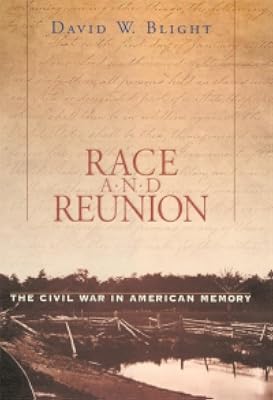
Race and Reunion: The Civil War in American Memory
by David W. Blight
On This Page
Description
No historical event has left as deep an imprint on America's collective memory as the Civil War. In the war's aftermath, Americans had to embrace and cast off a traumatic past. David Blight explores the perilous path of remembering and forgetting, and reveals its tragic costs to race relations and America's national reunion. In 1865, confronted with a ravaged landscape and a torn America, the North and South began a slow and painful process of reconciliation. The ensuing decades witnessed show more the triumph of a culture of reunion, which downplayed sectional division and emphasized the heroics of a battle between noble men of the Blue and the Gray. Nearly lost in national culture were the moral crusades over slavery that ignited the war, the presence and participation of African Americans throughout the war, and the promise of emancipation that emerged from the war. Race and Reunion is a history of how the unity of white America was purchased through the increasing segregation of black and white memory of the Civil War. Blight delves deeply into the shifting meanings of death and sacrifice, Reconstruction, the romanticized South of literature, soldiers' reminiscences of battle, the idea of the Lost Cause, and the ritual of Memorial Day. He resurrects the variety of African-American voices and memories of the war and the efforts to preserve the emancipationist legacy in the midst of a culture built on its denial. Blight's sweeping narrative of triumph and tragedy, romance and realism, is a compelling tale of the politics of memory, of how a nation healed from civil war without justice. By the early twentieth century, the problems of race and reunion were locked in mutual dependence, a painful legacy that continues to haunt us today. show lessTags
Recommendations







Member Recommendations
by anonymous user
Member Reviews
David Blight is an eminent, Pulitzer-Prize-winning historian interested in the role of race in American history. Many think that American attitudes about race were “solved” by the Civil War and the emancipation of slaves. Those battles were won by the Union and not the Confederacy, right? This book seeks to chronicle how in the 50 years after emancipation (until around World War I), southern states and the promotion of “Lost Cause” ideology won a place in American society, north and south. Americans were more concerned with reconciliation among the whites than peace among all peoples. This attitude laid the necessity of further social action in the Civil Rights movements, up to today.
When I was ten years old, I moved from St. show more Louis, Missouri, to upstate South Carolina. I noticed a cultural difference in attitudes about the Civil War. My community in St. Louis was quite proudly multicultural while my community in South Carolina was predominantly white. Southernisms abounded, like the word “y’all” and sayings like “The devil’s beating his wife” when it rained. Likewise, conversations about the Civil War were less about the end of slavery and more about family who fought.
I have since lived in northern, western, and southern states and currently live in urban Tennessee. I’ve seen a lot of attitudes about the Civil War and racism: Northern pride over “uneducated southerners,” southern regions with a pro-Union history, southerners celebrating frank ignorance, and a Nashville pride of birthing the Civil Rights movement. Often forgotten are the victims and survivors of slavery and white supremacy. Blight’s book indicts all white history with abundant, carefully reasoned evidence. Our ancestors almost universally favored white reunion over racial reconciliation. Civil rights movements, past and present, try to overturn the remnants of such structural racism. White supremacy lingered far past 1863 or 1865. Indeed, some is still with us, north and south.
I appreciate this book for correcting my common tendency to overlook racial injustice. I’ve tried to fight it in protests, professional advocacy, and personal relationships. Yet anywhere in America, it’s easy to fall prey to forgetting historical inertia. And I remain a complicit part of that forgetful inertia. Blight’s work clearly corrects that tendency in a dispassionate, erudite, and reflective manner. By enlightening me and healing my own unknowing biases, I hope it will help me have better relationships and construct a better society. The American experiment is not done yet, and Race and Reunion can help put up a few more supporting flanks in its house. show less
When I was ten years old, I moved from St. show more Louis, Missouri, to upstate South Carolina. I noticed a cultural difference in attitudes about the Civil War. My community in St. Louis was quite proudly multicultural while my community in South Carolina was predominantly white. Southernisms abounded, like the word “y’all” and sayings like “The devil’s beating his wife” when it rained. Likewise, conversations about the Civil War were less about the end of slavery and more about family who fought.
I have since lived in northern, western, and southern states and currently live in urban Tennessee. I’ve seen a lot of attitudes about the Civil War and racism: Northern pride over “uneducated southerners,” southern regions with a pro-Union history, southerners celebrating frank ignorance, and a Nashville pride of birthing the Civil Rights movement. Often forgotten are the victims and survivors of slavery and white supremacy. Blight’s book indicts all white history with abundant, carefully reasoned evidence. Our ancestors almost universally favored white reunion over racial reconciliation. Civil rights movements, past and present, try to overturn the remnants of such structural racism. White supremacy lingered far past 1863 or 1865. Indeed, some is still with us, north and south.
I appreciate this book for correcting my common tendency to overlook racial injustice. I’ve tried to fight it in protests, professional advocacy, and personal relationships. Yet anywhere in America, it’s easy to fall prey to forgetting historical inertia. And I remain a complicit part of that forgetful inertia. Blight’s work clearly corrects that tendency in a dispassionate, erudite, and reflective manner. By enlightening me and healing my own unknowing biases, I hope it will help me have better relationships and construct a better society. The American experiment is not done yet, and Race and Reunion can help put up a few more supporting flanks in its house. show less
A history of just how fast white Americans decided that they’d fixed slavery and that everybody on the battlefield was noble. I was amazed all over again by how fast even high Confederate officials began insisting that they hadn’t seceded over slavery, but over mumble mumble federal overreach—it took only a few years, though it was deliberately cultivated and alternative accounts erased in organized fashion by Southern history leagues, often led by white women. African-Americans and some allies held out for a different view, but the Southern white insistence a mere twenty years later that they’d actually won the peace has a depressing truth absent from the rest of the white supremacist story. Also, white southerners insisted show more that they hadn’t really lost the war as a matter of soldiering; they’d just been overwhelmed by Northern resources. Nice to get to redefine what it means to lose, I guess. show less
Two occurrences in recent years have drawn me to think on how the meaning of history influences modern conceptions widely held in the national mind. While at a funeral in Richmond I sat by an elderly, very Southern, woman. I mentioned how rich is Richmond in museums and remarked on its famous boulevard of monuments to Confederate notables. She told me she was distantly related to Kirby Smith, a lesser known general in Confederate army. She said it was important to revere "our Southern heritage". I thought, "what on earth does that mean?" What is to revere about a political revolt that sought to dissolve the union and whose motivating aim was the preservation of slavery. What about the 100+ years of overt white supremacy with its show more lynchings and social and political suppression? The second occurrence was (and still is) the controversy roiling about the "Silent Sam" statue on the campus of UNC (and Charlottesville, too). How is it that 150+ years after the end of the Civil War this issue generates such hostility on both sides? Reverence as a desirable virtue? What would we think of reverence for history in modern Germany that resulted in statues of Nazi military and political leaders placed in every village square?
History is memory. Memory is inherently a matter of interpretation, never neutral and quite often shaped by powerful contemporaneous social, political and cultural forces. David Blight gives a masterful analysis of how memories of the Civil War were hugely influenced by its losing side and with the nearly cavalier acceptance nationally by academia and literature/journalism. His themes can be succinctly summarized as: the drive toward reconciliation, sentimentality and romanticism replacing revulsion of the horrors, reaction to the perceived oppression of Reconstruction, a false portrayal of the halcyon days of benign slavery in literature, the threat to white supremacy resulting from emancipation, and distortions to the point of falsehoods about the causes of the conflict. All of this infused the so-called "Lost Cause" portrayal of the South's military defeat.
Its defeat forcibly rejoined the southern states to the union. But, how would the hostilities and bitterness of the bloodiest war in history ever be resolved? Blight argues convincingly that fairly soon after the end of the war the two sides drifted toward reconciliation, that the perpetuation of animus must at some point diminish and disappear. We see this, do we not, after every war. The opponents accept each other on new terms and even become allies. For the South, however, this did not entail wiping away their beliefs in the righteousness of their cause. (Do today's Germans think that Nazi ideology is, or ever was, proper?) The South's defeat did not produce an epiphany on the errors of its ways. Rather, notions arose that the South's casus belli remained morally proper, that secession was politically justified and that defeat was due only to the North's overwhelming advantages in resources. What was important for memory to extol was valor, what was to be suppressed were morally and politically dubious instigating factors. The conflict, thus, became in Southern eyes the "War Between the States" or the "War of Northern Aggression".
How, then, to deal with the view that the decades-long tension over slavery was a primary cause? Southerners evoked the idea that slavery was a beneficent relationship between the races that the slaves actually cherished, that the disruption of this natural state of relations was detrimental to both races. In this view, Negroes were helplessly child-like who benefited from the guidance and protection of the beneficent masters. Underlying this theme, of course, was the imperative to Southerners to preserve absolute supremacy over the emancipated slaves, politically, culturally and socially. This, as we know, resulted in the "Jim Crow" era of political repression in all its ugly manifestations.
If its ethos was virtuous, if its defeat was due only to a far more powerful enemy, then efforts of the victors to reorder the South politically and socially were heinously wrong. So emerged the distorted historical theses on Reconstruction. I recall from my now distant high school days the teaching on those reviled characters -- the "carpetbaggers" and "scalawags" -- who imposed corrupt regimes on the Southern states. The image of blacks as incompetent and nearly savage in their new found political voice was a prominent feature of textbooks of the day. Blight points out that a major strategy of promoters of the "redemption" of the South's was to capture the minds of the young. It is astonishing to realize that a great number of purportedly professional historians adopted this perspective. As the wag said, "History is the way by which we betray the past." Is revisionism sometimes a product of rethinking stimulated by contemporary views? Yes, of course, history can never ignore its ongoing obligation to correct its errors, to get things right.
Perhaps, then, we should not wonder why, in 21st century America, there is renewed attention to the meaning of memorials that commemorate an ideology based on racism and oppression. When our president spews forth his "dog whistle" messages on racism, when he posits the virtue of a film like "Gone with the Wind" as a model of film making, when hostility and violence erupts over removing symbols of racism from the public square, we know that history is deeply responsible to fulfilling its responsibility to the public psyche. show less
History is memory. Memory is inherently a matter of interpretation, never neutral and quite often shaped by powerful contemporaneous social, political and cultural forces. David Blight gives a masterful analysis of how memories of the Civil War were hugely influenced by its losing side and with the nearly cavalier acceptance nationally by academia and literature/journalism. His themes can be succinctly summarized as: the drive toward reconciliation, sentimentality and romanticism replacing revulsion of the horrors, reaction to the perceived oppression of Reconstruction, a false portrayal of the halcyon days of benign slavery in literature, the threat to white supremacy resulting from emancipation, and distortions to the point of falsehoods about the causes of the conflict. All of this infused the so-called "Lost Cause" portrayal of the South's military defeat.
Its defeat forcibly rejoined the southern states to the union. But, how would the hostilities and bitterness of the bloodiest war in history ever be resolved? Blight argues convincingly that fairly soon after the end of the war the two sides drifted toward reconciliation, that the perpetuation of animus must at some point diminish and disappear. We see this, do we not, after every war. The opponents accept each other on new terms and even become allies. For the South, however, this did not entail wiping away their beliefs in the righteousness of their cause. (Do today's Germans think that Nazi ideology is, or ever was, proper?) The South's defeat did not produce an epiphany on the errors of its ways. Rather, notions arose that the South's casus belli remained morally proper, that secession was politically justified and that defeat was due only to the North's overwhelming advantages in resources. What was important for memory to extol was valor, what was to be suppressed were morally and politically dubious instigating factors. The conflict, thus, became in Southern eyes the "War Between the States" or the "War of Northern Aggression".
How, then, to deal with the view that the decades-long tension over slavery was a primary cause? Southerners evoked the idea that slavery was a beneficent relationship between the races that the slaves actually cherished, that the disruption of this natural state of relations was detrimental to both races. In this view, Negroes were helplessly child-like who benefited from the guidance and protection of the beneficent masters. Underlying this theme, of course, was the imperative to Southerners to preserve absolute supremacy over the emancipated slaves, politically, culturally and socially. This, as we know, resulted in the "Jim Crow" era of political repression in all its ugly manifestations.
If its ethos was virtuous, if its defeat was due only to a far more powerful enemy, then efforts of the victors to reorder the South politically and socially were heinously wrong. So emerged the distorted historical theses on Reconstruction. I recall from my now distant high school days the teaching on those reviled characters -- the "carpetbaggers" and "scalawags" -- who imposed corrupt regimes on the Southern states. The image of blacks as incompetent and nearly savage in their new found political voice was a prominent feature of textbooks of the day. Blight points out that a major strategy of promoters of the "redemption" of the South's was to capture the minds of the young. It is astonishing to realize that a great number of purportedly professional historians adopted this perspective. As the wag said, "History is the way by which we betray the past." Is revisionism sometimes a product of rethinking stimulated by contemporary views? Yes, of course, history can never ignore its ongoing obligation to correct its errors, to get things right.
Perhaps, then, we should not wonder why, in 21st century America, there is renewed attention to the meaning of memorials that commemorate an ideology based on racism and oppression. When our president spews forth his "dog whistle" messages on racism, when he posits the virtue of a film like "Gone with the Wind" as a model of film making, when hostility and violence erupts over removing symbols of racism from the public square, we know that history is deeply responsible to fulfilling its responsibility to the public psyche. show less
Who Shaped Your View of the American Civil War?
Even before the Civil War ended, people began forming their own memories about it, in particular about what caused it. Depending upon when and where you grew up in the U.S., it’s a good bet you may not share the same understanding of the cause. In fact, if you think about the Civil War at all, you probably focus on the battles, the generals, the valiantness of soldiers, and the like. You may not even use the term Civil War, but maybe War Between the States, or the War for Southern Independence, to name but a few. It’s worth pausing and asking yourself why many of us still to this day, more than 150 years after the guns silenced, carry around varying memories of among the most monumental show more periods in American History. Because, as David W. Blight, Yale prof and director of the Gilder Lehrman Center (for the study of slavery, resistance, and abolition) shows, a second struggle ensued. This involved words, societies, memorials, monuments, and a generalized racism that continues to this day. Memory, as Blight forcefully demonstrates, is quite malleable.
In brief summary, three strains of thought regarding the war developed in the years following its conclusion. These were emancipationists, white supremacists, and reconciliationists. For a time, the emancipationists prevailed, primarily during Reconstruction (voting rights, approximate equal treatment under the law, and the like). But nearly after the war’s end, whites (think the Klan, separation of races, distorted histories) began terrorizing freedmen, white leaders rebelled against Reconstruction (even today many recall it as harsh retribution), and writers started constructing a mythology that cast the Antebellum South and the war in a golden hue, which, among other things, portrayed slaves as loyal and faithful to their masters, as liking their condition, and most perniciously as simple minded and barbaric (if not taken in hand and guided by the white race). You can find and read works by Thomas Nelson Page, Joel Chandler Harris, Thomas Dixon, and Margaret Mitchell, all of whom’s titles are available on Amazon, to experience these first-hand.
In short, the South, with the acquiesce of reconcilationists, rewrote history and this rewrite pervaded even the North. Those interested in reconciliation and moving forward did so by ignoring the virulent racism in the South. Rather than a war to end slavery, the aftermath became something of a reversal to memorialize aspects of the Antebellum South, it became the Lost Cause of the Confederacy, and memorialization because the honoring of old traditions at graveyards, with marches, and plenty of speechifying honoring the dead, even if what was called honor came in the service of an evil cause.
How this came about makes for a fascinating historical tale told well and in detail by Blight. More, though, it serves as yet another illustration of how propagandizing can distort and even change the collective memory of events, because memory isn’t necessarily factual and it can be, and has been more than once, molded. show less
Even before the Civil War ended, people began forming their own memories about it, in particular about what caused it. Depending upon when and where you grew up in the U.S., it’s a good bet you may not share the same understanding of the cause. In fact, if you think about the Civil War at all, you probably focus on the battles, the generals, the valiantness of soldiers, and the like. You may not even use the term Civil War, but maybe War Between the States, or the War for Southern Independence, to name but a few. It’s worth pausing and asking yourself why many of us still to this day, more than 150 years after the guns silenced, carry around varying memories of among the most monumental show more periods in American History. Because, as David W. Blight, Yale prof and director of the Gilder Lehrman Center (for the study of slavery, resistance, and abolition) shows, a second struggle ensued. This involved words, societies, memorials, monuments, and a generalized racism that continues to this day. Memory, as Blight forcefully demonstrates, is quite malleable.
In brief summary, three strains of thought regarding the war developed in the years following its conclusion. These were emancipationists, white supremacists, and reconciliationists. For a time, the emancipationists prevailed, primarily during Reconstruction (voting rights, approximate equal treatment under the law, and the like). But nearly after the war’s end, whites (think the Klan, separation of races, distorted histories) began terrorizing freedmen, white leaders rebelled against Reconstruction (even today many recall it as harsh retribution), and writers started constructing a mythology that cast the Antebellum South and the war in a golden hue, which, among other things, portrayed slaves as loyal and faithful to their masters, as liking their condition, and most perniciously as simple minded and barbaric (if not taken in hand and guided by the white race). You can find and read works by Thomas Nelson Page, Joel Chandler Harris, Thomas Dixon, and Margaret Mitchell, all of whom’s titles are available on Amazon, to experience these first-hand.
In short, the South, with the acquiesce of reconcilationists, rewrote history and this rewrite pervaded even the North. Those interested in reconciliation and moving forward did so by ignoring the virulent racism in the South. Rather than a war to end slavery, the aftermath became something of a reversal to memorialize aspects of the Antebellum South, it became the Lost Cause of the Confederacy, and memorialization because the honoring of old traditions at graveyards, with marches, and plenty of speechifying honoring the dead, even if what was called honor came in the service of an evil cause.
How this came about makes for a fascinating historical tale told well and in detail by Blight. More, though, it serves as yet another illustration of how propagandizing can distort and even change the collective memory of events, because memory isn’t necessarily factual and it can be, and has been more than once, molded. show less
Who Shaped Your View of the American Civil War?
Even before the Civil War ended, people began forming their own memories about it, in particular about what caused it. Depending upon when and where you grew up in the U.S., it’s a good bet you may not share the same understanding of the cause. In fact, if you think about the Civil War at all, you probably focus on the battles, the generals, the valiantness of soldiers, and the like. You may not even use the term Civil War, but maybe War Between the States, or the War for Southern Independence, to name but a few. It’s worth pausing and asking yourself why many of us still to this day, more than 150 years after the guns silenced, carry around varying memories of among the most monumental show more periods in American History. Because, as David W. Blight, Yale prof and director of the Gilder Lehrman Center (for the study of slavery, resistance, and abolition) shows, a second struggle ensued. This involved words, societies, memorials, monuments, and a generalized racism that continues to this day. Memory, as Blight forcefully demonstrates, is quite malleable.
In brief summary, three strains of thought regarding the war developed in the years following its conclusion. These were emancipationists, white supremacists, and reconciliationists. For a time, the emancipationists prevailed, primarily during Reconstruction (voting rights, approximate equal treatment under the law, and the like). But nearly after the war’s end, whites (think the Klan, separation of races, distorted histories) began terrorizing freedmen, white leaders rebelled against Reconstruction (even today many recall it as harsh retribution), and writers started constructing a mythology that cast the Antebellum South and the war in a golden hue, which, among other things, portrayed slaves as loyal and faithful to their masters, as liking their condition, and most perniciously as simple minded and barbaric (if not taken in hand and guided by the white race). You can find and read works by Thomas Nelson Page, Joel Chandler Harris, Thomas Dixon, and Margaret Mitchell, all of whom’s titles are available on Amazon, to experience these first-hand.
In short, the South, with the acquiesce of reconcilationists, rewrote history and this rewrite pervaded even the North. Those interested in reconciliation and moving forward did so by ignoring the virulent racism in the South. Rather than a war to end slavery, the aftermath became something of a reversal to memorialize aspects of the Antebellum South, it became the Lost Cause of the Confederacy, and memorialization because the honoring of old traditions at graveyards, with marches, and plenty of speechifying honoring the dead, even if what was called honor came in the service of an evil cause.
How this came about makes for a fascinating historical tale told well and in detail by Blight. More, though, it serves as yet another illustration of how propagandizing can distort and even change the collective memory of events, because memory isn’t necessarily factual and it can be, and has been more than once, molded. show less
Even before the Civil War ended, people began forming their own memories about it, in particular about what caused it. Depending upon when and where you grew up in the U.S., it’s a good bet you may not share the same understanding of the cause. In fact, if you think about the Civil War at all, you probably focus on the battles, the generals, the valiantness of soldiers, and the like. You may not even use the term Civil War, but maybe War Between the States, or the War for Southern Independence, to name but a few. It’s worth pausing and asking yourself why many of us still to this day, more than 150 years after the guns silenced, carry around varying memories of among the most monumental show more periods in American History. Because, as David W. Blight, Yale prof and director of the Gilder Lehrman Center (for the study of slavery, resistance, and abolition) shows, a second struggle ensued. This involved words, societies, memorials, monuments, and a generalized racism that continues to this day. Memory, as Blight forcefully demonstrates, is quite malleable.
In brief summary, three strains of thought regarding the war developed in the years following its conclusion. These were emancipationists, white supremacists, and reconciliationists. For a time, the emancipationists prevailed, primarily during Reconstruction (voting rights, approximate equal treatment under the law, and the like). But nearly after the war’s end, whites (think the Klan, separation of races, distorted histories) began terrorizing freedmen, white leaders rebelled against Reconstruction (even today many recall it as harsh retribution), and writers started constructing a mythology that cast the Antebellum South and the war in a golden hue, which, among other things, portrayed slaves as loyal and faithful to their masters, as liking their condition, and most perniciously as simple minded and barbaric (if not taken in hand and guided by the white race). You can find and read works by Thomas Nelson Page, Joel Chandler Harris, Thomas Dixon, and Margaret Mitchell, all of whom’s titles are available on Amazon, to experience these first-hand.
In short, the South, with the acquiesce of reconcilationists, rewrote history and this rewrite pervaded even the North. Those interested in reconciliation and moving forward did so by ignoring the virulent racism in the South. Rather than a war to end slavery, the aftermath became something of a reversal to memorialize aspects of the Antebellum South, it became the Lost Cause of the Confederacy, and memorialization because the honoring of old traditions at graveyards, with marches, and plenty of speechifying honoring the dead, even if what was called honor came in the service of an evil cause.
How this came about makes for a fascinating historical tale told well and in detail by Blight. More, though, it serves as yet another illustration of how propagandizing can distort and even change the collective memory of events, because memory isn’t necessarily factual and it can be, and has been more than once, molded. show less
Blight's book tells how Americans negotiated the trecherous shoals of reunification during the first fifty years after the Civil War. Although the battles on the fields of war were over, the battles for hegemony of memory had just begun. As Blight's tragic history unfolds, it is clear that the South may have lost in the short-term, but in a relatively short period of time it won "the struggle over Civil War memory" and [thus] more importantly, the repudiation of Reconstruction and the [re]establishment of White Supremacy. As black intellectual Joseph Price observed in 1890, "The South was more conquered than convinced. ... The Confederacy surrendered its sword at Appomattox, but did not there surrender its conviction."
According to the show more refigured history of the War avidly pressed by Southerners, Southern white people were actually the victims. Their cause - one of states' rights - was noble, slavery having been just a secondary issue (and one morever that could be characterized as "patriarchal happiness"!) White southerners suffered still further from "the dreadful reconstruction period" (according to Thomas Dixon, who wrote the book which was adapted by D.W. Griffith to make "Birth of a Nation.") In fact, per Blight, this movie, premiering in 1915 with the approval of White Supremacist President Woodrow Wilson, formulated the perfect expression of the new memories Southerners sought so successfully to impose. "In "Birth of a Nation,'" the author writes, "Griffith and Dixon gave their well-plied audiences the message not only that blacks did not want their freedom, but also that emancipation had been America's greatest and most dangerous disaster." Most critically, Blight notes that "by using powerful imagery, buttressed by enormous advertising and political endorsement, it etched a story of Reconstruction that has lasted long in American's historical consciousness. . . . The South not only wins in the end in 'Birth of a Nation'; it also transforms emancipation, the potential second founding of the American nation, into a reign of racial terror and the necessity of a third creation by the heroic, hooded riders of the Ku Klux Klan."
The black crimes to which the movie alluded may have been fictional, but the white response seemed more like a documentary of the real plight of blacks at the turn of the Century as documented by Blight. "Race and Reunion" is a well-researched powerful expose of the perversions of memory after the Civil War. It also gives a great deal of welcome play to powerful black voices such as Frederick Douglas and W.E.B. Dubois who fought so valiantly and fruitlessly to restore the promise of freedom to black Americans.
(JAF) show less
According to the show more refigured history of the War avidly pressed by Southerners, Southern white people were actually the victims. Their cause - one of states' rights - was noble, slavery having been just a secondary issue (and one morever that could be characterized as "patriarchal happiness"!) White southerners suffered still further from "the dreadful reconstruction period" (according to Thomas Dixon, who wrote the book which was adapted by D.W. Griffith to make "Birth of a Nation.") In fact, per Blight, this movie, premiering in 1915 with the approval of White Supremacist President Woodrow Wilson, formulated the perfect expression of the new memories Southerners sought so successfully to impose. "In "Birth of a Nation,'" the author writes, "Griffith and Dixon gave their well-plied audiences the message not only that blacks did not want their freedom, but also that emancipation had been America's greatest and most dangerous disaster." Most critically, Blight notes that "by using powerful imagery, buttressed by enormous advertising and political endorsement, it etched a story of Reconstruction that has lasted long in American's historical consciousness. . . . The South not only wins in the end in 'Birth of a Nation'; it also transforms emancipation, the potential second founding of the American nation, into a reign of racial terror and the necessity of a third creation by the heroic, hooded riders of the Ku Klux Klan."
The black crimes to which the movie alluded may have been fictional, but the white response seemed more like a documentary of the real plight of blacks at the turn of the Century as documented by Blight. "Race and Reunion" is a well-researched powerful expose of the perversions of memory after the Civil War. It also gives a great deal of welcome play to powerful black voices such as Frederick Douglas and W.E.B. Dubois who fought so valiantly and fruitlessly to restore the promise of freedom to black Americans.
(JAF) show less
Compellingly written and impressively researched, this book shows how the Southern story about the Civil War and its aftermath took over as the national story in the half-century after the Emancipation Proclamation. That story stayed in place until the civil rights movement in the second half of the 20th century, which is a long run for a narrative far removed from what is suggested by the actual evidence about the causes of the war and about racial developments after the war.
Blight shows how, after the war, various groups competed to have their story about the war take over as the dominant narrative. African Americans focussed on what it meant for them -- the end of slavery -- and expected freedom and citizenship to lead to full show more participation in society. Many Southerners, however, almost immediately began to push for as much of a return to the old social order was was possible. In this effort, the construction of "The Lost Cause" myth gave a post-war focus to regional patriotism (the war was only lost because of the crushing numerical and material superiority of the North). At the same time, focussing on states' rights as a cause of the war rather than on slavery gave southerners an acceptable reason to have fought. As to the Northern story, Blight suggests that there wasn't much of one. During the war, saving the union and freeing the slaves were both major motivations for Northerners, but as the war slipped into the past, Northern interest in maintaining the rights of black people faded. In time, race relations in the South became the province of state and local governments, with the North implicitly accepting the abandonment of black rights as the price of national reunion.
Blight shows how this happened in very concrete detail: the emergence of a literature of the Lost Cause, the appearance of history and veteran's magazines and organizations advancing the southern view, the building of monuments in the South, the choosing of textbooks, the "reconciliationist" push for Blue/Grey reunions, etc. etc. etc. This was a highly organized and very successful effort to take control of the memory of the Civil War, a process which helped Southern states make race a local issue, not a national one. That, of course, had terrible implications for African Americans.
More broadly, this book vividly illustrates how much of the "history" we learn in school and from the culture around us is really a version of history, selected and shaped to bolster patriotism and a sense of group identity. That's not just true of the American South, of course -- every society has its national myth, which forms the basis of its official version of history, including America as a whole. But the sucdess of the Southern story in taking over the national view and national politics -- especially national politics about race -- was remarkable. Clearly, history isn't always written by the victors.
Note for those interested in the Civil War -- David Blight, the author of "Race and Reunion", has an EXCELLENT series of podcasts on "The Civil War and Reconstruction Era, 1845-1877" which is available free at I Tunes U at the ITunes store. It comprises 27 lectures, each about 50 minutes long, of which about a third are on pre-war developments, a third on the war itself, and a third on reconstruction. If this series were a book, it would be one of the best I have ever read on the Civil War. It isn't a book, but it is a great listen. show less
Blight shows how, after the war, various groups competed to have their story about the war take over as the dominant narrative. African Americans focussed on what it meant for them -- the end of slavery -- and expected freedom and citizenship to lead to full show more participation in society. Many Southerners, however, almost immediately began to push for as much of a return to the old social order was was possible. In this effort, the construction of "The Lost Cause" myth gave a post-war focus to regional patriotism (the war was only lost because of the crushing numerical and material superiority of the North). At the same time, focussing on states' rights as a cause of the war rather than on slavery gave southerners an acceptable reason to have fought. As to the Northern story, Blight suggests that there wasn't much of one. During the war, saving the union and freeing the slaves were both major motivations for Northerners, but as the war slipped into the past, Northern interest in maintaining the rights of black people faded. In time, race relations in the South became the province of state and local governments, with the North implicitly accepting the abandonment of black rights as the price of national reunion.
Blight shows how this happened in very concrete detail: the emergence of a literature of the Lost Cause, the appearance of history and veteran's magazines and organizations advancing the southern view, the building of monuments in the South, the choosing of textbooks, the "reconciliationist" push for Blue/Grey reunions, etc. etc. etc. This was a highly organized and very successful effort to take control of the memory of the Civil War, a process which helped Southern states make race a local issue, not a national one. That, of course, had terrible implications for African Americans.
More broadly, this book vividly illustrates how much of the "history" we learn in school and from the culture around us is really a version of history, selected and shaped to bolster patriotism and a sense of group identity. That's not just true of the American South, of course -- every society has its national myth, which forms the basis of its official version of history, including America as a whole. But the sucdess of the Southern story in taking over the national view and national politics -- especially national politics about race -- was remarkable. Clearly, history isn't always written by the victors.
Note for those interested in the Civil War -- David Blight, the author of "Race and Reunion", has an EXCELLENT series of podcasts on "The Civil War and Reconstruction Era, 1845-1877" which is available free at I Tunes U at the ITunes store. It comprises 27 lectures, each about 50 minutes long, of which about a third are on pre-war developments, a third on the war itself, and a third on reconstruction. If this series were a book, it would be one of the best I have ever read on the Civil War. It isn't a book, but it is a great listen. show less
Members
- Recently Added By
Lists

Charleston Syllabus (waitingtoderail)
143 works; 2 members

r/AskHistorians' Recommended Books
1,068 works; 19 members

2024-2025 Ezra Klein Guest Recommendations
213 works; 6 members

Books Cited in Digging Up the Dead by Michael Kammen
183 works; 1 member
Author Information

23+ Works 4,618 Members
David W. Blight is Sterling Professor of History at Yale University and Director of the Gilder Lehrman Center for the Study of Slavery, Resistance, and Abolition at Yale. He is the author of annotated editions of two of Frederick Douglass's autobiographies, The Narrative of the Life of Frederick Douglass and My Bondage and My Freedom. He is also show more the author of A Slave No More: Two Men Who Escaped to Freedom, Including Their Own Narratives of Emancipation and the prize-winning Race and Reunion: The Civil War in American Memory, among other works. Visit David W. Blight at www.davidwblight.com. show less
Awards and Honors
Common Knowledge
- Canonical title
- Race and Reunion: The Civil War in American Memory
- Original publication date
- 2001-02-09
- Important places
- USA
- Important events
- American Civil War (1861 | 1865)
- Original language
- English
- Disambiguation notice
- Full title (2001): Race and Reunion: the Civil War in American Memory.
Classifications
Statistics
- Members
- 715
- Popularity
- 39,935
- Reviews
- 15
- Rating
- (4.16)
- Languages
- English, German
- Media
- Paper, Audiobook, Ebook
- ISBNs
- 6
- ASINs
- 3