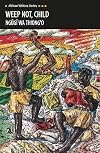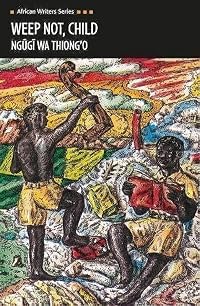
Weep Not, Child
by Ngũgĩ wa Thiong'o
On This Page
Description
"Two brothers, Njoroge and Kamau, stand on a garbage heap and look into their futures: Njoroge is to attend school, while Kamau will train to be a carpenter. But this is Kenya, and the times are against them: in the forests, the Mau Mau is waging war against the white government, and the two brothers and their family need to decide where their loyalties lie. For the practical Kamau, the choice is simple, but for Njoroge the scholar, the dream of progress through learning is a hard one to show more give up.First published in 1964, Weep Not, Child is a moving novel about the effects of the infamous Mau Mau uprising on the lives of ordinary men and women, and on one family in particular"-- show lessTags
Recommendations







Member Reviews
Ngũgĩ's powerful debut novel about colonial Kenya was released in 1964 while he was a student at the University of Leeds, and was the first book published in English by an East African. The story is centered around Njoroge, a young Kenyan boy within a loving but impoverished household who is overjoyed when his father Ngotho is able to pay for him to attend school, an opportunity that was not made available to his older brothers. Ngotho is barely able to provide for his family as he works for Mr Howlands, a white landowner who views the Africans who work for him as savages who are barely more useful or worthy of his attention than his farm animals. The property that Ngotho and his family lives on is owned by Jacobo, a wealthier black show more Kenyan who is supportive of the Mr Howlands and other colonialists and oppresses and torments Ngotho and other landless natives.
Ngotho is challenged by an older son to take a stand against his employer and participate in the nationwide strike against white rule, subsistence wages, and laws designed by the colonialists to restrict most black Kenyans from advancement. The strike is brutally repressed, and Ngotho and his family suffer as a result. The failure of the strike leads to the Mau Mau uprising, in which nationalists commit acts of violence against colonialists, and black Kenyans who do not agree with their oath of loyalty. Njoroge is caught in the middle of the struggle, as he does not take the oath of loyalty but is opposed to colonialists and the natives that benefit from their rule. His older brothers join the freedom fighters, as the conflict
threatens the lives Njoroge and the other members of his family, and he is forced to decide whether to continue with his education or take a stand with or against his brothers and his father.
Weep Not, Child is a superb first novel, as Ngũgĩ convincingly places the reader amidst the difficult decisions and violence that many ordinary Kenyans faced during the early days of the independence movement. I would have enjoyed this novel more if some of the key supporting characters had been better developed, but this is a minor criticism of this highly recommended book. show less
Ngotho is challenged by an older son to take a stand against his employer and participate in the nationwide strike against white rule, subsistence wages, and laws designed by the colonialists to restrict most black Kenyans from advancement. The strike is brutally repressed, and Ngotho and his family suffer as a result. The failure of the strike leads to the Mau Mau uprising, in which nationalists commit acts of violence against colonialists, and black Kenyans who do not agree with their oath of loyalty. Njoroge is caught in the middle of the struggle, as he does not take the oath of loyalty but is opposed to colonialists and the natives that benefit from their rule. His older brothers join the freedom fighters, as the conflict
threatens the lives Njoroge and the other members of his family, and he is forced to decide whether to continue with his education or take a stand with or against his brothers and his father.
Weep Not, Child is a superb first novel, as Ngũgĩ convincingly places the reader amidst the difficult decisions and violence that many ordinary Kenyans faced during the early days of the independence movement. I would have enjoyed this novel more if some of the key supporting characters had been better developed, but this is a minor criticism of this highly recommended book. show less
The main theme of this novel is opposition. If you've ever said to yourself “I'd like to read a really good novel where the main theme is opposition in all it's forms”, then this is the book for you. There are other themes, land for instance, but everything ties in to opposition. Take the passage in chapter one where Ngũgĩ describes the landscape, and the opposition between the various ethnic groups is picked out in the lay of it.
Or the passage in chapter five where the children learn to say “I am standing up”. It's a very funny scene, but it's also a metaphor for a conquered people who are just learning to stand up and oppose the oppressor. It's so subtle, this metaphor, when you read the passage. The whole book is. So show more supple. Like gossamer, turning under the wind from your mind and only showing certain meanings when the light falls just right on it.
But enough of this damned poetry. There's also a good story. It's set during the Mau Mau rebellion. I knew nothing about that so I looked up the wikipedia article. I had to stop three quarters of the way through as it made me feel physically sick. The denouement of the novel had a physical impact on me that I wasn't expecting.
I'd rate this five stars but I read The River Between a few years ago and know the author can do better. show less
Or the passage in chapter five where the children learn to say “I am standing up”. It's a very funny scene, but it's also a metaphor for a conquered people who are just learning to stand up and oppose the oppressor. It's so subtle, this metaphor, when you read the passage. The whole book is. So show more supple. Like gossamer, turning under the wind from your mind and only showing certain meanings when the light falls just right on it.
But enough of this damned poetry. There's also a good story. It's set during the Mau Mau rebellion. I knew nothing about that so I looked up the wikipedia article. I had to stop three quarters of the way through as it made me feel physically sick. The denouement of the novel had a physical impact on me that I wasn't expecting.
I'd rate this five stars but I read The River Between a few years ago and know the author can do better. show less
This is well known enough on this board that no summary is needed. I will say only that I had the same reaction to this as to the last book of his that I read (The River Between): good, but no more. Although I find his settings and themes of great interest, he just doesn’t engage me. I don’t find the writing particularly moving and the characters—the protagonist(s) as well as the lesser characters—strike me too often as just a step up from stick figures. I will persist and try A Grain of Wheat next since that seems well-regarded here. But I will confess to being disappointed. Again.
In his first novel, Ngũgĩ tells the story of a village boy, Njoroge, hungry for education, growing up at the time of the fight for independence from the British known by the Kenyans as "the Emergency" and by the British as the "Mau Mau rebellion." Through the different members of his family and their histories (in which some of them were forced to fight for the British during the second world war) and their relationships with a neighboring African who has ingratiated himself with the British rulers and the main British farmer in the area who owns land that used to belong to Njoroge's family, the conflicts of the time emerge, as well as Njoroge's own intellectual and psychological development. This brief novel, although a little show more schematic at times, and not as complex as Ngũgĩ's later work, nevertheless paints a moving and powerful portrait of a time, a place, and a young person who may in some respects resemble Ngũgĩ himself. show less
The Nobel Prize-nominated Kenyan writer's powerful first novel Two brothers, Njoroge and Kamau, stand on a garbage heap and look into their futures: Njoroge is to attend school, while Kamau will train to be a carpenter. But this is Kenya, and the times are against them: In the forests, the Mau Mau is waging war against the white government, and the two brothers and their family need to decide where their loyalties lie. For the practical Kamau, the choice is simple, but for Njoroge the scholar, the dream of progress through learning is a hard one to give up. The first East African novel published in English, Weep Not, Child is a moving book about the effects of the infamous Mau Mau uprising on the lives of ordinary men and women, and on show more one family in particular. show less
The Mau Mau uprising in Kenya during the 1950s is featured in this story of 2 brothers, Njoroge and Kamau. Their lives and that of their family and many others are thrown into chaos when their loyalties are strained. Do they support the Mau Mau or do they support the colonial government. As the violence escalates, dreams and ideals are shattered as are families.
A novel of the early days of Kenya's independence and a look at the resistance to the British colonialists through the eyes of Africans.
Members
- Recently Added By
Lists

Best African Books
126 works; 46 members
Talk Discussions
Past Discussions
Weep Not, Child by Ngũgĩ wa Thiong'o in Author Theme Reads (December 2011)
Author Information

70+ Works 7,457 Members
Novelist, playwright, and essayist, Ngugi wa Thiong'o was born in Kenya on January 5, 1938. He received a B.A. in English from Makerere University College in Kampala, Uganda in 1963. He is Kenya's best-known writer and one of East Africa's most outspoken social critics. His first novel, Weep Not, Child (1964), was a penetrating account of the Mau show more Mau uprising (a tribal revolt that occurred in colonial Kenya) and was the first English-language novel by an East African. Two subsequent works, The River Between (1965) and A Grain of Wheat (1967), are sensitive novels about the Kikuyu people caught between the old and the new Africa. One of his major concerns has been the lack of reading materials in native African languages. In an attempt to bring literature to African peasants and workers, he wrote and produced the play I Will Marry When I Want (1977) in his native Kikuyu language. The play, which shows the exploitation of Kikuyu workers and peasants, attracted a large audience of poor Kenyans. It also led to Ngugi's arrest and imprisonment. After his release from prison, he went into exile and is currently living in the United States. His other works include Detained (1981); Decolonising the Mind: The Politics of Language in African Literature (1986); and Matigari (1987). He received the 2001 Nonino International Prize for Literature. In 2006, Random House published his first new novel in nearly two decades, Wizard of the Crow. (Bowker Author Biography) show less
Awards and Honors
Notable Lists
Series
Belongs to Publisher Series
Common Knowledge
- Canonical title
- Weep Not, Child
- Original title
- Weep Not, Child
- Original publication date
- 1964
- People/Characters
- Njoroge; Ngotho; Nyokabi; Njeri; Boro; Kori (show all 10); Kamau; Jacobo; Mr. Howlands; Mwihaki
- Important places
- Kipanga, Kenya
- Epigraph
- Weep not, child
Weep not, my darling
With these kisses let me remove your tears,
The ravening clouds shall not be long victorious,
They shall not long possess the sky...
Walt Whitman
On the Beach at Night - Dedication
- For Jasbir Kalsi
- First words
- Nyokabi called him.
- Quotations
- If you said that you did not know who the barber was, or where his shop was, people at once knew that you were either a stranger of a fool.
The white man makes a law or a rule. Through that rule or law or what you may call it, he takes away the land and then imposes many laws on the people concerning that land and many other things, all without people agreeing f... (show all)irst as in the old days of the tribe. Now a man rises and opposes that law which made right the taking away of land. Now that man is taken by the same people who made the laws against which that man was fighting. He is tried under those alien rules. Now tell me who is that man who can win even if the angels of God were his lawyers...
Though he had never come into real contact with white men, yet if one had met him and had abused him or tried to put him in his place, Njoroge would have understood. He would have even know how to react. But not when he met ... (show all)some who could smile and laugh. Not when he met some who made friends with him and tried to help him in his Christian progress.
Hope of a better day was the only comfort he could give to a weeping child. He did not know that this faith in the future could be a form of escape from the reality of the present. - Last words
- (Click to show. Warning: May contain spoilers.)And he ran home and opened the door for his two mothers.
Classifications
Statistics
- Members
- 688
- Popularity
- 41,557
- Reviews
- 9
- Rating
- (3.60)
- Languages
- 6 — Basque, English, French, Italian, Spanish, Swedish
- Media
- Paper, Ebook
- ISBNs
- 18
- ASINs
- 8