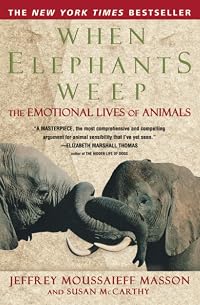
When Elephants Weep: The Emotional Lives of Animals
by Jeffrey Moussaieff Masson  , Susan McCarthy
On This Page
Description
Offers evidence of emotions throughout the animal kingdom and evaluates humans' treatment of animals--from hunting to eating them--in light of this discovery.Tags
Recommendations



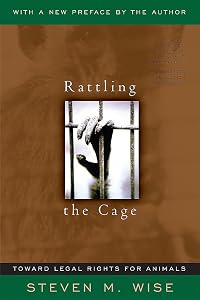
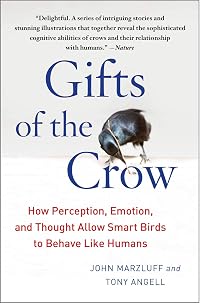
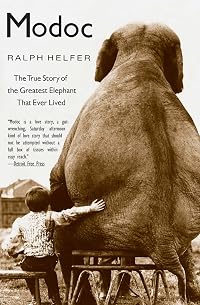
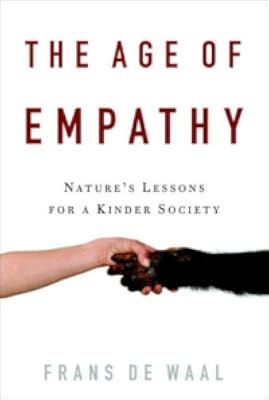
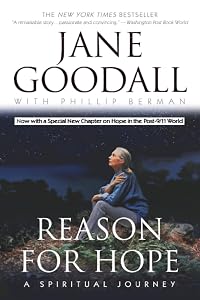

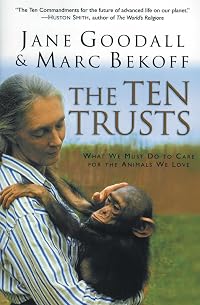
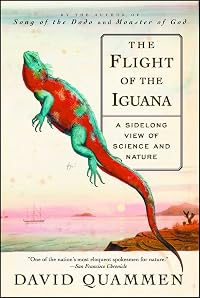


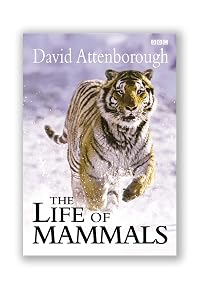
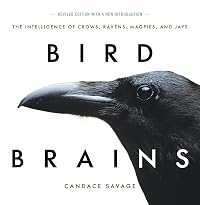
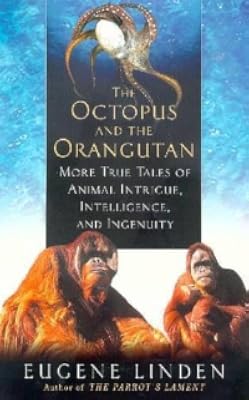
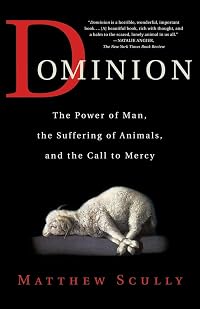
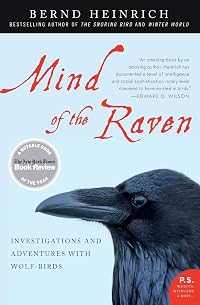
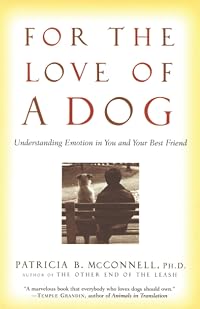
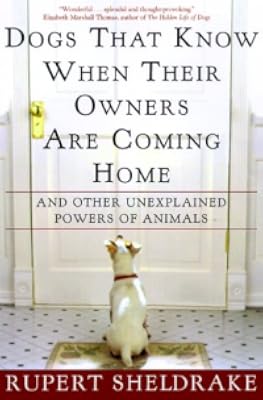
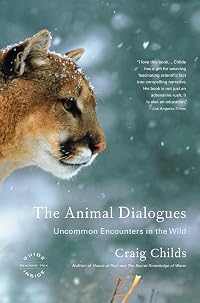
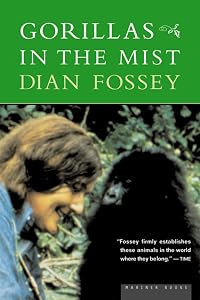
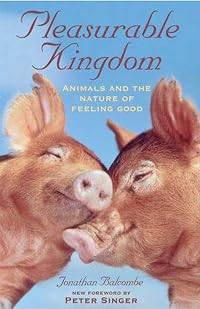

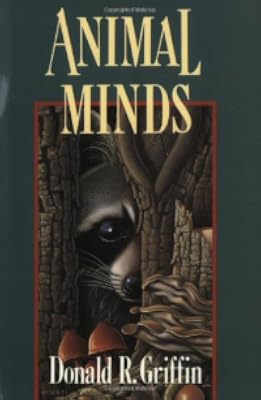
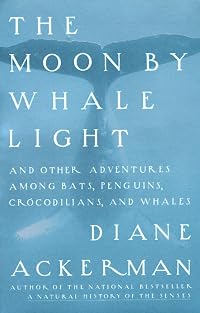

Member Recommendations
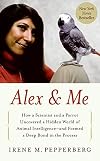
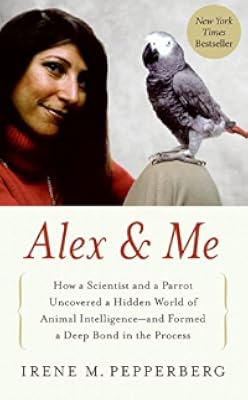
Alex and Me: How a Scientist and a Parrot Uncovered a Hidden World of Animal Intelligence and Formed a Deep Bond in the Process by Irene M. Pepperberg
Ape If you liked the story of the talking parrot, Alex, in When Elephants Weep, here is a book written by the trainer, Irene Pepperberg, about her experiences with Alex.
40
Ape If you liked the story of the talking parrot, Alex, in When Elephants Weep, here is a book written by the trainer, Irene Pepperberg, about her experiences with Alex.
30
Member Reviews
If you have ever loved an animal, shared your life with an animal or wondered just how much the animals we live with have in common with us, here is a book you cannot miss. When Elephants Weep is an eloquent and compelling reminder that one of the traits we share with many other mammals are that we experience our world through emotional response as well as physical response (or at least that the two are inexorably linked). With touching and thought provoking examples and anecdotes, Masson presents a strong case for the rich and nuanced emotional life of creatures of than humans, and challenges readers to examine their own resistance to admitting how much we have in common with other living beings, with persons who walk on paws, who show more sheathe claws, who have flippers and fins. show less
First off, let me say that I am not an animal rights activist. I eat meat regularly, probably daily or close to it, and I think animal experimentation for the advancement of the human race is a positive thing for the most part, unless the experimentation might be considered "cruel."
I am, however, a young man who has spent most of his life surrounded by animals. Growing up in small-town Ohio, I haven't spent a day without a dog by my side since I was about 7 years old. I currently live between a corn field and a cow pasture. I've owned dogs, cats, gerbils, even a goat and a ferret once. As a result, I am a firm believer in animal emotions. Anyone who denies the emotions of animals has probably never spent any time around them and thus, show more has no valid opinion.
But enough about my history with animals, I'm here to review When Animals Weep. If you haven't guessed, it's about the emotions of animals. The authors are clearly passionate about the topic, and fiercely want to demonstrate that animals have emotions. Anyone who has ever owned a dog will immediately agree. From the tail-wagging joy of a dog excited by an owner recently returned from work, to the droopy-eyed sadness of a dog scolded, clearly animals feel at least basic emotions.
The problem with the book, and the authors admit it, is the lack of science behind it. Our only proof of animal emotions is casual observation. You would think that would be plentiful, but the authors also admit that you cannot know what someone or something is feeling just by looking at it/them. If you see a woman on a train with slumping shoulders and a grim look on her face, staring at the floor and sighing, what is she feeling? You might say sadness, but how do you know? Maybe she is disappointed after not getting a promotion at work, or maybe she is lonely. You can't look at her and say "that woman is sad, she must not like to ride trains" and you can't look at a wolf who sticks with his mate to raise his offspring and say he is experiencing "romantic love."
While it's obvious that animals are emotional beings, I don't think you can just look at them and assume they are experiencing the emotion you wish to apply to them. This book uses lots of single events with animals doing odd, out-of-the-ordinary things and applies anthropomorphism to try to convey an emotion, with no way of knowing whether or not that is how the animal is actually feeling. So, while I do agree that animals demonstrate a wide variety of emotions, I didn't always find the authors' examples as relevant or reasonable.
With all that said, I still found the book to be an enjoyable read and I did feel like I left it with a lot more knowledge. Many of the stories were touching and I thoroughly enjoyed reading them. I especially liked the stories describing elephants and apes. I was also captivated but the section about animals that like to draw. While the book lacks a scientific backbone, there is still a lot to be gained from reading this book.
So what's the verdict? While I doubt I would recommend this to people who don't like animals because I don't know if it would do a well enough job of convincing them to believe otherwise, I would certainly recommend this book to just about everyone else! show less
I am, however, a young man who has spent most of his life surrounded by animals. Growing up in small-town Ohio, I haven't spent a day without a dog by my side since I was about 7 years old. I currently live between a corn field and a cow pasture. I've owned dogs, cats, gerbils, even a goat and a ferret once. As a result, I am a firm believer in animal emotions. Anyone who denies the emotions of animals has probably never spent any time around them and thus, show more has no valid opinion.
But enough about my history with animals, I'm here to review When Animals Weep. If you haven't guessed, it's about the emotions of animals. The authors are clearly passionate about the topic, and fiercely want to demonstrate that animals have emotions. Anyone who has ever owned a dog will immediately agree. From the tail-wagging joy of a dog excited by an owner recently returned from work, to the droopy-eyed sadness of a dog scolded, clearly animals feel at least basic emotions.
The problem with the book, and the authors admit it, is the lack of science behind it. Our only proof of animal emotions is casual observation. You would think that would be plentiful, but the authors also admit that you cannot know what someone or something is feeling just by looking at it/them. If you see a woman on a train with slumping shoulders and a grim look on her face, staring at the floor and sighing, what is she feeling? You might say sadness, but how do you know? Maybe she is disappointed after not getting a promotion at work, or maybe she is lonely. You can't look at her and say "that woman is sad, she must not like to ride trains" and you can't look at a wolf who sticks with his mate to raise his offspring and say he is experiencing "romantic love."
While it's obvious that animals are emotional beings, I don't think you can just look at them and assume they are experiencing the emotion you wish to apply to them. This book uses lots of single events with animals doing odd, out-of-the-ordinary things and applies anthropomorphism to try to convey an emotion, with no way of knowing whether or not that is how the animal is actually feeling. So, while I do agree that animals demonstrate a wide variety of emotions, I didn't always find the authors' examples as relevant or reasonable.
With all that said, I still found the book to be an enjoyable read and I did feel like I left it with a lot more knowledge. Many of the stories were touching and I thoroughly enjoyed reading them. I especially liked the stories describing elephants and apes. I was also captivated but the section about animals that like to draw. While the book lacks a scientific backbone, there is still a lot to be gained from reading this book.
So what's the verdict? While I doubt I would recommend this to people who don't like animals because I don't know if it would do a well enough job of convincing them to believe otherwise, I would certainly recommend this book to just about everyone else! show less
A thoughtprovoking analysis of the science, or the lack thereof, regarding emotions in non-human animals. Raises interesting questions about where we (mankind) draw our conclusions about animal intelligence. Contains several intriguing examples of the double standards applied to humans and animals, especially mammals, when looking for "proof" of complex emotions such as love, mourning, altruism, shame, etc. The authors also discuss some of the underlying reasons (fear of being labeled anthropomorphic being one) which prevent more research from being done in this field. Whichever side of the animal rights issue you're on, it is a compelling read. Warning: There are some
brief, but graphic, discussions of various experiments conducted on show more animals that may not be suitable for all readers. show less
brief, but graphic, discussions of various experiments conducted on show more animals that may not be suitable for all readers. show less
Librarything member 'Ape' has already done an excellent job reviewing this book, along with others. I'd only add a few things. Firstly that the premise of the book is made clear in the final words - it is an argument for more respect for animals, and for your fellow man and woman. Masson and McCarthy make a very good case (philosophically speaking) that the scientific community's denial of emotions in animals stems in large part from it's history of abusing animals in the name of (legitimate and sometimes absurd) scientific research. To deny the possibility that the animal feels pain (as some did) or feels fear or sadness makes the abuse bearable - and hence possible. Just as the definition of the 'race' you wish to persecute as show more 'sub-human' (which is in fact two - not one - arbitrary acts of labelling) makes the persecution of entire populations possible. Add in a dose of good-old anthropo-centrism and the innate conservatism of hard science (and the even more extreme conservatism of wannabe-hard sciences) and you have an explanation for the stance of those who deny emotions in animals.
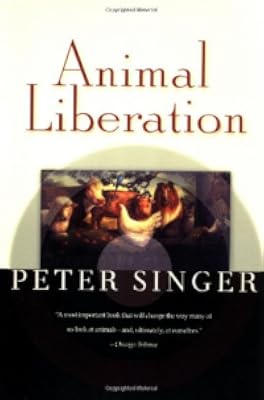
The authors argument is not so much constructed, however, as illustrated - and with devastating effect. It is true that not all of their anecdotes stand up to scrutiny, but enough hit the mark to make the point. What I particularly appreciated was their references to the work of others - most notably Goodall, Schaller and Singer. If you read this book, and then went on to look at the work of these others then you could say that you have not just dipped into this issue, but have made a serious effort to understand the issues. One of the most important questions that this book raises but does not address (and for this try Singer) is that if you accept that animals deserve respect, what form does this take in our everyday lives - how for instance should we regards factory farming? Masson and McCarthy do an excellent job of pointing the way, but if you stopped here you would have missed out on the real value of their work. Highly recommended on this basis. show less
The authors argument is not so much constructed, however, as illustrated - and with devastating effect. It is true that not all of their anecdotes stand up to scrutiny, but enough hit the mark to make the point. What I particularly appreciated was their references to the work of others - most notably Goodall, Schaller and Singer. If you read this book, and then went on to look at the work of these others then you could say that you have not just dipped into this issue, but have made a serious effort to understand the issues. One of the most important questions that this book raises but does not address (and for this try Singer) is that if you accept that animals deserve respect, what form does this take in our everyday lives - how for instance should we regards factory farming? Masson and McCarthy do an excellent job of pointing the way, but if you stopped here you would have missed out on the real value of their work. Highly recommended on this basis. show less
Once in a while, a book comes along that smacks you in the face with what you already know through common sense and intuition. This, for me, is such a book.
I've never been so close to becoming vegetarian.
I've never been so close to becoming vegetarian.
Probably one of my favorite books about the emotional side of animals. While there is bias here, to see animals as being like ourselves, there is also an understanding of the negative emotions and actions like jealousy and rape.
A truly introspective look at animals being more than just animals. It brings to light the idea that animals do not require the same intellectual potential or ability to deserve respect and consideration on par with the human animal when being scientifically studied or observed. As thought provoking as it is, the opinion of the book is not aggressive or overbearing - perfect for the individual who is new to this school of thought.
Members
- Recently Added By
Lists

Best Books About Animals
143 works; 48 members

BingoDOG - Animals in Adult Nonfiction
41 works; 7 members

Books about Animals
86 works; 4 members

Favorite Animal Non-Fiction
293 works; 144 members

GraceCollection TBR/To Buy List
106 works; 1 member
Author Information

39+ Works 4,728 Members
Jeffrey Moussaieff Masson is the author of "Dogs Never Lie About Love: Reflections on the Emotional World of Dogs"; "When Elephants Weep: The Emotional Lives of Animals"; "My Father's Guru: A Journey Through Spirituality & Disillusion"; "Final Analysis: The Making & Unmaking of a Psychoanalyst"; & "The Assault on Truth: Freud's Suppression of the show more Seduction Theory", among other books. After receiving his undergraduate degree & a Ph.D. in Sanskrit & Indian Studies from Harvard University, he completed a full clinical training program in psychoanalysis at the Toronto Psychoanalytic Institute from 1970 to 1978. Masson served for one year as Projects Director of the Sigmund Freud Archives in London. (Bowker Author Biography) show less
Jeffrey Moussaieff Masson is a LibraryThing Author, an author who lists their personal library on LibraryThing.

3+ Works 1,655 Members
Susan McCarthy holds degrees in biology and journalism, writes regularly for Salon.com, and has contributed to Best American Science Writing. She lives in San Francisco
Some Editions
Awards and Honors
Distinctions
Series
Belongs to Publisher Series
Common Knowledge
- Canonical title
- When Elephants Weep: The Emotional Lives of Animals
- Original title
- When Elephants Weep. The Emotional Lives of Animals
- Original publication date
- 1995
- Epigraph
- "The Indian elephant is said sometimes to weep."
Charles Darwin - Dedication
- For the Fu and Fiona
- First words
- Animals cry.
- Last words
- (Click to show. Warning: May contain spoilers.)Perhaps then the ancient hope for a deeper emotional connection across the species barrier, for closeness and participation in a realm of feelings now beyond our imagination, will be realized.
- Blurbers
- Montgomery, Sy; Singer, Peter
- Original language*
- English
*Some information comes from Common Knowledge in other languages. Click "Edit" for more information.
Classifications
Statistics
- Members
- 1,546
- Popularity
- 14,871
- Reviews
- 20
- Rating
- (3.69)
- Languages
- 11 — Czech, Dutch, English, Estonian, Finnish, French, German, Hungarian, Italian, Portuguese, Croatian
- Media
- Paper, Audiobook, Ebook
- ISBNs
- 29
- UPCs
- 1
- ASINs
- 9