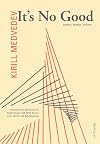
It's No Good (Eastern European Poets)
by Kirill Medvedev
On This Page
Description
Poetry. Literary Nonfiction. Translated from the Russian by Keith Gessen with Mark Krotov, Corey Mead and Bela Shayevich. Edited and introduced by Keith Gessen, IT'S NO GOOD includes selected poems from Kirill Medvedev's four books of poetry as well as his most significant essays: "My Fascism" (on the failure of post-Soviet Russian liberalism, politically and culturally); "Literature and Sincerity" (on the attractions and dangers of the "new sincerity" in Russian letters); "Dmitry Kuzmin, a show more Memoir" (a detailed memoir and analysis of the work of the 1990s Moscow poet, publisher, and impresario Kuzmin, and what his activity represents). This is Medvedev's first book in English. "Kirill Medvedev is the most exciting phenomenon in Russian poetry at the beginning of the new century. To be fair, that's not a compliment. It's a judgment. You get the sense that Medvedev has no fear, and that this fearlessness costs him nothing. Such things are rarely forgiven."—Dmitry Vodennikov show lessTags
Recommendations




Member Reviews
Notes:
- A slow devolve into the eternal resistance of shit
- Which comes from the ability only to love all of humanity, or one sexually, but nothing else
- The ideals espoused of being politically forthright with opinions and then actually sticking to them is something I preach almost daily, and something I find difficult, but rewarding and impressive to pull off
- The part where Lev Ponomaryov beats up the guy in city hall is entertaining (yeah sock it to the man Mr physicist!)
- Medvedev also fits my definition of new sincerity so I find it funny that he really hates it (however I understand his criticism of the neoliberal cult of self)
- Another artist i'm infatuated with who's completely and utterly tactless, yet convincing through show more passion (and empathy) alone (the other is Ian Mackay)
- Just finished reading this in the toilet on holiday because I've been forced into a room with my parents and I didn't want to wake them up show less
- A slow devolve into the eternal resistance of shit
- Which comes from the ability only to love all of humanity, or one sexually, but nothing else
- The ideals espoused of being politically forthright with opinions and then actually sticking to them is something I preach almost daily, and something I find difficult, but rewarding and impressive to pull off
- The part where Lev Ponomaryov beats up the guy in city hall is entertaining (yeah sock it to the man Mr physicist!)
- Medvedev also fits my definition of new sincerity so I find it funny that he really hates it (however I understand his criticism of the neoliberal cult of self)
- Another artist i'm infatuated with who's completely and utterly tactless, yet convincing through show more passion (and empathy) alone (the other is Ian Mackay)
- Just finished reading this in the toilet on holiday because I've been forced into a room with my parents and I didn't want to wake them up show less
Book containing a selection of Medvedev's poetry and short essays, in a collaborative translation by Keith Gessen, Mark Krotov, Cory Merrill and Bela Shayevich. All centre around the post-Soviet political situation in Russia and the reaction against it (of which Medvedev's writing is part). Provides an insider's view of the tensions within modern Russia and artists response to these which is only touched on simplisticly in Western media. To me the poetry is the most successful in doing this. A further aspect to the book is the author's renunciation of copyright, and this is written about too.
Quite a difficult read, but will be of great interest to followers of contemporary Russian life or international politics. Otherwise a good taster show more of these and, importantly, by a voice within the country. show less
Quite a difficult read, but will be of great interest to followers of contemporary Russian life or international politics. Otherwise a good taster show more of these and, importantly, by a voice within the country. show less
In his 2007 essay Literature Will Be Tested, Kirill Medvedev writes:
The idea that follows is that in a “normal” society, various strata would get along independently of one another: large corporations would be independent of the proletariat working in their mines and oil fields, bohemia would be independent of the large corporations whom it serves, and so forth. At the same time, nearly every person (especially every artist) wants to be considered unique, separate, independent, disconnected from conditions of, God forbid, “the relations of production.” And the most important idea of all: that the current situation, whatever you wish to call it – “celebrity culture,” “capitalism,” “the Putin regime,” and so forth show more – is total, that there is no escaping it. These ideas, which seem natural, but which date back to concrete historical conditions, explain the almost absolute hegemony of the “right” in Russian culture and politics today. These are a set of specific, deeply metaphysical ideas about the unshakable foundations of human nature. In their extreme-right, reactionary form, they are manifest in perceptions of the eternal characteristics of ethnic groups, races, nations; in their more or less liberal variant: of the irrevocable expansion of the market, which is impossible to wholly describe, to which one can only resign oneself, and within which the best one can do is find a tiny little niche.
It’s as if, within this system, the artist were indulged as a vessel for a particular kind of political innocence: this is his social role. The artist represents the idea of timeless, “apolitical” categories, of great masterpieces, of existential freedom. A poet is even freer than others, because unlike the artist, musician, or theatre director, the poet doesn’t need any capital to create works. The conditions of production are so cheap that a poet can believe his work is connected directly to the fabric of life, that it prevails over its context and circumstances. On an individual level this perfection is perfectly reasonable and can be productive. In truth, the belief that your work can escape the stagnant social fabric is very important – it is a major stimulus to the production of art.
But when one idea comes to be shared by all poets, it begins to look suspicious. Right now, not only is the idea of the “private project” shared by all poets, it is also the rallying cry of artists, critics, and other intellectuals.
Some examples of the touching innocence that characterizes our leading cultural figures illustrates this: Vyacheslav Butusov, a former star of the punk underground, expresses genuine surprise that he should be criticized for performing at a rally for “Nashi,” the Putin youth brigade; the fashionable theatre director Kirill Serebrennikov criticizes the President in Aesopian language and is simultaneously the main guide of the Kremlin’s cultural politics: he lectures under the aegis of the United Russia party.
The theatre director Alexander Kalyagin signs a letter against the imprisoned Mikhail Khodorkovsky, in exchange for which he receives a theatre in the centre of Moscow, where he will, of course, stage his incorruptible oeuvres, where he will even stage Brecht – ars longa, vita brevis!
I recently found myself puzzled by one poet and critic who wrote a sympathetic article on “leftist poets” for a pro-Kremlin website. He even expressed a kind of solidarity with the leftist poets, cheerily urging them toward direct political action! And he did this not only from the right (it would not be notable if this were in the pages of the liberal journal Znamya), but from a space that was created by the Kremlin expressly to strengthen its power via the smokescreen of “parliamentary polyphony.” When I wrote to say I was surprised, he answered” “What difference does it make where the article is published; what matters is what is written in it” – again confirming my worst fears regarding the condition of the minds of even the most advanced and talented representatives of the intelligentsia.
What motivates these people is irrelevant: whether it’s really political naïveté or just ordinary cynicism and prudence. It’s impossible to separate one from the other, and I’m not posing a question of moral judgment. Russian culture as a whole has acquired (very much at the wrong time) the possibility of palpable autonomy, and now each individual artist sincerely defends his or her innocence and independence. But it is precisely through this kind of “innocence” and “sincerity” that works of art become commodities – not because the artist believes himself a spineless, prostituted insect, ready to do anything for publicity, but for exactly the opposite reason: because he values himself and his work very highly and believes that media appearances won’t do him any harm. show less
The idea that follows is that in a “normal” society, various strata would get along independently of one another: large corporations would be independent of the proletariat working in their mines and oil fields, bohemia would be independent of the large corporations whom it serves, and so forth. At the same time, nearly every person (especially every artist) wants to be considered unique, separate, independent, disconnected from conditions of, God forbid, “the relations of production.” And the most important idea of all: that the current situation, whatever you wish to call it – “celebrity culture,” “capitalism,” “the Putin regime,” and so forth show more – is total, that there is no escaping it. These ideas, which seem natural, but which date back to concrete historical conditions, explain the almost absolute hegemony of the “right” in Russian culture and politics today. These are a set of specific, deeply metaphysical ideas about the unshakable foundations of human nature. In their extreme-right, reactionary form, they are manifest in perceptions of the eternal characteristics of ethnic groups, races, nations; in their more or less liberal variant: of the irrevocable expansion of the market, which is impossible to wholly describe, to which one can only resign oneself, and within which the best one can do is find a tiny little niche.
It’s as if, within this system, the artist were indulged as a vessel for a particular kind of political innocence: this is his social role. The artist represents the idea of timeless, “apolitical” categories, of great masterpieces, of existential freedom. A poet is even freer than others, because unlike the artist, musician, or theatre director, the poet doesn’t need any capital to create works. The conditions of production are so cheap that a poet can believe his work is connected directly to the fabric of life, that it prevails over its context and circumstances. On an individual level this perfection is perfectly reasonable and can be productive. In truth, the belief that your work can escape the stagnant social fabric is very important – it is a major stimulus to the production of art.
But when one idea comes to be shared by all poets, it begins to look suspicious. Right now, not only is the idea of the “private project” shared by all poets, it is also the rallying cry of artists, critics, and other intellectuals.
Some examples of the touching innocence that characterizes our leading cultural figures illustrates this: Vyacheslav Butusov, a former star of the punk underground, expresses genuine surprise that he should be criticized for performing at a rally for “Nashi,” the Putin youth brigade; the fashionable theatre director Kirill Serebrennikov criticizes the President in Aesopian language and is simultaneously the main guide of the Kremlin’s cultural politics: he lectures under the aegis of the United Russia party.
The theatre director Alexander Kalyagin signs a letter against the imprisoned Mikhail Khodorkovsky, in exchange for which he receives a theatre in the centre of Moscow, where he will, of course, stage his incorruptible oeuvres, where he will even stage Brecht – ars longa, vita brevis!
I recently found myself puzzled by one poet and critic who wrote a sympathetic article on “leftist poets” for a pro-Kremlin website. He even expressed a kind of solidarity with the leftist poets, cheerily urging them toward direct political action! And he did this not only from the right (it would not be notable if this were in the pages of the liberal journal Znamya), but from a space that was created by the Kremlin expressly to strengthen its power via the smokescreen of “parliamentary polyphony.” When I wrote to say I was surprised, he answered” “What difference does it make where the article is published; what matters is what is written in it” – again confirming my worst fears regarding the condition of the minds of even the most advanced and talented representatives of the intelligentsia.
What motivates these people is irrelevant: whether it’s really political naïveté or just ordinary cynicism and prudence. It’s impossible to separate one from the other, and I’m not posing a question of moral judgment. Russian culture as a whole has acquired (very much at the wrong time) the possibility of palpable autonomy, and now each individual artist sincerely defends his or her innocence and independence. But it is precisely through this kind of “innocence” and “sincerity” that works of art become commodities – not because the artist believes himself a spineless, prostituted insect, ready to do anything for publicity, but for exactly the opposite reason: because he values himself and his work very highly and believes that media appearances won’t do him any harm. show less
891.785 M493i 2016
Ratings
Members
- Recently Added By
Lists

Russian Literature
184 works; 35 members

Disco Elysium
19 works; 1 member
Author Information
4+ Works 58 Members
Classifications
- Genre
- Poetry
- DDC/MDS
- 327.47009051 — Social sciences Political science International Relations Europe Russia and Eastern Europe
- LCC
- PG3492.76 .E38 .I87 — Language and Literature Slavic languages and literatures. Baltic languages. Albanian language Slavic. Baltic. Albanian Russian literature Individual authors and works 2001-
- BISAC
Statistics
- Members
- 54
- Popularity
- 561,488
- Reviews
- 4
- Rating
- (3.13)
- Languages
- Dutch, English
- Media
- Paper, Ebook
- ISBNs
- 5
- ASINs
- 3