On This Page
Description
Laura Elizabeth Howe Richards (1850-1943) was born in Boston, Massachusetts, to a high-profile family. During her life, she wrote over 90 books, including children's, biographies, poetry, and others. A well-known children's poem for which she is noted is the literary nonsense verse Eletelephony. In 1917, she won a Pulitzer Prize for The Life of Julia Ward Howe, a biography, which she coauthored with her sister, Maud Howe Elliott. Among her most famous works are: Queen Hildegarde (1889), show more Captain January (1890), Melody (1893), Marie (1894), Hildegarde's Neighbors (1895), Nautilus (1895), Three Margarets (1897), Geoffrey Strong (1901), The Green Satin Gown (1903) and The Silver Crown: Another Book of Fables (1906). show lessTags
Member Reviews
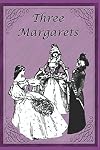
Originally published in 1897, Three Margarets was the first book in Laura E. Richards Margaret Series, about three young cousins, all named Margaret Montfort. When the "three Margarets" came to stay at Fernley House, their Uncle John's home on Long Island, they found themselves enjoying an unsupervised summer, slowly becoming acquainted with one another. Margaret was a true "Northerner," with her quiet, bookish ways; and she was also very, very good. Rita was fiery, dramatic, and terribly aristocratic, proud of her royal Spanish blood, inherited from her Cuban mother. Peggy was sweet but awkward, physically courageous but mentally timid, a true daughter of the western prairie.
All three had much to learn, and the slow process whereby show more they all became friends, mirrored their growth in wisdom and understanding. I found this a wonderful, engaging and entertaining read, and I am thankful to my friend Constance for suggesting it. I cared about all three of the "Margarets," despite my impatience with (and occasional amusement at) Rita, and did not think the story was overwhelmed by too strong a moralistic tone, as is sometimes the case with Victorian literature of this kind. The moments of light-hearted fun, as when the girls play "dress up" with all the beautiful costumes up in the garret, are nicely balanced with the moments of truth, when each much confront and vanquish her prejudices. I finished Three Margarets with a real feeling of satisfaction, and immediately longed to read the next in the series...
Addendum: Having recently read Laura E. Richards' five-volume Hildegarde Series, beginning with Queen Hildegarde: A Story for Girls, I've been meaning to move on to the Margaret Series, which apparently is connected in some way to the Hildegarde books, and thought I'd begin by rereading Three Margarets. I found it just as charming as the first time around, and was (once again) instantly involved in the story, from the opening scene in which the three cousins approach Fernley House through the rain. I was struck, in this rereading, by some of the stereotypes surrounding the depiction of Rita - the "slowness" of people with Spanish blood (their desire for naps!), and their passionate excitability - and by the importance of the issue of Cuban independence, something that, given the publication date (1897, with the Spanish-American War just around the corner), would have been quite current. Fascinating stuff, to see the political and cultural currents of the day reflected in this sweet girls' story. And now, on to Margaret Montfort! show less
All three had much to learn, and the slow process whereby show more they all became friends, mirrored their growth in wisdom and understanding. I found this a wonderful, engaging and entertaining read, and I am thankful to my friend Constance for suggesting it. I cared about all three of the "Margarets," despite my impatience with (and occasional amusement at) Rita, and did not think the story was overwhelmed by too strong a moralistic tone, as is sometimes the case with Victorian literature of this kind. The moments of light-hearted fun, as when the girls play "dress up" with all the beautiful costumes up in the garret, are nicely balanced with the moments of truth, when each much confront and vanquish her prejudices. I finished Three Margarets with a real feeling of satisfaction, and immediately longed to read the next in the series...
Addendum: Having recently read Laura E. Richards' five-volume Hildegarde Series, beginning with Queen Hildegarde: A Story for Girls, I've been meaning to move on to the Margaret Series, which apparently is connected in some way to the Hildegarde books, and thought I'd begin by rereading Three Margarets. I found it just as charming as the first time around, and was (once again) instantly involved in the story, from the opening scene in which the three cousins approach Fernley House through the rain. I was struck, in this rereading, by some of the stereotypes surrounding the depiction of Rita - the "slowness" of people with Spanish blood (their desire for naps!), and their passionate excitability - and by the importance of the issue of Cuban independence, something that, given the publication date (1897, with the Spanish-American War just around the corner), would have been quite current. Fascinating stuff, to see the political and cultural currents of the day reflected in this sweet girls' story. And now, on to Margaret Montfort! show less
Ratings
Members
- Recently Added By
Author Information

88+ Works 807 Members
Some Editions
Series

Common Knowledge
- Original publication date
- 1897
- People/Characters
- Margaret Montfort; Peggy Montfort; Rita Montfort; John Strong Montfort; Carlos Montfort
- Important places
- Long Island, New York, USA
- Important events
- Cuban Revolution
- First words
- Long ago and long ago,
And long ago still, There dwelt three merry maidens
Upon a distant hill.
CHRISTINA G. ROSSETTI.
THE rain was falling fast. - Last words
- (Click to show. Warning: May contain spoilers.)But Uncle John had only one word to say, and that was the one word of an old song that he loved, and that his mother had sung to him when he was a little lad in the nursery:
"Weel I ken my ain lassie;
Kind love is in her e'e!"
Classifications
Statistics
- Members
- 17
- Popularity
- 1,449,121
- Reviews
- 1
- Rating
- (4.00)
- Languages
- English
- Media
- Paper, Ebook
- ISBNs
- 4
- ASINs
- 1