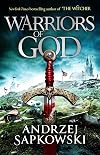
On This Page
Description
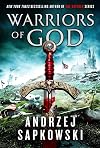
Forced to come out of hiding, Reynevan, while on a dangerous secret mission for the Hussite leaders, uses this opportunity to avenge the death of his brother and discover the whereabouts of his beloved.Tags
Recommendations






















Member Reviews
Reynevan is firmly on the Hussite side as war ravages Silesia. The Wallcreeper is still after him and his companions while he looks to avenge his brother and find his lost love.
I'm enjoying this series, a part of history I knew nothing about. Sapkowski injects some fantasy but relies mostly on actual events and references. I really like Reynevan, a very different character from Geralt of Rivia. Most of the other characters are interesting and diverse, though there are a lot of named minor characters (much like Robert Jordan) that can make it confusing, especially when one is not used to Polish/Slavic names. But the pacing is good except for a slow and confusing bit at the very beginning. I can't wait to read the final book in the series.
I'm enjoying this series, a part of history I knew nothing about. Sapkowski injects some fantasy but relies mostly on actual events and references. I really like Reynevan, a very different character from Geralt of Rivia. Most of the other characters are interesting and diverse, though there are a lot of named minor characters (much like Robert Jordan) that can make it confusing, especially when one is not used to Polish/Slavic names. But the pacing is good except for a slow and confusing bit at the very beginning. I can't wait to read the final book in the series.
I enjoyed the Warriors of God a lot more then the first book in the series, Narrenturm.
Good action, interesting twists and vivid characters, and all in all, for me personally, it wasn't dragging like the Narrenturm.
At first we find ourselves in Prague in 1427 where the Hussites quietly prepare for war with the papists and Reynevan learns couple of new magic tricks. We then follow the characters to Silesia to witness the nasty war at its full and watch Reynevan being forced to fight for his lovely Nicoletta.
A good read altogether, can't wait to start reading the third one in the series.
Good action, interesting twists and vivid characters, and all in all, for me personally, it wasn't dragging like the Narrenturm.
At first we find ourselves in Prague in 1427 where the Hussites quietly prepare for war with the papists and Reynevan learns couple of new magic tricks. We then follow the characters to Silesia to witness the nasty war at its full and watch Reynevan being forced to fight for his lovely Nicoletta.
A good read altogether, can't wait to start reading the third one in the series.
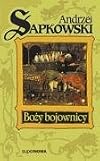
Rok nastał Pański 1427. Pamiętacie co przyniósł? Wiosną wonczas, ogłosił papież Marcin V bullę Salvatoris omnium, w której konieczność kolejnej krucjaty przeciw Czechom kacerzom proklamował. W miejsce Orsiniego, który leciwy był i haniebnie nieudolny, obwołał papa Marcin kardynałem i legatem Henryka Beauforta. Beaufort aktywnie bardzo sprawy się ujął. Wnet krucjatę postanowiono, która mieczem i ogniem husyckich apostatów pokarać miała. Gorące, skwarne było lato roku 1427. A co, pytacie na to Boży bojownicy? Cóż, kontynuują oni swoją misję. Po rejzach ich oddziałów pozostają jeno zgliszcza i trupy. Reynevan, medyk z wykształcenia i powołania, bierze udział w krwawych bitwach. Jest wielokrotnie show more brany w niewolę, ale ze wszystkich opresji wychodzi cało. Z zadziwiającą gorliwością nastają na niego wszyscy: i Inkwizycja, i złowrogi Pomurnik, i pospolici raubritterzy, których nikt nie przekona, że Reynevan nie miał nic wspólnego z napadem na wiozącego znaczną sumę pieniędzy poborcę podatków. A także wyjątkowo nań zawzięty Jan von Biberstein, pan na zamku Stolz, obwiniający Reynevana o zniewolenie jego córki. Pan Jan obiecuje, że napcha gwałciciela prochem i wystrzeli w powietrze. U boku Bożych bojowników Reynevan walczy za prawdziwą wiarę, mści się za doznane krzywdy, i odnajduje wreszcie miłość swego życia. show less
Aug 9, 2006Polish
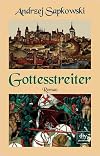
Corre el año de 1427 y los herejes husitas asentados en Praga libran batalla tras batalla contra las tropas de la Iglesia de Roma, venciendo una y otra vez. La rebelión husita es también una revolución social contra el clero y la nobleza, de ahí que los nobles de Silesia, Lausacia y Bohemia intenten destruirlos por todos los medios. La Inquisición tiene sus espías por doquier, como también los tienen el obispo de Wroclaw y sus misteriosos asesinos negros. Para preparar la invasión de Silesia, los líderes husitas resucitan una oscura red de espionaje que saboteará y asesinará en nombre de la causa. La guerra extiende sus alas por el corazón de Europa.
Jan 27, 2023Spanish
Ratings
Members
- Recently Added By
Lists

Library Fantasy/Science Fiction
159 works; 2 members
Author Information

121+ Works 43,562 Members
Andrzej Sapkowski is a fantasy writer, economist, and translator, he wrote the best-selling book series The Witcher and recently wrote the best-selling book, Lady of the Lake. In 2018 his title, Season of Storms, made the bestseller list. (Bowker Author Biography)
Some Editions
Awards and Honors
Awards
Series

Work Relationships
Common Knowledge
- Canonical title
- Warriors of God
- Original title
- Boży bojownicy
- Original publication date
- 2004
- People/Characters
- Reynevan (Reinmar z Bielawy); Szarlej; Samson Miodek; Urban Horn; Neplach; Tybald Raabe
- Important places
- Prague, Czech Republic; Stolz Castle, Silesia, Poland; Bolkow, Poland
- First words
- Ihr lacht? Weil ich, wie es scheint, Unsinn rede?
"Swiat, cni panowie, ostatnimi czasy wzial sie nam i zwiekszyl. A i zmalal zarazem. Smiejecie sie? Ze niby bzdury plote? Ze jedno drugiemu przeczy? Wnet wam dowiode, ze bynajmniej." [POL] - Quotations
- "Nim prawda buty wzuje, klamstwo pol swiata przebiezy [...]"
- Last words*
- (Click to show. Warning: May contain spoilers.)Und noch viel Schlimmeres. ENDE DES ZWEITEN BANDES
*Some information comes from Common Knowledge in other languages. Click "Edit" for more information.
Classifications
- Genres
- Fiction and Literature, Fantasy, General Fiction, Historical Fiction
- DDC/MDS
- 891.8 — Literature & rhetoric Literatures of other languages East Indo-European and Celtic literatures West and South Slavic languages (Bulgarian, Slovene, Polish, Czech, Slovak, Serbo-Croatian, and Macedonian)
- LCC
- PG7178 .A65 .B69 — Language and Literature Slavic languages and literatures. Baltic languages. Albanian language Slavic. Baltic. Albanian Slavic Polish
- BISAC
Statistics
- Members
- 376
- Popularity
- 83,380
- Reviews
- 4
- Rating
- (4.15)
- Languages
- 11 — Czech, English, Finnish, French, German, Hungarian, Polish, Russian, Serbian, Slovak, Spanish
- Media
- Paper, Audiobook, Ebook
- ISBNs
- 29
- ASINs
- 6