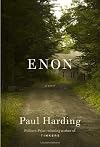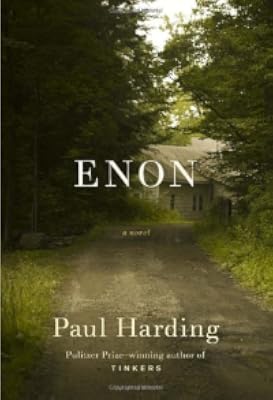
Enon
by Paul Harding
On This Page
Description
NAMED ONE OF THE BEST NOVELS OF THE YEAR BYThe Wall Street Journal • American Library Association • Kirkus Reviews
A stunning allegorical novel about one man’s enduring love for his daughter
In Enon, Paul Harding follows a year in the life of Charlie Crosby as he tries to come to terms with a shattering personal tragedy. Grandson of George Crosby (the protagonist of Tinkers), Charlie inhabits the same dynamic landscape of New England, its seasons mirroring his turbulent emotional show more odyssey. Along the way, Charlie’s encounters are brought to life by his wit, his insights into history, and his yearning to understand the big questions. A stunning mosaic of human experience, Enon affirms Paul Harding as “a contemporary master and one of our most important writers” (Publishers Weekly, starred review).
Look for special features inside. Join the Random House Reader’s Circle for author chats and more.
“Harding conveys the common but powerful bond of parental love with devastating accuracy. . . . [He] is a major voice in American fiction.”—Chicago Tribune
“Paul Harding’s novel Tinkers won the Pulitzer Prize; its stunning successor, Enon, only raises the bar.”—O: The Oprah Magazine
“Extraordinary . . . a darkly intoxicating read . . . [Harding’s] prose is steeped in a visionary, transcendentalist tradition that echoes Blake, Rilke, Emerson, and Thoreau.”—The New Yorker
“So wild and riveting it’s practically an aria . . . Harding is a superb stylist.”—Entertainment Weekly
“[Charlie’s grief], shaped by a gifted writer’s caressing attention, can bring about moments of what Charlie calls ‘brokenhearted joy.’”—The Wall Street Journal
“Astonishing . . . a work of fiction that feels authentic as memoir.”—Financial Times
“Read Enon to live longer in the harsh, gorgeous atmosphere that Paul Harding has created.”—San Francisco Chronicle. show less
Tags
Recommendations



Member Reviews
As I set out to write about this book, I fear that I don't have the time or brain cells currently to really do this five-star book justice, but it must be done, hopefully you'll be able to pull some useful things from it.
I loved Harding's [Tinkers] for so many reasons. I know many were less enthralled. Most were put off by its densely lyrical prose style which I though worked wonderfully for a story about time (and clocks, with their mechanics and regular ticking), and such a sense of place. Enon, a story of grief, not as densely lyrical as Tinkers is, but still beautifully written, and a tad longer than his previous book at 238 pages.
Enon tells us the story of Charlie Crosby (grandson of the Tinkers character) and his journey into show more grief after the death of his beloved 13-year-old daughter and only child. He and his wife separate soon after. Charlie immerses himself in his memories, both of his daughter and his growing up in the town of Enon. Enon (a fictional town on the north shore of Massachusetts, north of Boston, in the area where Harding grew up), I think, is another very vivid character in the story.
Charlie's memories are mostly affectionate ones, but as he swims in his river of grief, he begins to drown, and his memories get mixed in with his drug-induced dreams. This is, yes, a sad, reflective story, but not a morose or depressing one. Ultimately, it is a powerful, uplifting story about the resilience of the human spirit. Charlie's journey, his wrestling with grief, is like an epic story where the hero must descend to some level of Hades before returning to the land of the living—and we all go with him. show less
I loved Harding's [Tinkers] for so many reasons. I know many were less enthralled. Most were put off by its densely lyrical prose style which I though worked wonderfully for a story about time (and clocks, with their mechanics and regular ticking), and such a sense of place. Enon, a story of grief, not as densely lyrical as Tinkers is, but still beautifully written, and a tad longer than his previous book at 238 pages.
Enon tells us the story of Charlie Crosby (grandson of the Tinkers character) and his journey into show more grief after the death of his beloved 13-year-old daughter and only child. He and his wife separate soon after. Charlie immerses himself in his memories, both of his daughter and his growing up in the town of Enon. Enon (a fictional town on the north shore of Massachusetts, north of Boston, in the area where Harding grew up), I think, is another very vivid character in the story.
Charlie's memories are mostly affectionate ones, but as he swims in his river of grief, he begins to drown, and his memories get mixed in with his drug-induced dreams. This is, yes, a sad, reflective story, but not a morose or depressing one. Ultimately, it is a powerful, uplifting story about the resilience of the human spirit. Charlie's journey, his wrestling with grief, is like an epic story where the hero must descend to some level of Hades before returning to the land of the living—and we all go with him. show less
Charlie’s daughter, Katie, was killed in a bicycle accident. Overcome with grief, he lets it take over. His wife goes to visit family and never returns. Charlie’s slide into the dark world of depression is aided by prescription pain pills. As I read it, I kept thinking this is how it happens to an ordinary person. I understand now how drug dependency happens. Harding’s writing is so precise I can smell Charlie’s unwashed body, vividly see the tomb-like house he has sealed himself in except for midnight rambles in the cemetery. I wanted to cry out and stop him when he was so desperate for drugs he robbed people. The plot? There is none. You read this book because the writing pulls you in emotionally. You know it could happen to you.
Most men in my family make widows of their wives and orphans of their children. I am the exception. My only child, Kate, was struck and killed by a car while riding her bicycle home from the beach one afternoon in September a year ago. She was thirteen. My wife, Susan, and I separated soon afterward. – opening paragraph of Enon -
Charlie Crosby, grandson of George Crosby (the protagonist of Paul Harding’s debut novel Tinkers), is living in New England, enjoying his life with his only child, Kate. They take walks, bike rides, feed birds from their bare hands, putter around at yard sales, and share an idyllic existence in a rural town. And then one day, Kate climbs on her bike and rides away…and never comes home again. Charlie is show more left reeling and grief stricken. He closes down, pushes his wife Susan away (literally) and sinks into a drunken, drug-fueled emptiness.
What could I say? What word could I utter into that rushing silence that would change things, that would bring Susan back to Enon, that would bring Kate back to both of us? – from Enon -
Enon is Charlie’s journey through the painful year following his daughter’s death. Eloquently written, difficult to read without sadness, and beautifully observed, the novel examines grief, despair, redemption, and how the passage of time can bring about the slow process of healing from loss.
The old air fell out of the clock, dry, held in the cubic shape of the case for who knows how many years until I opened the door and it collapsed out into the contemporary atmosphere, distinct and nearly colonial for a moment and then subsumed, and I wondered how old it was, if it contained any of Simon Willard’s breath. - from Enon -
Paul Harding’s work is meditative and meticulously penned. It is filled with the quiet observation of nature, the passage of the seasons, and the limits of memory.
Memories of her feeding the birds and practicing running and playing cribbage were not enough. I was ravenous for my child and took to gorging myself in the boneyard, hoping that she might meet me halfway, or just beyond, one night, if only for an instant – step back into her own bare feet, onto the wet grass or fallen leaves or snowy ground of the living Enon, so that we could share just one last human word. – from Enon -
Enon is almost unbearably sad and despairing at times…a painful journey through a parent’s worst nightmare. And yet, Harding does not leave the reader bereft. He finds room for hope and healing in the face of terrible loss. He allows his character room for redemption.
As with his highly successful novel, Tinkers, Harding offers deep insight into the passage of time, loss, and the importance of family. This is a highly literary work of fiction, one which allows the reader to profoundly feel the emotions of its protagonist. Readers who enjoy literary fiction which is lyrical and introspective, will want to read Harding’s sophomore effort.
Highly recommended. show less
Charlie Crosby, grandson of George Crosby (the protagonist of Paul Harding’s debut novel Tinkers), is living in New England, enjoying his life with his only child, Kate. They take walks, bike rides, feed birds from their bare hands, putter around at yard sales, and share an idyllic existence in a rural town. And then one day, Kate climbs on her bike and rides away…and never comes home again. Charlie is show more left reeling and grief stricken. He closes down, pushes his wife Susan away (literally) and sinks into a drunken, drug-fueled emptiness.
What could I say? What word could I utter into that rushing silence that would change things, that would bring Susan back to Enon, that would bring Kate back to both of us? – from Enon -
Enon is Charlie’s journey through the painful year following his daughter’s death. Eloquently written, difficult to read without sadness, and beautifully observed, the novel examines grief, despair, redemption, and how the passage of time can bring about the slow process of healing from loss.
The old air fell out of the clock, dry, held in the cubic shape of the case for who knows how many years until I opened the door and it collapsed out into the contemporary atmosphere, distinct and nearly colonial for a moment and then subsumed, and I wondered how old it was, if it contained any of Simon Willard’s breath. - from Enon -
Paul Harding’s work is meditative and meticulously penned. It is filled with the quiet observation of nature, the passage of the seasons, and the limits of memory.
Memories of her feeding the birds and practicing running and playing cribbage were not enough. I was ravenous for my child and took to gorging myself in the boneyard, hoping that she might meet me halfway, or just beyond, one night, if only for an instant – step back into her own bare feet, onto the wet grass or fallen leaves or snowy ground of the living Enon, so that we could share just one last human word. – from Enon -
Enon is almost unbearably sad and despairing at times…a painful journey through a parent’s worst nightmare. And yet, Harding does not leave the reader bereft. He finds room for hope and healing in the face of terrible loss. He allows his character room for redemption.
As with his highly successful novel, Tinkers, Harding offers deep insight into the passage of time, loss, and the importance of family. This is a highly literary work of fiction, one which allows the reader to profoundly feel the emotions of its protagonist. Readers who enjoy literary fiction which is lyrical and introspective, will want to read Harding’s sophomore effort.
Highly recommended. show less
 This review was written for LibraryThing Early Reviewers.
It is often said that no parent should outlive their child. When Charlie Cosby's daughter, Kate, is killed in a car accident, his life spirals into, first anger, then depression and addiction. His days are spent passed out on the couch and his nights are spent either seeking more drugs or sitting by his daughter's grave.
Enon was not an easy book to read. Author Paul Harding takes us through every drug induced dream, every humiliating encounter as Charlie seeks to deaden his grief. Like an alcoholic, Charlie must hit rock bottom before he can reach acceptance and begin to heal. But, like the addict he has become, there is nothing too low, too embarrassing, too sad he won't do to get his fix. Yet, all the drugs, the alcohol, the show more self-pity, nothing even begins to touch his grief.
I can't say I liked this book. In fact, it's not really the type of book you are supposed to like. I did, however, appreciate author Harding's descriptions of the five stages of grief and how debilitating it can be. He doesn't shy away from the realities of grief; in fact, he makes the reader wallow in it. He makes it clear that grief doesn't create heros and martyrs; it creates emotional cripples and, no matter what face is shown to the public, real grief is soggy and pathetic and more than a little self-involved. Too often, novels about grief show people who bravely soldier on keeping their feelings hidden, sort of like the way we really prefer people to act in real life and, despite our best intentions and if we're being completely honest, we all find open displays of grief a bit embarrassing, kind of like watching a drunk try to eat soup. If you're going to do it, have the courtesy to do it in the privacy of your own home where you are responsible for your own messes. And just like we want grieving people to just get over it and move on, it's hard not to feel like that towards Charlie. The reader quickly loses patience with him, finds him tiresome, selfish, and self-pitying. We want him to move on or at least show some self-restraint for our sake if not for his own.
For the most part, I found Harding's writing beautiful, almost poetic. However, there are times, especially when Charlie imagines his daughter during his many drug-induced musings, when the writing seems overwrought, over-the-top, and overly stylized. Certainly it allows the reader to better experience the effects of Charlie's opium dreams but, after awhile, it was just as mind numbing for me as it was supposed to be for Charlie. I suspect that was the intention but knowing this didn't make it easier to wade through.
Despite this criticism, I found Enon one of the best novels about grief I have ever read. And although this is a fairly short book, it is definitely not an easy read. Grief is a part of our existence, part of what makes us human but it's rare to see it portrayed with such honesty. No, I didn't really like this book but it will be a long time before I forget it. show less
Enon was not an easy book to read. Author Paul Harding takes us through every drug induced dream, every humiliating encounter as Charlie seeks to deaden his grief. Like an alcoholic, Charlie must hit rock bottom before he can reach acceptance and begin to heal. But, like the addict he has become, there is nothing too low, too embarrassing, too sad he won't do to get his fix. Yet, all the drugs, the alcohol, the show more self-pity, nothing even begins to touch his grief.
I can't say I liked this book. In fact, it's not really the type of book you are supposed to like. I did, however, appreciate author Harding's descriptions of the five stages of grief and how debilitating it can be. He doesn't shy away from the realities of grief; in fact, he makes the reader wallow in it. He makes it clear that grief doesn't create heros and martyrs; it creates emotional cripples and, no matter what face is shown to the public, real grief is soggy and pathetic and more than a little self-involved. Too often, novels about grief show people who bravely soldier on keeping their feelings hidden, sort of like the way we really prefer people to act in real life and, despite our best intentions and if we're being completely honest, we all find open displays of grief a bit embarrassing, kind of like watching a drunk try to eat soup. If you're going to do it, have the courtesy to do it in the privacy of your own home where you are responsible for your own messes. And just like we want grieving people to just get over it and move on, it's hard not to feel like that towards Charlie. The reader quickly loses patience with him, finds him tiresome, selfish, and self-pitying. We want him to move on or at least show some self-restraint for our sake if not for his own.
For the most part, I found Harding's writing beautiful, almost poetic. However, there are times, especially when Charlie imagines his daughter during his many drug-induced musings, when the writing seems overwrought, over-the-top, and overly stylized. Certainly it allows the reader to better experience the effects of Charlie's opium dreams but, after awhile, it was just as mind numbing for me as it was supposed to be for Charlie. I suspect that was the intention but knowing this didn't make it easier to wade through.
Despite this criticism, I found Enon one of the best novels about grief I have ever read. And although this is a fairly short book, it is definitely not an easy read. Grief is a part of our existence, part of what makes us human but it's rare to see it portrayed with such honesty. No, I didn't really like this book but it will be a long time before I forget it. show less
A father attempts to cope with the accidental death of his 13-year-old daughter by roaming the fields, streets and cemeteries of his home town, fueled almost entirely by caffeine, nicotine and a vicious cocktail of painkillers, muscle relaxants, Valium and unnamed stuff scrounged from various sources. He suffers hangovers, blackouts, strange dreams/visions, and unrelenting guilt as he pushes himself ever closer to the boundary between the living and the dead, but he also remembers vividly his daughter's joyful life, his own untroubled childhood and the satisfaction of jobs well done. His brief and infrequent interactions with other human beings in the classic New England town of Enon keep him from teetering over the edge until he can show more get a grip and choose to go on living. As the friend who sent this book to me said, "Sad, but not depressing". show less
Charlie grieves over his loss self-destructively. Harding's descriptions of Charlie's rich imaginings and dreams of complex scenarios of Kate are superb. As a parent I felt frightened and stunned by the pain of the tragedy, and uncomfortably voyeuristic witnessing Charlie's continuous plummeting into the deepest wells of grief and destruction.
I couldn't help but wonder how and why he could so quickly write Susan out of his life. Wouldn't it have been better if they grieved together?
I couldn't help but wonder how and why he could so quickly write Susan out of his life. Wouldn't it have been better if they grieved together?
This review was written for LibraryThing Early Reviewers.I'm familiar with experiencing personal, heart rending loss, but less familiar with allowing that to let oneself fall into a terrible downward spiral that is this novel's main line. This book was a hard read. Perhaps that speaks to the writer's skill and integrity. Harding is a master with word choice, with verbs that pick and poke and stick, with lengthy, exploratory sentences, with a page or two trailing into dense and detailed imagining. Still this was a hard book to read. The downward spiral seemed of infinite depth, much of it anchored in life of the mind, imagination, dream, hallucination, drugs, and addiction. At times I was anxious to get back to some facts, some open-eyed, in the daylight events, to have the story move forward. show more I even skimmed through some of the lengthy hallucinatory pages, and considered putting the book down long before finishing. But the book never lost touch with its center. I was happy that I stuck it out. But this book was a hard read. show less
Members
- Recently Added By
Lists

2014 Notable Books for Adults
26 works; 5 members
Kirkus Reviews Best Fiction of 2013
99 works; 6 members
Author Information

3 Works 5,560 Members
Paul Harding has an MFA from the Iowa Writers' Workshop and teaches creative writing at Harvard. He lives in Georgetown, Massachusetts.
Awards and Honors
Awards
Common Knowledge
- Canonical title
- Enon
- Original title
- Enon
- Original publication date
- 2013-09
- People/Characters
- Charlie Crosby; Susan Crosby; Kate Crosby
- First words
- Most men in my family make widows of their wives and orphans of their children.
Classifications
Statistics
- Members
- 525
- Popularity
- 57,044
- Reviews
- 83
- Rating
- (3.33)
- Languages
- 7 — Czech, Danish, Dutch, English, French, Italian, Polish
- Media
- Paper, Audiobook, Ebook
- ISBNs
- 23
- UPCs
- 1
- ASINs
- 6