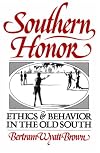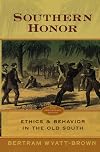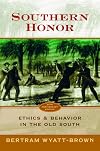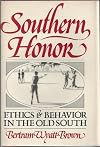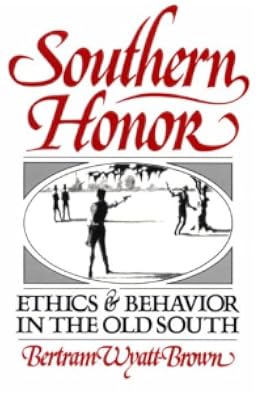
Southern Honor: Ethics and Behavior in the Old South
by Bertram Wyatt-Brown
On This Page
Description
The first edition of 'Southern Honor' changed our understanding of the antebellum South, revealing how Southern men adopted an ancient honor code that shaped their society from top to bottom. Using legal documents, letters, diaries, and newspaper columns, Wyatt-Brown offers fascinating examples to illuminate the dynamics of Southern life.Tags
Recommendations













Member Reviews
Bertram Wyatt-Brown’s Southern Honor: Ethics and Behavior in the Old South explores Southerners’ understandings of honor and how that affected their lives and society. The book speaks to cultural history and draws upon the work of anthropologists such as Julian Pitt-Rivers and sociological studies, particularly the theories of Emile Durkheim.
Wyatt-Brown argues, “Honor served all members of society in a world of chronic mistrust, particularly so at times of crises, great or small” (pg. xxxv). Wyatt-Brown organizes his monograph and Southern society into three overarching topics: origins and definitions of honor, family and gender behavior, and structures of rivalry and social control. His focus on the origins of honor reaches show more back to ancient Rome and Germanic tribes as well as English and Celtic traditions. Discussing the fundamental role of honor, Wyatt-Brown writes, “At the heart of honor…lies the evaluation of the public” (pg. 14). He identifies three essential components to honor in the form of self-worth, public vindication of that worth, and reputation (pg. 14). These concepts drive his argument as he moves through each section in his monograph.
In his discussion of gender, Wyatt-Brown links honor directly to patriarchy. The family served as a physical manifestation in the world. Wyatt-Brown writes, “Reverence for parents was a classless ideal. Few questioned the right of fathers to demand instant, outward deference” (pg. 147). Society at large, and politics specifically, replicated this system. Wyatt-Brown writes, “The occupation of politics had a familial, closed character no less than banking. A young aspirant for office almost had to have a large and strategically placed set of kinfolks” (pg. 184). This section primarily serves to set up his final chapter, about the Foster family in Natchez, Mississippi, in which a man killed his wife. Wyatt-Brown would have benefitted from advancing this case study in his monograph and investigating issues as they arose. This may also have saved him from his overuse of Freud’s theories, which no longer work in psychology.
Finally, dueling plays a key role in Wyatt-Brown’s discussion of public honor. He writes that dueling “was alleged to be a defense of personal honor. Actually, that honor was little more than the reflection of what the community judged a man to be” (pg. 350). Wyatt-Brown works to counter the misconception of the duel as a breach in social etiquette, continuously returning to the rules and structure of the event. Unlike a feud, which may ravage a community, Wyatt-Brown writes, “duels…provided structure and ritual” (pg. 352). They also circumscribed social ranks and reinforced the hierarchy of the South, further affirming Wyatt-Brown’s claim that honor was a public system.
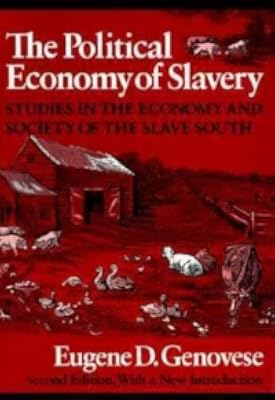
Wyatt-Brown draws upon Carroll Smith-Rosenberg and Mary Beth Norton for his discussion of gender. When discussing slavery, he makes extensive use of Eugene Genovese and often interprets chattel slavery through the lens of paternalism, especially in his explanation of slaves as an extension of the master’s family. Wyatt-Brown’s discussion of dueling draws upon Dickson D. Bruce’s 1979 monograph Violence and culture in the Antebellum South. show less
Wyatt-Brown argues, “Honor served all members of society in a world of chronic mistrust, particularly so at times of crises, great or small” (pg. xxxv). Wyatt-Brown organizes his monograph and Southern society into three overarching topics: origins and definitions of honor, family and gender behavior, and structures of rivalry and social control. His focus on the origins of honor reaches show more back to ancient Rome and Germanic tribes as well as English and Celtic traditions. Discussing the fundamental role of honor, Wyatt-Brown writes, “At the heart of honor…lies the evaluation of the public” (pg. 14). He identifies three essential components to honor in the form of self-worth, public vindication of that worth, and reputation (pg. 14). These concepts drive his argument as he moves through each section in his monograph.
In his discussion of gender, Wyatt-Brown links honor directly to patriarchy. The family served as a physical manifestation in the world. Wyatt-Brown writes, “Reverence for parents was a classless ideal. Few questioned the right of fathers to demand instant, outward deference” (pg. 147). Society at large, and politics specifically, replicated this system. Wyatt-Brown writes, “The occupation of politics had a familial, closed character no less than banking. A young aspirant for office almost had to have a large and strategically placed set of kinfolks” (pg. 184). This section primarily serves to set up his final chapter, about the Foster family in Natchez, Mississippi, in which a man killed his wife. Wyatt-Brown would have benefitted from advancing this case study in his monograph and investigating issues as they arose. This may also have saved him from his overuse of Freud’s theories, which no longer work in psychology.
Finally, dueling plays a key role in Wyatt-Brown’s discussion of public honor. He writes that dueling “was alleged to be a defense of personal honor. Actually, that honor was little more than the reflection of what the community judged a man to be” (pg. 350). Wyatt-Brown works to counter the misconception of the duel as a breach in social etiquette, continuously returning to the rules and structure of the event. Unlike a feud, which may ravage a community, Wyatt-Brown writes, “duels…provided structure and ritual” (pg. 352). They also circumscribed social ranks and reinforced the hierarchy of the South, further affirming Wyatt-Brown’s claim that honor was a public system.
Wyatt-Brown draws upon Carroll Smith-Rosenberg and Mary Beth Norton for his discussion of gender. When discussing slavery, he makes extensive use of Eugene Genovese and often interprets chattel slavery through the lens of paternalism, especially in his explanation of slaves as an extension of the master’s family. Wyatt-Brown’s discussion of dueling draws upon Dickson D. Bruce’s 1979 monograph Violence and culture in the Antebellum South. show less
Ratings
Members
- Recently Added By
Author Information

12+ Works 560 Members
Bertram Wyatt-Brown is Richard J. Milbauer Professor of History at the University of Florida
Some Editions
Awards and Honors
Common Knowledge
- Canonical title
- Southern Honor: Ethics and Behavior in the Old South
- Original publication date
- 1982
- People/Characters
- Thomas Carlyle
- Important places
- Charleston, South Carolina, USA
- Dedication
- Dedicated to Natalie Wyatt-Brown and in Memory of Laura Wyatt-Brown
- First words
- Paradox, irony, and guilt have been three current words used by historians to describe white Southern life before the Civil War. They are popular terms because it is hard for us to believe that Southerners ever meant what the... (show all)y said themselves. How could they so glibly reconcile slavegolding with pretensions to virtue? -Chapter 1, Honor in Literary Perspective
- Last words
- (Click to show. Warning: May contain spoilers.)Honor had always had many faces.
- Blurbers
- Percy, Walker
- Canonical DDC/MDS
- 975
- Canonical LCC
- F209.W9
Classifications
Statistics
- Members
- 250
- Popularity
- 129,406
- Reviews
- 1
- Rating
- (3.64)
- Languages
- English
- Media
- Paper, Ebook
- ISBNs
- 8
- ASINs
- 3