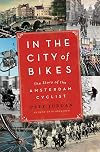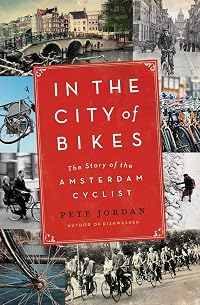
In the City of Bikes: The Story of the Amsterdam Cyclist
by Pete Jordan
On This Page
Description
Pete Jordan, author of the wildly popular Dishwasher: One Man's Quest to Wash Dishes in All Fifty States, is back with a memoir that tells the story of his love affair with Amsterdam, the city of bikes, all the while unfolding an unknown history of the city's cycling, from the craze of the 1890s, through the Nazi occupation, to the bike-centric culture adored by the world today Pete never planned to stay long in Amsterdam, just a semester. But he quickly falls in love with the city and soon show more his wife, Amy Joy, joins him. Together they explore every inch of their new home on two wheels, their rides a respite from the struggles that come with starting a new life in a new country. Weaving together personal anecdotes and details of the role that cycling has played throughout Dutch history, Pete Jordan's In the City of Bikes: The Story of the Amsterdam Cyclist is a poignant and entertaining read. show lessTags
Recommendations









Member Recommendations
Member Reviews
Pete Jordan's book serves three purposes: first, it's a memoir of his coming to Amsterdam in 2002 for a five month urban studies program and ending up staying for over a decade so far and raising a child with his wife. Second, it's a distillation of the ideas behind what makes a great cycling city. But mostly it is a detailed history of over a century of cycling in Amsterdam based on deep archival research. Jordan focuses on the rise of cycling in Amsterdam and the many aspects of the culture that makes it successful but also chaotic. The occupation by Nazi Germany leads to attempts to ban the Dutch from biking and the bike becoming a symbol of the resistance. The bike is also central to the counterculture movement of the 1960s. And in show more the 1970s and 1980s, when Amsterdam became overwhelmed by cars, there was the fight to reclaim the city for bikes. There's a downside to biking in Amsterdam with the high levels of bike theft, and Jordan also ponders why so many bikes end up in the canals (and admiringly watches the city employees who have to fish them out). Even a bike tunnel through the Rijksmuseum is a constant source of wonder and conflict.
It's a wonderful and engrossing book and makes me want to pack up and move to Amsterdam right now.
Favorite Passages:
It's a wonderful and engrossing book and makes me want to pack up and move to Amsterdam right now.
Favorite Passages:
It was past midnight. What the hell were all these people doing out on their bikes? Why were they all moving so unhurriedly? And why were they in my way? That’s when it struck me: It’s the middle of winter; it’s past midnight—and I’m stuck in a bicycle traffic jam. My haste vanished. I decelerated, accepted the pace of the others and appreciated the rest of my ride home. From then on, whenever anyone asked why I had immigrated to Holland, I didn’t hesitate to reply: “So I can be stuck in a bicycle traffic jam at midnight.”show less
The most gender-neutral characteristic noted: the carrying of ironing boards. Of the 16 people spotted with an ironing board, 8 were female, 8 male. Far from being an ironer myself, the meaning of these stats is unclear. Further study on this topic is required
The most gender-neutral characteristic noted: the carrying of ironing boards. Of the 16 people spotted with an ironing board, 8 were female, 8 male. Far from being an ironer myself, the meaning of these stats is unclear. Further study on this topic is required the lingering animosity toward the Nazis for all of their misdeeds. Over the next few years, whenever a German tourist in the Dutch capital asked a local for directions, the Amsterdammer was apt to either give false directions or ask for his bike back. If a German requested service in an Amsterdam café or restaurant, oftentimes the response was: “First, return my bike.”
A car is acceptable as a means of transport only within thinly populated areas or from a thinly populated area to the city. Cars are a dangerous and totally unsuitable means of transport within the city. There are better ways of moving from one city to another. For these purposes, the automobile is an outdated solution.
The film drew the audience’s attention to each renegade cyclist, leading us to overlook the obvious: the vast majority of the cyclists were actually obeying the traffic rules. Later I watched the film again. The number of cyclists highlighted as lawbreakers? Nine. The number of cyclists in the film who broke no laws (that is, stopped for the traffic signal, rode within the bike lanes)? One hundred and seventy-four. By featuring the 5 percent of the cyclists in view who were scofflaws, the film helped to embellish the image of the Amsterdam cyclist as out of control. Yet if the film had highlighted the law-abiders, the message could just as easily have been this: 95 percent of Amsterdam’s cyclists obey traffic laws. Maybe we aren’t such a bad lot after all.
After my recent trip to Amsterdam I became interested in the city and its massive (by American standards) number of bicycle riders, so when I saw that the Kindle version of this book was on sale I bought it immediately and started reading it shortly afterward.
Pete Jordan, a self described "bike nut", was born in San Francisco and spent a decade there and in Portland, Pittsburgh and other American cities before he decided to move to Amsterdam with his new wife to pursue a graduate degree in urban planning at the University of Amsterdam. The focus of his studies was an examination of the history of bicycling in the city, the often lawless mind set of its bicyclists and bike thieves, and how they impacted the development and culture of the show more Dutch capital.
This book starts at the end of the 19th century, when bicycles first became available and affordable to ordinary citizens, and continues through the present. Amsterdam's compact size and consequent lack of space for parking cars, its narrow streets, the high cost of automobiles and gasoline, and the more relaxed pace of life in the tiny country of the Netherlands compared to the massive and spread out United States were all factors that led to the proliferation of bicycles in and outside of the city. Amsterdammers then and now embrace their bicycles as extensions of their own bodies, and any laws or pleas to restrict their usage or their right of way on the roads were met with indifference and were often ignored, most notably during the Nazi occupation in World War II when German officials attempted repeatedly to impose order on the cyclists but failed miserably.
In relating the story of Amsterdam's cyclists Jordan provides an interesting history of the city itself, which, like its cyclists, cannot be separated from its bicycles. He intersperses his and his family's experiences as bicyclists, beginning with his first collision with a bicyclist upon his arrival to the city, and including his son's initiation as a stunt cyclist, his wife's training as a bicycle mechanic, and his own development as a bicycle historian.
In the City of Bikes is a well written and very interesting book, which gave me greater insight into and appreciation of the bicycling culture of my newest favorite city, and enhanced my knowledge of the history of the Dutch capital. show less
Pete Jordan, a self described "bike nut", was born in San Francisco and spent a decade there and in Portland, Pittsburgh and other American cities before he decided to move to Amsterdam with his new wife to pursue a graduate degree in urban planning at the University of Amsterdam. The focus of his studies was an examination of the history of bicycling in the city, the often lawless mind set of its bicyclists and bike thieves, and how they impacted the development and culture of the show more Dutch capital.
This book starts at the end of the 19th century, when bicycles first became available and affordable to ordinary citizens, and continues through the present. Amsterdam's compact size and consequent lack of space for parking cars, its narrow streets, the high cost of automobiles and gasoline, and the more relaxed pace of life in the tiny country of the Netherlands compared to the massive and spread out United States were all factors that led to the proliferation of bicycles in and outside of the city. Amsterdammers then and now embrace their bicycles as extensions of their own bodies, and any laws or pleas to restrict their usage or their right of way on the roads were met with indifference and were often ignored, most notably during the Nazi occupation in World War II when German officials attempted repeatedly to impose order on the cyclists but failed miserably.
In relating the story of Amsterdam's cyclists Jordan provides an interesting history of the city itself, which, like its cyclists, cannot be separated from its bicycles. He intersperses his and his family's experiences as bicyclists, beginning with his first collision with a bicyclist upon his arrival to the city, and including his son's initiation as a stunt cyclist, his wife's training as a bicycle mechanic, and his own development as a bicycle historian.
In the City of Bikes is a well written and very interesting book, which gave me greater insight into and appreciation of the bicycling culture of my newest favorite city, and enhanced my knowledge of the history of the Dutch capital. show less
The cover is what attracted me first to the book. Then, I saw the title and assumed it was all about bikes in Holland. I was pleased that I was right. The book is exactly what you would think it would be, with a lot more history, more about the people, the land, the experience and so much more. Not only did I come across familiar things but I learned so much more. If I had sat on the bike myself, I don't think I would have taken as much in as I did with this book.
Peter told it in such a way that kept it interesting.
Peter told it in such a way that kept it interesting.
Traveling in Europe, one usually passes thru Amsterdam somehow. We were on a bike barge trip that ended there. What an amazing place with all the thousands of bikes. How anyone finds their own parked bike is a mystery. After riding for a week in the countryside, we were all afraid to ride in Amsterdam. It is another world. Reading this book now that I am home, gave me the history and background of this special biking city. I'm inspired to be off on my e-bike after reading this in my city.
I am also interested in reading Pete Jordan's Dishwasher book.
I am also interested in reading Pete Jordan's Dishwasher book.
The cover is what attracted me first to the book. Then, I saw the title and assumed it was all about bikes in Holland. I was pleased that I was right. The book is exactly what you would think it would be, with a lot more history, more about the people, the land, the experience and so much more. Not only did I come across familiar things but I learned so much more. If I had sat on the bike myself, I don't think I would have taken as much in as I did with this book.
Peter told it in such a way that kept it interesting.
Peter told it in such a way that kept it interesting.
In the City of Bikes: Peter Jordan
Traffic jams, overwrought motorists, cyclists and pedestrians trying to share the streets, the pathways and hoping to get to their destinations. But, what happens when all of these people converge and traffic gets bottled up and the end result is chaos or a bottleneck. Peter Jordan takes us on his own private journey through the many cities in Amsterdam, to back in time when the first bikes were invented and allows readers to join him on his special journey. Imagine finding your way to Amsterdam and deciding to become immersed in the culture and the customs but first having to decide your mode of transportation.
Bicycling came to Amsterdam in the late 19th century. The city itself had many changes in show more urban development and become conducive for the cyclist and the bike use. Most cities at this time had seen a lot of suburban growth but the inner suburbs was better suited for bike riding. As we hear the voice of our author we get his reaction to seeing so many different people riding bikes. From women in long dresses, short skirts, men in suits and others in different attire you can feel the excitement within him as he takes us across the many streets, cities and routes in this insightful memoir titled In the City of Bikes.
Amsterdam is better suited for the cyclist than for cars. A network of canals and bridges spans the center of this beautiful city and the result of their urban renovations resulted in trying to widen their roads but that did not work. Congestion problems soared when more people bought cars. Kids riding bikes, infants in little seats, some on the rear rack of a bike, these are the impressions related by the author to readers as we learn more about his yearning to live in this city and the fact that what he witnessed we would not here in America. Narrow streets, canals that could not handle car traffic and finding himself in need of a mechanic when he was in the bike lane just walking as he shares his experience on page 9 with readers. He gives readers the history of bikes and describes the many people that he sees riding. One all “dolled up, another with stiletto heels and still another rolling a cigarette while riding.
But, the author decided to take his journey even further by learning Dutch and then hoping that his soon to be bride would join him. We learn that at the beginning of 1890 we would see bikes with high mounts, solid tires and even four huge front wheels. The author continues on pages 22-23 telling everyone about what happened to Princess Wilhelmina and why she was not allowed to ride. In reading this book I decided to learn more and found the actual article written about this soon to be queen. I need to state that Amsterdam is a bike friendly city the most friendly in Europe. Believe it or not it has about 280 miles of cycling lanes. Most of the people living there ride bikes and as many as 43 percent ride them to work.
Bikes are popular here and many of its city officials and planners would prefer their residents to ride bikes. But, between 1955 and 1970 cars became more popular creating traffic jams. So, in 1970 those living in Amsterdam who were citizens voted in favor of bikes allowing the planners to invest more time and money creating a better and safer routes for cyclists. Bike lanes were created, and believe it or not they even have special areas for cyclists to park. But, of course those using cars or buses were not happy.
The author shares some history with readers about German Queen Emma just before Wilhelmina would become Queen in 1898. Poor Wilhelmina was not allowed to ride a bike for fear she might have an accident and get hurt. Challenging her mother she actually we learn she actually went to the Council of State, but they did not side with her. They felt that “ the matter of her Majesty’s life and death is too important for too many of her loyal subjects, to take the risk, how ever small it may seem.” They also stated it was undignified for a Queen. She of course obeyed the rule and the cycling ban until the early 1930’s and after her the death of her mother she began to ride along public roads with her daughter Juliana. An advocate of cycling she did a lot to encourage others to do the same. Learn more when you read the chapter titled Lucky Few.
This is the actual article and here is her picture. Amsterdam and the history behind cycling is exciting. They even opened up Cyclist Schools, which the author describes on pages 26- 29. He continues to enlighten readers with the many laws passed, the job of one man to control the traffic and next Bike Thievery. The author shares stories about many bike thieves, the law passed that states that bikes must be properly secured and his own naivety causing the bike he bought for his wife to be stolen. He then continues with his search for the thief and to what lengths he would go to recover the bike. Throughout the memoir we learn more about the history of the bike, the regulations that were made, the laws created and his love for the cycle. Imagine trying to cross the street and some who wanted to rule the road. As the author takes us back in time to the first 2 decades of the 20th century and explains in detail why everyday transport was expensive and how it changed after WWI. The book then continues with the history of that time period, German bikes of all sorts that were made and which firms received them. Every class of people wanted bikes and each person had a particular one that suited them. Read King of the Streets to learn more and understand why Queen Wilhelmina loved cycling. But, like everything else remember there are those that would be against it and that the author elaborates on in pages 59-64. Okay, so they even instituted a bike tax law whose enforcement was transferred from tax agents to traffic police. Read the chapter to learn more.
Everyone has their own preference so as you will learn in Chapter 6 which focuses on Automobile vs. the bike. We learn more about Amy Joy and their life in this city in Chapter 7. He takes us inside their apartment, the renovations need and the new definition of Cyclomania and how it affected everyone. He calls it the Amsterdam Cycling explosion beginning in the 1930’s and then booming in the present. Read Problem Children and Which Ones’ the Wrench to learn more where he shares his job, how he managed and his feelings for the city. He even includes statistics for those who smoke and ride, those with two bikes and those that ride with beer bottles and even those that ride with their arms in a sling. Next, he shares Remembrance Day in Holland in Chapter 9 followed by Chapter 10 which is quite compelling and focuses on WWII and anticyclist measures and banning Jews in the country outside of Amsterdam from riding, renting or borrowing bikes. The rest of the chapter you have to read for yourself to understand just what was done to so many. Nazi occupation described, the fact that Amsterdam was the home to about three hundred thousand bikes at the time including women and children. But, the Nazi decided it would be easier the author states to net 8000 bikes. The rest you can read including statements written by a diarist about how when the police took their posts most bikes were gone. There is much more that is shared and what part the police played. Then the final years of the Occupation followed by The Mystery Rider where the author describes his life in Amsterdam, moving into his fifth apartment and hoping to upgrade his bike which his wife did as a surprise. Added in his some history about Theo Van Gogh the great-grandnephew of the painter and the fact that he used to ride an old, black bike with a wicker basket. What happened and the attack on him is described and who did it was exposed. Van Gogh was murdered and this for some reason remains in the author’s mind till today. He even recounts events after his murder and an incident that happened to him.
The rest of the book focuses on The Chaos with the Bicycles: the 1950’s, new additions to bikes and bike programs and successes.
Sharing with readers the typical bike fisherman so why did he think Amsterdam did not match up to Copenhagen where he realized that a public-use bicycles program according to the author really worked.
He describes their arrival at the Danish capital and shares with readers the difference in the cities on page 328. Bike keys, bike thieves, keys in the locks and sharing the history with Amy Joy and his family we learn that upon being in Copenhagen for four days and further investigation that many bikes were secured by three locks where in Amsterdam only two. There is much more that he shares within this chapter. Let’s not forget the information about the bike fisherman within this chapter. So, why would you not need a car and what does Death to the Car mean?
For someone that has never ridden a bike because where I grew up there were no bike paths, huge streets with heavy traffic and nowhere for kids to really run and play I love reading It’s a Joy to Be On Bike Again where the author shares how he managed to ride and replacing the front seat of his bike with a rear one thanks to his wife and hopefully allowing his son to have a safe place to ride. Riding with his son Ferris will definitely bring smiles to reader’s faces when you read this story and the chapter. Conditions were changing for those who rode but the rudeness of many did not. So, the author shares on page 373 what the police think and feel about cyclists and what they plan to do about their disruptive behavior.
This book is filled with great stories, great history and will definitely make you want to go out and cycle in the park, on bike path or with your kids on a safe street that has of course very little traffic and very few cars. He even shares fact that he still has the snapshots of bike repair shops and rental shops. He is leads “enraptured foreigners on bike tours, and he still rides on the Spuristraat bike path the first day in town. The rest read it for yourself and take go alone with Peter Jordan and his family on this exciting tour, by bike through the city of bikes: Amsterdam. Don’t forget your helmet. Don’t forget to secure your bike when not in use and don’t forget to take some pictures along the way.
Fran Lewis: reviewer
How about : Five Golden Handlebars and Five Golden Safety Locks show less
Traffic jams, overwrought motorists, cyclists and pedestrians trying to share the streets, the pathways and hoping to get to their destinations. But, what happens when all of these people converge and traffic gets bottled up and the end result is chaos or a bottleneck. Peter Jordan takes us on his own private journey through the many cities in Amsterdam, to back in time when the first bikes were invented and allows readers to join him on his special journey. Imagine finding your way to Amsterdam and deciding to become immersed in the culture and the customs but first having to decide your mode of transportation.
Bicycling came to Amsterdam in the late 19th century. The city itself had many changes in show more urban development and become conducive for the cyclist and the bike use. Most cities at this time had seen a lot of suburban growth but the inner suburbs was better suited for bike riding. As we hear the voice of our author we get his reaction to seeing so many different people riding bikes. From women in long dresses, short skirts, men in suits and others in different attire you can feel the excitement within him as he takes us across the many streets, cities and routes in this insightful memoir titled In the City of Bikes.
Amsterdam is better suited for the cyclist than for cars. A network of canals and bridges spans the center of this beautiful city and the result of their urban renovations resulted in trying to widen their roads but that did not work. Congestion problems soared when more people bought cars. Kids riding bikes, infants in little seats, some on the rear rack of a bike, these are the impressions related by the author to readers as we learn more about his yearning to live in this city and the fact that what he witnessed we would not here in America. Narrow streets, canals that could not handle car traffic and finding himself in need of a mechanic when he was in the bike lane just walking as he shares his experience on page 9 with readers. He gives readers the history of bikes and describes the many people that he sees riding. One all “dolled up, another with stiletto heels and still another rolling a cigarette while riding.
But, the author decided to take his journey even further by learning Dutch and then hoping that his soon to be bride would join him. We learn that at the beginning of 1890 we would see bikes with high mounts, solid tires and even four huge front wheels. The author continues on pages 22-23 telling everyone about what happened to Princess Wilhelmina and why she was not allowed to ride. In reading this book I decided to learn more and found the actual article written about this soon to be queen. I need to state that Amsterdam is a bike friendly city the most friendly in Europe. Believe it or not it has about 280 miles of cycling lanes. Most of the people living there ride bikes and as many as 43 percent ride them to work.
Bikes are popular here and many of its city officials and planners would prefer their residents to ride bikes. But, between 1955 and 1970 cars became more popular creating traffic jams. So, in 1970 those living in Amsterdam who were citizens voted in favor of bikes allowing the planners to invest more time and money creating a better and safer routes for cyclists. Bike lanes were created, and believe it or not they even have special areas for cyclists to park. But, of course those using cars or buses were not happy.
The author shares some history with readers about German Queen Emma just before Wilhelmina would become Queen in 1898. Poor Wilhelmina was not allowed to ride a bike for fear she might have an accident and get hurt. Challenging her mother she actually we learn she actually went to the Council of State, but they did not side with her. They felt that “ the matter of her Majesty’s life and death is too important for too many of her loyal subjects, to take the risk, how ever small it may seem.” They also stated it was undignified for a Queen. She of course obeyed the rule and the cycling ban until the early 1930’s and after her the death of her mother she began to ride along public roads with her daughter Juliana. An advocate of cycling she did a lot to encourage others to do the same. Learn more when you read the chapter titled Lucky Few.
This is the actual article and here is her picture. Amsterdam and the history behind cycling is exciting. They even opened up Cyclist Schools, which the author describes on pages 26- 29. He continues to enlighten readers with the many laws passed, the job of one man to control the traffic and next Bike Thievery. The author shares stories about many bike thieves, the law passed that states that bikes must be properly secured and his own naivety causing the bike he bought for his wife to be stolen. He then continues with his search for the thief and to what lengths he would go to recover the bike. Throughout the memoir we learn more about the history of the bike, the regulations that were made, the laws created and his love for the cycle. Imagine trying to cross the street and some who wanted to rule the road. As the author takes us back in time to the first 2 decades of the 20th century and explains in detail why everyday transport was expensive and how it changed after WWI. The book then continues with the history of that time period, German bikes of all sorts that were made and which firms received them. Every class of people wanted bikes and each person had a particular one that suited them. Read King of the Streets to learn more and understand why Queen Wilhelmina loved cycling. But, like everything else remember there are those that would be against it and that the author elaborates on in pages 59-64. Okay, so they even instituted a bike tax law whose enforcement was transferred from tax agents to traffic police. Read the chapter to learn more.
Everyone has their own preference so as you will learn in Chapter 6 which focuses on Automobile vs. the bike. We learn more about Amy Joy and their life in this city in Chapter 7. He takes us inside their apartment, the renovations need and the new definition of Cyclomania and how it affected everyone. He calls it the Amsterdam Cycling explosion beginning in the 1930’s and then booming in the present. Read Problem Children and Which Ones’ the Wrench to learn more where he shares his job, how he managed and his feelings for the city. He even includes statistics for those who smoke and ride, those with two bikes and those that ride with beer bottles and even those that ride with their arms in a sling. Next, he shares Remembrance Day in Holland in Chapter 9 followed by Chapter 10 which is quite compelling and focuses on WWII and anticyclist measures and banning Jews in the country outside of Amsterdam from riding, renting or borrowing bikes. The rest of the chapter you have to read for yourself to understand just what was done to so many. Nazi occupation described, the fact that Amsterdam was the home to about three hundred thousand bikes at the time including women and children. But, the Nazi decided it would be easier the author states to net 8000 bikes. The rest you can read including statements written by a diarist about how when the police took their posts most bikes were gone. There is much more that is shared and what part the police played. Then the final years of the Occupation followed by The Mystery Rider where the author describes his life in Amsterdam, moving into his fifth apartment and hoping to upgrade his bike which his wife did as a surprise. Added in his some history about Theo Van Gogh the great-grandnephew of the painter and the fact that he used to ride an old, black bike with a wicker basket. What happened and the attack on him is described and who did it was exposed. Van Gogh was murdered and this for some reason remains in the author’s mind till today. He even recounts events after his murder and an incident that happened to him.
The rest of the book focuses on The Chaos with the Bicycles: the 1950’s, new additions to bikes and bike programs and successes.
Sharing with readers the typical bike fisherman so why did he think Amsterdam did not match up to Copenhagen where he realized that a public-use bicycles program according to the author really worked.
He describes their arrival at the Danish capital and shares with readers the difference in the cities on page 328. Bike keys, bike thieves, keys in the locks and sharing the history with Amy Joy and his family we learn that upon being in Copenhagen for four days and further investigation that many bikes were secured by three locks where in Amsterdam only two. There is much more that he shares within this chapter. Let’s not forget the information about the bike fisherman within this chapter. So, why would you not need a car and what does Death to the Car mean?
For someone that has never ridden a bike because where I grew up there were no bike paths, huge streets with heavy traffic and nowhere for kids to really run and play I love reading It’s a Joy to Be On Bike Again where the author shares how he managed to ride and replacing the front seat of his bike with a rear one thanks to his wife and hopefully allowing his son to have a safe place to ride. Riding with his son Ferris will definitely bring smiles to reader’s faces when you read this story and the chapter. Conditions were changing for those who rode but the rudeness of many did not. So, the author shares on page 373 what the police think and feel about cyclists and what they plan to do about their disruptive behavior.
This book is filled with great stories, great history and will definitely make you want to go out and cycle in the park, on bike path or with your kids on a safe street that has of course very little traffic and very few cars. He even shares fact that he still has the snapshots of bike repair shops and rental shops. He is leads “enraptured foreigners on bike tours, and he still rides on the Spuristraat bike path the first day in town. The rest read it for yourself and take go alone with Peter Jordan and his family on this exciting tour, by bike through the city of bikes: Amsterdam. Don’t forget your helmet. Don’t forget to secure your bike when not in use and don’t forget to take some pictures along the way.
Fran Lewis: reviewer
How about : Five Golden Handlebars and Five Golden Safety Locks show less
Ratings
Members
- Recently Added By
Lists

The War on Cars podcast
108 works; 1 member
Author Information
9 Works 557 Members
Pete Jordan is the author of the memoir Dishwasher: One Man's Quest to Wash Dishes in All Fifty States. Pete's work has been featured on public radio's This American Life and in the New York Times. He lives in Amsterdam.
Common Knowledge
- Canonical title
- In the City of Bikes: The Story of the Amsterdam Cyclist
- Original publication date
- 2013
- People/Characters
- Peter Jordan; Amy Joy Jordan; Ferris Jordan
- Important places
- The Netherlands; Amsterdam, North Holland, Netherlands
- Dedication
- For Ferris, in memory of my mom.
- First words
- "Welkom in Amsterday," the flight attendant said upon our landing. From the airport, a 20-minute train trip brought me to Central Station. Then, with my duffel bag slung over my left shoulder, I stepped onto the streets of ... (show all)coninental Europe for the very first time. Two minutes later - and two blocks away on Spuistraat - I was busy gaping at 17th-century, gable-roofed buildings that leaned so severely they appeard ready to spill into the street, when suddenly a bike bell rang out: Brringg! Brringg!
- Last words
- (Click to show. Warning: May contain spoilers.)Finally, I'd like to express a hearty, special thanks to the hundreds of thousands of amsterdammers who cycle as part of their daily rountines. Observing them and riding amoung them has enabled me to go about my own daily routine with warmth in my heart. And every day, for more than a decade, they have inspired me greatly.
Classifications
- Genres
- Nonfiction, Sports and Leisure, General Nonfiction, Biography & Memoir, History, Travel
- DDC/MDS
- 796.609492 — Arts & recreation Recreation, sports, and performing arts Athletic and outdoor sports and games Cycling standard subdivisions History, geographic treatment, biography Europe Other parts of Europe
- LCC
- GV1046 .N442 .J67 — Geography, Anthropology and Recreation Recreation. Leisure Recreation. Leisure Sports Cycling. Bicycling. Motorcycling
- BISAC
Statistics
- Members
- 152
- Popularity
- 216,340
- Reviews
- 6
- Rating
- (4.17)
- Languages
- Dutch, English
- Media
- Paper, Ebook
- ISBNs
- 4
- ASINs
- 1