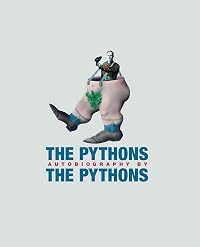
The Pythons' Autobiography
by Graham Chapman (Author), John Cleese (Author), Terry Gilliam (Author), Eric Idle (Author), Terry Jones (Author), Bob McCabe (Author), Michael Palin (Author)
Monty Python (autobiography)
On This Page
Description
For the first time all surviving Pythons have agreed to create the definitive story of Monty Python's Flying Circus and the 'genius' who created it. Over thirty years ago, a group of five Englishmen - and one wayward American - rewrote the rules of comedy. Monty Python's Flying Circus, an unheralded, previously unseen half-hour show of sketches, hilarities, inanities and animations, first appeared on the BBC late one night in 1969. Its impact has been felt on the world ever since. From its show more humble beginnings, it blossomed into the most influential movement in modern comedy. THE PYTHONS' AUTOBIOGRAPHY OF THE PYTHONS is a unique look at arguably the most important comic team of the modern age, lavishly illustrated with 1000 photographs, many culled from the team's own personal collections, many more seen for the first time. This is the definitive word on all things Pythonesque. show lessTags
Recommendations


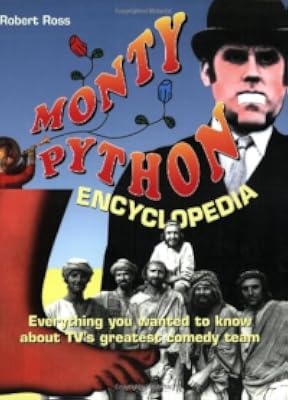
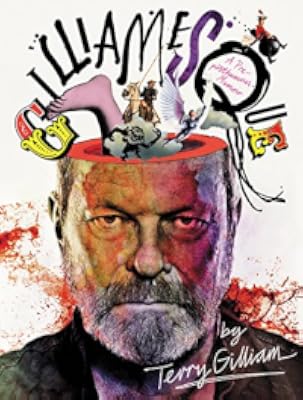
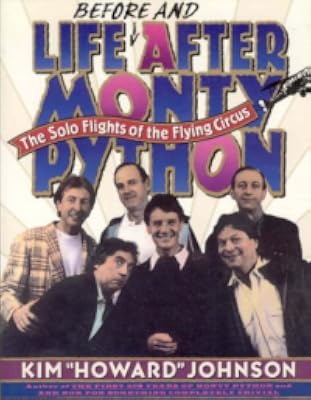
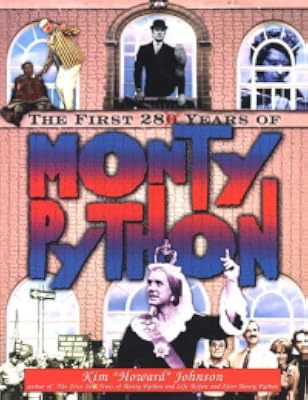















Member Recommendations

Member Reviews
My parents are responsible for getting me hooked on Monty Python. I remember seeing the dead parrot sketch, the lumberjack song, the Spanish Inquisition, and so much more on PBS back in the day. But what hooked me forever was Monty Python and the Holy Grail. My parents had a copy of the movie on Betamax. I lost track of the number of times I'd watched the film after about the 40th time.
I even got to see Graham Chapman on a speaking tour in 1987 while I was in college. I don't recall much from it, but one thing still sticks with me. He was talking about the making of Holy Grail and confessed when he realized that he was an alcoholic. They were in the Scottish Highlands. The weight of playing King Arthur was getting to him. He desperately show more wanted a drink to steady his nerves, but there was nothing available. Between the cold, the dampness, the pressure, and withdrawal symptoms, he was shaking and feverish in his chain mail and wool. He was completely miserable. The auditorium had grown completely silent as Chapman revealed that he was not an invulnerable comedic hero but a human being with all the frailties of mortality.
In October of 1989 he died of cancer.
This book is an account of the group's lives growing up, their days at university, their early pre-Python work, the coalescence of what would become Monty Python, the TV show, the movies, and the inevitable end. Each of the Pythons provided the information in interview format with Chapman's parts taken from previous memoirs and from his brother and his partner. So you would get each of their recollections about events, what they were doing and thinking.
It's clear to me now that postwar English schools were horrid places. Roger Waters, Bruce Dickinson, and the members of Monty Python have all provided details about how miserable these places were. It's almost as if the adults were punishing the children for not having a dour disposition brought on by the travails of the war.
It was really interesting to see how the Python troupe came together, and I'm curious to know how well the pre-Python work holds up. Of course, with the BBC in the habit of recycling all of its tapes back then, I don't know if any of it still exists.
There was a certain joie de vivre that the group back in the days of the TV show, and it was a delight to read about it. But you could see it start to slip away. Certain members didn't want to do the TV show anymore, so others suggested a movie. And for a while they were happy again. Holy Grail was a success and then Life of Brian. They would separate to work on their personal projects, but they would always come back. But they got the work process wrong with The Meaning of Life. Lessons of creation were forgotten. The joy was gone.
When Chapman died, the unraveling of the knot that kept them together quickened. They tried to reunite, but there was always someone to veto a project, whether it be TV, movie, or tour. While they still professed their love for one another, it was clear to me by this book's publication in 2003 that Monty Python had ceased to be as a creative entity.
While there was an abundance of detailed material for their early years, it seemed like when the joy was gone, so too went many of the details. All of these non-Python side projects they were involved in left huge gaps between events in the Python history. The interview format kind of broke down with grudges and hurt feelings creeping in. Subjective accounts obscured objective reality, forcing the reader to deduce what actually happened.
I'm glad that I read it, but now it's more of a reference book than something to revisit for nostalgia's sake, which I guess is why I read it in the first place. show less
I even got to see Graham Chapman on a speaking tour in 1987 while I was in college. I don't recall much from it, but one thing still sticks with me. He was talking about the making of Holy Grail and confessed when he realized that he was an alcoholic. They were in the Scottish Highlands. The weight of playing King Arthur was getting to him. He desperately show more wanted a drink to steady his nerves, but there was nothing available. Between the cold, the dampness, the pressure, and withdrawal symptoms, he was shaking and feverish in his chain mail and wool. He was completely miserable. The auditorium had grown completely silent as Chapman revealed that he was not an invulnerable comedic hero but a human being with all the frailties of mortality.
In October of 1989 he died of cancer.
This book is an account of the group's lives growing up, their days at university, their early pre-Python work, the coalescence of what would become Monty Python, the TV show, the movies, and the inevitable end. Each of the Pythons provided the information in interview format with Chapman's parts taken from previous memoirs and from his brother and his partner. So you would get each of their recollections about events, what they were doing and thinking.
It's clear to me now that postwar English schools were horrid places. Roger Waters, Bruce Dickinson, and the members of Monty Python have all provided details about how miserable these places were. It's almost as if the adults were punishing the children for not having a dour disposition brought on by the travails of the war.
It was really interesting to see how the Python troupe came together, and I'm curious to know how well the pre-Python work holds up. Of course, with the BBC in the habit of recycling all of its tapes back then, I don't know if any of it still exists.
There was a certain joie de vivre that the group back in the days of the TV show, and it was a delight to read about it. But you could see it start to slip away. Certain members didn't want to do the TV show anymore, so others suggested a movie. And for a while they were happy again. Holy Grail was a success and then Life of Brian. They would separate to work on their personal projects, but they would always come back. But they got the work process wrong with The Meaning of Life. Lessons of creation were forgotten. The joy was gone.
When Chapman died, the unraveling of the knot that kept them together quickened. They tried to reunite, but there was always someone to veto a project, whether it be TV, movie, or tour. While they still professed their love for one another, it was clear to me by this book's publication in 2003 that Monty Python had ceased to be as a creative entity.
While there was an abundance of detailed material for their early years, it seemed like when the joy was gone, so too went many of the details. All of these non-Python side projects they were involved in left huge gaps between events in the Python history. The interview format kind of broke down with grudges and hurt feelings creeping in. Subjective accounts obscured objective reality, forcing the reader to deduce what actually happened.
I'm glad that I read it, but now it's more of a reference book than something to revisit for nostalgia's sake, which I guess is why I read it in the first place. show less
A weighty and impressive-looking coffee-table book, The Pythons makes excellent reading for devoted fans, though it's probably too in-depth for those who aren't interested in the nuts and bolts of how the series were produced. Although they don't deal with everything—understandably, after four decades I'm sure there are some things that can't be recalled, and everyone needs some measure of privacy for themselves—what is discussed is frank and honest, even if that honesty seems to have led to some tension and contradiction.
Em honra dos 50 anos do Flying Circus a ser comemorado esse ano.
Depois de ler ess livro não sei gosto mais tanto assim do John Cleese, claro, ele é um gênio da comédia física e verbal, mas ele me parece ser particularmente insuportável de se conviver, mas tudo bem, também acho isso do Peter Sellers e nem por isso ele é menos gênio.
No mais é um livro super informativo para fãs dos Pythons, há diversos detalhes e pequenas informações que me passaram batido em todos essas décadas admirando-os, além de também reiterar informações que os fãs de comédia inglesa sabem por osmose, eles nunca deixam de mencionar que foram os Goons e o pessoal do Beyond The Fringe que abriram as portas para o tipo de comédia que faziam, o show more que achei bem ético da parte deles.
A informação mais interessante desse livro é a afirmação dos Terrys que a influência cinematográfica principal do Holy Grail foi Pasolini. E nóis achando que era o Monicelli. Italiano errado. show less
Depois de ler ess livro não sei gosto mais tanto assim do John Cleese, claro, ele é um gênio da comédia física e verbal, mas ele me parece ser particularmente insuportável de se conviver, mas tudo bem, também acho isso do Peter Sellers e nem por isso ele é menos gênio.
No mais é um livro super informativo para fãs dos Pythons, há diversos detalhes e pequenas informações que me passaram batido em todos essas décadas admirando-os, além de também reiterar informações que os fãs de comédia inglesa sabem por osmose, eles nunca deixam de mencionar que foram os Goons e o pessoal do Beyond The Fringe que abriram as portas para o tipo de comédia que faziam, o show more que achei bem ético da parte deles.
A informação mais interessante desse livro é a afirmação dos Terrys que a influência cinematográfica principal do Holy Grail foi Pasolini. E nóis achando que era o Monicelli. Italiano errado. show less
This is sort of like "The Python Anthology." The remaining members of Monty Python, as well as Graham Chapman's brother, sister-in-law, and longtime partner David Sherlock, tell the history of Monty Python in their own words. There are a lot of contradictions; no one can seem to remember who actually picked "The Liberty Bell March" as the theme, for example, and some things have become so legendary that one gets the feeling that everyone is telling the version that makes the best story (case in point: everyone loves to tell the story that Graham Chapman invited his fiancee to the party where he announced he was gay, but according to David Sherlock, she wasn't actually his fiancee anymore at that point. What's true? Who knows.) You get show more to learn a lot about their personalities and their working relationships, which is always interesting, even if it means finding out that John Cleese is kind of a git. Good stuff for fans of Monty Python, probably utterly boring for anyone else (although there's lots of great pictures of Terry Gilliam's cartoon work). show less
This is roughly the Python equivalent of the Beatles Anthology: the story of the Pythons, as told by them in new interviews, old diaries and old interviews (in the case of Graham Chapman, who is not in a position to give new interviews). So you get the same events from multiple perspectives, which is interesting; one example is the first meeting with Terry Gilliam, where everyone comments on the crazy coat he is wearing. This book also contains interviews with Graham Chapman's surviving relatives and is very lavishly illustrated with many never-before-seen photographs taken from the Pythons' own archives.
I enjoyed reading their perspectives and seeing the photos, but the layout can be visually distracting at times. Many pages use a show more monochrome colour version of a photograph as a "watermark" on a given page, but sometimes the watermark is so dark that the text on the page is difficult to read. I also sometimes found it difficult to pinpoint individual Pythons in group shots from their younger years; some photos had them circled and highlighted, while others did not. That visual inconsistency bothered me.
I would recommend this to Python fans with the warning that it can be difficult to read some pages. In the meantime, this has prompted me to go back to the DVDs and to hunt up a copy of Michael Palin's diaries. show less
I enjoyed reading their perspectives and seeing the photos, but the layout can be visually distracting at times. Many pages use a show more monochrome colour version of a photograph as a "watermark" on a given page, but sometimes the watermark is so dark that the text on the page is difficult to read. I also sometimes found it difficult to pinpoint individual Pythons in group shots from their younger years; some photos had them circled and highlighted, while others did not. That visual inconsistency bothered me.
I would recommend this to Python fans with the warning that it can be difficult to read some pages. In the meantime, this has prompted me to go back to the DVDs and to hunt up a copy of Michael Palin's diaries. show less
I thought, after all the interviews and directors' commentaries, that this one might be a bit old hat. Instead, it's frank and interesting. The relationship between Cleese and the others is very tense, and the simmering resentments are still evident.
Thank goodness this is almost all recordings of the actual cast members, or I wouldn’t have listened to it. As it is, and since I am a massive fan, I loved it. I just wish there had been more from Chapman, but as he is dead and has been for some time, this wasn’t particularly possible at this time.
It’s not a long listen, and was rather fun. Please check and see if your local library has a copy so you can listen to it also. I feel it was well worth it.
4 stars, and recommended to all.
“The Pythons Autobiography by The Pythons (2003), compiled from interviews with the surviving members, reveals that a series of disputes in 1998, over a possible sequel to Holy Grail that had been conceived by Idle, may have resulted in the group's show more split. Cleese's feeling was that The Meaning of Life had been personally difficult and ultimately mediocre, and did not wish to be involved in another Python project for a variety of reasons (not least amongst them was the absence of Chapman, whose straight man-like central roles in the Grail and Brian films had been considered to be an essential anchoring performance). The book also reveals that Cleese saw Chapman as his “greatest sounding board. If Graham thought something was funny, then it almost certainly was funny. You cannot believe how invaluable that is.'[96] Ultimately it was Cleese who ended the possibility of another Python movie.[97]”
https://en.wikipedia.org/wiki/Monty_Python?wprov=sfti1 show less
It’s not a long listen, and was rather fun. Please check and see if your local library has a copy so you can listen to it also. I feel it was well worth it.
4 stars, and recommended to all.
“The Pythons Autobiography by The Pythons (2003), compiled from interviews with the surviving members, reveals that a series of disputes in 1998, over a possible sequel to Holy Grail that had been conceived by Idle, may have resulted in the group's show more split. Cleese's feeling was that The Meaning of Life had been personally difficult and ultimately mediocre, and did not wish to be involved in another Python project for a variety of reasons (not least amongst them was the absence of Chapman, whose straight man-like central roles in the Grail and Brian films had been considered to be an essential anchoring performance). The book also reveals that Cleese saw Chapman as his “greatest sounding board. If Graham thought something was funny, then it almost certainly was funny. You cannot believe how invaluable that is.'[96] Ultimately it was Cleese who ended the possibility of another Python movie.[97]”
https://en.wikipedia.org/wiki/Monty_Python?wprov=sfti1 show less
Members
- Recently Added By
Author Information


John Cleese, October 27, 1939 - John Cleese was born on October 27, 1939 in Weston-Super-Mare, Somerset, England to Reginald Cleese, and insurance salesman, and Muriel Cross. He attended Cambridge University beginning in 1960 and joined the Footlights Club in his second term. In 1963, a Footlights production called "A Clump of Plinths" became so show more popular that the production spawned Cambridge Circus and ran in London's West End. He eventually earned his law degree from Cambridge. In 1964, the show traveled first to New Zealand and then to America for 24 performances on Broadway. By the late 60's, Cleese was established as an actor and a writer. In 1969, the BBC, looking for a new show to fill an empty time slot, coupled Cleese and pal Graham Chapman with three graduates from Oxford, Eric Idle, Terry Jones and Michael Palin, as well as Terry Gilliam to create Monty Python's Flying Circus. The BBC produced 45 episodes which have been run and rerun over 30 years. Flying Circus became a cult classic and spawned yet another television show, "Fawlty Towers" as well as books and feature films such as "Monty Python's Life of Brian" and "Monty Python and the Holy Grail." Cleese then came down with a debilitating flu-like illness which his doctor suggested might be psychosomatic. After working with a therapist, Cleese returned with no signs of the illness and even joined the doctor in writing two books, "Families and How to Survive Them" and "Life and How to Survive It." He went on to create training films for corporations through his company called Video Arts. These videos enabled training to be fun as well as informative. Through all of this, Cleese has demonstrated his ability to perform in all walks of life and has made a name for himself doing what he loves best. (Bowker Author Biography) show less


Terry Jones was born in Colwyn Bay, Wales on February 1, 1942. He was a writer for such BBC programs as The Frost Report and Do Not Adjust Your Set, before joining with Graham Chapman, John Cleese, Eric Idle, and Michael Palin to form the Monty Python comedy troupe. Best remembered as the nude organist, Jones co-directed Monty Python and the Holy show more Grail (1975), and directed Life of Brian (1979) and Monty Python's The Meaning of Life (1983). Along with many Python-related books, screenplays, and records, he has written several non-fiction works including Chaucer's Knight: The Portrait of a Medieval Mercenary, Who Murdered Chaucer?: A Medieval Mystery, and Terry Jones's War on the War on Terror. He also wrote numerous children's books including The Saga of Erik the Viking, which won the Children's Book Award in 1984, Fantastic Stories, The Beast with a Thousand Teeth, The Curse of the Vampire Socks, and Bedtime Stories. (Bowker Author Biography) show less

Bob McCabe has worked as a film critic for the Express on Sunday and for the BBC, and has been film editor for Vox magazine, Blah Blah Blah and Comedy Review.

Some Editions
Awards and Honors
Series

Common Knowledge
- Canonical title
- The Pythons' Autobiography
- Original title
- The Pythons' autobiography
- Original publication date
- 2003
- People/Characters
- Graham Chapman; John Cleese; Eric Idle; Michael Palin; Terry Gilliam; Terry Jones
- Important places
- England, UK
- Related movies
- Monty Python: Almost the Truth - Lawyers Cut (2009 | IMDb)
- First words
- Michael would have been the first Python I ever met, although I didn't know it at the time.
- Last words
- (Click to show. Warning: May contain spoilers.)[JOHN CLEESE:] It may well be we have to do this all over again...
Classifications
- Genres
- Biography & Memoir, Nonfiction, General Nonfiction
- DDC/MDS
- 791.45028092241 — Arts & recreation Recreation, sports, and performing arts Public performances Motion pictures, radio, television, podcasting Television Acting Biography Collected biography
- LCC
- PN2599.5 .T54 .P95 — Language and Literature Literature (General) Literature (General) Drama Dramatic representation. The theater Special regions or countries
- BISAC
Statistics
- Members
- 1,427
- Popularity
- 16,561
- Reviews
- 13
- Rating
- (4.10)
- Languages
- 6 — English, Finnish, German, Italian, Spanish, Portuguese (Portugal)
- Media
- Paper, Audiobook, Ebook
- ISBNs
- 24
- UPCs
- 1
- ASINs
- 4