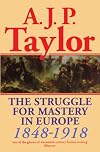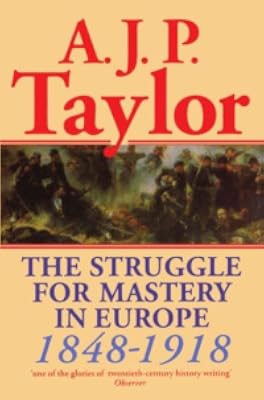
The Struggle for Mastery in Europe, 1848-1918
by Alan J. P. Taylor
Century of Conflict (Collections and Selections — 1848-1918 [vol.1&2])
On This Page
Description
The system of international repression ended with the fall of Metternich in 1848. The conflicting ideals of international revolution and collective security came into being with Lenin and Wilson in 1918. Nationalism, tempered by the Balance of Power, dominated Europe in the intervening seventyyears. Drawing on a wealth of diplomatic documents, A. J. P. Taylor examines the relations of the Great Powers, when Europe was still the centre of the world. Written in characteristically vigorous show more prose, this is a challenging and original diplomatic history, that also considers the political and economicforces which made continental war inevitable. show lessTags
Recommendations














Member Reviews
2377 The Struggle for Mastery in Europe 1848-1918, by A. J. P. Taylor (read 13 Apr 1991) (Book of the Year) This is a sheerly fascinating diplomatic history. I should have read it in 1954 when it came out. I don't think I disagreed with any of its assessments. For instance, Taylor says 'peace must have brought Germany the mastery of Europe within a few years' in 1914 but peace was prevented by the habit of her diplomacy and by the mental outlook of her people. The crassness of diplomacy before the first World War surprised--somehow it seems we are little better nowadays. This book told me lots I didn't seem to remember anymore--and it told it so fast. So many of the events discussed are worth a lot closer study. There is no end to what show more I want to read. [At year's end I decided this was the best book I read in 1991.] show less
Mr. Taylor has assembled the basic account of European international affairs in this time period. Though my copy dates from the previous generation I feel that it still moulders away on many library shelves. If you are engaged with Europe prior to WWI, this is a very useful book, even today, though I am sure there has been at least one wave of revisionism washing over it. The prose is competent.
The Struggle for Mastery in Europe, 1848-1918
A.J.P Taylor
Entered Sunday, February 23, 2014, read in November, 1972
I read this book for a history course in the first semester of senior year at Yale. The topic was European diplomatic history 1820 to 1918, with professor Hans Gatzke. I marvel now at plowing through this long volume, although as I sample parts I can see it is exceptionally readable. The title summarizes the contents well; this is the diplomatic history of the European powers during the last half of the 19th century.
A.J.P Taylor
Entered Sunday, February 23, 2014, read in November, 1972
I read this book for a history course in the first semester of senior year at Yale. The topic was European diplomatic history 1820 to 1918, with professor Hans Gatzke. I marvel now at plowing through this long volume, although as I sample parts I can see it is exceptionally readable. The title summarizes the contents well; this is the diplomatic history of the European powers during the last half of the 19th century.
Department of History
University of Hong Kong
University of Hong Kong
Het leven in de wereld van de grote mogendheden, schrijft Taylor, is ‘nasty, brutish and short’. Zij laten zich niet de wet voorschrijven en rechtvaardigen zichzelf in laatste instantie door het feit dat ze zich met geweld kunnen handhaven tegen het geweld van hun rivalen. Dat in dit Hobbesiaanse universum geen constante oorlog heerst, komt door de ‘balance of power’, het machtsevenwicht dat tussen hen bestaat. Geen enkele staat is sterk genoeg om alle andere te overheersen en de onderlinge wedijver tussen de grote mogendheden staat garant voor het overleven van kleinere landen.
The Struggle for Mastery beschrijft dit machtsevenwicht in Europa, van het revolutiejaar 1848 tot aan het einde van de Eerste Wereldoorlog in 1918. Een show more bewogen tijd, waarin de Europese landen in steeds wisselende coalities tegenover elkaar staan: Frankrijk en Groot-Brittanië tegen Rusland in de Krimoorlog, Frankrijk en het koninkrijk Sardinïe tegen Oostenrijk-Hongarije in het conflict dat leidt tot de eenwording van Italië, Pruisen tegen Oostenrijk-Hongarije in de strijd om zeggenschap over Duitsland, Pruisen en de kleinere Duitse staten tegen Frankrijk in 1870, Rusland tegen Oostenrijk-Hongarije in de Balkan, Engeland tegen Frankrijk in Egypte enzovoorts, enzovoorts, in een eeuwige dans met telkens nieuwe partners.
Taylor neemt de lezer bij de hand door zeventig jaar geschiedenis en ontwart in kristalheldere taal zelfs de meest byzantijnse, diplomatieke knopen. Hij doet dat met flair en humor (‘it becomes wearisome to add ‘except the Italians’ to every generalization. Henceforth it may be assumed’) en hij is niet bang om zijn eigen mening te geven of, als het zo uitkomt, partij te kiezen. Bismarck kan, in grote lijnen, op waardering rekenen, maar Napoleon III bijvoorbeeld krijgt een flinke veeg uit de pan. Taylor vindt hem een parvenu en een leugenaar en schuift hem zelfs de neergang van de moraal in internationale betrekkingen in de schoenen.
Het boek eindigt, zoals gezegd, in 1918, met de ineenstorting van de ‘balance of power’. Eerst is er de Duitse poging om het machtsevenwicht te verstoren en als enige grote mogendheid overeind te blijven (volgens Taylor de meest fundamentele oorzaak van de Eerste Wereldoorlog) en wanneer dit streven ternauwernood wordt gestopt door interventie van de Verenigde Staten, is het politieke landschap voor altijd hertekend. Europa is niet meer het centrum van de wereld en de twee aankomende supermachten, Amerika en de juist ontstane Sovjet-Unie, bieden ieder een alternatief voor de soevereine natie-staat: de internationale revolutie van Lenin of de internationale rechtsorde van de Veertien Punten van Wilson en zijn Volkerenbond. show less
The Struggle for Mastery beschrijft dit machtsevenwicht in Europa, van het revolutiejaar 1848 tot aan het einde van de Eerste Wereldoorlog in 1918. Een show more bewogen tijd, waarin de Europese landen in steeds wisselende coalities tegenover elkaar staan: Frankrijk en Groot-Brittanië tegen Rusland in de Krimoorlog, Frankrijk en het koninkrijk Sardinïe tegen Oostenrijk-Hongarije in het conflict dat leidt tot de eenwording van Italië, Pruisen tegen Oostenrijk-Hongarije in de strijd om zeggenschap over Duitsland, Pruisen en de kleinere Duitse staten tegen Frankrijk in 1870, Rusland tegen Oostenrijk-Hongarije in de Balkan, Engeland tegen Frankrijk in Egypte enzovoorts, enzovoorts, in een eeuwige dans met telkens nieuwe partners.
Taylor neemt de lezer bij de hand door zeventig jaar geschiedenis en ontwart in kristalheldere taal zelfs de meest byzantijnse, diplomatieke knopen. Hij doet dat met flair en humor (‘it becomes wearisome to add ‘except the Italians’ to every generalization. Henceforth it may be assumed’) en hij is niet bang om zijn eigen mening te geven of, als het zo uitkomt, partij te kiezen. Bismarck kan, in grote lijnen, op waardering rekenen, maar Napoleon III bijvoorbeeld krijgt een flinke veeg uit de pan. Taylor vindt hem een parvenu en een leugenaar en schuift hem zelfs de neergang van de moraal in internationale betrekkingen in de schoenen.
Het boek eindigt, zoals gezegd, in 1918, met de ineenstorting van de ‘balance of power’. Eerst is er de Duitse poging om het machtsevenwicht te verstoren en als enige grote mogendheid overeind te blijven (volgens Taylor de meest fundamentele oorzaak van de Eerste Wereldoorlog) en wanneer dit streven ternauwernood wordt gestopt door interventie van de Verenigde Staten, is het politieke landschap voor altijd hertekend. Europa is niet meer het centrum van de wereld en de twee aankomende supermachten, Amerika en de juist ontstane Sovjet-Unie, bieden ieder een alternatief voor de soevereine natie-staat: de internationale revolutie van Lenin of de internationale rechtsorde van de Veertien Punten van Wilson en zijn Volkerenbond. show less
May 26, 2009Dutch
1
Ratings
Members
- Recently Added By
Author Information

191+ Works 6,204 Members
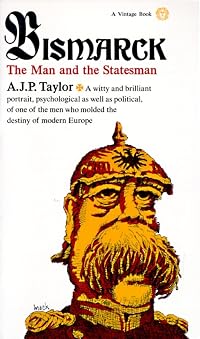
British historian A.J.P. Taylor studied at Oxford University and in 1938 became a fellow of Magdalen College. Interested chiefly in diplomatic and central European history, he is a prolific and masterful writer. Fritz Stern wrote of him and his The Struggle for Mastery in Europe, 1848--1918 (1954) in the Political Science Quarterly: "There is show more something Shavian about A. J. P. Taylor and his place among academic historians; he is brilliant, erudite, witty, dogmatic, heretical, irritating, insufferable, and withal inescapable. He sometimes insults and always instructs his fellow-historians, and never more so than in his present effort to reinterpret the diplomatic history of Europe from 1848 to the end of the First World War. . . . After a brilliant introduction, in which he defines the balance of power and assesses the relative and changing strength of the Great Powers, Mr. Taylor presents a chronological survey, beginning with the diplomacy of war, 1914--1918. . . . [He] writes on two levels. He narrates the history of European diplomacy and compresses it admirably into a single volume. Imposed upon the narrative is his effort to probe the historical meaning of given actions and conditions. . . . He has a peculiar sense of inevitability, growing out of what he regards the logic of a given development, as well as a delicate feeling for live options and alternatives. Mr. Taylor suggests that fear, not aggression, was the dominant impulse of pre-war diplomacy." The Origins of the Second World War (1961), again controversial and lively, starts from the premise (in Taylor's words) that "the war of 1939, far from being premeditated, was a mistake, the result on both sides of diplomatic blunders." The New Statesman said of it: "Taylor is the only English historian now writing who can bend the bow of Gibbon and Macaulay. [This is] a masterpiece: lucid, compassionate, beautifully written in a bare, sparse style, and at the same time deeply disturbing." Several of Taylor's other works also received high praise. Among these were Bismarck, the Man and the Statesman (1955), in which he exonerated Bismarck; Hapsburg Monarchy, 1809--1914, a survey of the era; and English History, 1919--1945, a volume in the Oxford History of England Series, greeted by the N.Y. Review of Books as "an astonishing tour de force." (Bowker Author Biography) show less
Awards and Honors
Notable Lists
Series

Belongs to Publisher Series
Work Relationships
Common Knowledge
- Canonical title
- The Struggle for Mastery in Europe, 1848-1918
- Original publication date
- 1954
- People/Characters
- Giuseppe Garibaldi; Otto von Bismarck; Robert Gascoyne-Cecil, 3rd Marquess of Salisbury
- Important places
- Europe
- Important events
- World War I (1914 | 1918)
- Original language
- English
Classifications
Statistics
- Members
- 516
- Popularity
- 58,267
- Reviews
- 6
- Rating
- (3.99)
- Languages
- English, Hungarian
- Media
- Paper
- ISBNs
- 6
- ASINs
- 17