On This Page
Description
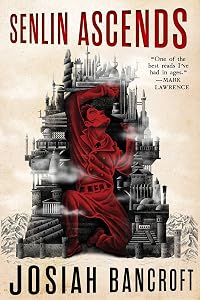
The first book in the word-of-mouth phenomenon debut fantasy series about one man's dangerous journey through a labyrinthine world. "One of my favorite books of all time" - Mark Lawrence The Tower of Babel is the greatest marvel in the world. Immense as a mountain, the ancient Tower holds unnumbered ringdoms, warring and peaceful, stacked one on the other like the layers of a cake. It is a world of geniuses and tyrants, of luxury and menace, of unusual animals and mysterious machines. Soon show more after arriving for his honeymoon at the Tower, the mild-mannered headmaster of a small village school, Thomas Senlin, gets separated from his wife, Marya, in the overwhelming swarm of tourists, residents, and miscreants. Senlin is determined to find Marya, but to do so he'll have to navigate madhouses, ballrooms, and burlesque theaters. He must survive betrayal, assassins, and the illusions of the Tower. But if he hopes to find his wife, he will have to do more than just endure. This quiet man of letters must become a man of action. The Books of Babel Senlin Ascends Arm of the Sphinx show lessTags
Recommendations






Member Reviews
This was one of the most lovely books I almost didn't finish. To certain library books I must ask certain questions: are they worth overdue fines? Perhaps more importantly, are they worth negative karma when late? To both of these questions, Senlin Ascends is an empathetic 'no.' And yet, on the strength of dear Milda's love for the tale and her encouragement, I find myself disregarding my earlier decision to return it.
"You have no idea what the Tower will turn you into!" Tarrou laughed and swatted the air trying to dispel Senlin's sudden piety."
Though the writing is truly gorgeous, the plotting is purposefully meandering. Headmaster Senlin is on a journey with his newly-wed wife to see the famous Tower of Babel. Within minutes of show more arrival, he loses her in the marketplace, and the rest of the story is a journey upward through the levels of Babel as he searches for the lovely, vivacious Marya. What follows is his experiences through the first four levels of the tower.
I suspect if you mix [b:The Pilgrim's Progress|29797|The Pilgrim's Progress|John Bunyan|https://images.gr-assets.com/books/1405982367s/29797.jpg|1960084] with 1001 Arabian Nights, using the language of [b:In the Night Garden|202769|In the Night Garden (The Orphan's Tales, #1)|Catherynne M. Valente|https://images.gr-assets.com/books/1320548374s/202769.jpg|196179], you'll probably have a good idea what you are getting into. Senlin is forced to reconsider ideas about Tower of Babel, his priorities, his identity, his relationship with Marya, even his conceptions about how the world operates and how he should relate to other people. It is as much a story of the internal self as one of external events.
"Senlin loved nothing more in the world than a warm hearth to set his feet upon and a good book to pour his whole mind into. While an evening storm rattled the shutters and a glass of port wine warmed in his hand, Senlin would read into the wee hours of the night. He especially delighted in the old tales, the epics in which heroes set out on some impossible and noble errand, confronting the dangers in their path with fatalistic bravery. Men often died along the way, killed in brutal and unnatural ways... Their deaths were boastful and lyrical and always, always more romantic than real. Death was not an end. It was an ellipsis" (page 23).
My barrier and sticking point was the idea that Senlin's journey centered on looking for his wife, Marya. Literally by page eight she has disappeared, so the rest of the story is about her from other perspectives. As a feminist, I find this type of structure deeply disturbing. Given that the story is from Senlin's third-person perspective, one may argue that's completely appropriate, so what's the big deal? The big deal is her placeholder status--replace her with 'ring,' or 'Grail,' or 'eighteenth-century silver cow-shaped creamer' and the agency would be the same. She acts in Senlin's memories of their interactions, she appears as a hallucination, Senlin thinks about her in relation to him, we learn of her actions from third parties, but beyond that there are only the barest paragraphs--in flashback, strangely, of Senlin's memories--of Marya being anything other than an Object. She is a mirage, a holding place for the character's own thoughts and emotions. A telling quote, I think, from page 1:
"Thomas Senlin and Marya, his new bride, peered at the human menagerie through the open window of their sunny sleeper car. Her china white hand lay weightlessly atop his long fingers."
Though that, perhaps, is part of the underlying motif of the story: the absence of women and the fickleness of love/relationships. Early on Senlin is told, "women get sucked up the Tower like embers up a flue," and we begin to get the picture that the destruction will be along gender lines. Outside the Tower, Senlin meets Adam, a young man who is missing his sister. On level three, we encounter another significant male character who will 'one day' return to his wife.
Of course, the search for the Other inspires in Senlin reflections on his own character, and his relationship with Marya. The challenge for me is that Senlin is someone I have trouble liking. It could be because Senlin hits too close to teen-Carol., and I don't mean in the hormonal sense, I mean the sense one has when one is young, overly book-smart, and color-blind to shades of grey. He is the headmaster in his small fishing village and he considers himself a leader of the community, although I strongly suspect the feeling is not mutual. He has harped on the wonders of Babel to his students and fellow citizens, which is no doubt supposed to play into the irony as he discovers the reality of Babel has little in common with his conceptions or his much-thumbed Guide to the Wonders of Babel.
In fact, I found myself wondering about the parallels with my most favorite and sometimes wildly inaccurate guidebook, [b:The Hitchhiker's Guide to the Galaxy|386162|The Hitchhiker's Guide to the Galaxy (Hitchhiker's Guide to the Galaxy, #1)|Douglas Adams|https://images.gr-assets.com/books/1388282444s/386162.jpg|3078186] where vaguely unlikable leading man Arthur also finds himself at a loss, forced to confront wonders and misconceptions. However, Hitchhiker's does it with absurdity and humor, while Senlin does it with gorgeous prose and Victorian sexism. If you'd like beautiful language and imagery without a plot, give [b:The Night Circus|9361589|The Night Circus|Erin Morgenstern|https://images.gr-assets.com/books/1387124618s/9361589.jpg|14245059] a try.
I absolutely enjoyed the writing, but Woman as Object coupled with the perspective of a man who is difficult to connect to means it was a struggle to read. It did pick up a great deal as Senlin reached level four (page 200/350) and started to embrace more duplicitous planing for the future, but it was too little, too late. The fact that most of the character actions were telegraphed in advance means there wasn't that much surprise. I wouldn't rule out Bancroft in the future, but I'd likely enter into it with suspicion, and that's no way to read a book.
*Many thanks to Milda for her encouragement in getting me to completion!
Original review of my first attempt:
Though the writing is truly gorgeous--think [a:Catherynne M. Valente|338705|Catherynne M. Valente|https://images.gr-assets.com/authors/1220999852p2/338705.jpg]--the plotting is also meandering. Senlin is on a journey with his newly-wed wife to see the famous Tower of Babel. Within minutes of arrival, he loses her in the marketplace and the rest of the story is a journey upward through the levels of Babel as he searches for the lovely Marya. I haven't read Arabian Nights in more than decades, so there might be a plotting parallel there, but again I found myself reminiscent of Valente, [b:In the Night Garden|202769|In the Night Garden (The Orphan's Tales, #1)|Catherynne M. Valente|https://images.gr-assets.com/books/1320548374s/202769.jpg|196179]. I'm not against meandering or loosely connected tales, but in this case, I found it continually irksome that the Grail is his young, beautiful, vivacious and energetic wife. Must we? Really? I'm just so over Twoo Love, or not perhaps even love, as we discover, as Senlin's journey is also a journey of reflection on their past and his own self-discovery. I think even had roles been reversed, or the object of the search the same sex, whatever; for me a plot in search of the romantic other is almost always less interesting. That it falls along lines of traditional gender roles means it is all the more grating.
Of course, the search for the Other inspires in Senlin reflections on his own character, and his relationship with Marya. The challenge for me is that Senlin is someone I have trouble liking. It could be because Senlin hits too close to teen-Carol., and I don't mean in the hormonal sense, I mean the sense one has when one is young, overly book-smart, and color-blind to shades of grey. He is the headmaster in his small fishing village and he considers himself a leader of the community, although I strongly suspect the feeling is not mutual. He has harped on the wonders of Babel to his students and fellow citizens, which is no doubt supposed to play into the irony as he discovers the reality of Babel has little in common with his conceptions or his much-thumbed Guide to the Wonders of Babel (here, I am unfortunately and perhaps negatively distracted by memories of both the Hitchhiker's Guide and the wonders of the Babel fish). I just don't care. Perhaps because I've lived some of Selin's experiences in the Tower--mind you, I was sixteen--but I fail to appreciate the loss of his lofty misconceptions and his encounters with baser human nature. Or his realization on level three that All the World's a Stage. I'm over that. Moving forward please. I'm sure things change as he ascends the Tower, but I'm having trouble caring about the transformation.
So, I gave it an honest try. I absolutely love the language and the imagery, and probably got as far as I did on the strength of that alone. I had strong antipathy towards a wife as Grail, and to Senlin's character as a whole. I'm sure it evolves, because book two implies he captains a stolen airship but at this moment, I'm having trouble caring. It doesn't rule it out for the future, or Bancroft at all, but I wish he'd take that talent and kick it up a notch, either with plotting or with moving outside gender roles.
"You have no idea what the Tower will turn you into!" Tarrou laughed and swatted the air trying to dispel Senlin's sudden piety."
Though the writing is truly gorgeous, the plotting is purposefully meandering. Headmaster Senlin is on a journey with his newly-wed wife to see the famous Tower of Babel. Within minutes of show more arrival, he loses her in the marketplace, and the rest of the story is a journey upward through the levels of Babel as he searches for the lovely, vivacious Marya. What follows is his experiences through the first four levels of the tower.
I suspect if you mix [b:The Pilgrim's Progress|29797|The Pilgrim's Progress|John Bunyan|https://images.gr-assets.com/books/1405982367s/29797.jpg|1960084] with 1001 Arabian Nights, using the language of [b:In the Night Garden|202769|In the Night Garden (The Orphan's Tales, #1)|Catherynne M. Valente|https://images.gr-assets.com/books/1320548374s/202769.jpg|196179], you'll probably have a good idea what you are getting into. Senlin is forced to reconsider ideas about Tower of Babel, his priorities, his identity, his relationship with Marya, even his conceptions about how the world operates and how he should relate to other people. It is as much a story of the internal self as one of external events.
"Senlin loved nothing more in the world than a warm hearth to set his feet upon and a good book to pour his whole mind into. While an evening storm rattled the shutters and a glass of port wine warmed in his hand, Senlin would read into the wee hours of the night. He especially delighted in the old tales, the epics in which heroes set out on some impossible and noble errand, confronting the dangers in their path with fatalistic bravery. Men often died along the way, killed in brutal and unnatural ways... Their deaths were boastful and lyrical and always, always more romantic than real. Death was not an end. It was an ellipsis" (page 23).
My barrier and sticking point was the idea that Senlin's journey centered on looking for his wife, Marya. Literally by page eight she has disappeared, so the rest of the story is about her from other perspectives. As a feminist, I find this type of structure deeply disturbing. Given that the story is from Senlin's third-person perspective, one may argue that's completely appropriate, so what's the big deal? The big deal is her placeholder status--replace her with 'ring,' or 'Grail,' or 'eighteenth-century silver cow-shaped creamer' and the agency would be the same. She acts in Senlin's memories of their interactions, she appears as a hallucination, Senlin thinks about her in relation to him, we learn of her actions from third parties, but beyond that there are only the barest paragraphs--in flashback, strangely, of Senlin's memories--of Marya being anything other than an Object. She is a mirage, a holding place for the character's own thoughts and emotions. A telling quote, I think, from page 1:
"Thomas Senlin and Marya, his new bride, peered at the human menagerie through the open window of their sunny sleeper car. Her china white hand lay weightlessly atop his long fingers."
Though that, perhaps, is part of the underlying motif of the story: the absence of women and the fickleness of love/relationships. Early on Senlin is told, "women get sucked up the Tower like embers up a flue," and we begin to get the picture that the destruction will be along gender lines. Outside the Tower, Senlin meets Adam, a young man who is missing his sister. On level three, we encounter another significant male character who will 'one day' return to his wife.
Of course, the search for the Other inspires in Senlin reflections on his own character, and his relationship with Marya. The challenge for me is that Senlin is someone I have trouble liking. It could be because Senlin hits too close to teen-Carol., and I don't mean in the hormonal sense, I mean the sense one has when one is young, overly book-smart, and color-blind to shades of grey. He is the headmaster in his small fishing village and he considers himself a leader of the community, although I strongly suspect the feeling is not mutual. He has harped on the wonders of Babel to his students and fellow citizens, which is no doubt supposed to play into the irony as he discovers the reality of Babel has little in common with his conceptions or his much-thumbed Guide to the Wonders of Babel.
In fact, I found myself wondering about the parallels with my most favorite and sometimes wildly inaccurate guidebook, [b:The Hitchhiker's Guide to the Galaxy|386162|The Hitchhiker's Guide to the Galaxy (Hitchhiker's Guide to the Galaxy, #1)|Douglas Adams|https://images.gr-assets.com/books/1388282444s/386162.jpg|3078186] where vaguely unlikable leading man Arthur also finds himself at a loss, forced to confront wonders and misconceptions. However, Hitchhiker's does it with absurdity and humor, while Senlin does it with gorgeous prose and Victorian sexism. If you'd like beautiful language and imagery without a plot, give [b:The Night Circus|9361589|The Night Circus|Erin Morgenstern|https://images.gr-assets.com/books/1387124618s/9361589.jpg|14245059] a try.
I absolutely enjoyed the writing, but Woman as Object coupled with the perspective of a man who is difficult to connect to means it was a struggle to read. It did pick up a great deal as Senlin reached level four (page 200/350) and started to embrace more duplicitous planing for the future, but it was too little, too late. The fact that most of the character actions were telegraphed in advance means there wasn't that much surprise. I wouldn't rule out Bancroft in the future, but I'd likely enter into it with suspicion, and that's no way to read a book.
*Many thanks to Milda for her encouragement in getting me to completion!
Original review of my first attempt:
Though the writing is truly gorgeous--think [a:Catherynne M. Valente|338705|Catherynne M. Valente|https://images.gr-assets.com/authors/1220999852p2/338705.jpg]--the plotting is also meandering. Senlin is on a journey with his newly-wed wife to see the famous Tower of Babel. Within minutes of arrival, he loses her in the marketplace and the rest of the story is a journey upward through the levels of Babel as he searches for the lovely Marya. I haven't read Arabian Nights in more than decades, so there might be a plotting parallel there, but again I found myself reminiscent of Valente, [b:In the Night Garden|202769|In the Night Garden (The Orphan's Tales, #1)|Catherynne M. Valente|https://images.gr-assets.com/books/1320548374s/202769.jpg|196179]. I'm not against meandering or loosely connected tales, but in this case, I found it continually irksome that the Grail is his young, beautiful, vivacious and energetic wife. Must we? Really? I'm just so over Twoo Love, or not perhaps even love, as we discover, as Senlin's journey is also a journey of reflection on their past and his own self-discovery. I think even had roles been reversed, or the object of the search the same sex, whatever; for me a plot in search of the romantic other is almost always less interesting. That it falls along lines of traditional gender roles means it is all the more grating.
Of course, the search for the Other inspires in Senlin reflections on his own character, and his relationship with Marya. The challenge for me is that Senlin is someone I have trouble liking. It could be because Senlin hits too close to teen-Carol., and I don't mean in the hormonal sense, I mean the sense one has when one is young, overly book-smart, and color-blind to shades of grey. He is the headmaster in his small fishing village and he considers himself a leader of the community, although I strongly suspect the feeling is not mutual. He has harped on the wonders of Babel to his students and fellow citizens, which is no doubt supposed to play into the irony as he discovers the reality of Babel has little in common with his conceptions or his much-thumbed Guide to the Wonders of Babel (here, I am unfortunately and perhaps negatively distracted by memories of both the Hitchhiker's Guide and the wonders of the Babel fish). I just don't care. Perhaps because I've lived some of Selin's experiences in the Tower--mind you, I was sixteen--but I fail to appreciate the loss of his lofty misconceptions and his encounters with baser human nature. Or his realization on level three that All the World's a Stage. I'm over that. Moving forward please. I'm sure things change as he ascends the Tower, but I'm having trouble caring about the transformation.
So, I gave it an honest try. I absolutely love the language and the imagery, and probably got as far as I did on the strength of that alone. I had strong antipathy towards a wife as Grail, and to Senlin's character as a whole. I'm sure it evolves, because book two implies he
There are some books that are just not made for the big screen - elements won't translate on celluloid and cinematography can do little to change that. This is not that book. This one has the makings of a SF/Steampunk visual feast of vibrant colors and people and a glorious assault on the senses. This would be the quintessential Steampunk Odyssey and I'd probably be first in line to get my ticket. Hey, Dennis Villanueva if you're looking for your next big visual after Dune, come hang out in the folds of this series.
"The Earth doesn't shake the tower, the tower shakes the earth."
- Everyman's Guide to the Tower of Babel, IV. XII
Thomas Senlin never stood a chance. Poor Bugger.
Senlin is a man blindsided by cold hard reality. Lulled into a show more sense of security and social standing in his sleepy portside town of Isguah, the number one tourist destination in this universe was supposed to be as easy as his life had been thus far. A headmaster of great standing becomes a man lost and in denial within a day of wandering near the Tower...not even in it. He is an innocent, naïve and foolish lost soul in the Tower of Babel - the perfect prey to be swallowed whole. And yet, there is something about him that gives the reader hope despite his outright denial of the barbarity and injustices of the Tower. Senlin is a thinker, an analytical one at that. Even without realizing it at first - he asks, why? He is not yet on the verge of the answer, nor is he anywhere near the beginning of his true ascent which I can only guess takes place in further books. But we bare witness to a man's realization of his place in the world and how vast and dark and debauched his "northern light" in the Tower of Babel.
Josiah Bancroft has this ability to hoodwink the reader into a false sense of calm, control, security and hope after plunging the main character into some precarious situations. So lulled into falsehood that you begin to pity Senlin's naivety as he believes:
1. The Tower is good - it can't possibly be barbaric
2. The Baths are the ultimate in civility, decorum, respect and hospitability.
3. Marya is okay. She will find me (Senlin) or she will wait.
4. Everything will be alright.
Bancroft you sly devil. A great introduction to an ingenious premise well executed and full of nail-biting sequences that have you almost ready to shut the book in hopes of saving Senlin. show less
"The Earth doesn't shake the tower, the tower shakes the earth."
- Everyman's Guide to the Tower of Babel, IV. XII
Thomas Senlin never stood a chance. Poor Bugger.
Senlin is a man blindsided by cold hard reality. Lulled into a show more sense of security and social standing in his sleepy portside town of Isguah, the number one tourist destination in this universe was supposed to be as easy as his life had been thus far. A headmaster of great standing becomes a man lost and in denial within a day of wandering near the Tower...not even in it. He is an innocent, naïve and foolish lost soul in the Tower of Babel - the perfect prey to be swallowed whole. And yet, there is something about him that gives the reader hope despite his outright denial of the barbarity and injustices of the Tower. Senlin is a thinker, an analytical one at that. Even without realizing it at first - he asks, why? He is not yet on the verge of the answer, nor is he anywhere near the beginning of his true ascent which I can only guess takes place in further books. But we bare witness to a man's realization of his place in the world and how vast and dark and debauched his "northern light" in the Tower of Babel.
Josiah Bancroft has this ability to hoodwink the reader into a false sense of calm, control, security and hope after plunging the main character into some precarious situations. So lulled into falsehood that you begin to pity Senlin's naivety as he believes:
1. The Tower is good - it can't possibly be barbaric
2. The Baths are the ultimate in civility, decorum, respect and hospitability.
3. Marya is okay. She will find me (Senlin) or she will wait.
4. Everything will be alright.
Bancroft you sly devil. A great introduction to an ingenious premise well executed and full of nail-biting sequences that have you almost ready to shut the book in hopes of saving Senlin. show less
Thomas Senlin is the bookish headmaster of a school in the countryside, recently married, and on a honeymoon trip to the Tower of Babel. In this world, the Tower is an incredibly tall, massive structure where each level is almost a city unto itself, the center of civilization, and Tom’s lifelong fascination. But when they get there, this place of wonders turns out to be nothing like he’s heard or imagined, and when he and Marya are separated, he’s forced to travel into this world of vice and wonder to find her.
Honestly, my summary can’t possibly do this book justice. It’s a mix of Tim Powers’ steampunk and China Mieville’s fantasy. It’s engaging and delightful. It’s about as unique a fantasy as I’ve come across. And show more it’s so good I ordered the set from Amazon before I finished the first volume from th3 library! show less
Honestly, my summary can’t possibly do this book justice. It’s a mix of Tim Powers’ steampunk and China Mieville’s fantasy. It’s engaging and delightful. It’s about as unique a fantasy as I’ve come across. And show more it’s so good I ordered the set from Amazon before I finished the first volume from th3 library! show less
Holy crap, man.
--
My staff pick at Quail Ridge Books:
Though I grew up loving sci-fi and fantasy, as an adult, I think it can be hard to find books that avoid the outdated, exclusionary pitfalls common to the genre. It's also unusual to pick up one of these books and realize it's completely different from anything else you've ever read. Remarkably, Senlin Ascends is able to do both - without tooting its own horn. The settings leap off the page, and each character, no matter how minor, has the depth and complexity of a real person. I can't wait to jump into the next installment in this series.
--
This is one of the best books I've read in years. I can't say how refreshing it is to read a sci-fi/fantasy (ish? It's kind of steampunk-y) novel show more that's totally new to me and like nothing I've read before. It also feels so nice to read something in this genre that was written by a man yet doesn't have lengthy paragraphs describing all of the female characters as stunningly attractive angels the main character wants to bang. Women are people! Amazing!
I really can't wait for more. I've already bought the second book and requested an ARC for the third, if that's a thing. (Mr Bancroft, please make this a thing.) This is the first time in a long time I've been excited to jump into a series, rather than reluctant. More! show less
--
My staff pick at Quail Ridge Books:
Though I grew up loving sci-fi and fantasy, as an adult, I think it can be hard to find books that avoid the outdated, exclusionary pitfalls common to the genre. It's also unusual to pick up one of these books and realize it's completely different from anything else you've ever read. Remarkably, Senlin Ascends is able to do both - without tooting its own horn. The settings leap off the page, and each character, no matter how minor, has the depth and complexity of a real person. I can't wait to jump into the next installment in this series.
--
This is one of the best books I've read in years. I can't say how refreshing it is to read a sci-fi/fantasy (ish? It's kind of steampunk-y) novel show more that's totally new to me and like nothing I've read before. It also feels so nice to read something in this genre that was written by a man yet doesn't have lengthy paragraphs describing all of the female characters as stunningly attractive angels the main character wants to bang. Women are people! Amazing!
I really can't wait for more. I've already bought the second book and requested an ARC for the third, if that's a thing. (Mr Bancroft, please make this a thing.) This is the first time in a long time I've been excited to jump into a series, rather than reluctant. More! show less
I would give this book 10 out of 5 stars if I could. Summaries that I have read hardly do it justice. A mythical tower, a lost wife, steampunk spiders, a giantess, a creepy undead assassin, air pirates, nefarious public figures, and poor Senlin stuck smack dab in the middle of it all. One of the best fast paced adventure stories I have ever read.
I picked this up while my husband was in the hospital, a different sort of lost spouse, if you will. I often felt as timid and powerless as Senlin and, in that, his journey was also mine. I found strength here, in this story, in Thomas Senlin. If he could find the courage to do these amazing things in the face of such a culture of depraved immorality, I could also survive. I'm tearing up right show more now writing this review.
Thank you for the ride, thank you for the push, thank you for this marvelous story, Mr Bancroft. I can't wait to read the next one. show less
I picked this up while my husband was in the hospital, a different sort of lost spouse, if you will. I often felt as timid and powerless as Senlin and, in that, his journey was also mine. I found strength here, in this story, in Thomas Senlin. If he could find the courage to do these amazing things in the face of such a culture of depraved immorality, I could also survive. I'm tearing up right show more now writing this review.
Thank you for the ride, thank you for the push, thank you for this marvelous story, Mr Bancroft. I can't wait to read the next one. show less
I picked this novel up in the library on impulse as I was intrigued by the Tower of Babel concept. My mind went to the [a:Ted Chiang|130698|Ted Chiang|https://images.gr-assets.com/authors/1399023404p2/130698.jpg] short story about the tower being built, which I read in [b:Arrival|31625351|Arrival|Ted Chiang|https://i.gr-assets.com/images/S/compressed.photo.goodreads.com/books/1478010711l/31625351._SY75_.jpg|216334]. 'Senlin Ascends' is also concerned with a man climbing the tower and centres upon his growing comprehension of its political economy. The titular Senlin is an outsider, visiting the tower on his honeymoon. Thus the reader discovers the place through his eyes, as he searches for his lost wife. The great strength of the book show more is its world-building, which is ingenious, original, and careful to show the systematic exploitation behind Senlin's initially naive view of the tower's magnificence. It also leaves plenty of mystery to be explored in further volumes, by raising questions about the higher levels of the tower, or 'ringdoms'. Their number and the overall purpose of the tower remains unclear. The tension between co-operation and self-interest in a situation of low social trust and lax rule of law is shown effectively. The plentiful action scenes are exciting.
The main disappointment, for me, was the presence of female characters who had the potential to be very interesting but took only marginal roles. Senlin's perspective is, at least initially, very patronising and would have been improved by a second protagonist, ideally his wife. She remains an attractive phantom throughout, a victim to be saved, and Adam's sister is very much the same. Both are threatened with sexual exploitation, depressingly. Edith and Iren have more agency, while remaining equally enigmatic. The majority of the book involves Senlin bonding with men, to the extent that I wondered whether his marriage was a sham and he was actually gay. I don't think that was the author's intent, however. I have no objection to reading about male protagonists, of course. In this case, though, the story felt incomplete because the reader only gets half of it. The contrast between Senlin and Marya's experiences would have been much more interesting, I think. Senlin himself becomes a bit tiresome after a while. At first his parochial stuffiness is quite fun, but once he settles into New Babel and becomes more confident he loses his distinctiveness. While the world-building was certainly enjoyable, I don't really want to read another entire book from Senlin's perspective. If the next in the series is from Marya's perspective, though, I'll gladly read it. show less
The main disappointment, for me, was the presence of female characters who had the potential to be very interesting but took only marginal roles. Senlin's perspective is, at least initially, very patronising and would have been improved by a second protagonist, ideally his wife. She remains an attractive phantom throughout, a victim to be saved, and Adam's sister is very much the same. Both are threatened with sexual exploitation, depressingly. Edith and Iren have more agency, while remaining equally enigmatic. The majority of the book involves Senlin bonding with men, to the extent that I wondered whether his marriage was a sham and he was actually gay. I don't think that was the author's intent, however. I have no objection to reading about male protagonists, of course. In this case, though, the story felt incomplete because the reader only gets half of it. The contrast between Senlin and Marya's experiences would have been much more interesting, I think. Senlin himself becomes a bit tiresome after a while. At first his parochial stuffiness is quite fun, but once he settles into New Babel and becomes more confident he loses his distinctiveness. While the world-building was certainly enjoyable, I don't really want to read another entire book from Senlin's perspective. If the next in the series is from Marya's perspective, though, I'll gladly read it. show less
There's a lot to love in this book. I was quite on the edge giving this a chance when I first picked it up, but the whole damn idea of having a full adventure in the mythical Tower of Babylon just struck all my fancies at once. I remember Ted Chiang's short story about the Tower of Babylon so fondly... I just had to imagine it taken as a full novel.
So how did this pan out? Wonderfully! Maybe not the same level as Chiang, but when dealing with a tower that not even airships can reach the top levels and whole cities are contained within, we're dealing with a delicious idea-driven fantasy with a world-building potential with LEGS.
Good? Good. And while it doesn't go all out with the Babylon run, it does strike out a super-solid Steampunk show more adventure through and through. Focus on a slightly sanctimonious headmaster with his new bride, take them to Babylon as the super-rubes as they are, and then tear them to pieces.
So nice. :) Innocence becomes an adventure to reach the top to find his missing wife as the mean streets of dirty London... ahem, I mean the Basement of Babel, steals, lies, and cheats every noob that lands on its doorsteps. Move on to the whole haves and have-nots in the bathhouses in the third level, or the hucksters in the second, and turn it into a heist novel, a revolutionary novel, a PIRACY novel.
Am I impressed? Sure! I mean, all these elements are pretty commonplace in fantasy anyway, but when you ply them with a deft hand and make sure the awesome core of the Tower of Babylon is still at the core, and I've got to say we've got something pretty original going on here.
I RESPECT original. It's not WILD original, though. It's solid fun, turning steampunk on a brand-new almost hard-SF edge while bringing in a lot of elements of the old Babylonian society all the while. And we have airships. I likey. :)
So many of those steampunk novels have been kinda... lacking. This one seems to do it RIGHT. :) Because it's not really steampunk. It's just plain creative. :) show less
So how did this pan out? Wonderfully! Maybe not the same level as Chiang, but when dealing with a tower that not even airships can reach the top levels and whole cities are contained within, we're dealing with a delicious idea-driven fantasy with a world-building potential with LEGS.
Good? Good. And while it doesn't go all out with the Babylon run, it does strike out a super-solid Steampunk show more adventure through and through. Focus on a slightly sanctimonious headmaster with his new bride, take them to Babylon as the super-rubes as they are, and then tear them to pieces.
So nice. :) Innocence becomes an adventure to reach the top to find his missing wife as the mean streets of dirty London... ahem, I mean the Basement of Babel, steals, lies, and cheats every noob that lands on its doorsteps. Move on to the whole haves and have-nots in the bathhouses in the third level, or the hucksters in the second, and turn it into a heist novel, a revolutionary novel, a PIRACY novel.
Am I impressed? Sure! I mean, all these elements are pretty commonplace in fantasy anyway, but when you ply them with a deft hand and make sure the awesome core of the Tower of Babylon is still at the core, and I've got to say we've got something pretty original going on here.
I RESPECT original. It's not WILD original, though. It's solid fun, turning steampunk on a brand-new almost hard-SF edge while bringing in a lot of elements of the old Babylonian society all the while. And we have airships. I likey. :)
So many of those steampunk novels have been kinda... lacking. This one seems to do it RIGHT. :) Because it's not really steampunk. It's just plain creative. :) show less
Members
- Recently Added By
Lists

Favourite Fantasy Books of the 21st Century
51 works; 6 members

Favourite Steampunk Books
80 works; 16 members

Stories About Other Worlds
145 works; 13 members

Top Five Books of 2020
982 works; 350 members

Best 21st Century Books (So Far)
679 works; 86 members

Top Five Books of 2017
757 works; 231 members

Review 4
37 works; 3 members

Top Five Books of 2015
811 works; 241 members

Fantastical Cities
23 works; 1 member

Recommended Fantasy Books
77 works; 5 members

Five star books
1,767 works; 109 members

Books Read in 2017
4,249 works; 130 members

2010s
241 works; 3 members

mom
729 works; 1 member

Publishers Weekly Best Books of the Week / Starred Reviews 2018
78 works; 2 members

Amazon best fictional genre picks monthly for 2018
418 works; 9 members

Books Read 2025
70 works; 2 members
Author Information

14 Works 3,893 Members
Awards and Honors
Awards
Series

Common Knowledge
- Canonical title
- Senlin Ascends
- Original publication date
- 2013-02
- People/Characters
- Thomas Senlin
- Important places
- The Tower of Babel
- Important events
- The Silk Age
- Epigraph
- The Tower of Babel is sometimes called the Sink of Humanity. Its immensity, the variety of its ringdoms, its mysterious and luxurious heights are irresistable to all comers. We are drawn to it like water to a drain.
- Dedication
- For Sharon, who never gets lost in the crowd
- First words
- It was a four-day journey by train from the coast to the desert where the Tower of Babel rose like a tusk from the jaw of the Earth.
- Quotations
- "Anything that distracts from the play becomes the play itself."
- Last words
- (Click to show. Warning: May contain spoilers.)But there was no time for a moment of triumph. They had no ballast and their course was set beyond their control. They were barreiing up through the black into the bursting heart of the storm.
- Canonical DDC/MDS
- 813.6
- Canonical LCC
- PS3602.A63518
Classifications
Statistics
- Members
- 1,696
- Popularity
- 13,202
- Reviews
- 64
- Rating
- (3.94)
- Languages
- 6 — Czech, English, German, Italian, Portuguese, Spanish
- Media
- Paper, Audiobook, Ebook
- ISBNs
- 17
- ASINs
- 9