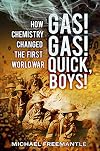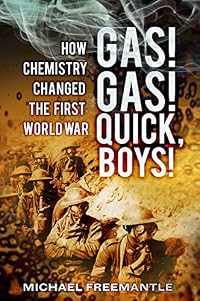
Gas! Gas! Quick, Boys!: How Chemistry Changed the First World War
by Michael Freemantle
On This Page
Description
The harnessing of the power of chemistry was a key factor in determining the shape and duration of the First World War and ultimately became the difference between winning and losing. The industrial-scale carnage and devastation seen on all fronts during the conflict would not have been possible without the chemistry of war, which generated the huge quantities of metals and explosives required for artillery shells and fuses; for pistol, rifle and machine-gun cartridges; for grenades and show more trench mortar bombs; and for the mines blown up in tunnelling operations. It also created deadly chemical warfare agents, such as chlorine gas, mustard gas and phosgene, which filled artillery shells or were released in cloud gas operations. However, chemistry was not only a destructive instrument of war but also protected troops and healed the sick and wounded. This double-edged sword is perfectly exemplified by the element chlorine, which served both as a frontline offensive weapon, causing horrific injuries and death, as well as a disinfectant and water-purifying agent, saving many lives. Michael Freemantle, in this first all-encompassing study of the chemistry of the Great War, reveals the true extent of the chemical arms race and how industry evolved to meet the needs for more powerful explosives and deadlier gases, as well as advancements in medicine. From bombs to bullets, tear gas to TNT, camouflage to cordite, this book tells the true story of the horrors of the 'Chemists' War. show lessTags
Recommendations









Member Reviews
The First World War has sometimes been described as the chemists' war. This moderately interesting little book (214 pages) explores this theme with considerable breadth but only moderate depth. The title suggests a book on poison gases, and they're certainly covered; but so is the chemistry of high explosives, the metallurgy of weapons, the use of pharmaceuticals, and even dyes for uniforms.
Franz Haber, who both invented a process for fixing atmospheric nitrogen as ammonium (and thereby kept Imperial Germany in the war) and planned and personally directed the first gas attacks using chlorine. For the former, he won a Nobel Prize; for the latter, he was widely vilified.
The chemistry is not terribly deep. The author uses descriptions show more like "phosgene, a compound whose molecules consist of an atom of carbon, an atom of oxygen, and an atom of chlorine" when "phosgene (Cl2CO)" would be a lot more succinct. There is not a structural formula in the book, nor a balanced reaction. Rather odd for a book with so much chemistry. Still, he describes the industrial processes for producing various compounds in a reasonably interesting way.
Surprises? Platinum was used to catalyze production of sulfuric acid during the First World War; vanadium oxide was not used until after the war. This produced a great patriotic drive to eschew platinum jewelry so that platinum could be used in the war effort. Chemical weapons were among the least lethal of any weapons used during the war, with just 7% fatalities among gas casualties. Cyanide was almost completely ineffective, because it dispersed almost at once. Mustard was the most effective chemical agent to see actual use, and nearly won the war for the Germans. Lewisite was not produced in time for combat use, which is a mercy, since the American Army Air Corps wanted to drop it on German cities ("the dew of death"). It was a thoroughly nasty war, except when compared with the next one.
Black powder was still being used in shells early in the war. This was replaced with proper high explosives such as picric acid or TNT. However, by its end, ammonal was being widely used, because everyone was running out of toluene for TNT and ammonal was mostly cheap ammonium nitrate.
Khaki uniforms were introduced by the British on the Northeast Frontier (between British India and Afghanistan) well before the war in Europe because Tommy discovered that white desert uniforms made one altogether too visible a target. Early versions were dyed with coffee or camel dung. No, really. The British industrialist who invented a color fast khaki dye based on ferrous and chromium salts made a fairly sizable fortune.
The trench fighting in France was on ground that had been well fertilized with dung for generations. Ergo, practically every wound rapidly became infected. This being the days before antibiotics or even sulfa drugs, heavy use was made of debridement and antiseptics. Unfortunately, most antiseptics were counterproductive in deep wounds. Anaesthesia was available, in principle, but sometimes ran low; there is an anecdote of an officer with a groin wound being held down by four men while the surgeon extracted the metal, because the chloroform had run out. Incidentally, chloroform in air exposed to UV light produces phosgene, one of the more lethal poison gases used in the war. Picric acid was both as a high explosive and an antiseptic. Freemantle does not miss the opportunity to revel in the irony. Some of the antiseptics and disinfectants were pretty harsh stuff, including things like mercuric chloride.
Trench nephritis has never been adequately explained, but may have been a mild form of Hantavirus. Theories at the time included speculation that it was a result of constantly drinking chlorinated water. Which beat the alternative; there is an anecdote of thirsty, exhausted soldiers continuing to drink out of a stream even after discovering that it ran over several German corpses.
Chaim Weizmann, future first President of Israel, invented a process for producing acetone, needed for cordite manufacture, by fermentation of starch. Grain being in short supply, schoolchildren were recruited to gather chestnuts as a carbohydrate source.
Lots of other anecdotes. A little breezy in places, but I think most of you will find it quite interesting, and it's an easy read. show less
Franz Haber, who both invented a process for fixing atmospheric nitrogen as ammonium (and thereby kept Imperial Germany in the war) and planned and personally directed the first gas attacks using chlorine. For the former, he won a Nobel Prize; for the latter, he was widely vilified.
The chemistry is not terribly deep. The author uses descriptions show more like "phosgene, a compound whose molecules consist of an atom of carbon, an atom of oxygen, and an atom of chlorine" when "phosgene (Cl2CO)" would be a lot more succinct. There is not a structural formula in the book, nor a balanced reaction. Rather odd for a book with so much chemistry. Still, he describes the industrial processes for producing various compounds in a reasonably interesting way.
Surprises? Platinum was used to catalyze production of sulfuric acid during the First World War; vanadium oxide was not used until after the war. This produced a great patriotic drive to eschew platinum jewelry so that platinum could be used in the war effort. Chemical weapons were among the least lethal of any weapons used during the war, with just 7% fatalities among gas casualties. Cyanide was almost completely ineffective, because it dispersed almost at once. Mustard was the most effective chemical agent to see actual use, and nearly won the war for the Germans. Lewisite was not produced in time for combat use, which is a mercy, since the American Army Air Corps wanted to drop it on German cities ("the dew of death"). It was a thoroughly nasty war, except when compared with the next one.
Black powder was still being used in shells early in the war. This was replaced with proper high explosives such as picric acid or TNT. However, by its end, ammonal was being widely used, because everyone was running out of toluene for TNT and ammonal was mostly cheap ammonium nitrate.
Khaki uniforms were introduced by the British on the Northeast Frontier (between British India and Afghanistan) well before the war in Europe because Tommy discovered that white desert uniforms made one altogether too visible a target. Early versions were dyed with coffee or camel dung. No, really. The British industrialist who invented a color fast khaki dye based on ferrous and chromium salts made a fairly sizable fortune.
The trench fighting in France was on ground that had been well fertilized with dung for generations. Ergo, practically every wound rapidly became infected. This being the days before antibiotics or even sulfa drugs, heavy use was made of debridement and antiseptics. Unfortunately, most antiseptics were counterproductive in deep wounds. Anaesthesia was available, in principle, but sometimes ran low; there is an anecdote of an officer with a groin wound being held down by four men while the surgeon extracted the metal, because the chloroform had run out. Incidentally, chloroform in air exposed to UV light produces phosgene, one of the more lethal poison gases used in the war. Picric acid was both as a high explosive and an antiseptic. Freemantle does not miss the opportunity to revel in the irony. Some of the antiseptics and disinfectants were pretty harsh stuff, including things like mercuric chloride.
Trench nephritis has never been adequately explained, but may have been a mild form of Hantavirus. Theories at the time included speculation that it was a result of constantly drinking chlorinated water. Which beat the alternative; there is an anecdote of thirsty, exhausted soldiers continuing to drink out of a stream even after discovering that it ran over several German corpses.
Chaim Weizmann, future first President of Israel, invented a process for producing acetone, needed for cordite manufacture, by fermentation of starch. Grain being in short supply, schoolchildren were recruited to gather chestnuts as a carbohydrate source.
Lots of other anecdotes. A little breezy in places, but I think most of you will find it quite interesting, and it's an easy read. show less
Members
- Recently Added By
Lists

Chemistry
53 works; 3 members
Author Information
6 Works 60 Members
Michael Freemantle is a science writer who has written numerous news reports and articles on chemistry, the history of chemistry and related topics. He is also the author, co-author or editor of eight books on chemistry. He lives in Hampshire.
Classifications
- Genres
- Nonfiction, History
- DDC/MDS
- 358.3409409041 — Society, Government, and Culture Public administration & military science Air and other specialized forces and warfare; engineering and related services Other technical services
- LCC
- D639 .C39 .F74 — History of Europe, Asia, Africa and Oceania History (General) World War I (1914-1918)
- BISAC
Statistics
- Members
- 43
- Popularity
- 684,885
- Reviews
- 1
- Rating
- (5.00)
- Languages
- English
- Media
- Paper, Ebook
- ISBNs
- 4
- ASINs
- 2