The Story of Spanish
by Jean-Benoît Nadeau
On This Page
Description
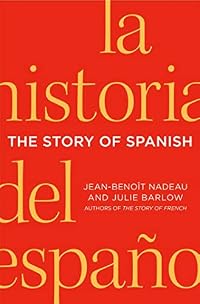
Explores the origins and evolution of the Spanish language, covering Hispania's Vulgar Latin of 800 AD, the language's development through the age of Queen Isabella and the rise of Spanish in the Americas.Tags
Recommendations














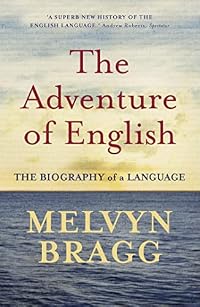

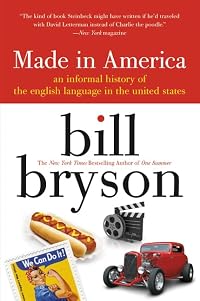
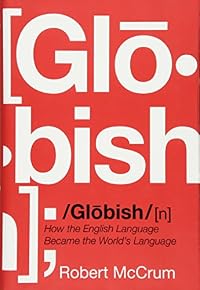

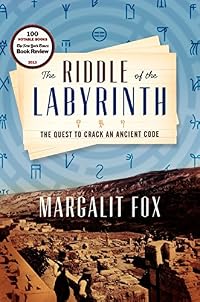






Member Recommendations
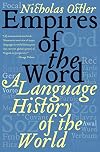
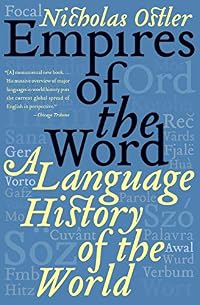
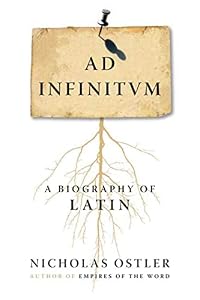
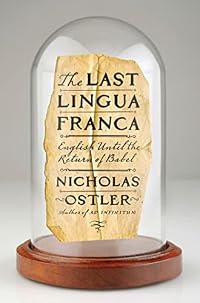
lorax "Empires of the Word" is a history of a dozen or so languages shaping history, including Spanish; "The Story of Spanish" is the same idea, less academically and obviously in more detail, focused on Spanish. Both are highly recommended.
13
Member Reviews
This popularization of academic landmarks (compare the Spanish sections of Nicholas Ostler, "Empires of the Word: Language History of the World") brings helpful perspectives to the native and adoptive speakers of Spanish. The authors note that Americans study Spanish as a "2d language" more than any other. While this is largely in recognition of its importance, many Americans are listening to deliberate and false drums of hatred and prejuduce. This volume can educate the ignorant who can now free themselves of their bias-based hostility. The Spanish spoken by immigrants from Mexico is a "gracious" language, and for the most part it takes years of being exposed to the "angry poor ignorant white men" of this country, before they begin to show more get as twisted. Spanish is the closest of the living languages to Latin, it is one of the most phonetic, and it is very organized and adapted. Like English, Spanish can express anything language can express.
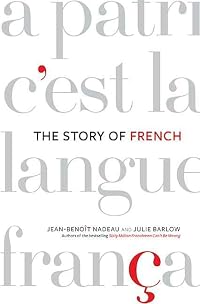
Nadeau and Barlow provide an wonderful story to explain the complex distribution of Spanish, and why people who speak its dialects can still be mutually understood. Sadly, they fail to mention the documented fact that certain Native American languages -- Nahuatl in Mexico (creating the "Los Angeles dialect), and Quechua/Aymara/Mapuche in South America -- have been shown to underlie some dialect differences. They do find support for my observation that Mexicans speak a "Victorian" language of grace, while El Salvadoreans, ruled for so long by brutal thugs, speak a crude obscenity which is nevertheless intelligible. Many ironies.
I love the hard linguistic work indulged by such cheerful authors who clearly love language and Spanish specifically. Cervantez and the great works of literature are not overlooked.
They show how the culture grew as it came into contacts with others, and with respect to America, the many borrowings. It is impossible to speak of the American West--its heartland--without going all bilingual: barbecue, rodeo, "ten gallon hat" from "tan galan". show less
Nadeau and Barlow provide an wonderful story to explain the complex distribution of Spanish, and why people who speak its dialects can still be mutually understood. Sadly, they fail to mention the documented fact that certain Native American languages -- Nahuatl in Mexico (creating the "Los Angeles dialect), and Quechua/Aymara/Mapuche in South America -- have been shown to underlie some dialect differences. They do find support for my observation that Mexicans speak a "Victorian" language of grace, while El Salvadoreans, ruled for so long by brutal thugs, speak a crude obscenity which is nevertheless intelligible. Many ironies.
I love the hard linguistic work indulged by such cheerful authors who clearly love language and Spanish specifically. Cervantez and the great works of literature are not overlooked.
They show how the culture grew as it came into contacts with others, and with respect to America, the many borrowings. It is impossible to speak of the American West--its heartland--without going all bilingual: barbecue, rodeo, "ten gallon hat" from "tan galan". show less
Thank you Goodreads First Reads for this book!
As someone who has been learning Spanish as a third language, and living in NY, and a serious student of flamenco, I can easily sum it up by saying that The Story of Spanish hit the spot! The book is a great way to re-read world history from the point of view of not Spain, per se, but Spanish, a living, changing, evolving, stretching, retracting, exploding language. The story begins all the way with Phoneacians, who gave the peninsula its original name, travels through the Moors and the Inquisition, and moves across the Atlantic, and explodes in a whole new continent. As a native Turkish speaker, I even learned where some of the weird words we have originally came from, though Turkish show more borrowed them directly from French and Italian, I had never thought that they had borrowed them from the native languages of South America (the Americans!) The book is full of fun trivia that I relentlessly repeat to my friends, who roll their eyes at me. Did you know that the first European language spoken in what is now the USA was Spanish (dates back to 1560s). And, here I was thinking those fierce Native American tribes were always expert horse riders! The book also gives a good account of all the Spanish language academies across the different Spanish-speaking countries, and the development of various dictionaries across time.
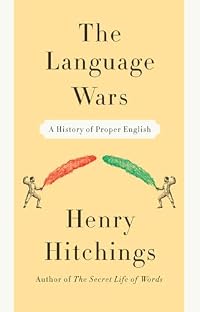
A perfect book to read before/after "The Story of Ain't" and any Henry Hitchings book.
Recommended for those who like to know where words come from, those who like Latin America and Latin American literature, telenovelas, civil wars, and world history. show less
As someone who has been learning Spanish as a third language, and living in NY, and a serious student of flamenco, I can easily sum it up by saying that The Story of Spanish hit the spot! The book is a great way to re-read world history from the point of view of not Spain, per se, but Spanish, a living, changing, evolving, stretching, retracting, exploding language. The story begins all the way with Phoneacians, who gave the peninsula its original name, travels through the Moors and the Inquisition, and moves across the Atlantic, and explodes in a whole new continent. As a native Turkish speaker, I even learned where some of the weird words we have originally came from, though Turkish show more borrowed them directly from French and Italian, I had never thought that they had borrowed them from the native languages of South America (the Americans!) The book is full of fun trivia that I relentlessly repeat to my friends, who roll their eyes at me. Did you know that the first European language spoken in what is now the USA was Spanish (dates back to 1560s). And, here I was thinking those fierce Native American tribes were always expert horse riders! The book also gives a good account of all the Spanish language academies across the different Spanish-speaking countries, and the development of various dictionaries across time.
A perfect book to read before/after "The Story of Ain't" and any Henry Hitchings book.
Recommended for those who like to know where words come from, those who like Latin America and Latin American literature, telenovelas, civil wars, and world history. show less
Fascinating! I kind of dropped the ball on my self-study Spanish program. I will eventually finish this. If it interests you, definitely pick it up. A number of fascinating facts have stuck with me even a year later. Really puts some cultures and languages in perspective to a surprising degree.
Like the authors' The Story of French, this book is let down by poor editing and a few factual errors. The second half is much better than the first half in this respect. Overall I found it less interesting than the previous book, but that may just be because I'm more familiar with Spanish. Overall I am neutral on this book.
Ratings
Members
- Recently Added By
Author Information

15 Works 1,627 Members
Classifications
Statistics
- Members
- 151
- Popularity
- 216,176
- Reviews
- 4
- Rating
- (3.69)
- Languages
- English
- Media
- Paper, Ebook
- ISBNs
- 3
- ASINs
- 1