On This Page
Description
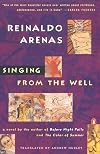
His mother talks piously of the heaven that awaits the good, and disciplines him with an ox prod. His grandmother burns his precious crosses for kindling. His cousins meet to plot their grandfather's death. Yet in the hills surrounding his home, another reality exists, a place where his mother wears flowers in her hair, and his cousin Celestino, a poet who inscribes verse on the trunks of trees, understands his visions. The first novel in Reinaldo Arenas's "secret history of Cuba," a show more quintet he called the Pentagonia, Singing from the Well is by turns explosively crude and breathtakingly lyrical. In the end, it is a stunning depiction of a childhood besieged by horror--and a moving defense of liberty and the imagination in a world of barbarity, persecution, and ignorance. show lessTags
Recommendations











































Member Reviews
It's hard to know what to say about this novel. On one hand, it was a deeply engaging novel about a boy, his cousin Celestino, his mother, his Grandma, and his Grandpa. On the other hand, it was a story that I didn't quite understand but felt compelled to read to completion. The story, as much of it as I undestood, was about a boy in Cuba who was brought to live with his grandparents because his mom had no husband. His cousin Celestino, whose own mother was no longer alive, was dropped off into this household as well because Celestino's father no longer wanted him. The family was very poor, subsisting on corn, eggs, plaintains, wild pineapples, star apples, roasted pig for Christmas, and water brought from the river and stored in a show more crock. Their house with a thatched roof was in constant disrepair and always at the verge of falling down.
That was the simple version of the story. In the real story, there are elves and witches and the characters constantly die and come back to life. Despite not being able to tell reality from what was surreal, I found most of the narrative mesmerizing except for the last quarter of the book which was written in the style of a play.
This is a book which was the first book of a quintet called the Pentagonia. As difficult as this story was for me to grasp, I was fascinated by the lyrical writing of Reinaldo Arenas, who was a Cuban dissident who later lived in exile and who died of AIDS at the age of 47 in New York City. I would like to read more of Arenas' work, especially Before NIght Falls, his autobiography. show less
That was the simple version of the story. In the real story, there are elves and witches and the characters constantly die and come back to life. Despite not being able to tell reality from what was surreal, I found most of the narrative mesmerizing except for the last quarter of the book which was written in the style of a play.
This is a book which was the first book of a quintet called the Pentagonia. As difficult as this story was for me to grasp, I was fascinated by the lyrical writing of Reinaldo Arenas, who was a Cuban dissident who later lived in exile and who died of AIDS at the age of 47 in New York City. I would like to read more of Arenas' work, especially Before NIght Falls, his autobiography. show less
Fantastically surreal this book jumps from factual descriptions to complete fantasy from one word to the next and paints an amazing picture of a child's difficult upbringing in Cuba, where the only release is to escape from reality.
El autor escribe sobre su vida, de cómo siendo niño, su familia no comprende su afición a las letras y su necesidad imperiosa de escribir y de desarrollar un rico y mágico mundo interior que lo ayuden a sobrellevar su triste y pobre realidad.
«Creo que la época más fecunda de mi creación fue la infancia.(. . .) Aunque en la casa había siempre mucha gente, para llenar aquella soledad tan profunda que sentía en medio del ruido, poblé todo aquel campo de personajes y apariciones casi míticos y sobrenaturales.» Estas palabras de Reinaldo Arenas, escritas en otro lugar, nos dicen que Celestino, el niño de esta historia, no es otro que su alma gemela. Para Celestino, su casa también es un endiablado enjambre; tampoco su madre y sus abuelos entienden por qué no cesa de escribir por todas partes, hasta en las hojas de los árboles; a él también le gritan y amenazan mientras se hostigan entre sí. No en vano, cuando el narrador se asoma al pozo de la casa, ve reflejado show more a Celestino; tampoco es de extrañar que éste, como el narrador, pueble su mundo de fantasmagóricos espíritus, seres y hechos extraordinarios, que habitan también sus escritos, refugio de su insufrible pobre realidad. show less
Jul 6, 2022Spanish
1993 Santi
Nov 15, 2021Catalan
Ratings
Members
- Recently Added By
Author Information

44+ Works 2,883 Members
The novel The Ill-fated Peregrinations of Fray Servando recreates in a poetic style, in which time, space, and character move on multiple planes of fantasy and reality, the life of Fray Servando Teresa de Mier, a Mexican priest famous for his hatred of the Spaniards. Mier denied even that the Spaniards had brought Christianity to the New World. show more Arenas begins with a letter to the friar: "Ever since I discovered you in an execrable history of Spanish literature, described as the friar who had traveled over the whole of Europe on foot having improbable adventures; I have tried to find out more about you." In a meditation on the nature of fiction, Arenas discovers that he and Servando are the same person, and author and character become one. (Bowker Author Biography) Reinaldo Arenas, born on July 16, 1943 in Cuba, endured a harsh and dismal childhood. Poverty stricken, Arenas joined Castro's revolution in an attempt to better society. He soon fell out of favor with Castro's regime and his writings were censored. Arenas continued to work as a writer, journalist, and editor, and was imprisoned 1974 to 1976. Arenas was deported to America in 1980 when Castro was ridding Cuba of criminals, artists, and others whom he perceived as adversaries. Arenas's works include novels, short stories, poems, and newspaper articles. In addition to the influence of his poor background, his writing is marked by the homosexual lifestyle he lived and includes such noteworthy titles as Farewell to the Sea, Graveyard of the Angels, and The Brightest Star. On December 7, 1990, while suffering from complications of AIDS, Arenas committed suicide by combining massive doses of drugs and alcohol. He outlined his reasons for taking his life in a letter written to a Spanish newspaper. (Bowker Author Biography) show less
Awards and Honors
Series

Common Knowledge
- Canonical title
- Singing from the Well
- Original title
- Cantando en el pozo
- Original publication date
- 1982 (original Spanish) (original Spanish); 1987 (English: Hurley) (English: Hurley)
- Original language
- Spanish
Classifications
Statistics
- Members
- 232
- Popularity
- 139,836
- Reviews
- 5
- Rating
- (3.77)
- Languages
- English, French, Portuguese, Spanish
- Media
- Paper, Ebook
- ISBNs
- 11
- ASINs
- 6