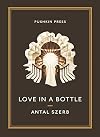
Love in a Bottle
by Antal Szerb
On This Page
Description
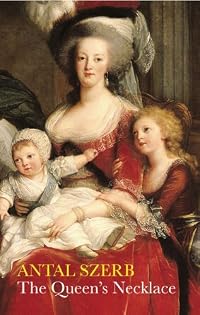
Hungarian Antal Szerb is best known in the West as the author of three extraordinary novels, most notably Journey by Moonlight (1937), and a highly entertaining study of the Ancient Regime in France, The Queen's Necklace (1942). This selection of his stories and novellas, set variously in mythical times and in the London and Paris of the twenties and thirties, reflects his love of life and the irrepressible irony that is his trademark.Tags
Recommendations




















Member Reviews
A slightly oddly arranged collection — in Part I there are eight of Szerb’s light, ironic stories from the 1930s, all of them with contemporary settings except for “Fin de siècle”, which makes fun of a couple of British poets (thinly-disguised versions of Yeats and Chesterton) in the heady atmosphere of 1892 London, and “Love in a bottle”, where it is the hapless Sir Lancelot who is at the sharp end of Szerb’s wit.
At the heart of all the contemporary stories is Szerb’s continued amusement at the new social complications of living in the inter-war world, with its sensational abandonment of the old rule that upper-middle-class girls were sexually off-limits until marriage. His viewpoint characters — usually young show more Hungarian scholars doing research into medieval texts in London or Paris — repeatedly find themselves baffled by the erotic twists and turns arising out of this new way of conducting relations between the sexes, perhaps most entertainingly in “In St Cloud,” where the lights go out during a French garden-party and the narrator has to work out which girl it was he was kissing so passionately in the dark, or in “In the library,” where the young man’s amusing campaign to seduce a serious-minded student is suddenly destabilised when he realises that it is she who has been stalking him. (This one made me think of Garbo in Ninotchka…)
But then there is Part II, with six of Szerb’s stories from the early 1920s in a quite different mode, all historical and deadly serious in a Kleistian sort of way, including another Arthurian venture, a retelling of part of the Parzival story, where we get a few glimmers of irony, but nowhere near enough to keep us awake. The only story I really enjoyed in this section was “The Tyrant”, from 1923, an unusual story about the relationship between a misanthropic ruler and the young page who is the one person whom he allows to become at all close to him. That one would surely make a great film. show less
At the heart of all the contemporary stories is Szerb’s continued amusement at the new social complications of living in the inter-war world, with its sensational abandonment of the old rule that upper-middle-class girls were sexually off-limits until marriage. His viewpoint characters — usually young show more Hungarian scholars doing research into medieval texts in London or Paris — repeatedly find themselves baffled by the erotic twists and turns arising out of this new way of conducting relations between the sexes, perhaps most entertainingly in “In St Cloud,” where the lights go out during a French garden-party and the narrator has to work out which girl it was he was kissing so passionately in the dark, or in “In the library,” where the young man’s amusing campaign to seduce a serious-minded student is suddenly destabilised when he realises that it is she who has been stalking him. (This one made me think of Garbo in Ninotchka…)
But then there is Part II, with six of Szerb’s stories from the early 1920s in a quite different mode, all historical and deadly serious in a Kleistian sort of way, including another Arthurian venture, a retelling of part of the Parzival story, where we get a few glimmers of irony, but nowhere near enough to keep us awake. The only story I really enjoyed in this section was “The Tyrant”, from 1923, an unusual story about the relationship between a misanthropic ruler and the young page who is the one person whom he allows to become at all close to him. That one would surely make a great film. show less
I've had this collection of stories and a three early novellas/long stories on my shelves longer than any other of the Szerbs I've read this year, and I'm glad I waited to read it because Szerb's novels and historical work are definitely far superior to these shorter works. I enjoyed reading the stories because they provide insight into the themes Szerb explores in his longer fiction, including love and the urge for death, working and obsession, and a little bit of the magical, and of course Szerb is a wonderful writer. I particularly enjoyed the first story, after which the collection is named, "The Incurable," and "Fin de Siecle," which involves various real writers. The translator, Len Rix, who has translated all the Szerbs I've show more read, notes in his introduction that the novellas, which I would call long stories, are very early works of Szerb, and are of interest chiefly because they show Szerb's early interests before he developed some of his distinctive style. I would agree with that, although they were charming in their way. A reader new to Szerb should not start with this collection. show less
This volume brings together the shorter fiction of Antal Szerb, who is best known as the writer of Journey by Moonlight, and also the comic novels The Pendragon Legend and Oliver VII.
The stories here showcase the full range of his talents. It is arranged chronologically, starting with a couple of folk tales, the first of which is the only one set in Szerb's native Hungary, but most of the rest are influenced by the time he spent in the great libraries of Paris and London, and mix esoteric learning, a broad range of interests, plenty of humour and romantic frustration - a common theme is the scholar who is too devoted to spend time with women. A very enjoyable collection.
The stories here showcase the full range of his talents. It is arranged chronologically, starting with a couple of folk tales, the first of which is the only one set in Szerb's native Hungary, but most of the rest are influenced by the time he spent in the great libraries of Paris and London, and mix esoteric learning, a broad range of interests, plenty of humour and romantic frustration - a common theme is the scholar who is too devoted to spend time with women. A very enjoyable collection.
A very interesting assembly of fiction, mixed with some poetical reveries that enlighten us upon the whole. Overall, I felt it was a solid collection and it is a shame what happened to the writer, both for humanity and for the fact that he was not able to keep producing his work.
Good book.
Good book.
Ratings
Members
- Recently Added By
Author Information

27+ Works 2,490 Members
Some Editions
Series
Belongs to Publisher Series
Common Knowledge
- Canonical title
- Love in a Bottle
- Original title
- Szerelem a palackban
- Original publication date
- 1935
- Original language
- Hungarian
Classifications
- Genres
- Fiction and Literature, General Fiction
- DDC/MDS
- 894.51133 — Literature & rhetoric Asian Literature Literatures of Altaic, Uralic, Hyperborean, Dravidian languages; literatures of miscellaneous languages of south Asia Finno-Ugric languages Ugric languages Hungarian Hungarian fiction 1900–2000
- LCC
- PH3351 .S86 .S913 — Language and Literature Uralic languages. Basque language Uralic. Basque Hungarian
- BISAC
Statistics
- Members
- 112
- Popularity
- 289,234
- Reviews
- 4
- Rating
- (3.80)
- Languages
- English, German, Hungarian
- Media
- Paper, Ebook
- ISBNs
- 9
- ASINs
- 3