H. G. Wells: Collectors Book of Science Fiction
by H. G. Wells
On This Page
Description
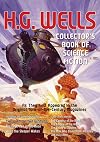
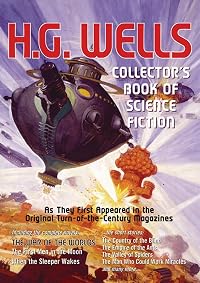
"Including the complete novels The war of the worlds, The first men in the moon, When the sleeper wakes...the short stories The country of the blind, The empire of the ants, The valley of spiders, The man who could work miracles...and many more."Tags
Recommendations





















Member Reviews
The stories in this collection are presented complete with illustrations as they originally appeared in the magazines of the time. Reading them is like stepping backward a century to the origins of the genre we now call science fiction. It’s an enlightening trip. This was a different world in some ways, culturally, politically, and technologically. When these were written, people still speculated about the existence of complex life on Mars, Venus, and the Moon, and in some of these stories, we see this possibility explored. Much of it may seem almost laughable now, but we have the benefit of an additional century of scientific exploration, orbiting space probes, robotic rovers, and manned moon missions. I don’t doubt that a century show more from now many of our current conjectures will seem quaint to our children’s grandchildren. I did find myself surprised at how dreadfully bad some of the basic science was, though. This included misunderstanding the effects of gravity, microgravity, and inertia. The worst offenders were The First Men in the Moon and The Man Who Could Work Miracles.
Wells did foresee things like video and sound recording, but he imagines enormous hardware being required. He also foresees flying machines, but these are light, flimsy things rather like ultra-lights, or lighter than air ships like blimps or zeppelins. What never seems to have been foreseen by any of the early speculative fiction writers are computers, miniature electronics, or something like the internet. This certainly is not a failing. They extrapolated from what they knew to imagine amazing devices of clockwork and electricity, and while these are certainly very cool, they are not what peopled eventually created.
Some of the ‘soft’ science fiction elements hit far from the mark as well. In When the Sleeper Wakes, for example, a revolution is going on in Twenty-second Century London with the goal of emancipating people from near serfdom, restore freedom and human dignity, and all that, but yet everyone is appalled when the antagonist of the story calls in enforcers from Africa to quell the uprisings -- because they’re black! Is this irony, or did Wells honestly not see the inherent conflict here? I’m pretty sure he was making a satirical point when he spoke of a future in which they had changed the numbering system to base twelve rather than changing the currency and measures to a decimal system, so it’s quite possible this was also a case of subtle irony. (In Victorian England, 12 inches made a foot and 12 pence made a shilling. There are still 12 inches to a foot, of course, but they eventually adopted the metric system and also abandoned the 12 pence shilling.)
It is easy to pick at all the things that Wells gets wrong, but I doubt very much he was trying to predict the future accurately any more than something like Star Trek (TOS) was. Wells was writing for the people of the time about the people of the time. The stories here are about the people of England and their view of the world as it raced into the Twentieth Century, and it gives us in the Twenty-first Century a better idea of what they were like. In this light, these are great stories and well worth reading. I recommend them.
These stories are included in this anthology:
• The War of the Worlds (Novel, serialized in Pearson’s Magazine, April-December 1897)
• The Country of the Blind (Short Story, The Strand Magazine, April 1904)
• The Flowering of the Strange Orchid (Short Story, Pearson’s Magazine, April 1905)
• Aepyornis Island (Short Story, Pearson’s Magazine, February 1905)
• The First Men in the Moon (Novel, Serialized in The Strand Magazine, December 1900-August 1901)
• The Diamond Maker (Short Story, Pearson’s Magazine, March 1905)
• The Story of the Inexperienced Ghost (Short Story, The Strand Magazine, March 1902)
• The Empire of the Ants (Short Story, The Strand Magazine, December 1905)
• Stories of the Stone Age (Short Story/Novella, Serialized in The Idler, May-November 1897)
• The Stolen Bacillus (Short Story, Pearson’s Magazine, June 1905)
• In the Abyss (Short Story, Pearson’s Magazine, August 1896)
• The Valley of Spiders (Short Story, Pearson’s Magazine, March 1903)
• When the Sleeper Wakes (Novel, Serialized in The Graphic 1898-1899)
• The Man Who Could Work Miracles (Short Story, The Illustrated London News, July 1898)
• The Land Ironclads (Short Story, The Strand Magazine, December 1903) show less
Wells did foresee things like video and sound recording, but he imagines enormous hardware being required. He also foresees flying machines, but these are light, flimsy things rather like ultra-lights, or lighter than air ships like blimps or zeppelins. What never seems to have been foreseen by any of the early speculative fiction writers are computers, miniature electronics, or something like the internet. This certainly is not a failing. They extrapolated from what they knew to imagine amazing devices of clockwork and electricity, and while these are certainly very cool, they are not what peopled eventually created.
Some of the ‘soft’ science fiction elements hit far from the mark as well. In When the Sleeper Wakes, for example, a revolution is going on in Twenty-second Century London with the goal of emancipating people from near serfdom, restore freedom and human dignity, and all that, but yet everyone is appalled when the antagonist of the story calls in enforcers from Africa to quell the uprisings -- because they’re black! Is this irony, or did Wells honestly not see the inherent conflict here? I’m pretty sure he was making a satirical point when he spoke of a future in which they had changed the numbering system to base twelve rather than changing the currency and measures to a decimal system, so it’s quite possible this was also a case of subtle irony. (In Victorian England, 12 inches made a foot and 12 pence made a shilling. There are still 12 inches to a foot, of course, but they eventually adopted the metric system and also abandoned the 12 pence shilling.)
It is easy to pick at all the things that Wells gets wrong, but I doubt very much he was trying to predict the future accurately any more than something like Star Trek (TOS) was. Wells was writing for the people of the time about the people of the time. The stories here are about the people of England and their view of the world as it raced into the Twentieth Century, and it gives us in the Twenty-first Century a better idea of what they were like. In this light, these are great stories and well worth reading. I recommend them.
These stories are included in this anthology:
• The War of the Worlds (Novel, serialized in Pearson’s Magazine, April-December 1897)
• The Country of the Blind (Short Story, The Strand Magazine, April 1904)
• The Flowering of the Strange Orchid (Short Story, Pearson’s Magazine, April 1905)
• Aepyornis Island (Short Story, Pearson’s Magazine, February 1905)
• The First Men in the Moon (Novel, Serialized in The Strand Magazine, December 1900-August 1901)
• The Diamond Maker (Short Story, Pearson’s Magazine, March 1905)
• The Story of the Inexperienced Ghost (Short Story, The Strand Magazine, March 1902)
• The Empire of the Ants (Short Story, The Strand Magazine, December 1905)
• Stories of the Stone Age (Short Story/Novella, Serialized in The Idler, May-November 1897)
• The Stolen Bacillus (Short Story, Pearson’s Magazine, June 1905)
• In the Abyss (Short Story, Pearson’s Magazine, August 1896)
• The Valley of Spiders (Short Story, Pearson’s Magazine, March 1903)
• When the Sleeper Wakes (Novel, Serialized in The Graphic 1898-1899)
• The Man Who Could Work Miracles (Short Story, The Illustrated London News, July 1898)
• The Land Ironclads (Short Story, The Strand Magazine, December 1903) show less
Book Description: Seacaucus, N.J. USA: Castle Books, 1978. Hard Cover. Fine/Fine. First Edition. "With the original illustrations" from the popular magazines in which it was first serialized.
Book Description: Secaucus, New Jersey: Castle Books, 1978. Hard Cover. Very Good /Very Good . First Edition. 8vo. (vii) 514 pp. Red boards lettered with black on the spine. Lightly rubbed on the corners of the dust jacket. Illustrated with original artwork that accompanied each first magazine appearance.
Book Description: Secaucus, New Jersey: Castle Books, 1978. Hard Cover. Very Good /Very Good . First Edition. 8vo. (vii) 514 pp. Red boards lettered with black on the spine. Lightly rubbed on the corners of the dust jacket. Illustrated with original artwork that accompanied each first magazine appearance.
Ratings
Members
- Recently Added By
Author Information

1,554+ Works 108,903 Members
H. G. Wells was born in Bromley, England on September 21, 1866. After a limited education, he was apprenticed to a draper, but soon found he wanted something more out of life. He read widely and got a position as a student assistant in a secondary school, eventually winning a scholarship to the Royal College of Science in South Kensington, where show more he studied biology. He graduated from London University in 1888 and became a science teacher. He also wrote for magazines. When his stories began to sell, he left teaching to write full time. He became an author best known for science fiction novels and comic novels. His science fiction novels include The Time Machine, The War of the Worlds, The Wonderful Visit, The Island of Doctor Moreau, The Invisible Man, The First Men in the Moon, and The Food of the Gods. His comic novels include Love and Mr. Lewisham, Kipps: The Story of a Simple Soul, The History of Mr. Polly, and Tono-Bungay. He also wrote several short story collections including The Stolen Bacillus, The Plattner Story, and Tales of Space and Time. He died on August 13, 1946 at the age of 79. (Bowker Author Biography) show less
All Editions
Work Relationships
Contains
Common Knowledge
- Original publication date
- 1978
- People/Characters
- Joseph Cavor
- Important places
- The Moon; Mars; Horsell Common, Horsell, Surrey, England, UK
- Important events
- Alien Invasion; Moon Landing
- Related movies
- The War of the Worlds (1953 | IMDb); The War of the Worlds (2005 | IMDb); The First Men in the Moon (1919 | IMDb); First Men in the Moon (1964 | IMDb)
- Epigraph
- "But who shall dewll in these Worlds if they be inhabited... Are we or they Lords of the World? ... And how are all things made for man" -- Kepler: quoted in The Anatomy of Melancholy
- First words
- No one would have believed in the last years of the nineteenth century that human affairs were being watched keenly and closely by intelligences greater than man's and yet as mortal as his own; that as men busied themselves a... (show all)bout their affairs they were scrutinized and studied perhaps as closely as a man with a microscope might scrutinize the transient creatures that swarm and multiply in a drop of water.
- Last words
- (Click to show. Warning: May contain spoilers.)And he was much too good a journalist to spoil his contrast by remarking that the half-dozen comparitively slender young men in blue pajamas who were standing about their victorius land ironclad, drinking coffee and eating biscuits, had also in their eyes and carriage something not altogether degraded below the level of a man.
Classifications
Statistics
- Members
- 337
- Popularity
- 94,150
- Reviews
- 2
- Rating
- (4.21)
- Languages
- English
- Media
- Paper
- ISBNs
- 1
- UPCs
- 1
- ASINs
- 5