On This Page
Description
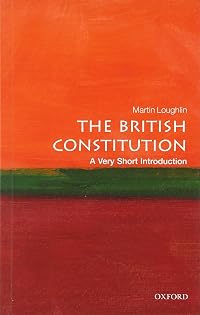
The British constitution has grown organically in response to changes in its economic, political, and social environment, and is not contained in a single authoritative text. In this 'Very Short Introduction', Martin Loughlin examines the nature and authority of the constitution, and its challenging prospects for the future.Tags
Recommendations







Member Reviews
Oxford publishes a great many of these Very Short Introductions. I have read several, and this may be the best I have found. It crams a great deal in. In truth I was glad I had read a chunk of public law before I started, as the book displays a level of sophistiation which richly rewards a more knowledgeable reading. Were you to read it as a complete and intitial introduction ot the subject, some of its finer points might evade you. It was sufficiently comprehensive to receive a a (favourable) review from Sir Stephen Sedley in the LRB, and not many of its companions have achieved so senior a reception. Loughlin is capable of expressing the significance of profoundly complex events in one or two sentences. I disagreed with him only once, show more and then only about an inference rather than a conclusion (I don't think that Britain's developing class consciousness was constitutionally unsettling - our patrician constitution was unsettled to begin with; our class consciousness corrected it). Speaking of conclusions: the book lacks one. But that is the nature of Britain's current constitutional status. It is very much in flux. A great little book and worthy of second reading. show less
Another excellent book from the OUP's Very Short Introduction Series. Loughlin does his best to give a clear description of the British Constitution - which is no easy task! The book concludes:
Certainly, if you were hoping to have the answer to 'What is the British Constitution?', you may be disappointed.
Other countries have, at some point, held a revolution, murdered their kings and tyrants, and written down a sensible description of how they want to be governed. The Brits can't even decide who they are! At various points the key players conceive of themselves as English, British, Saxon, Scottish, Irish, (the poor Welsh don't get much of a say) or even Norman. show more They come together through conquest or union and separate by choice. They don't just overthrow kings: they ambush them, kill them, expel them, invite them back and negotiate with them. Other nations celebrate their revolutions and constitutions as bold adventures in government. The Brits pretend that actually constitution change is a very conservative resurrection of rights they definitely always had all along. Consequently, the British Constitution is a mishmash of various habits, customs, laws, Acts and accidents.
The fact is that it doesn't really make much sense and the Brits have dealt with the problem by ignoring it, fudging it and getting testy with anyone who enquires too closely. Through-out the 20th Century more and more people have been enquiring, as the make-shift situation gradually loses the confidence of the people - not to mention the effect of joining the EU which creates several headaches about where things like legitimacy or rights even come from. So the questions is far from settled, and there are exciting times ahead as judges grow more and more active in interpreting constitutional law. show less
so we end as we began, not with answers but with a new set of questions.
Certainly, if you were hoping to have the answer to 'What is the British Constitution?', you may be disappointed.
Other countries have, at some point, held a revolution, murdered their kings and tyrants, and written down a sensible description of how they want to be governed. The Brits can't even decide who they are! At various points the key players conceive of themselves as English, British, Saxon, Scottish, Irish, (the poor Welsh don't get much of a say) or even Norman. show more They come together through conquest or union and separate by choice. They don't just overthrow kings: they ambush them, kill them, expel them, invite them back and negotiate with them. Other nations celebrate their revolutions and constitutions as bold adventures in government. The Brits pretend that actually constitution change is a very conservative resurrection of rights they definitely always had all along. Consequently, the British Constitution is a mishmash of various habits, customs, laws, Acts and accidents.
The fact is that it doesn't really make much sense and the Brits have dealt with the problem by ignoring it, fudging it and getting testy with anyone who enquires too closely. Through-out the 20th Century more and more people have been enquiring, as the make-shift situation gradually loses the confidence of the people - not to mention the effect of joining the EU which creates several headaches about where things like legitimacy or rights even come from. So the questions is far from settled, and there are exciting times ahead as judges grow more and more active in interpreting constitutional law. show less
Ratings
Members
- Recently Added By
Author Information
14 Works 181 Members
Martin Loughlin is Professor of Public Law at the London School of Economics and Political Science.
Series

Common Knowledge
- Canonical title
- The British Constitution: A Very Short Introduction
- First words
- Once extolled as a standing wonder, the British constitution today can evoke bewilderment and sometimes even derision.
- Last words
- (Click to show. Warning: May contain spoilers.)As one chapter of constitutional development draws to a close, we look forward with a mixture of anxiety and anticipation to the prospect of reading the new.
Classifications
- Genres
- Politics and Government, Nonfiction, History, General Nonfiction
- DDC/MDS
- 342.4102 — Society, government, & culture Law U.S. Constitution - Bill of Rights, Amendments Europe British Isles, Ireland, Scotland Basic instruments of government {constitutions, municipal charters}
- LCC
- KD3934 .L675 — Law Law of the United Kingdom and Ireland Law of England and Wales Constitutional law History General works
- BISAC
Statistics
- Members
- 92
- Popularity
- 341,916
- Reviews
- 2
- Rating
- (3.56)
- Languages
- English
- Media
- Paper, Audiobook, Ebook
- ISBNs
- 6
- ASINs
- 1