On This Page
Description
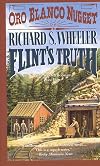
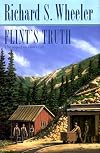
Golden Spur Award–winning author Richard S. Wheeler continues his popular series featuring frontier journalist Sam Flint with Flint’s Truth, a tale of corruption and cover-up set against he vibrant backdrop of the American West.An editor is popular only if he can keep a secret, and Sam Flint’s new home of Oro Blanco has more than its share. Flint chooses this small frontier town, the site of the richest gold strike in the New Mexico Territory, to launch his newest weekly newspaper, the show more Oro Blanco Nugget. As soon as he hits town, however, Flint can tell that something is not right, as the atmosphere in Oro Blanco is thick with signs of corruption and injustice. With all trails leading to the big mining bosses, Flint prepares to do battle for the truth, while defending his newspaper and his life. show lessTags
Member Reviews
Richard S. Wheeler's 1998 novel "Flint's Truth" is the second part of a trilogy about Sam Flint, an itinerant newspaperman who moves from one town in the Old West to another, publishing a paper until he eventually gets run out of town for reporting what someone doesn't want reported.
When he arrives in Oro Blanco, a mining town in New Mexico Territory, he doesn't expect to be staying very long. He's not even sure he'll be living very long. The town is sharply divided, quite literally. On one side of the river are the Mexicans, who were there first. On the other side are those who arrived after gold was discovered and who want the Mexicans and their claims on the land and the gold to disappear.
Mason Weed runs the mine and, therefore, runs show more the town, handpicking the mayor, the marshal and everyone else in power. He is committed to progress for Oro Blanco, and he is convinced progress does not require either Mexicans or a newspaper that tells the truth.
Flint's only employee is Libby Madigan, a young girl who supports herself and her dying mother by selling wildflowers on the street. Flint puts her to work selling papers and, eventually, helping with the printing. She becomes a key character, an object lesson showing just how far Weed is willing to go in pursuit of his own vision of progress.
Once again in "Flint's Truth," Wheeler shows you don't need gunfights or train robberies to make an exciting western novel. show less
When he arrives in Oro Blanco, a mining town in New Mexico Territory, he doesn't expect to be staying very long. He's not even sure he'll be living very long. The town is sharply divided, quite literally. On one side of the river are the Mexicans, who were there first. On the other side are those who arrived after gold was discovered and who want the Mexicans and their claims on the land and the gold to disappear.
Mason Weed runs the mine and, therefore, runs show more the town, handpicking the mayor, the marshal and everyone else in power. He is committed to progress for Oro Blanco, and he is convinced progress does not require either Mexicans or a newspaper that tells the truth.
Flint's only employee is Libby Madigan, a young girl who supports herself and her dying mother by selling wildflowers on the street. Flint puts her to work selling papers and, eventually, helping with the printing. She becomes a key character, an object lesson showing just how far Weed is willing to go in pursuit of his own vision of progress.
Once again in "Flint's Truth," Wheeler shows you don't need gunfights or train robberies to make an exciting western novel. show less
Ratings
Members
- Recently Added By
Author Information

84 Works 1,290 Members
Richard S. (Shaw) Wheeler was born in Milwaukee in 1935 and grew up in nearby Wauwatosa. Wheeler spent three years in Hollywood in the mid-50s, where he worked in a record store and took acting lessons while struggling as a screenwriter. He eventually returned home, and attended the University of Wisconsin at Madison. He spent over a decade as a show more newspaperman, working as an editorial writer for the Phoenix Gazette, editorial page editor for the Oakland, California, Tribune, reporter on the Nevada Appeal in Carson City, and reporter and assistant city editor for the Billings, Montana, Gazette. In 1972, he turned to book editing, working in all for four publishers through 1987. As an editor for Walker & Company he edited twelve Western novels a year. Sandwiched between editing stints, in the mid-70s he worked at the Rancho de la Osa dude ranch in Sasabe, Arizona, on the Mexican border. There, in the off season, he experimented with his own fiction and wrote his first novel, Bushwack, published by Doubleday in 1978. Five more Western novels followed Bushwack before Wheeler was able to turn to writing full time: Beneath the Blue Mountain (1979), Winter Grass (1983), Sam Hook (1986), Richard Lamb (1987) and Dodging Red Cloud (1987). (Bowker Author Biography) show less
Series

Classifications
Statistics
- Members
- 14
- Popularity
- 1,672,683
- Reviews
- 1
- Rating
- (3.00)
- Languages
- English
- Media
- Paper, Audiobook, Ebook
- ISBNs
- 10
- ASINs
- 1