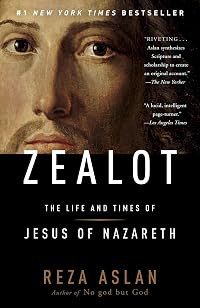
Zealot: The Life and Times of Jesus of Nazareth
by Reza Aslan
On This Page
Description
Sifting through centuries of mythmaking, Reza Aslan sheds new light on one of history's most influential and enigmatic characters by examining Jesus through the lens of the tumultuous era in which he lived: first-century Palestine, an age awash in apocalyptic fervor. Scores of Jewish prophets, preachers, and would-be messiahs wandered through the Holy Land, bearing messages from God. This was the age of zealotry--a fervent nationalism that made resistance to the Roman occupation a sacred show more duty incumbent on all Jews. And few figures better exemplified this principle than the charismatic Galilean who defied both the imperial authorities and their allies in the Jewish religious hierarchy. show lessTags
Recommendations













Member Reviews
A fantastic little read - a challenging thesis demonstrated well. Shows that Jesus was a real person, who was a Jewish nationalist, who was crucified by the Roman Empire for being a rebel during a time when there were dozens of similar 'messiahs'. Beyond that it is almost all fabulation by the apostles and by Paul of Tarsus, whose version (Christianity) won out over the apostles Jerusalem-based Jewish Jesus because of the Roman suppression of the Jewish Revolt. Jerusalem was left in ruins and Judaism forever changed, whilst Paul was able to continue selling Jesus and Christianity to gentiles across the Mediterranean world. Great work.
La versione originale inglese di questo libro lo definisce “zealot”, quella italiana lo chiama “ribelle”. Il dizionario inglese, a dire il vero, offre una lunga sfilza di sinonimi del tipo “fanatico, entusiasta, estremista, radicale, attivista, militante, bigotto, dommatico, settario, partigiano, infido, maniaco”. Non mi pare che facciano giustizia a quella importante “figura storica” che si chiama Gesù. Una “giustizia” di tipo, ovviamente, terreno e poco religiosa.
Il libro l’ho letto in inglese, mi propongo di trovare l’edizione italiana per meglio contestualizzare le cose di cui parla. E’ costato all’autore due decenni di lavoro, un autorevole e rispettabile esperto studioso arabo iraniano di storia delle show more religioni. Il libro è stato pubblicato negli Usa e in Inghilterra nel 2013. Me lo sono trovato tra le mani in questi giorni prenatalizi di fine anno, non ricordo bene cosa mi spinse a comprarlo da Amazon.
L’ho ritrovato dietro una siepe di altri libri, mi è parso opportuno affrontare la lettura in questo contesto quanto mai appropriato. Diviso in tre parti, quindici capitoli, tre prologhi ed una introduzione, con oltre cento pagine di note ed una ricca bibliografia, il lavoro è ineccepibile da un punto di vista strettamente documentario. Risponde in maniera egregia alle canoniche domande che cerco sempre di assegnare alla affidabilità di un libro.
Reza Aslan si propone di dare una risposta a “chi” era l’uomo chiamato Gesù, “cosa” si proponeva, “quando” apparve sulla scena del mondo del suo tempo, “dove” fece sentire la sua presenza, e “perchè” la sua vita ebbe un senso. Un impegno molto forte quello di Aslan. Sono migliaia le recensioni disponibili su GoodReads e altri siti di libri, punti di vista che aiutano chi vuole dare un senso alle sue letture. Aslan ha dato alla sua ricerca uno stile quanto mai contestualizzato. Il suo sistema di lavoro ha un approccio molto diverso al problema interpretativo dei canonici testi sacri biblici. Per lui ha poco interesse la storia dell’individuo chiamato Gesù ed i suoi attributi teologici.
Ciò che conta per Aslan è il contesto: la politica, la sociologia, l’amministrazione governativa e la cultura dei tempi, prima, durante e dopo la breve vita di Gesù. Mettendo insieme ciò che sappiamo di questo contesto, con la conoscenza storica molto limitata di Gesù e le prime interpretazioni teologiche della sua vita, Aslan crea una storia molto leggibile, molto moderna e coerente sull’Uomo e la sua missione.
Chi crede, ovviamente, può non accettare questo sistema di lavoro. L’esegesi di Aslan è professionale, sempre rispettosa ed inoffensiva da riuscire a spiegare tanto, sia della teologia che della storia di Gesù, facendo riferimento a eventi, condizioni e motivi che sono del tutto indipendente da lui, dai suoi seguaci e dai suoi avversari. La storia raccontata da Aslan incorpora contraddizioni bibliche, non-sequitur e anche molto spesso l’impossibilità assoluta di una narrazione coerente.
Una minaccia questa per la quale chi crede e legge fideisticamente può provare irritazione. Sulla vera identità dell’uomo Gesù continua a cadere il velo del mistero, che rimane tale e che solo la fede può disvelare. In un mondo tanto diverso oggi dai tempi in cui visse Gesù detto il Nazareno, pensare a un Dio Creatore che manda suo figlio su un pianeta chiamato Terra per una missione che rimane (im)possibile, (dipende dai punti di vista), collocato in un universo fatto da tanti infiniti universi, rimane un racconto quanto mai avvincente. Ecco come Reza Aslan conclude il suo libro:
Duemila anni dopo, la creazione del Cristo di Paolo ha completamente assorbito il Gesù della storia. Il ricordo del fanatico rivoluzionario che attraversò la Galilea radunando un esercito di discepoli con l’obiettivo di stabilire il Regno di Dio sulla terra, il predicatore magnetico che sfidò l’autorità dei sacerdoti del Tempio a Gerusalemme, il nazionalista ebreo radicale che sfidò l’occupazione romana e perse, è stato quasi completamente perduto nella storia. Peccato. Perché l’unica cosa che ogni studio completo del Gesù storico dovrebbe rivelare, io credo, è che Gesù di Nazareth, Gesù l’uomo, è altrettanto avvincente, carismatico e degno di lode come Gesù il Cristo. In breve, è qualcuno in cui vale la pena credere. show less
Il libro l’ho letto in inglese, mi propongo di trovare l’edizione italiana per meglio contestualizzare le cose di cui parla. E’ costato all’autore due decenni di lavoro, un autorevole e rispettabile esperto studioso arabo iraniano di storia delle show more religioni. Il libro è stato pubblicato negli Usa e in Inghilterra nel 2013. Me lo sono trovato tra le mani in questi giorni prenatalizi di fine anno, non ricordo bene cosa mi spinse a comprarlo da Amazon.
L’ho ritrovato dietro una siepe di altri libri, mi è parso opportuno affrontare la lettura in questo contesto quanto mai appropriato. Diviso in tre parti, quindici capitoli, tre prologhi ed una introduzione, con oltre cento pagine di note ed una ricca bibliografia, il lavoro è ineccepibile da un punto di vista strettamente documentario. Risponde in maniera egregia alle canoniche domande che cerco sempre di assegnare alla affidabilità di un libro.
Reza Aslan si propone di dare una risposta a “chi” era l’uomo chiamato Gesù, “cosa” si proponeva, “quando” apparve sulla scena del mondo del suo tempo, “dove” fece sentire la sua presenza, e “perchè” la sua vita ebbe un senso. Un impegno molto forte quello di Aslan. Sono migliaia le recensioni disponibili su GoodReads e altri siti di libri, punti di vista che aiutano chi vuole dare un senso alle sue letture. Aslan ha dato alla sua ricerca uno stile quanto mai contestualizzato. Il suo sistema di lavoro ha un approccio molto diverso al problema interpretativo dei canonici testi sacri biblici. Per lui ha poco interesse la storia dell’individuo chiamato Gesù ed i suoi attributi teologici.
Ciò che conta per Aslan è il contesto: la politica, la sociologia, l’amministrazione governativa e la cultura dei tempi, prima, durante e dopo la breve vita di Gesù. Mettendo insieme ciò che sappiamo di questo contesto, con la conoscenza storica molto limitata di Gesù e le prime interpretazioni teologiche della sua vita, Aslan crea una storia molto leggibile, molto moderna e coerente sull’Uomo e la sua missione.
Chi crede, ovviamente, può non accettare questo sistema di lavoro. L’esegesi di Aslan è professionale, sempre rispettosa ed inoffensiva da riuscire a spiegare tanto, sia della teologia che della storia di Gesù, facendo riferimento a eventi, condizioni e motivi che sono del tutto indipendente da lui, dai suoi seguaci e dai suoi avversari. La storia raccontata da Aslan incorpora contraddizioni bibliche, non-sequitur e anche molto spesso l’impossibilità assoluta di una narrazione coerente.
Una minaccia questa per la quale chi crede e legge fideisticamente può provare irritazione. Sulla vera identità dell’uomo Gesù continua a cadere il velo del mistero, che rimane tale e che solo la fede può disvelare. In un mondo tanto diverso oggi dai tempi in cui visse Gesù detto il Nazareno, pensare a un Dio Creatore che manda suo figlio su un pianeta chiamato Terra per una missione che rimane (im)possibile, (dipende dai punti di vista), collocato in un universo fatto da tanti infiniti universi, rimane un racconto quanto mai avvincente. Ecco come Reza Aslan conclude il suo libro:
Duemila anni dopo, la creazione del Cristo di Paolo ha completamente assorbito il Gesù della storia. Il ricordo del fanatico rivoluzionario che attraversò la Galilea radunando un esercito di discepoli con l’obiettivo di stabilire il Regno di Dio sulla terra, il predicatore magnetico che sfidò l’autorità dei sacerdoti del Tempio a Gerusalemme, il nazionalista ebreo radicale che sfidò l’occupazione romana e perse, è stato quasi completamente perduto nella storia. Peccato. Perché l’unica cosa che ogni studio completo del Gesù storico dovrebbe rivelare, io credo, è che Gesù di Nazareth, Gesù l’uomo, è altrettanto avvincente, carismatico e degno di lode come Gesù il Cristo. In breve, è qualcuno in cui vale la pena credere. show less
La versione originale inglese di questo libro lo definisce “zealot”, quella italiana lo chiama “ribelle”. Il dizionario inglese, a dire il vero, offre una lunga sfilza di sinonimi del tipo “fanatico, entusiasta, estremista, radicale, attivista, militante, bigotto, dommatico, settario, partigiano, infido, maniaco”. Non mi pare che facciano giustizia a quella importante “figura storica” che si chiama Gesù. Una “giustizia” di tipo, ovviamente, terreno e poco religiosa.
Il libro l’ho letto in inglese, mi propongo di trovare l’edizione italiana per meglio contestualizzare le cose di cui parla. E’ costato all’autore due decenni di lavoro, un autorevole e rispettabile esperto studioso arabo iraniano di storia delle show more religioni. Il libro è stato pubblicato negli Usa e in Inghilterra nel 2013. Me lo sono trovato tra le mani in questi giorni prenatalizi di fine anno, non ricordo bene cosa mi spinse a comprarlo da Amazon.
L’ho ritrovato dietro una siepe di altri libri, mi è parso opportuno affrontare la lettura in questo contesto quanto mai appropriato. Diviso in tre parti, quindici capitoli, tre prologhi ed una introduzione, con oltre cento pagine di note ed una ricca bibliografia, il lavoro è ineccepibile da un punto di vista strettamente documentario. Risponde in maniera egregia alle canoniche domande che cerco sempre di assegnare alla affidabilità di un libro.
Reza Aslan si propone di dare una risposta a “chi” era l’uomo chiamato Gesù, “cosa” si proponeva, “quando” apparve sulla scena del mondo del suo tempo, “dove” fece sentire la sua presenza, e “perchè” la sua vita ebbe un senso. Un impegno molto forte quello di Aslan. Sono migliaia le recensioni disponibili su GoodReads e altri siti di libri, punti di vista che aiutano chi vuole dare un senso alle sue letture. Aslan ha dato alla sua ricerca uno stile quanto mai contestualizzato. Il suo sistema di lavoro ha un approccio molto diverso al problema interpretativo dei canonici testi sacri biblici. Per lui ha poco interesse la storia dell’individuo chiamato Gesù ed i suoi attributi teologici.
Ciò che conta per Aslan è il contesto: la politica, la sociologia, l’amministrazione governativa e la cultura dei tempi, prima, durante e dopo la breve vita di Gesù. Mettendo insieme ciò che sappiamo di questo contesto, con la conoscenza storica molto limitata di Gesù e le prime interpretazioni teologiche della sua vita, Aslan crea una storia molto leggibile, molto moderna e coerente sull’Uomo e la sua missione.
Chi crede, ovviamente, può non accettare questo sistema di lavoro. L’esegesi di Aslan è professionale, sempre rispettosa ed inoffensiva da riuscire a spiegare tanto, sia della teologia che della storia di Gesù, facendo riferimento a eventi, condizioni e motivi che sono del tutto indipendente da lui, dai suoi seguaci e dai suoi avversari. La storia raccontata da Aslan incorpora contraddizioni bibliche, non-sequitur e anche molto spesso l’impossibilità assoluta di una narrazione coerente.
Una minaccia questa per la quale chi crede e legge fideisticamente può provare irritazione. Sulla vera identità dell’uomo Gesù continua a cadere il velo del mistero, che rimane tale e che solo la fede può disvelare. In un mondo tanto diverso oggi dai tempi in cui visse Gesù detto il Nazareno, pensare a un Dio Creatore che manda suo figlio su un pianeta chiamato Terra per una missione che rimane (im)possibile, (dipende dai punti di vista), collocato in un universo fatto da tanti infiniti universi, rimane un racconto quanto mai avvincente. Ecco come Reza Aslan conclude il suo libro:
Duemila anni dopo, la creazione del Cristo di Paolo ha completamente assorbito il Gesù della storia. Il ricordo del fanatico rivoluzionario che attraversò la Galilea radunando un esercito di discepoli con l’obiettivo di stabilire il Regno di Dio sulla terra, il predicatore magnetico che sfidò l’autorità dei sacerdoti del Tempio a Gerusalemme, il nazionalista ebreo radicale che sfidò l’occupazione romana e perse, è stato quasi completamente perduto nella storia. Peccato. Perché l’unica cosa che ogni studio completo del Gesù storico dovrebbe rivelare, io credo, è che Gesù di Nazareth, Gesù l’uomo, è altrettanto avvincente, carismatico e degno di lode come Gesù il Cristo. In breve, è qualcuno in cui vale la pena credere. show less
Il libro l’ho letto in inglese, mi propongo di trovare l’edizione italiana per meglio contestualizzare le cose di cui parla. E’ costato all’autore due decenni di lavoro, un autorevole e rispettabile esperto studioso arabo iraniano di storia delle show more religioni. Il libro è stato pubblicato negli Usa e in Inghilterra nel 2013. Me lo sono trovato tra le mani in questi giorni prenatalizi di fine anno, non ricordo bene cosa mi spinse a comprarlo da Amazon.
L’ho ritrovato dietro una siepe di altri libri, mi è parso opportuno affrontare la lettura in questo contesto quanto mai appropriato. Diviso in tre parti, quindici capitoli, tre prologhi ed una introduzione, con oltre cento pagine di note ed una ricca bibliografia, il lavoro è ineccepibile da un punto di vista strettamente documentario. Risponde in maniera egregia alle canoniche domande che cerco sempre di assegnare alla affidabilità di un libro.
Reza Aslan si propone di dare una risposta a “chi” era l’uomo chiamato Gesù, “cosa” si proponeva, “quando” apparve sulla scena del mondo del suo tempo, “dove” fece sentire la sua presenza, e “perchè” la sua vita ebbe un senso. Un impegno molto forte quello di Aslan. Sono migliaia le recensioni disponibili su GoodReads e altri siti di libri, punti di vista che aiutano chi vuole dare un senso alle sue letture. Aslan ha dato alla sua ricerca uno stile quanto mai contestualizzato. Il suo sistema di lavoro ha un approccio molto diverso al problema interpretativo dei canonici testi sacri biblici. Per lui ha poco interesse la storia dell’individuo chiamato Gesù ed i suoi attributi teologici.
Ciò che conta per Aslan è il contesto: la politica, la sociologia, l’amministrazione governativa e la cultura dei tempi, prima, durante e dopo la breve vita di Gesù. Mettendo insieme ciò che sappiamo di questo contesto, con la conoscenza storica molto limitata di Gesù e le prime interpretazioni teologiche della sua vita, Aslan crea una storia molto leggibile, molto moderna e coerente sull’Uomo e la sua missione.
Chi crede, ovviamente, può non accettare questo sistema di lavoro. L’esegesi di Aslan è professionale, sempre rispettosa ed inoffensiva da riuscire a spiegare tanto, sia della teologia che della storia di Gesù, facendo riferimento a eventi, condizioni e motivi che sono del tutto indipendente da lui, dai suoi seguaci e dai suoi avversari. La storia raccontata da Aslan incorpora contraddizioni bibliche, non-sequitur e anche molto spesso l’impossibilità assoluta di una narrazione coerente.
Una minaccia questa per la quale chi crede e legge fideisticamente può provare irritazione. Sulla vera identità dell’uomo Gesù continua a cadere il velo del mistero, che rimane tale e che solo la fede può disvelare. In un mondo tanto diverso oggi dai tempi in cui visse Gesù detto il Nazareno, pensare a un Dio Creatore che manda suo figlio su un pianeta chiamato Terra per una missione che rimane (im)possibile, (dipende dai punti di vista), collocato in un universo fatto da tanti infiniti universi, rimane un racconto quanto mai avvincente. Ecco come Reza Aslan conclude il suo libro:
Duemila anni dopo, la creazione del Cristo di Paolo ha completamente assorbito il Gesù della storia. Il ricordo del fanatico rivoluzionario che attraversò la Galilea radunando un esercito di discepoli con l’obiettivo di stabilire il Regno di Dio sulla terra, il predicatore magnetico che sfidò l’autorità dei sacerdoti del Tempio a Gerusalemme, il nazionalista ebreo radicale che sfidò l’occupazione romana e perse, è stato quasi completamente perduto nella storia. Peccato. Perché l’unica cosa che ogni studio completo del Gesù storico dovrebbe rivelare, io credo, è che Gesù di Nazareth, Gesù l’uomo, è altrettanto avvincente, carismatico e degno di lode come Gesù il Cristo. In breve, è qualcuno in cui vale la pena credere. show less
- I received a copy of this book through LibraryThing Early Reviews in exchange for an honest review -
I first really became aware of this book through the infamous Fox interview, and I instantly couldn't wait to read it. I'm certainly glad I was given the chance to do so.
We are told, on page xxx, that:
"This book is an attempt to reclaim, as much as possible, the Jesus of history, the Jesus before Christianity: the political revolutionary...."
I have always been interested in the political, more historically grounded side of Jesus and his message, and this book is one that does a very decent job of placing Jesus back into his historical, religious, and political context in a way that is accessible, informative, and enjoyable for the show more reader. He has a way of making you feel familiar with the material, the customs and times he is writing about.
At first, labeling Jesus as a zealot felt uncomfortable to me; not because I maintain any sort of literal understanding of Jesus as God or any sort of dogma regarding his person or nature, but because of the connotation "zealot" has as someone who is devoted enough to their cause to attempt to achieve it through violent or illegal means. But seeing the author speak on how Jesus' "views on the use of violence were far more complex than it is often assumed" (page 79) helped to put my mind at ease with the term and what was intended with its use.
Aslan doesn't just write about Jesus, though. He continues on after the crucifixion to reveal Christianity afterwards, going into detail about the disagreements between the two "camps" - the Jewish and the Hellenized - and the contention between James and Paul. He frames the development of Christianity after Jesus in a very interesting and illuminating way, showing how Jesus of Nazareth was replaced, over time, by Jesus the Christ in the hearts and minds of those who claim to follow him.
What I like most about this book is that Aslan includes, in the notes at the end, the opinions of other scholars on the topics mentioned in his chapters, whether they agree with him or with each other, which helps give the reader the chance to really consider a more complete representation of the discussion on the historical Jesus and the ideas surrounding him; especially with as thorough as those notes are. This book isn't written in an argumentative or aggressive way that makes you feel as though he is trying to discredit or argue with those who have different opinions than he has, which makes it all the more enjoyable, because the reader doesn't feel pressured into accepting everything that the author suggests in his writing about Jesus and the Christian movement.
Of course, I did agree with much of it. I know a lot of it isn't necessarily new scholarship, but it is always refreshing to read something that does touch on the scholastic side of Jesus and Christianity in a time when it seems as though fundamentalism, literalism, and dogmatism are fighting so incredulously against any other way of interpretation or understanding. So the author's pointing out that parts of the Bible were written for liturgical purposes and were not concerned with representing literal history (his discussion on page 154 regarding Christology and history is a prime example), for example, was gladly appreciated, as such points always are when I am reading various authors.
Of course, for those who are uncomfortable with the idea of "stripping away the theological overlay" (page 154), this book might not be very enjoyable. But for those of us - of whatever religious persuasion we may be - who are truly interested in a look at the Jesus of history, this book is an excellent one to add to our collections. I highly recommend it.
Rating : 5 stars show less
I first really became aware of this book through the infamous Fox interview, and I instantly couldn't wait to read it. I'm certainly glad I was given the chance to do so.
We are told, on page xxx, that:
"This book is an attempt to reclaim, as much as possible, the Jesus of history, the Jesus before Christianity: the political revolutionary...."
I have always been interested in the political, more historically grounded side of Jesus and his message, and this book is one that does a very decent job of placing Jesus back into his historical, religious, and political context in a way that is accessible, informative, and enjoyable for the show more reader. He has a way of making you feel familiar with the material, the customs and times he is writing about.
At first, labeling Jesus as a zealot felt uncomfortable to me; not because I maintain any sort of literal understanding of Jesus as God or any sort of dogma regarding his person or nature, but because of the connotation "zealot" has as someone who is devoted enough to their cause to attempt to achieve it through violent or illegal means. But seeing the author speak on how Jesus' "views on the use of violence were far more complex than it is often assumed" (page 79) helped to put my mind at ease with the term and what was intended with its use.
Aslan doesn't just write about Jesus, though. He continues on after the crucifixion to reveal Christianity afterwards, going into detail about the disagreements between the two "camps" - the Jewish and the Hellenized - and the contention between James and Paul. He frames the development of Christianity after Jesus in a very interesting and illuminating way, showing how Jesus of Nazareth was replaced, over time, by Jesus the Christ in the hearts and minds of those who claim to follow him.
What I like most about this book is that Aslan includes, in the notes at the end, the opinions of other scholars on the topics mentioned in his chapters, whether they agree with him or with each other, which helps give the reader the chance to really consider a more complete representation of the discussion on the historical Jesus and the ideas surrounding him; especially with as thorough as those notes are. This book isn't written in an argumentative or aggressive way that makes you feel as though he is trying to discredit or argue with those who have different opinions than he has, which makes it all the more enjoyable, because the reader doesn't feel pressured into accepting everything that the author suggests in his writing about Jesus and the Christian movement.
Of course, I did agree with much of it. I know a lot of it isn't necessarily new scholarship, but it is always refreshing to read something that does touch on the scholastic side of Jesus and Christianity in a time when it seems as though fundamentalism, literalism, and dogmatism are fighting so incredulously against any other way of interpretation or understanding. So the author's pointing out that parts of the Bible were written for liturgical purposes and were not concerned with representing literal history (his discussion on page 154 regarding Christology and history is a prime example), for example, was gladly appreciated, as such points always are when I am reading various authors.
Of course, for those who are uncomfortable with the idea of "stripping away the theological overlay" (page 154), this book might not be very enjoyable. But for those of us - of whatever religious persuasion we may be - who are truly interested in a look at the Jesus of history, this book is an excellent one to add to our collections. I highly recommend it.
Rating : 5 stars show less
I would say from a particular kind of revisionist Christian setting Aslan does a decent act of balancing the historical Jesus, that is of Nazareth, with the theological one, that is Christ and Saviour. However, from the standpoint of all the hype that it created due to generally misplaced Islamophobic critiques and the authorial defences centered on a presumably academic unbiased historical work, its a mediocre work.
Its basic idea: disentangle historical Jesus from the theological one by contending that the former was a radicalised anti-Roman zealous Jew. The claim is not alarmingly novel, at least from a Muslim standpoint, however, Aslan's work merely moves on the fringes of the arguments. In my humble opinion, its neither a rebuttal show more of classical orthodox Christian position and nor a critical challenge to it. To achieve any of that Aslan had to delve deep into the theology and scriptural interpretation of last 20 centuries, from which he deliberately distanced himself by calling his work a 'historical study'. However, on the chronological scale that he is working, its nearly impossible to disentangle history from theology and the work obviously suffers not recognizing that. Even a Muslim reader would struggle to grapple with Aslan's portrait of Jesus and in the end, it would only prove to be a gripping read for his non-religious audience.
In a nutshell, Aslan claims to engage himself in the domain of critical history (drawing from a rich archive of secondary revisionist sources) rather than literary analysis but the grandiose claims that he makes belong as much to the latter. I do not even have an amateur reading in Biblical studies but my reader's hunch says that a Biblical scholar would accuse him of cherry-picking from selective ancient sources, such as Josephus. As far as his flat reconstructions of Jewish resistance into a formal zealotry is concerned, well I leave it to a more informed reader. show less
Its basic idea: disentangle historical Jesus from the theological one by contending that the former was a radicalised anti-Roman zealous Jew. The claim is not alarmingly novel, at least from a Muslim standpoint, however, Aslan's work merely moves on the fringes of the arguments. In my humble opinion, its neither a rebuttal show more of classical orthodox Christian position and nor a critical challenge to it. To achieve any of that Aslan had to delve deep into the theology and scriptural interpretation of last 20 centuries, from which he deliberately distanced himself by calling his work a 'historical study'. However, on the chronological scale that he is working, its nearly impossible to disentangle history from theology and the work obviously suffers not recognizing that. Even a Muslim reader would struggle to grapple with Aslan's portrait of Jesus and in the end, it would only prove to be a gripping read for his non-religious audience.
In a nutshell, Aslan claims to engage himself in the domain of critical history (drawing from a rich archive of secondary revisionist sources) rather than literary analysis but the grandiose claims that he makes belong as much to the latter. I do not even have an amateur reading in Biblical studies but my reader's hunch says that a Biblical scholar would accuse him of cherry-picking from selective ancient sources, such as Josephus. As far as his flat reconstructions of Jewish resistance into a formal zealotry is concerned, well I leave it to a more informed reader. show less
I think this should be required reading for, well, everyone. It puts Jesus the Man in perspective of his political world, and does the same for the Bible's authors. I learned SO much that I never learned in Sunday school (inconvenient truths, shall we say). History truly belongs to the victors, and this book tells the rest of the story, the history that has been passed over or subsumed. Brilliant. I want to read it again & take notes.
I first bought Zealot: The Life and Times of Jesus of Nazareth in a fit of pique; I’m not sure if I ever seriously intended to read Reza Aslan’s scrupulously researched and well-conceived account of the historical Jesus. I had seen the travesty of Aslan’s interview on Fox News, which you can witness for yourself here.
The interview by the exceptionally dim-witted Lauren Green was so incredibly dreadful that it proved hilarious, and it led to interviews with Piers Morgan, Now with Alex Wagner, and a particularly delicious visit with Jon Stewart on The Daily Show. Newspapers, online news sources and NPR all carried accounts of the cringe-worthy Fox News exchange.
So I impetuously bought the book in solidarity with Aslan.
But then my show more Presbyterian Sunday School undertook to read the book, and I’m so glad they did. Aslan has done yeoman’s work in teasing out the threads that remain extant on the itinerant carpenter that launched a religion — albeit one very different than that which his brothers and earliest followers ever envisioned. The book also gives precedence to a Jesus that has fallen from ascendency — an ardent exponent for justice and the poor — who too often gets lost in this day of prosperity gospels and sex-obsessed fundamentalism.
Highly recommended for believers and nonbelievers alike. show less
The interview by the exceptionally dim-witted Lauren Green was so incredibly dreadful that it proved hilarious, and it led to interviews with Piers Morgan, Now with Alex Wagner, and a particularly delicious visit with Jon Stewart on The Daily Show. Newspapers, online news sources and NPR all carried accounts of the cringe-worthy Fox News exchange.
So I impetuously bought the book in solidarity with Aslan.
But then my show more Presbyterian Sunday School undertook to read the book, and I’m so glad they did. Aslan has done yeoman’s work in teasing out the threads that remain extant on the itinerant carpenter that launched a religion — albeit one very different than that which his brothers and earliest followers ever envisioned. The book also gives precedence to a Jesus that has fallen from ascendency — an ardent exponent for justice and the poor — who too often gets lost in this day of prosperity gospels and sex-obsessed fundamentalism.
Highly recommended for believers and nonbelievers alike. show less
Members
- Recently Added By
Published Reviews
ThingScore 39
There is a sense in which each "biographer" of Jesus of Nazareth is like my young son: once I finish the work then I will know what the subject looks like. Reza Aslan is no different. He is an Iranian-American writer and scholar of religions and is a contributing editor for The Daily Beast. He is best known as the author of No God but God: The Origin, Evolution, and Future of Islam, which has show more been translated into thirteen languages and named by Blackwell as one of the 100 most important books of the last decade. His new book is Zealot: The Life and Times of Jesus of Nazareth. In a recent interview with The Nation Aslan is asked, Your Jesus is "the man who defied the will of the most powerful empire the world had ever known--and lost." Sounds a bit like Bradley Manning.He answers:
I think you could make a lot of comparisons in that regard. The historical Jesus took on the powers that be on behalf of the poor and the dispossessed, the outcast and the marginalized; he sacrificed himself for a group that most Romans--and the Jewish elite--didn't consider to be real people, much less people worthy of salvation.
Most of his approach is evident in that answer. Jesus, he argues, was outcast and marginalized, probably illiterate, and filled with zeal for the Jewish religion he was born into. He reminds us that the gospels were written after 70 CE, an important date because that is when the Romans returned and destroyed Jerusalem, burning the temple to the ground. The Romans slaughtered thousands of Jews, exiled the rest, and made Judaism a "pariah religion". [Read the interview here.] show less
I think you could make a lot of comparisons in that regard. The historical Jesus took on the powers that be on behalf of the poor and the dispossessed, the outcast and the marginalized; he sacrificed himself for a group that most Romans--and the Jewish elite--didn't consider to be real people, much less people worthy of salvation.
Most of his approach is evident in that answer. Jesus, he argues, was outcast and marginalized, probably illiterate, and filled with zeal for the Jewish religion he was born into. He reminds us that the gospels were written after 70 CE, an important date because that is when the Romans returned and destroyed Jerusalem, burning the temple to the ground. The Romans slaughtered thousands of Jews, exiled the rest, and made Judaism a "pariah religion". [Read the interview here.] show less
added by delan
Zealot reflects wide reading in the secondary literature that has emerged in the scholarly study of the historical Jesus. In that sense, as one colleague of mine puts it, Aslan is a reader rather than a researcher. Aslan’s reconstruction of the life of Jesus invests a surprisingly literalist faith in some parts of the gospel narratives. For example, he argues, against the scholarly show more consensus, that the so-called “messianic secret” in the Gospel of Mark (a text written four decades after the death of Jesus) reflects an actual political strategy of the historical Jesus rather than a literary device by which the author of that text made sense of conflicting bits of received tradition. His readings of the canonical gospels give little attention to the fact that the writers of these texts were engaged in a complex intertextual practice with the Hebrew scriptures in Greek, that these writers were interested in demonstrating that Jesus fulfilled prophecies written centuries earlier—in short, that the gospel writers were writers with (sometimes modest, sometimes expansive) literary aspirations and particular theological axes to grind. Biblical scholars have, over many decades, sought to develop methods of textual analysis to tease out these various interests and threads.
But Aslan does not claim to be engaged in literary analysis but in history-writing. One might then expect his reconstruction of the world of Jesus of Nazareth to display a deep understanding of second-temple Judaism. Yet, his historical reconstruction is partial in both senses of the term.
...
Simply put, Zealot does not break new ground in the history of early Christianity. It isn’t clear that any book framed as a “the life and times of Jesus of Nazareth” could, in fact, do so. Indeed, if it had not been thrust into the limelight by an aggressive marketing plan, the painfully offensive Fox News interview, and Aslan’s own considerable gifts for self-promotion, Zealot would likely have simply been shelved next to myriad other examples of its genre, and everyone could get back to their lives. As it is, the whole spectacle has been painful to watch. And as it is with so many spectacles, perhaps the best advice one might take is this: Nothing to see here, people. Move along. show less
But Aslan does not claim to be engaged in literary analysis but in history-writing. One might then expect his reconstruction of the world of Jesus of Nazareth to display a deep understanding of second-temple Judaism. Yet, his historical reconstruction is partial in both senses of the term.
...
Simply put, Zealot does not break new ground in the history of early Christianity. It isn’t clear that any book framed as a “the life and times of Jesus of Nazareth” could, in fact, do so. Indeed, if it had not been thrust into the limelight by an aggressive marketing plan, the painfully offensive Fox News interview, and Aslan’s own considerable gifts for self-promotion, Zealot would likely have simply been shelved next to myriad other examples of its genre, and everyone could get back to their lives. As it is, the whole spectacle has been painful to watch. And as it is with so many spectacles, perhaps the best advice one might take is this: Nothing to see here, people. Move along. show less
added by jimroberts
Zealot likewise fits the temper of our times neatly -- too neatly. Aslan's controversial Fox News interview, about whether his Islamic background allows him to write an objective historical account of Jesus, obscures the real problem: the hubris of the professional provocateur.
Aslan has advanced his career -- he is a professor of creative writing, not a historian -- with self-serving criticism show more of the "demonization" of Islam under the Bush administration. Having fled Iran in 1979 for the United States, he interprets the 9/11 attacks as a clarion call to Muslims in the Middle East to overthrow oppressive regimes. Thus, the Arab Spring is seen as the happy fruit of that horrific event: an unequivocal march toward political freedom. "Across the board," he told Mother Jones, "what has happened is that the regimes in the region now understand that they can no longer just ignore the will of the people." (Aslan has less to say about the pernicious influence of radical Islamist jihad in directing the "will of the people" in Egypt, Syria, Libya and beyond.) show less
Aslan has advanced his career -- he is a professor of creative writing, not a historian -- with self-serving criticism show more of the "demonization" of Islam under the Bush administration. Having fled Iran in 1979 for the United States, he interprets the 9/11 attacks as a clarion call to Muslims in the Middle East to overthrow oppressive regimes. Thus, the Arab Spring is seen as the happy fruit of that horrific event: an unequivocal march toward political freedom. "Across the board," he told Mother Jones, "what has happened is that the regimes in the region now understand that they can no longer just ignore the will of the people." (Aslan has less to say about the pernicious influence of radical Islamist jihad in directing the "will of the people" in Egypt, Syria, Libya and beyond.) show less
added by jimroberts
Lists

Best Biographies, Autobiographies and Memoirs
465 works; 160 members

Top Five Books of 2013
1,562 works; 721 members

Mike's Theology Books
74 works; 2 members

Top Five Books of 2015
811 works; 241 members

Perspectives Book Club Picks
49 works; 3 members

Books Read in 2013
1,630 works; 51 members

KayStJ's to-read list
1,616 works; 11 members

Reading list
170 works; 1 member

Books Read in 2020
4,379 works; 124 members

Books Read in 2022
5,226 works; 115 members

Real Good Religion
32 works; 1 member

Books cited in Progress by Samuel McDonald
160 works; 1 member
Talk Discussions
Past Discussions
Zealot in Christianity (February 2014)
Warning on "Zealot" by Reza Aslan in Theology Book Club (December 2013)
Author Information

13+ Works 7,199 Members
Born in Iran, Dr. Reza Aslan is a writer and scholar of religion. He is also President and CEO of Aslan Media Inc. Dr. Aslan has degrees in Religions from Santa Clara University, Harvard University, and the University of California, Santa Barbara, as well as a Master of Fine Arts from the University of Iowa. He is a member of the Council on show more Foreign Relations, the Los Angeles Institute for the Humanities, and the Pacific Council on International Policy. Dr. Aslan also serves on the national advisory board of the Levantine Cultural Center, building bridges between Americans and the Arab/Muslim world. Aslan's first book, the International Bestseller, No god but God: The Origins, Evolution, and Future of Islam (Heinemann 2005), has been translated into thirteen languages, and named one of the 100 most important books of the last decade. He is also the editor of the anthology Tablet & Pen: Literary Landscapes from the Modern Middle East: A Words Without Borders Anthology (WW Norton 2010). His latest work is entitled Zealot: The Life and Times of Jesus of Nazareth (Random House 2013). Dr. Aslan lives in Los Angeles where he is Associate Professor of Creative Writing at the University of California, Riverside. (Bowker Author Biography) show less
Some Editions
Awards and Honors
Awards
Distinctions
Common Knowledge
- Canonical title
- Zealot: The Life and Times of Jesus of Nazareth
- Original publication date
- 2013
- People/Characters
- Jesus of Nazareth; Reza Aslan; Ian C. Werrett; Celsus (Aulus Cornelius); Theudas; The Egyptian (show all 130); Athronges; The Samaritan; Pontius Pilate; Hezekiah; Simon of Peraea; Simon son of Giora; Simon son of Kochba; Flavius Josephus (37-c.100); Lucceius Albinus (6th Roman Procurator of Judea, 62-64); Ananus; Festus; James, the brother of Jesus; Albinus; Tacitus; Pliny the Younger (Gaius Plinius Caecilius Secundus, 61-c.113); Paul; John the Baptist; Flavius Theodosius; Rudolf Bultmann; Jonathan, son of Ananus; Pompey Magnus; King David; Solomon, King of Israel; Marcus Tullius Cicero (106-43 BC); Ezekiel, the Prophet; God; King Cyrus; Alexander the Great; King Antiochus; Antiochus Epiphanes; Hyrcanus; Aristobulus; Baal; Saturn; Seneca the Younger (c.5 BC/BCE-65 AD/CE); Joshua; Aaron; Moses; Phineas; Samuel; Julius Caesar; Herod; Phasael, brother of Herod; Herod the Great; Herod Jnr; Antigonus; Caesar Augustus; Archelaus; Antipater; Philip; Achiab; Simon the Rebel; Quirinius; Micah; Amos; Jeremiah; Hosea; Joseph, the brother of Jesus; Simon, the brother of Jesus; Judas, the brother of Jesus; Panthera; Judas the Galilean; Zaddok the Pharisee; Joazar; Josiah, King of Judea; The Pontii; Valerius Gratus; Joseph Caiaphas; Annas, High Priest of Judea (also Ananus or Ananias, 23/22 BC/BCE to c40 AD/CE); Tiberius, Emperor of Rome; Jacob, the son of Judas the Galilean; Simon, the son of Judas the Galilean; Ventidius Cumanus; Eleazar; Antonius Felix (4th procurator of Judea Province: c.52-60); Sicarri; Menahem; Jesus son of Ananias; Porcius Festus (5th procurator of Judea Province: c.60-62); Gessius Florus; Herod Agrippa I, King of Judea (Agrippa the Great, Marcus Julius Agrippa, 11 BC/BCE? to 44?); Herod Agrippa II (Agrippa II, Marcus Julius Agrippa, 27/28 to 92 or 100); Bernice; King Saul; Titus Flavius Vespasianus; Vespasian; Nero Claudius Caesar Augustus Germanicus (37-68); The Zealot Party; Phanni son of Samuel; John of Gischala; Cestius Gallus; John Mark, son of Mary; Jehu; Zechariah; Nadab, son of Aaron; Abihu, son of Aaron; Jesus ben Ananias; Judas, son of Sepphoraeus; Matthias, son of Margalus; Abbas; bar Abbas; Eusibius of Caesarea; Osiris; Thomas Aquinas (Saint, Confessor, Doctor of the Church, 1225-1274); Prochorus; Nicanor; Timon; Parmenas; Nicolaus; Ananias of Damascus (Saint Ananias II, 1st century); Jesse; Adam; Barnabus; Hegesippus; Jesus son of Damneus; Jerome (Saint, Jerome of Stridon, c.331/347-420); Simeon, son of Clopas; Abraham; Isaac; Clement; Constantine the Great; Arius Didymus (250/256-336); Athanasius I The Great, Pope of Alexandria (or A. the Confessor, or A. the Apostolic, Saint, c.296-373); Phinehas, son of Eli
- Important places
- Nazareth, Judea; Jerusalem; Galilee; Iran; Palestine; Judea (show all 40); Jerusalem; The Temple Mount; The Antonia Fortress; Mount Scopus; Mount of Olives; Valley of Gehenna; Galilee; Mesopotamia; Emmaus; Beth-horon; Bethlehem, Judea; Idumea; Temple of Jerusalem; Mount Moriah; Peraea, Israel; Sepphoris, Israel; Samnium; Masada, Israel; Alexandria; Gamala, Galilee; Gischala, Galilee; Aelia Capitolina; Caesarea Philippi; Mount Sinai; Corinth; Ephesus; Damascus, Syria; Garden of Gethsemane; Golgotha; Ashdod; Cilicia; Nicaea; Hippo Regius; Cenchreae
- Epigraph
- Do not think that I have come to bring peace on earth. I have not come to bring peace, but the sword.
Matthew 10:34 - Dedication
- For my wife, Jessica Jackley, and the entire Jackley clan,
whose love and acceptance have taught me more about Jesus
than all my years of research and study. - First words
- Author's Note: When I was fifteen years old, I found Jesus.
Introduction: It is a miracle that we know anything at all about the man called Jesus of Nazareth.
Prologue: The war with Rome begins not with a clang ... (show all)of swords but with the lick of a dagger drawn from an assassin's cloak.
Chapter One: Who killed Jonathan son of Ananus as he strode across the Temple Mount in the year 56 C.E.? - Quotations
- Today, I can confidently say that two decades of rigorous academic research into the origins of Christianity has made me a more genuinely committed disciple of Jesus of Nazareth than I ever was of Jesus Christ.
- Last words
- (Click to show. Warning: May contain spoilers.)He is, in short, someone worth believing in.
- Publisher's editor
- Murphy, Will
- Blurbers
- Wright, Lawrence; Meacham, Jon; Shulevitz, Judith
- Canonical DDC/MDS
- 232.901
- Canonical LCC
- BT301.3
Classifications
- Genres
- Religion & Spirituality, History, Nonfiction, General Nonfiction, Biography & Memoir
- DDC/MDS
- 232.901 — Religion Christianity Jesus Christ and his family Family and life of Jesus Life of Jesus
- LCC
- BT301.3 — Philosophy, Psychology and Religion Doctrinal Theology Doctrinal Theology Christology Life of Christ
- BISAC
Statistics
- Members
- 3,461
- Popularity
- 4,825
- Reviews
- 148
- Rating
- (3.89)
- Languages
- 16 — Bosnian, Chinese, Dutch, English, Finnish, French, German, Italian, Korean, Farsi/Persian, Polish, Portuguese, Russian, Spanish, Swedish, Turkish
- Media
- Paper, Audiobook, Ebook
- ISBNs
- 45
- UPCs
- 1
- ASINs
- 14
