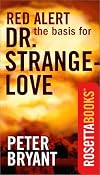
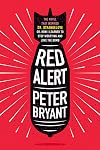
Red Alert
by Peter Bryant
On This Page
Description
The basis for Stanley Kubrick's masterpiece, Dr. Strangelove-a chilling, suspenseful novel in which unchecked power unleashes total nuclear disaster. Air Force Brigadier General Quinten is a dying man suffering from the paranoid delusion that he can make the world a better place by ordering a full-scale nuclear attack on the Soviet Union. Once they get wind of it, the President of the United States and his advisors work frantically to stop the attack. The American bombers are to be shot show more down, and they succeed-but a lone bomber called the "Alabama Angel" escapes and flies on to complete its lunatic mission, ignoring the President's orders. A ghastly and chilling vision of what might happen when profound and deadly power is put into the wrong hands, this classic thriller continues to serve warning in today's tumultuous political climate. show lessTags
Recommendations


















Member Reviews
Intense story of nuclear bombers headed for the Soviet Union and the mistaken outbreak of World War III. It was the source for Dr. Strangelove, which morphed into a very black comedy. This book plays everything straight, but will still entertain you with its doomsday scenario.
"Nucular combat toe to toe with the Russkies". Red Alert is the book that Dr. Strangelove was based on. The only thing is that the book is not a comedy, not even a black comedy. Red Alert is a book written in the 1950s in the Cold War period about the US/Soviet stand-off. This book is played for real.
It's not a great book, but a good flashback to the mood of the Cold War. It's interesting that Stanley Kubrick took this book as his starting point. He exaggerated the themes of the book to construct his black comedy. It didn't take much. The logic of General Quinten (General Ripper in the movie) is something deeply rooted in the Cold War. A first strike made sense, within the logic of a death match between the US and the Soviet Union. And show more the movie, and the book, follow that logic to its conclusion. Not good.
There's no "Dr. Strangelove" in the book. He is a brilliant invention of Kubrick. The disturbing thing is that, without Strangelove, and without the exaggerations, the logic proceeds to its disastrous conclusion.
"Gentlemen, you can't fight in here! This is the War Room!" show less
It's not a great book, but a good flashback to the mood of the Cold War. It's interesting that Stanley Kubrick took this book as his starting point. He exaggerated the themes of the book to construct his black comedy. It didn't take much. The logic of General Quinten (General Ripper in the movie) is something deeply rooted in the Cold War. A first strike made sense, within the logic of a death match between the US and the Soviet Union. And show more the movie, and the book, follow that logic to its conclusion. Not good.
There's no "Dr. Strangelove" in the book. He is a brilliant invention of Kubrick. The disturbing thing is that, without Strangelove, and without the exaggerations, the logic proceeds to its disastrous conclusion.
"Gentlemen, you can't fight in here! This is the War Room!" show less
The true genius in this book is how Stanley Kubrick came up with Dr. Strangelove out of this story. Red Alert is a serious Cold War Doomsday novel much like Fail-Safe even with a similar ending. Kubrick follows Peter Bryant’s basic plot line but layers it with insane black humor to provide a bizarro-world take on the whole “duck-and-cover” life in the Sixties. Skip the book and go straight to the film.
An excellent, terrifying work. However, it is also one of the few writings which the movie based upon it surpassed it. Peter Bryant despite his intense pessimism, saw a way out: the world lived on, the bombs didn't go off, and Russia and America began working towards world peace.
The book was, or is, a bestseller and inspired a movie. Red Alert highlights the dangers we face from the possibility of nuclear annihilation when politics goes wrong.
Here, within the space of two hours, the risk of nuclear warfare increased and then decreased. While the book serves as a reminder of how close we can come to destruction, it did not appeal to me and left me unengaged.
Here, within the space of two hours, the risk of nuclear warfare increased and then decreased. While the book serves as a reminder of how close we can come to destruction, it did not appeal to me and left me unengaged.
Interesting read, especially when you compare and contrast it to the movie, "Doctor Strangelove", which was based on this novel. The book is serious, while the movie is darkly satirical. Much of the basic story is the same, though details vary.The entire (though not long) novel takes place during only about a 2-3 hour period. That, along with the nature of the story (nuclear war) makes for a fairly high state of tension throughout, but it is never sensationalized or over the top.Interestingly, there are a few aspects of the story that reminded me of the movie "Failsafe" -- in particular the ending -- and upon poking around at Wikipedia, I see that the author of this book sued the author of [b:Failsafe|6017374|Failsafe|Ian show more Prattis|http://photo.goodreads.com/books/1266459403s/6017374.jpg|6192731] for plagiarism (and settled out of court). show less
This book is quite neat, but I’d imagine you’d only be interested in it because of the Kubrick remake (Dr. Strangelove), or because of its place in with the multitude of other “WWIII”/nuclear holocaust stories around the time of the Cold War. The basic plot revolves around a crazed air-base commander who uses a flaw in the "fail-safe" plans to set off a series of attacks on Russia--a move that could have more dangerous consequences than he perceives. Here enters the rest of the higher government (including the President himself) to try and "save the day".
Unfortunately, a book like this was somewhat like futuristic speculative fiction at the time, but since Cold War is over, it just reads like another alternate history book. show more There are a few things that, when reading, I felt were still relevant today—especially when thinking about the North Korea Missile Tests, the Iraq War, choosing your enemies and things like that—but for the most part, it’s just a curiosity piece.
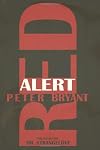
Most of the problems I have with this book spring from the printing and the publisher. If you want to get this book, DO NOT get the blackmask.com edition. I’ve seen a few people complain about “typographical” errors with Blackmask, an Indy publisher; and this is not to mention their “recent” entanglement with Condé Nast Publications for printing and selling books that were out of print, but still under the copyright of Condé Nast. Even the lack of good-quality graphics on the cover may provide a tell-tale sign.
There are many spelling and grammar errors—I’m guessing this comes from the fact that the novel was probably scanned and converted to text before being published independently. In a novel that takes place in the course of two hours, it’s extremely confusing when the publisher has even overlooked the times at which different chapters occur.
If you want this book, you aren’t going to find a good copy new—so search for it used on abebooks.com or something. Chances are your old book will have better spelling and grammar than this new one! show less
Unfortunately, a book like this was somewhat like futuristic speculative fiction at the time, but since Cold War is over, it just reads like another alternate history book. show more There are a few things that, when reading, I felt were still relevant today—especially when thinking about the North Korea Missile Tests, the Iraq War, choosing your enemies and things like that—but for the most part, it’s just a curiosity piece.
Most of the problems I have with this book spring from the printing and the publisher. If you want to get this book, DO NOT get the blackmask.com edition. I’ve seen a few people complain about “typographical” errors with Blackmask, an Indy publisher; and this is not to mention their “recent” entanglement with Condé Nast Publications for printing and selling books that were out of print, but still under the copyright of Condé Nast. Even the lack of good-quality graphics on the cover may provide a tell-tale sign.
There are many spelling and grammar errors—I’m guessing this comes from the fact that the novel was probably scanned and converted to text before being published independently. In a novel that takes place in the course of two hours, it’s extremely confusing when the publisher has even overlooked the times at which different chapters occur.
If you want this book, you aren’t going to find a good copy new—so search for it used on abebooks.com or something. Chances are your old book will have better spelling and grammar than this new one! show less
Members
- Recently Added By
Author Information

1 Work 316 Members
Work Relationships
Common Knowledge
- Canonical title
- Red Alert
- Original title
- Two Hours to Doom
- Alternate titles
- Dr. Strangelove, or: How I Learned to Stop Worrying and Love the Bomb
- Original publication date
- 1958
- Related movies
- Dr. Strangelove or: How I Learned to Stop Worrying and Love the Bomb (1964 | IMDb)
- Dedication
- For Johnny and Joe
- First words
- 09.45 G.M.T.
- Last words
- (Click to show. Warning: May contain spoilers.)He signaled for the link to be opened, and began to talk to the Marshal.
Classifications
Statistics
- Members
- 317
- Popularity
- 100,881
- Reviews
- 12
- Rating
- (3.51)
- Languages
- Danish, Dutch, English
- Media
- Paper, Ebook
- ISBNs
- 11
- ASINs
- 15