Cotton Tenants: Three Families
by James Agee, Walker Evans (Photographer)
On This Page
Description
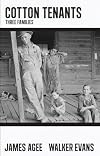
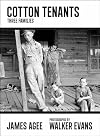
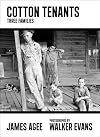
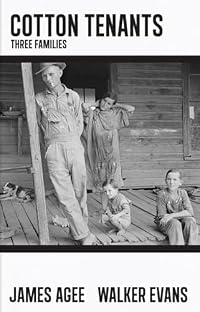
On assignment for "Fortune" magazine in 1936, Agee and Evans set out to explore the plight of sharecroppers during the Great Depression. Published for the first time, Agee's original dispatch (accompanied by 25 of Evans' historic photographs) is an unsparing record of three families at a desperate time.Tags
Recommendations



















Member Reviews
Let Us Now Praise Famous Men is James Agee's and Walker Evans' famous book about white sharecroppers* in Hale County, Alabama during the Great Depression. It was the outgrowth of a report they did for Fortune magazine, a report which was not published, for reasons that are not certain, and that had long been thought lost. This is that report. It is blunt and unsparing. It is an indictment of the agricultural, social and political systems of the South that kept hard-working people living in appalling conditions, poorly nourished, undereducated, and eternally in debt to those whose land they tilled.
This is a straight-forward telling. It is not prettified or fictionalized. In this report, unlike their book, the families are given their show more true names. The descriptions of their daily lives, the rhythm of their months and years, the food they eat, the clothes they wear, the work they do, are terse, almost list-like, but all the more compelling for that.
Yet Agee's words still astonish. Read his description of the cotton fields ready for picking, look how he juxtaposes an image of light with an image of ugliness : "Late in August the fields begin to whiten more rarely with late blooms and more frequently with cotton and then still thicker with cotton, like a sparkling ground starlight; and the wide tremendous light holds the earth beneath a glass vacuum and a burning glass. The bolls are rusty green, are bronze, are split and burst and splayed open in a loose vomit of cotton . . . There is a great deal of beauty about a single burr and the cotton slobbering from it and about a whole field opening." The same is true of Evans' photographs. These faces lined with hardship, with work and starvation, still have in them a delicacy, a reflection of all that is human. Look at the photos of Floyd Burroughs and his wife, Allie May, look at their eyes. There is a sadness in his, a worn-out-ness, while hers still have a hint of the beauty she must once have been, a hint of humor, too.
We mustn't read this as history, though it was written more than 70 years ago. Things have improved, no doubt, for people like the Burroughs and the Fields and the Tingles. But our cities could use a team like Agee & Evans to document the social and economic injustices that have not been eradicated, but seem only to have become urban rather than rural. I call this "uncomfortable reading" because, if we are honest, we know that we cannot say "that's over and done with", and we must confront the failures of our current age.
* a note on this. Agee & Evans deliberately chose to focus on white families, because, as Agee says, "Any honest consideration of the Negro would crosslight and distort the issue with the problems not of a tenant but of a race . . ." show less
This is a straight-forward telling. It is not prettified or fictionalized. In this report, unlike their book, the families are given their show more true names. The descriptions of their daily lives, the rhythm of their months and years, the food they eat, the clothes they wear, the work they do, are terse, almost list-like, but all the more compelling for that.
Yet Agee's words still astonish. Read his description of the cotton fields ready for picking, look how he juxtaposes an image of light with an image of ugliness : "Late in August the fields begin to whiten more rarely with late blooms and more frequently with cotton and then still thicker with cotton, like a sparkling ground starlight; and the wide tremendous light holds the earth beneath a glass vacuum and a burning glass. The bolls are rusty green, are bronze, are split and burst and splayed open in a loose vomit of cotton . . . There is a great deal of beauty about a single burr and the cotton slobbering from it and about a whole field opening." The same is true of Evans' photographs. These faces lined with hardship, with work and starvation, still have in them a delicacy, a reflection of all that is human. Look at the photos of Floyd Burroughs and his wife, Allie May, look at their eyes. There is a sadness in his, a worn-out-ness, while hers still have a hint of the beauty she must once have been, a hint of humor, too.
We mustn't read this as history, though it was written more than 70 years ago. Things have improved, no doubt, for people like the Burroughs and the Fields and the Tingles. But our cities could use a team like Agee & Evans to document the social and economic injustices that have not been eradicated, but seem only to have become urban rather than rural. I call this "uncomfortable reading" because, if we are honest, we know that we cannot say "that's over and done with", and we must confront the failures of our current age.
* a note on this. Agee & Evans deliberately chose to focus on white families, because, as Agee says, "Any honest consideration of the Negro would crosslight and distort the issue with the problems not of a tenant but of a race . . ." show less
Beautiful.
Visceral.
Astonishing and courageous, and so timely.
You wanna crab about the wi-fi being down? Try living without window screens, on a sub-nutritious diet of sorghum, field peas, and coffee, playing the losing, desperate economic roulette of the barely-literate Alabama cotton sharecropper in 1936, and see how your priorities might change.
Visceral.
Astonishing and courageous, and so timely.
You wanna crab about the wi-fi being down? Try living without window screens, on a sub-nutritious diet of sorghum, field peas, and coffee, playing the losing, desperate economic roulette of the barely-literate Alabama cotton sharecropper in 1936, and see how your priorities might change.
A heartrending eyewitness account of the desperate plight of sharecroppers and tenant farmers of Alabama during the 1930s. A very important piece of American history told in stark, elegant prose and photographs. It is a companion piece to “Let Us Now Praise Famous Men”. I think the legacy of exploitation affects us today.
Ratings
Members
- Recently Added By
Author Information

42+ Works 7,923 Members
Born in Knoxville, Tennessee, on November 27, 1909 and educated at Harvard, James Agee crowded versatile literary activity into his short and troubled life. In addition to two novels, he wrote short stories, essays, poetry, and screenplays; he worked professionally as a journalist and film critic. Appropriately, he is best remembered for a work show more that combines several genres and literary approaches. Let Us Now Praise Famous Men, a documentary report on sharecropper life accompanied by vividly realistic photographs by Walker Evans, has been called "a great Moby Dick of a book" (New York Times Book Review). It may be considered an important precursor of the so-called nonfiction novel that was to gain prominence during the 1960s. The Morning Watch (1954), a novel in the tradition of portraits of artists-to-be, and A Death in the Family, a moving account of domestic life based on the loss of Agee's father belong to more conventional types of fiction. The 1960 dramatization of All the Way Home by Tad Mosel, won a Pulitizer Prize and the New York Drama Critics Circle Award; it was also cited by Life as the "Best American Play of the Season." Agee's work for the screen included his scripts for The African Queen and The Night of the Hunter. Agee on Film (1958-60) consists of a gathering of reviews and comments as well as five scripts. Prior to Laurence Bergreen's well-received 1984 biography of Agee, the principal source of information about his life was Letters of James Agee to Father Flye, a collection of seventy letters written by Agee to his instructor at St. Andrew's School and trusted friend throughout his life. The letters show Agee most often in a reflective, self-condemning mood. The final letters, written from the hospital where he was battling daily heart attacks, are touching, as are his sad reflections on the work he yet wanted to do. Agee died in New York of a heart attack on May 16, 1955. He was posthumously awarded a Pulitzer Prize in 1957 for A Death in the Family. (Bowker Author Biography) show less

All Editions
Common Knowledge
- Original publication date
- 2013-05
- Epigraph
- Despair so far invading every tissue has destroyed in these the hidden seats of the desire and of the intelligence.
-- W.H. Auden
Classifications
Statistics
- Members
- 171
- Popularity
- 190,907
- Reviews
- 3
- Rating
- (4.10)
- Languages
- English, French
- Media
- Paper, Ebook
- ISBNs
- 4
- ASINs
- 2