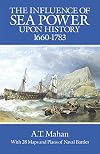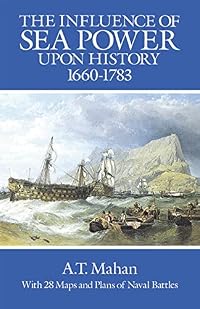
The Influence of Sea Power Upon History, 1660-1783
by A. T. Mahan
On This Page
Description
Alfred Thayer Mahan (1840-1914) was an American naval officer, considered one of the most important naval strategists of the nineteenth century. In 1885 he was appointed Lecturer in Naval History and Tactics at the US Naval War College, and became President of the institution between 1886-1889. This highly influential volume, first published in 1890, contains Mahan's analysis of naval warfare and tactics between 1660-1783. Mahan discusses and analyses the factors which led to Britain's naval show more domination during the eighteenth century, and recommends various naval strategies based on these factors. His work was closely studied by contemporary military powers, with his tactics adopted by many major navies in the years preceding the First World War. This volume is considered one of the most influential published works on naval strategy, and is invaluable for the study of naval warfare both before and during the First World War. show lessTags
Recommendations



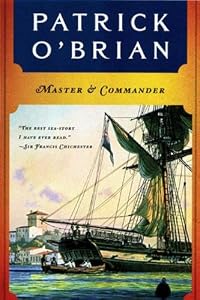
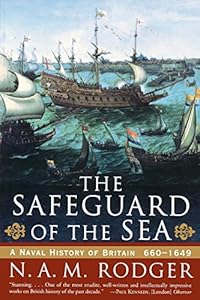
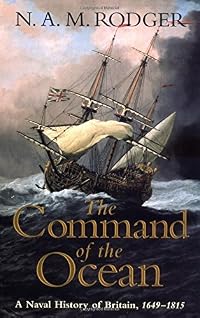

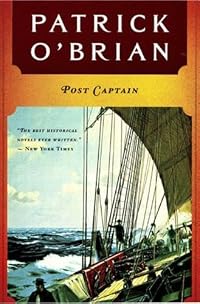











Member Reviews
This is a must read, but must read CRITICALLY. Mahan is basically toying with various ideas to try to cope with America's pre-panama canal two coast navy and thus takes up ideas like "decisive battle" / "battle of decision" and also thinks about commerce war (guerre de course). He correctly identifies that naval power would be core to the defense of the American Republic and the extension of its liberal democratic and capitalist ideas, thus three stars. But in fact wars are never won by one grand decisive battle, whether on land or sea. It is rather the accumulation of a series of victories in succession which seals the fate of a contending power. Meanwhile commerce warfare has repeatedly proven less than decisive, the one time show more succesfully executed was used by USN to cripple imperial Japan: no oil means no training means Mariana's turkey shoot. That was partly the result of Japanese strategic blindness. Many many other examples of FAIlEd guerre de course can be readily found and the ONE succesful example was in concert with surface superiority: by the time the USN submarines were strangling Japan the USN finally outnumbered the IJN in carriers. Finally, the USA has since dug the canal and appears so far to have checked Chinese efforts at building a nicaragua canal.
So.. the problems Mahan addressed are no longer there, the solutions he proposes are inexact, his ideas were entirely the basis of Japanese naval strategy which in fact failed to achieve victory despite one grand decisive battle called Pearl Harbor. And then what?
Oh. Defeat in a grinding war of naval attrition in which the Japanese empire had no chance.
Mahan is right that the navy is the most important power projection AND defensive tool and SHOULD be concentrated (principle of concentration of force). Most of his other propositions are contestable or even demonstrably false. Right strategy (large navy, concentrated) wrong tactic (seeking one grand decisive battle) as a solution to a no longer existing problem (coastal bifurcation).
Well worth reading, well written, but only partly apt to the current world. show less
So.. the problems Mahan addressed are no longer there, the solutions he proposes are inexact, his ideas were entirely the basis of Japanese naval strategy which in fact failed to achieve victory despite one grand decisive battle called Pearl Harbor. And then what?
Oh. Defeat in a grinding war of naval attrition in which the Japanese empire had no chance.
Mahan is right that the navy is the most important power projection AND defensive tool and SHOULD be concentrated (principle of concentration of force). Most of his other propositions are contestable or even demonstrably false. Right strategy (large navy, concentrated) wrong tactic (seeking one grand decisive battle) as a solution to a no longer existing problem (coastal bifurcation).
Well worth reading, well written, but only partly apt to the current world. show less
First published 1890, this book now belongs on every Top 10 of military strategic thought, along with the works of a Clausewitz. Within purely naval strategy, it's a barely disputed Top 1. Light reading it isn't. Drawing mainly from the Age of Sail, Mahan's substance may (or may not) be partly dated. But his repetitive style, however nourished by sharp & fresh details, hints of a bygone age.
Still, it's a masterpiece. Mahan set himself a simple but definitive task: to explain why England's Royal Navy, from mainly 1660 to 1783, became the most effective maritime force in history. His answers circle, with hypnotic iteration, around 3 main points:
1) For ambitious nations (or any state hoping to defend itself against these), a credible show more naval policy is such a multiplier of strength that it has become fatal if not inconceivable to neglect this dimension.
2) An armed navy never rests on a vacuum, or on a merely militarist policy, but draws its resources & power from an even healthier, flourishing commercial navy. This insight, or instinct, is the innermost "secret" of England's maritime empire.
3) Yet to undermine an enemy sea power it won't do to attack only its trade. You must specifically engage its armed fleet, in bold, decisive battles. Not its commercial vessels, colonies, or even supply posts alone. Destroy, annihilate the warships that safeguard all that. Such was England's strategy, time after time. France stubbornly insisted on the opposite doctrine, & ended up as the also-ran.
To Mahan, a flamboyant exception proving these rules was French Admiral Pierre de Suffren. Almost alone among his compatriots he understood war in English terms, conducting it even better than his enemy. Yet without support from his peers & superiors, decisive victory kept eluding him. Precisely because his success was so obviously shackled, here he represents how further afar France or any nation might reach, the moment they more consistently imitate the English way. show less
Still, it's a masterpiece. Mahan set himself a simple but definitive task: to explain why England's Royal Navy, from mainly 1660 to 1783, became the most effective maritime force in history. His answers circle, with hypnotic iteration, around 3 main points:
1) For ambitious nations (or any state hoping to defend itself against these), a credible show more naval policy is such a multiplier of strength that it has become fatal if not inconceivable to neglect this dimension.
2) An armed navy never rests on a vacuum, or on a merely militarist policy, but draws its resources & power from an even healthier, flourishing commercial navy. This insight, or instinct, is the innermost "secret" of England's maritime empire.
3) Yet to undermine an enemy sea power it won't do to attack only its trade. You must specifically engage its armed fleet, in bold, decisive battles. Not its commercial vessels, colonies, or even supply posts alone. Destroy, annihilate the warships that safeguard all that. Such was England's strategy, time after time. France stubbornly insisted on the opposite doctrine, & ended up as the also-ran.
To Mahan, a flamboyant exception proving these rules was French Admiral Pierre de Suffren. Almost alone among his compatriots he understood war in English terms, conducting it even better than his enemy. Yet without support from his peers & superiors, decisive victory kept eluding him. Precisely because his success was so obviously shackled, here he represents how further afar France or any nation might reach, the moment they more consistently imitate the English way. show less
Well sometimes a classic is book that is good to own, but not to read. Innovative as it might have been in it's day, it's more significant on reflection for creating history (arguably being an inspiration for the Japanese, German and US heavy investment in sea power in the early 1900's), than as history. At it's core it's an essentially tedious account of the projection of political power by the British navy in the days of sail and empire, and rather tediously makes a great deal of battle tactics rather than the influence of trade and communication. There is a theme here that is very relevant today - witnessing China's creation of a deep water navy - but this isn't the book that has much (any more) to say about it.
This is one of the foundational works of maritime strategy and puts Mahan in a category with history's other great strategic thinkers; Sun Tzu, Clausewitz, Moltke, Giap, Mao. Like those others, Mahan's tactical doctrines, and so the examples and illustrations taken from his writings, are obsolete and mostly irrelevant in the world of modern weaponry. Like the others, also, his strategic doctrine is suspect, but his influence is so great that everyone writing on maritime strategy gives him at least a hat-tip.
The Japanese, arguably, based their entire naval strategy during WWII on Mahan's ideas, and his work is cited increasingly by Chinese strategists as they hurry to build a blue-water navy, two facts which argue for Mahan's continued show more relevance. The period he writes of here was during the age of sail, and descriptions of maneuver can be hard to follow, but the combat operations he details can be read through quickly without losing sight of the strategic ideas.
Spoiler: A nation's strategic power rests on it's control of the seas. Control of the seas depends on production, commerce, and colonies (which provide friendly, foreign ports), and the purpose of a navy is to ensure these dependencies through an ability to destroy the enemy fleets. show less
The Japanese, arguably, based their entire naval strategy during WWII on Mahan's ideas, and his work is cited increasingly by Chinese strategists as they hurry to build a blue-water navy, two facts which argue for Mahan's continued show more relevance. The period he writes of here was during the age of sail, and descriptions of maneuver can be hard to follow, but the combat operations he details can be read through quickly without losing sight of the strategic ideas.
Spoiler: A nation's strategic power rests on it's control of the seas. Control of the seas depends on production, commerce, and colonies (which provide friendly, foreign ports), and the purpose of a navy is to ensure these dependencies through an ability to destroy the enemy fleets. show less
A classic that is said to have been inspired by Theodore Roosevelt in which Mahan argues that any nation wishing to maintain its strength must possess a strong navy. The perennial relevance can be applied to the Chinese who have developed a killer weapon that specifically takes out American aircraft carriers. The Chinese are applying their offensive weapons as the Americans once took their defense and build up of a Navy seriously.
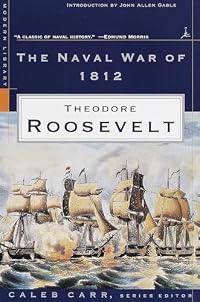
Cf. The Naval War Of 1812 by Theodore Roosevelt. Da Capo Press (1999), Paperback, 500 pages.
Cf. The Naval War Of 1812 by Theodore Roosevelt. Da Capo Press (1999), Paperback, 500 pages.
The Influence of Sea Power Upon History: 1660–1783 is a history of naval warfare published in 1890 by Alfred Thayer Mahan. It details the role of sea power during the seventeenth and eighteenth centuries, and discussed the various factors needed to support and achieve sea power, with emphasis on having the largest and most powerful fleet. Scholars considered it the single most influential book in naval strategy. Its policies were quickly adopted by most major navies,[1][2][3][4] ultimately leading to the World War I naval arms race. It is also cited as one of the contributing factors of the United States becoming a great power.
Members
- Recently Added By
Lists

Robert B. Downs's Books that Changed the World
16 works; 1 member

Robert B. Downs's Books that Changed America
15 works; 1 member

Bibliography of How the Old World Ended by Jonathan Scott
308 works; 1 member
Author Information

57+ Works 1,601 Members
Alfred Thayer Mahan was born on September 27, 1840 at West Point, New York, where his father was a professor of Civil and Military Engineering at the U.S. Military Academy. He graduated from the Naval Academy in 1859 and embarked on a nearly 40-year naval career seeing duty in the South Atlantic and Gulf of Mexico against the Confederacy. He show more taught briefly at Annapolis, but spent most of his academic career at the newly founded Naval War College in Newport, Rhode Island, where he eventually served as president. He wrote twenty books during his lifetime including The Influence of Sea Power upon History, 1660-1783; The Influence of Sea Power upon the French Revolution and Empire, 1793-1812; The Interest of America in Sea Power, Present and Future; The Life of Nelson; and The Major Operations of the Navies in the War of American Independence. He died on December 1, 1914. (Bowker Author Biography) show less
Series
Belongs to Publisher Series
Work Relationships
Is contained in
Common Knowledge
- Original publication date
- 1890
- People/Characters
- Pierre André de Suffren
- Important events
- Seven Years' War
- First words
- The first and most obvious light in which the sea presents itself from the political and social point of view is that of a great highway; or better, perhaps, of a wide common, over which men may pass in all directions, but on... (show all) which some well-worn paths show that controlling reasons have led them to choose certain lines of travel rather than others. These lines of travel are called trade routes; and the reasons which have determined them are to be sought in the history of the world.
- Last words
- (Click to show. Warning: May contain spoilers.)Trivial in themselves, there is but one comment that need be made upon these arrangements. In any coming war their permanency would depend wholly upon the balance of sea power, upon that empire of the seas concerning which nothing conclusive had been established by the war.
The definitive treaties of peace were signed at Versailles, September 3, 1783.
Classifications
Statistics
- Members
- 837
- Popularity
- 32,703
- Reviews
- 7
- Rating
- (3.83)
- Languages
- Chinese, English, Spanish
- Media
- Paper, Audiobook, Ebook
- ISBNs
- 68
- UPCs
- 1
- ASINs
- 34