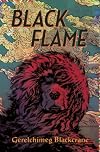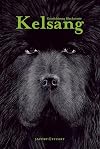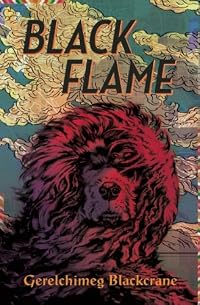
Black Flame
by Gerelchimeg Blackcrane
On This Page
Description
When Kelsang, a Tibetan mastiff, is bought by some travelers, he soon finds himself chained and neglected before a series of misadventures brings him to a loving and loyal master at last.Tags
Recommendations













Member Reviews
Born on the northern Tibetan plateau, Kelsang was a purebred Tibetan mastiff, one of the world's largest and fiercest dog breeds. Orphaned as a puppy, when his mother was killed in a battle with a snow leopard, he became his master Tenzin's sheep dog, until two unscrupulous strangers, realizing his worth, tricked his human keeper into parting with him. What followed was a period of various unhappy adventures for Kelsang, from his experiences being forced to fight other dogs, to his time as a stray in Llhasa, where he was briefly looked after by an elderly and mostly indifferent painter. After a period of being chained up outside a rural hotel, our canine hero made his escape once again, meeting his true human master - the kind Han Ma - show more in the process. Experiencing love and devotion for the first time, Kelsang wanted nothing more than to stay by Han Ma's side, and after some other adventures, and a period of being parted from him, the mastiff was finally reunited with the human to whom he had become so devoted. Here, on the grasslands of Hulunbuir, when a terrible and dangerous snowstorm struck, Kelsang once again proved his courage, dedication, and worth...
Apparently Gerelchimeg Blackcrane, a Chinese citizen of Mongolian ethnicity who is celebrated for his many animal stories, is a best-selling author in his native country. Having greatly enjoyed The Moose of Ewenki, the only other one of his books to be translated into English thus far, I lost no time in tracking down Black Flame, originally published in China as 黑焰 (Hēi yàn). I am so glad that I did, as I found it to be an engrossing story. There are certainly many heartwarming moments here - I loved the interactions between Kelsang and Han Ma, which are beautifully described by the author! - but I wouldn't describe this as being sweet, in quite the way that so many contemporary animal stories here in the west would be. Blackcrane write realistically, and without overt sentimentality, about the darker aspects of his canine hero's life, whether that be the natural enemies (particularly wolves) with whom he fights, or the human beings who mistreat him, and act as if he is nothing more than a commodity, rather than a feeling being with needs of his own. As a result, some of the scenes here can be a little difficult for an animal lover to read, but they never feel gratuitous, and the motivations of all involved always make sense in the context of the story, even when (in the case of humans) they are not so admirable.
Knowing nothing of mastiffs, Tibetan or otherwise, when I picked Black Flame up, I immediately went digging around on the internet (as you do), and discovered that like so many other breeds around the world, there was a fad for a while in China, of keeping these animals as pets. As Blackcrane's story makes abundantly clear, these are not animals that can be safely or happily kept by just anybody, and they have certain requirements - lots of space to roam, the need for actual work to do - that make keeping them in most cities problematic. I was therefore not surprised to discover that there is an epidemic of abandoned Tibetan mastiffs, dumped back in Tibet by their rich former Chinese owners, and being cared for mostly by monasteries. Ironically, given that Blackcrane clearly warns about the dangers of taking such dogs to large cities in his story, I can't help but wonder whether 黑焰, which was first published in 2005, was connected to the craze. Given that one of the first articles I read featured a photograph of a Tibetan mastiff being beaten to death by men with shovels, I almost wish I hadn't gone looking! Unlike animals, humans never fail to disappoint...
Leaving that disturbing reality aside, Black Flame is a book I would highly recommend, with the proviso that very sensitive animal lovers may find some scenes (especially the ones where Kelsang fights off wolves or other dogs) disturbing. show less
Apparently Gerelchimeg Blackcrane, a Chinese citizen of Mongolian ethnicity who is celebrated for his many animal stories, is a best-selling author in his native country. Having greatly enjoyed The Moose of Ewenki, the only other one of his books to be translated into English thus far, I lost no time in tracking down Black Flame, originally published in China as 黑焰 (Hēi yàn). I am so glad that I did, as I found it to be an engrossing story. There are certainly many heartwarming moments here - I loved the interactions between Kelsang and Han Ma, which are beautifully described by the author! - but I wouldn't describe this as being sweet, in quite the way that so many contemporary animal stories here in the west would be. Blackcrane write realistically, and without overt sentimentality, about the darker aspects of his canine hero's life, whether that be the natural enemies (particularly wolves) with whom he fights, or the human beings who mistreat him, and act as if he is nothing more than a commodity, rather than a feeling being with needs of his own. As a result, some of the scenes here can be a little difficult for an animal lover to read, but they never feel gratuitous, and the motivations of all involved always make sense in the context of the story, even when (in the case of humans) they are not so admirable.
Knowing nothing of mastiffs, Tibetan or otherwise, when I picked Black Flame up, I immediately went digging around on the internet (as you do), and discovered that like so many other breeds around the world, there was a fad for a while in China, of keeping these animals as pets. As Blackcrane's story makes abundantly clear, these are not animals that can be safely or happily kept by just anybody, and they have certain requirements - lots of space to roam, the need for actual work to do - that make keeping them in most cities problematic. I was therefore not surprised to discover that there is an epidemic of abandoned Tibetan mastiffs, dumped back in Tibet by their rich former Chinese owners, and being cared for mostly by monasteries. Ironically, given that Blackcrane clearly warns about the dangers of taking such dogs to large cities in his story, I can't help but wonder whether 黑焰, which was first published in 2005, was connected to the craze. Given that one of the first articles I read featured a photograph of a Tibetan mastiff being beaten to death by men with shovels, I almost wish I hadn't gone looking! Unlike animals, humans never fail to disappoint...
Leaving that disturbing reality aside, Black Flame is a book I would highly recommend, with the proviso that very sensitive animal lovers may find some scenes (especially the ones where Kelsang fights off wolves or other dogs) disturbing. show less
The dog in this book is like Lassie! Well, except he is a Tibetan Mastiff and he kills dogs that challenge him, but he does have some nice occasions where he can save others.
I liked the book because it has a different feel to it. The dog is a different type of breed than I usually read about. The location in Tibet and China is exotic terrain. The author is very familiar with the area and habits so you never feel the need to question the books authenticity. It is hard for me to describe how the attitudes of the people are also different, but as I said I liked the difference.
At one point the dog, Kelsang, gets a new kind master, and after the big dog had knocked him down in enthusiasm, the person laughs and Kelsang realizes he is happy show more again. His feeling is described as “Sunlight, the greenest grass, the warmest wind.”
In another part of the story, Kelsang stays in the courtyard of a tanka painter. I had to look up what that was. From Wikipedia:
“A thangka, variously spelled as thangka, tangka, thanka, or tanka (Nepali pronunciation: [ˈt̪ʰaŋka]; Tibetan: ཐང་ཀ་; Nepal Bhasa: पौभा), is a Tibetan Buddhist painting on cotton, silk appliqué, usually depicting a Buddhist deity, scene, or mandala.”
The tanka painter is a form of monk, and a quiet meditative person. “Words were an extravagance to the old painter, who was used to being alone. They were only to be spoken when absolutely necessary.”
He helps by feeding the dog, but then when asked gives the dog away. Then later in reflection, “That night the wind came and carried Kelsang’s mat away. The next morning, the painter shambled out to water his plants. Kelsang had never existed, he was sure of it. While there was still a hazy image of a dog lingering in the back of his mind, he thought of it as he did one of his tanka paintings that had been taken away and was now hanging in a temple somewhere.”
What I didn’t like was that Kelsang killed at least 4-5 dogs in the story. I know it relates to the character of Kelsang, and authors dream up conflicts to make the drama of a book work. It works, but you get the feeling that the author admires tough dogs and has no remorse for the dogs that get killed. I am giving the book one less star because of this. For some, this may be a much bigger turn off. Although there is no Kleenex needed for Kelsang, I cry to think of the other dogs.
If you like classic tales of dogs overcoming hardship in an exotic land, then doing heroic deeds, I would say you would like this book. show less
I liked the book because it has a different feel to it. The dog is a different type of breed than I usually read about. The location in Tibet and China is exotic terrain. The author is very familiar with the area and habits so you never feel the need to question the books authenticity. It is hard for me to describe how the attitudes of the people are also different, but as I said I liked the difference.
At one point the dog, Kelsang, gets a new kind master, and after the big dog had knocked him down in enthusiasm, the person laughs and Kelsang realizes he is happy show more again. His feeling is described as “Sunlight, the greenest grass, the warmest wind.”
In another part of the story, Kelsang stays in the courtyard of a tanka painter. I had to look up what that was. From Wikipedia:
“A thangka, variously spelled as thangka, tangka, thanka, or tanka (Nepali pronunciation: [ˈt̪ʰaŋka]; Tibetan: ཐང་ཀ་; Nepal Bhasa: पौभा), is a Tibetan Buddhist painting on cotton, silk appliqué, usually depicting a Buddhist deity, scene, or mandala.”
The tanka painter is a form of monk, and a quiet meditative person. “Words were an extravagance to the old painter, who was used to being alone. They were only to be spoken when absolutely necessary.”
He helps by feeding the dog, but then when asked gives the dog away. Then later in reflection, “That night the wind came and carried Kelsang’s mat away. The next morning, the painter shambled out to water his plants. Kelsang had never existed, he was sure of it. While there was still a hazy image of a dog lingering in the back of his mind, he thought of it as he did one of his tanka paintings that had been taken away and was now hanging in a temple somewhere.”
What I didn’t like was that Kelsang killed at least 4-5 dogs in the story. I know it relates to the character of Kelsang, and authors dream up conflicts to make the drama of a book work. It works, but you get the feeling that the author admires tough dogs and has no remorse for the dogs that get killed. I am giving the book one less star because of this. For some, this may be a much bigger turn off. Although there is no Kleenex needed for Kelsang, I cry to think of the other dogs.
If you like classic tales of dogs overcoming hardship in an exotic land, then doing heroic deeds, I would say you would like this book. show less
The dog in this book is like Lassie! Well, except he is a Tibetan Mastiff and he kills dogs that challenge him, but he does have some nice occasions where he can save others.
I liked the book because it has a different feel to it. The dog is a different type of breed than I usually read about. The location in Tibet and China is exotic terrain. The author is very familiar with the area and habits so you never feel the need to question the books authenticity. It is hard for me to describe how the attitudes of the people are also different, but as I said I liked the difference.
At one point the dog, Kelsang, gets a new kind master, and after the big dog had knocked him down in enthusiasm, the person laughs and Kelsang realizes he is happy show more again. His feeling is described as “Sunlight, the greenest grass, the warmest wind.”
In another part of the story, Kelsang stays in the courtyard of a tanka painter. I had to look up what that was. From Wikipedia:
“A thangka, variously spelled as thangka, tangka, thanka, or tanka (Nepali pronunciation: [ˈt̪ʰaŋka]; Tibetan: ཐང་ཀ་; Nepal Bhasa: पौभा), is a Tibetan Buddhist painting on cotton, silk appliqué, usually depicting a Buddhist deity, scene, or mandala.”
The tanka painter is a form of monk, and a quiet meditative person. “Words were an extravagance to the old painter, who was used to being alone. They were only to be spoken when absolutely necessary.”
He helps by feeding the dog, but then when asked gives the dog away. Then later in reflection, “That night the wind came and carried Kelsang’s mat away. The next morning, the painter shambled out to water his plants. Kelsang had never existed, he was sure of it. While there was still a hazy image of a dog lingering in the back of his mind, he thought of it as he did one of his tanka paintings that had been taken away and was now hanging in a temple somewhere.”
What I didn’t like was that Kelsang killed at least 4-5 dogs in the story. I know it relates to the character of Kelsang, and authors dream up conflicts to make the drama of a book work. It works, but you get the feeling that the author admires tough dogs and has no remorse for the dogs that get killed. I am giving the book one less star because of this. For some, this may be a much bigger turn off. Although there is no Kleenex needed for Kelsang, I cry to think of the other dogs.
If you like classic tales of dogs overcoming hardship in an exotic land, then doing heroic deeds, I would say you would like this book. show less
I liked the book because it has a different feel to it. The dog is a different type of breed than I usually read about. The location in Tibet and China is exotic terrain. The author is very familiar with the area and habits so you never feel the need to question the books authenticity. It is hard for me to describe how the attitudes of the people are also different, but as I said I liked the difference.
At one point the dog, Kelsang, gets a new kind master, and after the big dog had knocked him down in enthusiasm, the person laughs and Kelsang realizes he is happy show more again. His feeling is described as “Sunlight, the greenest grass, the warmest wind.”
In another part of the story, Kelsang stays in the courtyard of a tanka painter. I had to look up what that was. From Wikipedia:
“A thangka, variously spelled as thangka, tangka, thanka, or tanka (Nepali pronunciation: [ˈt̪ʰaŋka]; Tibetan: ཐང་ཀ་; Nepal Bhasa: पौभा), is a Tibetan Buddhist painting on cotton, silk appliqué, usually depicting a Buddhist deity, scene, or mandala.”
The tanka painter is a form of monk, and a quiet meditative person. “Words were an extravagance to the old painter, who was used to being alone. They were only to be spoken when absolutely necessary.”
He helps by feeding the dog, but then when asked gives the dog away. Then later in reflection, “That night the wind came and carried Kelsang’s mat away. The next morning, the painter shambled out to water his plants. Kelsang had never existed, he was sure of it. While there was still a hazy image of a dog lingering in the back of his mind, he thought of it as he did one of his tanka paintings that had been taken away and was now hanging in a temple somewhere.”
What I didn’t like was that Kelsang killed at least 4-5 dogs in the story. I know it relates to the character of Kelsang, and authors dream up conflicts to make the drama of a book work. It works, but you get the feeling that the author admires tough dogs and has no remorse for the dogs that get killed. I am giving the book one less star because of this. For some, this may be a much bigger turn off. Although there is no Kleenex needed for Kelsang, I cry to think of the other dogs.
If you like classic tales of dogs overcoming hardship in an exotic land, then doing heroic deeds, I would say you would like this book. show less
The exciting adventures of a black Tibetan mastiff. A wonderful dog story set in an exotic location.
Response - The story is told through the perspective of a Tibetan Mastiff living in the wilds of Tibet. The writing is very descriptive, which I think can be difficult. I'd recommend this book for 6th grade and older.
Curricular connection - reading groups
Curricular connection - reading groups
Ratings
Members
- Recently Added By
Lists

Red Dot 2014-2015 - Older Readers - Longlist
37 works; 4 members
Author Information
3 Works 54 Members
Some Editions
Awards and Honors
Common Knowledge
- Original language
- Chinese
Classifications
- Genres
- Fiction and Literature, Kids, Children's Books, Tween
- DDC/MDS
- 895.1 — Literature & rhetoric Asian Literature Literatures of East and Southeast Asia Chinese
- LCC
- PZ7 .B5315 .B5234 — Language and Literature Fiction and juvenile belles lettres Fiction and juvenile belles lettres Juvenile belles lettres
- BISAC
Statistics
- Members
- 30
- Popularity
- 924,613
- Reviews
- 5
- Rating
- (4.20)
- Languages
- English, German
- Media
- Paper, Ebook
- ISBNs
- 5
- ASINs
- 2