On This Page
Description
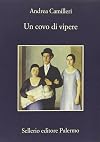
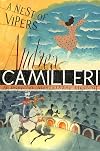
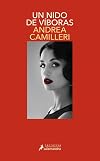
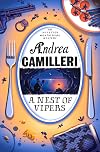
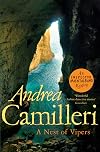
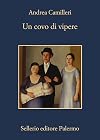
"Montalbano investigates the death of the wealthy Cosimo Barletta in a case that involves a ring of mistresses and family secrets"--Tags
Recommendations


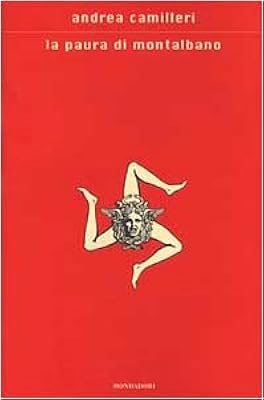




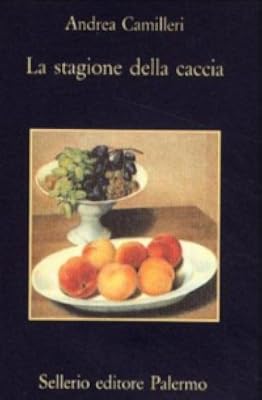
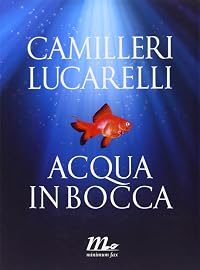
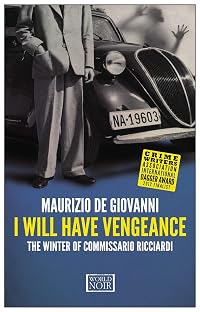
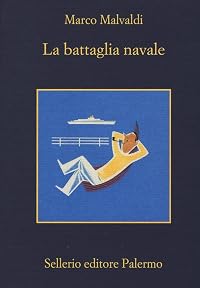




Member Reviews
After reading 20 earlier installments in the series, I did not think that Camilleri could surprise me, but surprise me he did. Not with the characters. They remain the loyal, unwavering, unique personalities that are a big part of the reason I continue to enjoy the Inspector Montalbano books. That, and the interesting mind games that Montalbano plays on some of the suspects (not always by the book, if you know what I mean). No, the surprise was in the unveiling of the crime(s) this go around. As the clues are uncovered, and disturbing layers to the case are revealed, I kept saying in my head, “No, it cannot be that… say it isn’t that”. Every now and then Camilleri takes readers, like me, outside of our comfort zone, making me show more squirm uncomfortably. He sure did this time! Some readers may be tiring of the “bickering” relationship between Salvo and Livia, but I can see where Camilleri uses that relationship as a foil for some of Montalbano’s frustrations.
Another wonderful installment in an entertaining series. show less
Another wonderful installment in an entertaining series. show less
I have enjoyed Andrea Camilleri’s Salvo Montalbano series for decades, awaiting on tenterhooks for the English translation of each gem. Even so, I’d forgotten how laugh-out-loud funny Camilleri can be without (usually) falling into slapstick silliness. A Nest of Vipers, the 21st novel in the series, provides the taut mystery readers have come to expect while still providing lots of humor.
In this novel, a ruthless, womanizing businessman is found murdered at his beach house. There are so many secrets involved in this Cosimo Barletta’s businesses, sexual proclivities and family that I dare not say much more. Even though most readers will guess the final secret before the end, they won’t care because the writing and plotting are so show more excellent. Recommended. show less
In this novel, a ruthless, womanizing businessman is found murdered at his beach house. There are so many secrets involved in this Cosimo Barletta’s businesses, sexual proclivities and family that I dare not say much more. Even though most readers will guess the final secret before the end, they won’t care because the writing and plotting are so show more excellent. Recommended. show less
This was over before I knew it. I do love Commissario Montalbano stories. Such great characters and lots of laughs along the way. Can't quite figure out the relationship with Livia, but the books are a delight anyway. They do make me hungry!
I turn to these books partly for the plot, but mostly for the unapologetically grumpy Montalbano, the food porn, the supporting characters and the locations.
In terms of plot, A NEST OF VIPERS undoubtedly isn't the strongest Montalbano book in the series. There was nothing particularly mysterious about the identity of the murderer, the reason for the murder and really, sometimes a victim is almost too deserving for there to be much in the way of interest in the investigation. There is, fortunately in this series, always much to distract the reader. Whether it's the food, the locations, Montalbano's ongoing odd relationship with Livia or his eccentric cast of colleagues, including the wonderful Cat, there are reasons to spend time with show more these books over and above the mystery elements. show less
In terms of plot, A NEST OF VIPERS undoubtedly isn't the strongest Montalbano book in the series. There was nothing particularly mysterious about the identity of the murderer, the reason for the murder and really, sometimes a victim is almost too deserving for there to be much in the way of interest in the investigation. There is, fortunately in this series, always much to distract the reader. Whether it's the food, the locations, Montalbano's ongoing odd relationship with Livia or his eccentric cast of colleagues, including the wonderful Cat, there are reasons to spend time with show more these books over and above the mystery elements. show less
When an older man is found shot dead in his kitchen, at first Chief Inspector Montalbano thinks it’s a fairly straightforward murder. But closer examination leads to the conclusion that the man was poisoned to death and then shot, indicating not one but *two* intended murderers, and when Montalbano probes into the man’s life, he begins to think there could be hundreds of potential suspects, so venal and downright evil the man had been…. It’s always a treat to get a new Montalbano novel, this one being from 2013 but translated to English in 2017 by the great Stephen Sartarelli; this is, I think, the 21st novel in the series, and it is full of the author’s trademark humour, love of food and, yes, beautiful women all over the show more place. My only quibble has to do with format; I bought the Kindle edition and the notes provided by Mr. Sartarelli at the end of the book are sometimes hard to access, first because the format doesn’t let the reader know there *is* a note about a given phrase or sentence, and second because one has to check the *next* note in order to know to look it up when one reaches that moment in the story. Otherwise, recommended as ever! show less
Why is Catarella allowed to have any part in the operation of the station? He'd be an encumbrance even if moved to toilet-cleaning duties. Why does Montalbano never seem to have any means of communicating with the rest of the force on him? It's not that he can't get a signal since he's never shown to try! Why does he appear to operate outside the rest of the force in his own time and to his inclinations? He's more like a private eye than a policeman. Catarella is almost certainly a “raccomandato”, i.e., someone who got his job thanks to connections rather than going through a rigorous interview and testing process (in Portuguese would be harder to translate; I don’t there’s a noun for that; for the action, yes; it’s called show more “meter uma cunha”, meaning literally “to pull strings for somebody”). It happens an awful lot. But Catarella does crack computer codes, week in week out, so he's good at something!
The Catarella thing is very much a reflection of the spirit of Montalbano’s books... He's there because he's loved, not because he's good. I remember one of Camilleri’s novels where a lawyer, I think he was called Leone, complained to Montalbano about Catarella's telephone manners and Montalbano got annoyed and defended him. It's about the laxness of process and the human interconnectedness; it's about peasantry rather than urbanism. Catarella is one of the running themes that leavens what might be a depressing view of Mediterranean corruption and violence. Irritating he might have been, but he has by now become a welcome feature.
I myself find the chauvinistic attitude towards women a bit cringing but then again, it does reflect Italian society. I know, by the way, I am not Italian. I’m Portuguese, but the Mediterranean culture is still there. There is also a whole sphere lost in translation. The characters that speak only in dialect and the socioeconomic layer hidden to the English-speaking public. Also, many jokes are translated as they can but often, are totally changed as they are untranslatable. It's such a good representation of the idyllic dissonance of Italy (and the Mediterranean culture in general).
I really enjoy Montalbano, especially in the Summer. Once upon a time I had a German teacher who also spoke Italian and she kept telling me that much of the humour and charm is in the use of Sicilian dialect; which of course is lost on me (I can pick up lots of Italian, but Sicilian? No way! It’s another ball game). She suggested that we only catch the slapstick or obvious comedic sketches and that there was a much richer seam of humour and intrigue that had been lost in translation. To command only three languages, Portuguese, English and German, is really a pain in the proverbial place (I know; it sounds like boasting, but it really isn’t…) show less
The Catarella thing is very much a reflection of the spirit of Montalbano’s books... He's there because he's loved, not because he's good. I remember one of Camilleri’s novels where a lawyer, I think he was called Leone, complained to Montalbano about Catarella's telephone manners and Montalbano got annoyed and defended him. It's about the laxness of process and the human interconnectedness; it's about peasantry rather than urbanism. Catarella is one of the running themes that leavens what might be a depressing view of Mediterranean corruption and violence. Irritating he might have been, but he has by now become a welcome feature.
I myself find the chauvinistic attitude towards women a bit cringing but then again, it does reflect Italian society. I know, by the way, I am not Italian. I’m Portuguese, but the Mediterranean culture is still there. There is also a whole sphere lost in translation. The characters that speak only in dialect and the socioeconomic layer hidden to the English-speaking public. Also, many jokes are translated as they can but often, are totally changed as they are untranslatable. It's such a good representation of the idyllic dissonance of Italy (and the Mediterranean culture in general).
I really enjoy Montalbano, especially in the Summer. Once upon a time I had a German teacher who also spoke Italian and she kept telling me that much of the humour and charm is in the use of Sicilian dialect; which of course is lost on me (I can pick up lots of Italian, but Sicilian? No way! It’s another ball game). She suggested that we only catch the slapstick or obvious comedic sketches and that there was a much richer seam of humour and intrigue that had been lost in translation. To command only three languages, Portuguese, English and German, is really a pain in the proverbial place (I know; it sounds like boasting, but it really isn’t…) show less
In a series that has run as long as Andrea Camilleri's has, not every installment is going to be a barnburner. That is the case with A Nest of Vipers. In his Author's Note, Camilleri admits that the plot of this book is very similar to that of The Paper Moon, the difference being that he became stronger in writing about a certain topic in A Nest of Vipers. I could tell you what that topic is, but it would give away too much of the story. Personally, I think it's one that doesn't need multiple covers due in part to the fact that it can be too easily deduced.
Speaking of deduction, Salvo Montalbano is never at his best when confronted with beautiful young women. One after another, he is brought face to face with drop-dead gorgeous young show more things as he tries to work his way through all the dead man's mistresses. They are prime suspects after all. Also, in previous reviews I've made it very clear that I don't like Montalbano's longtime girlfriend, Livia. She can't cook. She's vindictive. She hates Montalbano's housekeeper. And--worst of all in my book-- she lives to pick fights with the inspector. But... if you are one of the many who believe fighting adds spice to any romance, this relationship will be right in your wheelhouse.
For me, the saving grace of A Nest of Vipers is its humor. From the gold standard dialogue of Catarella to the coroner whose aspiration in life is to perform Montalbano's autopsy to the inspector's finding a new home for his mountains of paperwork, there are plenty of smiles, chuckles, and outright laughs to be found.
If only there hadn't been an overload of estrogen. Poor Montalbano has so much trouble dealing with it. show less
Speaking of deduction, Salvo Montalbano is never at his best when confronted with beautiful young women. One after another, he is brought face to face with drop-dead gorgeous young show more things as he tries to work his way through all the dead man's mistresses. They are prime suspects after all. Also, in previous reviews I've made it very clear that I don't like Montalbano's longtime girlfriend, Livia. She can't cook. She's vindictive. She hates Montalbano's housekeeper. And--worst of all in my book-- she lives to pick fights with the inspector. But... if you are one of the many who believe fighting adds spice to any romance, this relationship will be right in your wheelhouse.
For me, the saving grace of A Nest of Vipers is its humor. From the gold standard dialogue of Catarella to the coroner whose aspiration in life is to perform Montalbano's autopsy to the inspector's finding a new home for his mountains of paperwork, there are plenty of smiles, chuckles, and outright laughs to be found.
If only there hadn't been an overload of estrogen. Poor Montalbano has so much trouble dealing with it. show less
Members
- Recently Added By
Lists

Italian Literature
558 works; 40 members
Author Information

428+ Works 42,069 Members
Andrea Camilleri lives in Italy. Andrea Camilleri was born in Porto Empedocle, Sicily on September 6, 1925. He began his studies at Faculty of Literature in 1944 but never finished. He started to publish poems and short stories. He studied stage and film direction at the Silvio D'Amico Academy of Dramatic Arts from 1948 to 1950 and soon began work show more as a director and screen writer. Andrea Camilleri worked on several TV productions such as Inspector Maigret wirh Gino Cervi. In 1971 he returned to the Academy of Dramatic Arts holding the chair of Movie Direction and keeping it for 20 years. In 1978 he wrote his first novel - The Way Things Go which was followed by A Thread of Smoke in 1980. In 1992 he published The Hunting Season which turned out to be a best seller. In 1994 Andrea Camilleri published the first in a long series of novels - The Shape of Water which features the character Inspector Montalbano - a ficticious Sicilian detective in the police force of Vigata, an imaginary Sicilian town. The TV adaption of this book took off in popularity and Andrea Camilleri's home town was renamed Porto Empedocle Vigata. In 1998 he won the Nino Mortoglio International Book Award. He received an honorary degree from the University of Pisa in 2005. Camilleri has worked as a television and theater director, as well as a screenwriter. In 1978 he wrote his first novel, Il Corso delle Cose. The Montalbano series, featuring the Sicilian detective Inspector Montalbano, is Camilleri's most famous work of fiction, and it has been adapted into a television series. Camilleri had written a few historical novels when, in 1994, he wrote The Shape of Water, the first book starring a Sicilian detective based in the fictional town of Vigata. Camilleri won the Nino Martoglio International Book Award in 1998. He is considered to be one of Italy's greatest contemporary writers. Andrea Camilleri passed away on July 17, 2019 at the age of 93. (Bowker Author Biography) show less
Series

Belongs to Publisher Series
La memoria [Sellerio] (929)
El balancí [Edicions 62] (775)
Common Knowledge
- Canonical title
- A Nest of Vipers
- Original title
- Un covo di vipere
- Original publication date
- 2013
- People/Characters*
- Salvo Montalbano; Mimi Augello; Catarella; Fazio; Giovanna Barletta; Arturo Barletta (show all 7); Lívia
- Important places
- Montelusa; Vigàta
- First words*
- El bosc on s'havia endinsat la Lívia i ell sense saber per què era una selva verge, d'això no n'hi havia el més mínim dubte, comptant que pocs metres abans un cartell clavat al tronc d'un arbre deia, amb lletres gravades... (show all) a foc: selva verge.
- Last words*
- (Click to show. Warning: May contain spoilers.)I de quina altra manera volia que en digués?
- Publisher's editor*
- Edicions 62
- Original language
- Italian
*Some information comes from Common Knowledge in other languages. Click "Edit" for more information.
Classifications
- Genres
- Fiction and Literature, Mystery
- DDC/MDS
- 853.914 — Literature & rhetoric Italian, Romanian & related literatures Italian fiction 1900- 20th Century 1945-1999
- LCC
- PQ4863 .A3894 .C68 — Language and Literature French, Italian, Spanish and Portuguese literatures Italian literature Individual authors, 1961-2000
- BISAC
Statistics
- Members
- 476
- Popularity
- 64,208
- Reviews
- 26
- Rating
- (3.59)
- Languages
- 8 — Catalan, Dutch, English, French, German, Greek, Italian, Spanish
- Media
- Paper, Audiobook, Ebook
- ISBNs
- 37
- ASINs
- 9