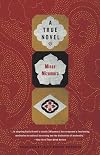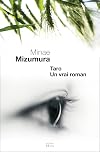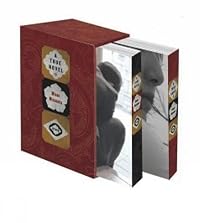
A True Novel
by Minae Mizumara
On This Page
Description
"Begins in New York in the 1960s, where we meet Taro, a relentlessly ambitious Japanese immigrant trying to make his fortune. Flashbacks and multilayered stories reveal his life: an impoverished upbringing as an orphan, his eventual rise to wealth and success--despite racial and class prejudice--and an obsession with a girl from an affluent family that has haunted him all his life. [The book] then widens into an examination of Japans westernization and the emergence of a middle show more class"--Amazon.com. show lessTags
Recommendations




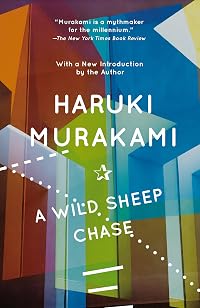
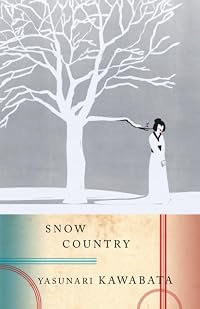
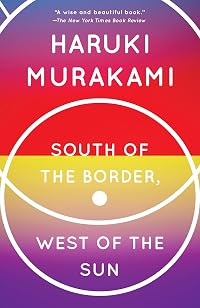
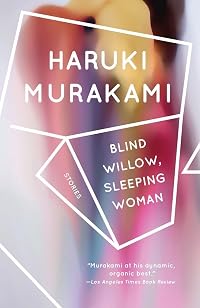
Member Recommendations
lottpoet another story of post-WWII class decline
Member Reviews
I went in expecting to find a Japanese version of Wuthering Heights, but it would be selling the richly layered storytelling of a True Novel short to label it as a mere retelling. This book is strangely engrossing for a book with so little plot for the first 400 pages. While I usually love gossip and multigenerational family drama more than anything else in a story, it was really the setting of this book that makes this novel such a memorable read. When Yusuke Kato enters the remote cottage in Karuizawa, he feels as though he has walked into the past. His narrative is so mesmerizing that I too felt bewitched by this cabin that has remained frozen in time. The descriptive narration combined with the full-page photographs help completely show more immerse the reader into the setting of post-war Japan. Life in the Japanese countryside seems to be much slower paced and quainter compared to Emily Bronte’s passionate depiction of life on the English moors, but what a True Novel lacks in drama it more than makes up for in evocative settings, complex relationships between the characters, and introspective narrative voices. show less
A True Novel - Minae Mizumura
5 stars
I’m in the unusual position of believing that this was an exceptional 5 star book, and not knowing who I might encourage to read it. I would probably discourage most people from reading it. I liked it, but I’d hate to feel responsible for trapping another person in its 854 slow moving pages. The book has been called a Japanese Wuthering Heights. That is the description that grabbed my attention. There are also some heavy overtones of The Great Gatsby, which when you think about it, makes perfect sense.
The novel is structured and marketed as two books. Book One begins in New York, in 1960. This book is narrated by Minae, the self stated author of both books. Minae describes her life growing up as show more a Japanese national in America because her father is a low level manager in a Japanese import company. As an adolescent attending her father’s company parties, she becomes acquainted with the young and upcoming Taro Azuma. Taro begins as the chauffeur to a rich American. He attracts attention because of his willingness to work hard. He attracts attention because he doesn’t look quite Japanese enough. It takes Minae over 400 pages to describe her personal encounters with Taro. As the 20th century comes to a close Taro’s fortunes have skyrocketed as Minae’s family has come on hard times. The middle-aged Minae is a published author and a sometime Japanese language instructor at prestigious American universities. As Book One comes to an end she is suffering writer’s block over a new novel when a strange encounter brings her back to the story of Taro Azuma.
At this point, I can see many readers throwing the book across the room in frustration. Book One is just an introduction; 485 pages and the real story of Taro Azuma hasn’t even begun yet. But, I found it very easy to read. I was interested. Throughout this elaborate setup, Minae is talking about an unique immigrant experience. This part of the story is full of her adolescent observations of America in the 1960’s, of Japanese company culture during the post war economic growth, and of the class structures and prejudices of these Japanese immigrants who have no intention of becoming American citizens. She also reveals how she stumbled into a life of literature and explains the Japanese fascination with 19th century literature and its influence on the ‘True Novel’ in Japanese literature.
The ‘True Novel’ and the tragic back story of Taro Azuma begins in Book Two. It is a multi-generational, multi-family saga. It requires a family tree diagram at the beginning of the story. It’s also a Japanese perspective on post war Japan. It’s a tragic love story that exposes the collapse of a wealthy upper class and the clash of western and eastern culture. It’s far too simplistic to say that Taro Azuma is a Japanese Heathcliff, but that comparison is everywhere in the storytelling.
I think Wuthering Heights is a true masterpiece. But, for me, Heathcliff and Cathy seem just as fictional as Dracula and Mina Harker. Taro Azuma, Yoko, and Fumiko seem completely real. There are black and white photographs of some locations in this part of the story. These are real people coping with real emotional scars and the consequences of rapid social and economic changes. But the story is high drama, like an opera. I become more impressed with this book as time passes. I keep thinking about it. I wish it was better known and read more widely by an American audience, but I’m still reluctant to recommend it. show less
5 stars
I’m in the unusual position of believing that this was an exceptional 5 star book, and not knowing who I might encourage to read it. I would probably discourage most people from reading it. I liked it, but I’d hate to feel responsible for trapping another person in its 854 slow moving pages. The book has been called a Japanese Wuthering Heights. That is the description that grabbed my attention. There are also some heavy overtones of The Great Gatsby, which when you think about it, makes perfect sense.
The novel is structured and marketed as two books. Book One begins in New York, in 1960. This book is narrated by Minae, the self stated author of both books. Minae describes her life growing up as show more a Japanese national in America because her father is a low level manager in a Japanese import company. As an adolescent attending her father’s company parties, she becomes acquainted with the young and upcoming Taro Azuma. Taro begins as the chauffeur to a rich American. He attracts attention because of his willingness to work hard. He attracts attention because he doesn’t look quite Japanese enough. It takes Minae over 400 pages to describe her personal encounters with Taro. As the 20th century comes to a close Taro’s fortunes have skyrocketed as Minae’s family has come on hard times. The middle-aged Minae is a published author and a sometime Japanese language instructor at prestigious American universities. As Book One comes to an end she is suffering writer’s block over a new novel when a strange encounter brings her back to the story of Taro Azuma.
At this point, I can see many readers throwing the book across the room in frustration. Book One is just an introduction; 485 pages and the real story of Taro Azuma hasn’t even begun yet. But, I found it very easy to read. I was interested. Throughout this elaborate setup, Minae is talking about an unique immigrant experience. This part of the story is full of her adolescent observations of America in the 1960’s, of Japanese company culture during the post war economic growth, and of the class structures and prejudices of these Japanese immigrants who have no intention of becoming American citizens. She also reveals how she stumbled into a life of literature and explains the Japanese fascination with 19th century literature and its influence on the ‘True Novel’ in Japanese literature.
The ‘True Novel’ and the tragic back story of Taro Azuma begins in Book Two. It is a multi-generational, multi-family saga. It requires a family tree diagram at the beginning of the story. It’s also a Japanese perspective on post war Japan. It’s a tragic love story that exposes the collapse of a wealthy upper class and the clash of western and eastern culture. It’s far too simplistic to say that Taro Azuma is a Japanese Heathcliff, but that comparison is everywhere in the storytelling.
I think Wuthering Heights is a true masterpiece. But, for me, Heathcliff and Cathy seem just as fictional as Dracula and Mina Harker. Taro Azuma, Yoko, and Fumiko seem completely real. There are black and white photographs of some locations in this part of the story. These are real people coping with real emotional scars and the consequences of rapid social and economic changes. But the story is high drama, like an opera. I become more impressed with this book as time passes. I keep thinking about it. I wish it was better known and read more widely by an American audience, but I’m still reluctant to recommend it. show less
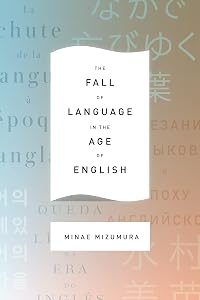
So far, only two works by Minae Mizumura have been translated into English. The first was the Yomiuri Prize-winning A True Novel. Originally published in Japan in 2002, A True Novel was selected for translation as part of the Japanese Literature Publishing Project. The novel was ultimately released by Other Press in 2013 with an English translation by Juliet Winters Carpenter. Other Press' edition of A True Novel is a lovely two-volume box set retaining the black-and-white images taken by Kyoto-based photographer Toyota Horiguchi scattered throughout the pages. Mizumura's second work to be translated, her treatise The Fall of Language in the Age of English, was published in early 2015. It was the release of The Fall of Language in the show more Age of English that reminded me that A True Novel had been sitting on my shelf waiting to be read for quite some time. My excuse was that I wanted to make sure that I had the time to devote to the novel that it deserved—A True Novel is a massive work well over eight hundred pages in length.
Taro Azuma immigrated to New York from Japan in the 1960s, finding a position as a personal chauffeur. Not much was known about the enigmatic young man and he was reluctant to talk about his past, but he did very well for himself in America, eventually becoming an extremely successful, wealthy, and respected businessman. It's only after he made a name and a fortune for himself that he began to return to Japan on occasion. Growing up Taro was an orphan raised in a poor and abusive household. His fate was changed when he was taken in as a helper by the well-off Utagawa family, becoming remarkably close with their youngest daughter Yoko. But as time passed, the differences between Taro and Yoko's social classes became more pronounced and more problematic for the Saegusas—Yoko's high-society relatives—especially after a series of "indiscretions." This was what prompted Taro to initially leave the country, but his destiny had already become intrinsically connected to those of Yoko and her family.
In part, A True Novel is a retelling of Emily Brontë's Wuthering Heights, Mizumura moving the setting of the story from nineteenth-century England to postwar Japan. While someone who has read Wuthering Heights will be able to appreciate the parallels between the two narratives, A True Novel stands completely on its own as a separate work. It's been a long while since I've read Wuthering Heights, but I must say I think I actually prefer A True Novel. The structure of the novel has several layers that build upon one another. The story opens with an autobiographically-influenced prologue long enough to be its own novel which outlines Mizumura's life growing up in America and her impression of Taro when she meets him there. A True Novel continues with a young editor named Yuske Kato relating to Mizumura his later encounter with Taro in Japan and the story told to him by Fumiko Tsuchiya who at one point in her life was a maid to the Utagawas. It is these two stories that Mizumura weaves together to form the main narrative of A True Novel.
Each of the three nested stories—Mizumura's, Yusuke's, and Fumiko's—draws the reader closer and closer to the heart of A True Novel. The work is tragically romantic, Yoko and Taro born into circumstances where their love for each other is all but impossible to realize, their hopes for happiness dashed by the expectations of society and matters of privilege and class. The characters and their relationships in A True Novel are marvelously complex with love and hate, redemption and revenge all playing a role. At times they can actually be infuriating, but that's part of the reason A True Novel is so compelling and engaging—the characters are believably flawed individuals navigating (not always successfully) a world that is inherently unfair. A True Novel is a tremendous work, the story tracing decades of family history and drama and the dynamics of complicated and shifting relationships. The novel may be lengthy, but it never felt overly long. If anything, while I was immensely satisfied I was still sad to see it end. A True Novel may very well be one of the best works of literature that I've read.
Experiments in Manga show less
Taro Azuma immigrated to New York from Japan in the 1960s, finding a position as a personal chauffeur. Not much was known about the enigmatic young man and he was reluctant to talk about his past, but he did very well for himself in America, eventually becoming an extremely successful, wealthy, and respected businessman. It's only after he made a name and a fortune for himself that he began to return to Japan on occasion. Growing up Taro was an orphan raised in a poor and abusive household. His fate was changed when he was taken in as a helper by the well-off Utagawa family, becoming remarkably close with their youngest daughter Yoko. But as time passed, the differences between Taro and Yoko's social classes became more pronounced and more problematic for the Saegusas—Yoko's high-society relatives—especially after a series of "indiscretions." This was what prompted Taro to initially leave the country, but his destiny had already become intrinsically connected to those of Yoko and her family.
In part, A True Novel is a retelling of Emily Brontë's Wuthering Heights, Mizumura moving the setting of the story from nineteenth-century England to postwar Japan. While someone who has read Wuthering Heights will be able to appreciate the parallels between the two narratives, A True Novel stands completely on its own as a separate work. It's been a long while since I've read Wuthering Heights, but I must say I think I actually prefer A True Novel. The structure of the novel has several layers that build upon one another. The story opens with an autobiographically-influenced prologue long enough to be its own novel which outlines Mizumura's life growing up in America and her impression of Taro when she meets him there. A True Novel continues with a young editor named Yuske Kato relating to Mizumura his later encounter with Taro in Japan and the story told to him by Fumiko Tsuchiya who at one point in her life was a maid to the Utagawas. It is these two stories that Mizumura weaves together to form the main narrative of A True Novel.
Each of the three nested stories—Mizumura's, Yusuke's, and Fumiko's—draws the reader closer and closer to the heart of A True Novel. The work is tragically romantic, Yoko and Taro born into circumstances where their love for each other is all but impossible to realize, their hopes for happiness dashed by the expectations of society and matters of privilege and class. The characters and their relationships in A True Novel are marvelously complex with love and hate, redemption and revenge all playing a role. At times they can actually be infuriating, but that's part of the reason A True Novel is so compelling and engaging—the characters are believably flawed individuals navigating (not always successfully) a world that is inherently unfair. A True Novel is a tremendous work, the story tracing decades of family history and drama and the dynamics of complicated and shifting relationships. The novel may be lengthy, but it never felt overly long. If anything, while I was immensely satisfied I was still sad to see it end. A True Novel may very well be one of the best works of literature that I've read.
Experiments in Manga show less
This novel is described as a retelling of Wuthering Heights, set in Japan, which is largely true, although it doesn’t follow the plot of Wuthering Heights exactly, and there is much more to it than that. But it is about a long love affair between a Heathcliff-like man, Taro, and a Catherine-like woman, Yoko. Taro disappears from home for many years and makes a return just as Heathcliff does, among many other parallels. The parallel to Wuthering Heights that I liked best, though, was the novel’s use of multiple story tellers and embedded stories. Where in WH, we get Nelly Dean telling us the bulk of the story, in A True Novel, it’s Fumiko who narrates much of it. She is first the maid to Yoko’s large extended family, and later show more more of a friend. There is also an equivalent of Lockwood, the first narrator in WH, in this case, Yusuke, who meets Fumiko accidentally and finds himself unexpectedly drawn into her story. But there is another layer beyond all this, which is the author herself, Minae Mizumura, or someone very much like her, who tells us how she found out about the whole story. This forms a lengthy prologue before the main part of the novel begins.
All this sounds complicated, but, of course, there is plenty of time for Mizumura to develop all her story lines. We begin, surprisingly enough, among Japanese immigrants to the U.S. living on Long Island, where Mizumura meets Taro, her novel’s hero. From there, however, we move to Japan to read about Fumiko’s history and Taro’s and Yoko’s youth and family life, and we learn a lot along the way about Japan from the World War II period through the 1990s. The novel has much to say about the struggles the Japanese experienced after the war and how the ups and downs of Japan’s economy affected their daily lives. We get a picture of Tokyo and also of the countryside, of poor families and of wealthy ones.
The novel offers a chance to think about the relationship of reality and fiction, a preoccupation announced in the book’s title — a “true novel” is perhaps oxymoronic, perhaps not. The author starts with what seems to be autobiography or memoir, and then moves into the lives of her “characters,” one of whom she has met in “real life.” So is all of this “real”? But this real life story is a retelling of sorts of a novel from 19thC England. Added into the mix of fact and fiction are photographs sprinkled throughout the book of landscapes and places mentioned in the story. In case you start to feel as though you are reading a fictional story (which of course, you actually are), the photographs are there to ground you in “reality,” or something like it.
Again, described this way, the book seems like a messy tangle, but that’s not what the experience of reading it feels like. Instead, you feel like you’re drawn into a complex, fully-realized world, a book that explores ideas and history and tells a good story at the same time. show less
All this sounds complicated, but, of course, there is plenty of time for Mizumura to develop all her story lines. We begin, surprisingly enough, among Japanese immigrants to the U.S. living on Long Island, where Mizumura meets Taro, her novel’s hero. From there, however, we move to Japan to read about Fumiko’s history and Taro’s and Yoko’s youth and family life, and we learn a lot along the way about Japan from the World War II period through the 1990s. The novel has much to say about the struggles the Japanese experienced after the war and how the ups and downs of Japan’s economy affected their daily lives. We get a picture of Tokyo and also of the countryside, of poor families and of wealthy ones.
The novel offers a chance to think about the relationship of reality and fiction, a preoccupation announced in the book’s title — a “true novel” is perhaps oxymoronic, perhaps not. The author starts with what seems to be autobiography or memoir, and then moves into the lives of her “characters,” one of whom she has met in “real life.” So is all of this “real”? But this real life story is a retelling of sorts of a novel from 19thC England. Added into the mix of fact and fiction are photographs sprinkled throughout the book of landscapes and places mentioned in the story. In case you start to feel as though you are reading a fictional story (which of course, you actually are), the photographs are there to ground you in “reality,” or something like it.
Again, described this way, the book seems like a messy tangle, but that’s not what the experience of reading it feels like. Instead, you feel like you’re drawn into a complex, fully-realized world, a book that explores ideas and history and tells a good story at the same time. show less
This Japanese novel is a reworking of Wuthering Heights to 20th century Japan, although this connection is not slavishly in your face. The author writes well, and the characters and their development are excellently portrayed. The structure of the novel is complex (and I believe that in some ways it reflects the structure of Wuthering Heights, though it's been many years since I read that). The first narrator is a Japanese woman who as a teenager lived with her family on Long Island. During her time in America her life crossed paths several times with an enigmatic Japanese man named Taro. When she first meets Taro, he is working as a chauffer, and cannot speak English. Later he comes to work for her father, first as a repairman and then show more as a salesman. He becomes fabulously successful and moves on to fame and glory.
When the teenage girl is a middle-aged college professor, she is approached by Yusuke, a young man who has had a "ships in the night" meeting with Taro. He takes over the narration, and within his narration, Fumiko, a Japanese woman living in the countryside who seems to be a domestic servant, but whose relationship with Taro is somewhat ambiguous, narrates large portions. These portions, which constitute the bulk of this nearly 900 page tome, besides being an engrossing story with complex characters, give us a fascinating view of Japanese culture, particularly its social stratification.
Although the book is long, and its narrative structure is unusual, it is not a difficult read, and it was one that called to me to pick it up when I wasn't reading. show less
When the teenage girl is a middle-aged college professor, she is approached by Yusuke, a young man who has had a "ships in the night" meeting with Taro. He takes over the narration, and within his narration, Fumiko, a Japanese woman living in the countryside who seems to be a domestic servant, but whose relationship with Taro is somewhat ambiguous, narrates large portions. These portions, which constitute the bulk of this nearly 900 page tome, besides being an engrossing story with complex characters, give us a fascinating view of Japanese culture, particularly its social stratification.
Although the book is long, and its narrative structure is unusual, it is not a difficult read, and it was one that called to me to pick it up when I wasn't reading. show less
Minae Mizumura's A True Novel is, in some ways, an updating and relocating of Emily Brontë's Wuthering Heights to post-war Japan. That sounds like it could be quite awful, but Mizumura, far from slavishly following Brontë, makes it something entirely new: an experimental novel, a riveting narrative, a commentary on class, and also on the novel. That A True Novel is more than twice as long as Wuthering Heights—and that none of those pages seems unnecessary—is an example of just how different it is. That it will send readers back to Brontë's classic is, of course, another plus.
The best novel I have read so far in 2013. And having finished it with less than an hour to spare in the year, I suspect its status will remain unchallenged.
A True Novel was described in reviews and even its own prologue as a Japanese version of Wuthering Heights (or that novel by ‰ÃÃC.B.Âàas the prologue refers to it). But it is much, much more. It does have at its core a fierce romance between a Heathcliff-like figure and an Catherine-like figure. But it tells the story through multiple layersÂÃÃstarting with the author, then the young man she heard it from, and finally the bulk of the story from the maid who told it to him and is herself effectively the main and most interesting character in the entire show more epic.
The characters are extremely well drawn and feel real, Taro (the Heathcliff figure) feels almost primordial in his romance, his passion for money, his infallibility, and his fallibility. They are thrown into the heights of romance and the depths of tragedy, all set agains the backdrop of postwar Japan through nearly the present. It does not feel like a multigenerational saga or historical novel, but you do feel the way the changing mores around sex and the economic situation shapes the characters and their situations. The role of America in the lives of the JapaneseÂÃÃincluding as a destination for company men and their familiesÂÃÃalso looms large.
But perhaps the most important characters of all are the placesÂÃÃKaruizawa and OiwakeÂÃÃthat loom so large throughout the book. The summer retreats for the families, and also the birthplace of the maid, the action keeps coming back to these locations with vivid descriptions (and photographs) of the houses, the surroundings, the impact of weatherÂÃÃboth stormy and snowyÂÃÃon the developments in the story. show less
A True Novel was described in reviews and even its own prologue as a Japanese version of Wuthering Heights (or that novel by ‰ÃÃC.B.Âàas the prologue refers to it). But it is much, much more. It does have at its core a fierce romance between a Heathcliff-like figure and an Catherine-like figure. But it tells the story through multiple layersÂÃÃstarting with the author, then the young man she heard it from, and finally the bulk of the story from the maid who told it to him and is herself effectively the main and most interesting character in the entire show more epic.
The characters are extremely well drawn and feel real, Taro (the Heathcliff figure) feels almost primordial in his romance, his passion for money, his infallibility, and his fallibility. They are thrown into the heights of romance and the depths of tragedy, all set agains the backdrop of postwar Japan through nearly the present. It does not feel like a multigenerational saga or historical novel, but you do feel the way the changing mores around sex and the economic situation shapes the characters and their situations. The role of America in the lives of the JapaneseÂÃÃincluding as a destination for company men and their familiesÂÃÃalso looms large.
But perhaps the most important characters of all are the placesÂÃÃKaruizawa and OiwakeÂÃÃthat loom so large throughout the book. The summer retreats for the families, and also the birthplace of the maid, the action keeps coming back to these locations with vivid descriptions (and photographs) of the houses, the surroundings, the impact of weatherÂÃÃboth stormy and snowyÂÃÃon the developments in the story. show less
Members
- Recently Added By
Published Reviews
ThingScore 92
“A True Novel” is, in part, an updating and relocating of Emily Bronte’s “Wuthering Heights” to postwar Japan. That sounds like it could be quite awful, but Mizumura, avoids the trap of slavishly following Bronte, and in so doing makes her novel something different — not a copy of Bronte’s classic, but a commentary on it, and also on themes, most notably passion and social class, show more that also interested Bronte, but do not, of course, belong to her. show less
added by dcozy
But there's another novel in A True Novel: one about the history of the modern novel in Japan. Its Japanese title, Honkaku Shosetsu, derives from the "true novel" that came to be seen as the ideal type in Japan after 1868, when the country was opened to the West—the complete fictional worlds of Flaubert, Tolstoy, Dickens, Brontë. Against the honkaku shosetsu was the shi-shosetsu, or show more autobiographical "I-novel," perhaps a more purely Japanese form in a land where the diary had been a respected genre for a thousand years. By the 1920s, critics were claiming that no successful honkaku shosetsu had been written in Japanese, opening a new round of challenge. Mizumura gives various linguistic theories to explain the form's problematic practice in Japan while stating that the controversy is no longer relevant—by acquiring a "history," the novel has been broken. show less
added by aileverte
Mizumura’s great accomplishment is to weave a love story through a serious exploration of themes central to Japan’s political and literary life: the burden of influence from the West and the struggle to retain a Japanese identity. As narrator, she notes that as a girl she resisted learning English even though she was living in New York, and immersed herself instead in Japanese literary show more classics. And in a digression that is one of the few moments when the novel loses its narrative drive, she notes that Japanese writers have long struggled to balance a Japanese literary tradition of the autobiographical novel with the Western ideal of inventing a fictional world outside one’s own life. show less
added by aileverte
Lists

Favorite Books in Translation
320 works; 133 members
Author Information

7 Works 597 Members
Some Editions
Awards and Honors
Awards
Distinctions
Notable Lists
Work Relationships
Is a retelling of
Common Knowledge
- Canonical title
- A True Novel
- Original title
- 本格小説
- Original publication date
- 2002
- People/Characters
- Fumiko Tsuchiya; Taro Azuma; Yoko Utagawa; Masayuki Shigemitsu; Yusuke Kato
- Important places
- Japan
- First words
- Preface
TO BE A novelist by occupation or a novelist by calling - these are two different things. - Last words
- (Click to show. Warning: May contain spoilers.)Time has worn it all away.
- Original language
- Japanese
Classifications
- Genres
- General Fiction, Fiction and Literature, Historical Fiction
- DDC/MDS
- 895.6 — Literature & rhetoric Literatures of other languages Literatures of East and Southeast Asia Japanese
- LCC
- PL856 .I948 .H6613 — Language and Literature Languages and literatures of Eastern Asia, Africa, Oceania Languages of Eastern Asia, Africa, Oceania Japanese language and literature Japanese literature Individual authors and works
- BISAC
Statistics
- Members
- 275
- Popularity
- 116,910
- Reviews
- 10
- Rating
- (3.98)
- Languages
- English, French, Polish, Spanish
- Media
- Paper, Ebook
- ISBNs
- 7
- ASINs
- 3