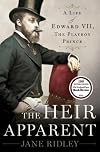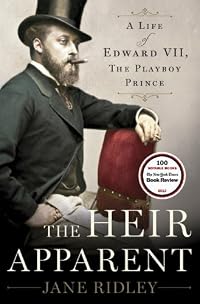
The Heir Apparent: A Life of Edward VII, the Playboy Prince
by Jane Ridley
On This Page
Description
NAMED ONE OF THE BEST BOOKS OF THE YEAR BY THE NEW YORK TIMES BOOK REVIEW AND THE BOSTON GLOBEThis richly entertaining biography chronicles the eventful life of Queen Victoria’s firstborn son, the quintessential black sheep of Buckingham Palace, who matured into as wise and effective a monarch as Britain has ever seen. Granted unprecedented access to the royal archives, noted scholar Jane Ridley draws on numerous primary sources to paint a vivid portrait of the man and the age to which he show more gave his name.
Born Prince Albert Edward, and known to familiars as “Bertie,” the future King Edward VII had a well-earned reputation for debauchery. A notorious gambler, glutton, and womanizer, he preferred the company of wastrels and courtesans to the dreary life of the Victorian court. His own mother considered him a lazy halfwit, temperamentally unfit to succeed her. When he ascended to the throne in 1901, at age fifty-nine, expectations were low. Yet by the time he died nine years later, he had proven himself a deft diplomat, hardworking head of state, and the architect of Britain’s modern constitutional monarchy.
Jane Ridley’s colorful biography rescues the man once derided as “Edward the Caresser” from the clutches of his historical detractors. Excerpts from letters and diaries shed new light on Bertie’s long power struggle with Queen Victoria, illuminating one of the most emotionally fraught mother-son relationships in history. Considerable attention is paid to King Edward’s campaign of personal diplomacy abroad and his valiant efforts to reform the political system at home. Separating truth from legend, Ridley also explores Bertie’s relationships with the women in his life. Their ranks comprised his wife, the stunning Danish princess Alexandra, along with some of the great beauties of the era: the actress Lillie Langtry, longtime “royal mistress” Alice Keppel (the great-grandmother of Camilla Parker Bowles), and Lady Randolph Churchill, mother of Winston.
Edward VII waited nearly six decades for his chance to rule, then did so with considerable panache and aplomb. A magnificent life of an unexpectedly impressive king, The Heir Apparent documents the remarkable transformation of a man—and a monarchy—at the dawn of a new century.
Praise for The Heir Apparent
“If [The Heir Apparent] isn’t the definitive life story of this fascinating figure of British history, then nothing ever will be.”—The Christian Science Monitor
“The Heir Apparent is smart, it’s fascinating, it’s sometimes funny, it’s well-documented and it reads like a novel, with Bertie so vivid he nearly leaps from the page, cigars and all.”—Minneapolis Star Tribune
“I closed The Heir Apparent with admiration and a kind of wry exhilaration.”—The Wall Street Journal
“Ridley is a serious scholar and historian, who keeps Bertie’s flaws and virtues in a fine balance.”—The Boston Globe
“Brilliantly entertaining . . . a landmark royal biography.”—The Sunday Telegraph
“Superb.”—The New York Times Book Review. show less
Tags
Recommendations













Member Recommendations
Member Reviews
The playboy prince gets some new respect
This cradle to grave biography of Queen Victoria’s colorful, often rebellious son King Edward VII, or Bertie, weaves a detailed, hard-to-stop-reading account of the Victorian and brief but influential Edwardian eras in Britain and the Continent through the lives of their interrelated royals. Belittling, controlling, and emotional, Queen Victoria as seen in The Heir Apparent is a mother you wouldn’t wish on your worst enemy, much less the future king of Britain.
Author Jane Ridley had new access to royal archives that allowed her to create this somewhat revisionist look at Bertie’s reign, taking his diplomatic successes--including his work to increase the popularity of the royal family--more show more seriously than previous biographers. There is even an actually interesting Afterward in which the author gives the history behind some of Bertie’s other biographies and critiques them for spin. As someone fascinated by Edwardian and Victorian history, royalty, and literature I found a lot to enjoy in this book. show less
This cradle to grave biography of Queen Victoria’s colorful, often rebellious son King Edward VII, or Bertie, weaves a detailed, hard-to-stop-reading account of the Victorian and brief but influential Edwardian eras in Britain and the Continent through the lives of their interrelated royals. Belittling, controlling, and emotional, Queen Victoria as seen in The Heir Apparent is a mother you wouldn’t wish on your worst enemy, much less the future king of Britain.
Author Jane Ridley had new access to royal archives that allowed her to create this somewhat revisionist look at Bertie’s reign, taking his diplomatic successes--including his work to increase the popularity of the royal family--more show more seriously than previous biographers. There is even an actually interesting Afterward in which the author gives the history behind some of Bertie’s other biographies and critiques them for spin. As someone fascinated by Edwardian and Victorian history, royalty, and literature I found a lot to enjoy in this book. show less
Very enjoyable biography of Bertie. I am pretty sketchy on the English monarchy so it was like fitting a puzzle piece that makes a picture come clearer. Queen Victoria emerges as a cranky old lady who was an awful mother and a neglectful queen, favoring a life of mourning for Albert over duties of state. Bertie was inauspicious to begin but eventually, for all his flaws and philandering ways, emerges with a degree of dignity--and ultimately beloved of his people. Not to say, that the whole royal family wasn't a pampered, indolent lot. It's almost comical--their yachts, their taking the cure, their house parties, their vast appetites.
Bertie died just a few years before WWI. But the clouds were gathering and the book provides glimpses show more Nicky the hapless Czar and William, Bertie's nephew, who becomes Kaiser Wilhelm--a villain if ever there was one.
Like most books that I really like, this story was vivid and easy to inhabit for the duration--a tribute to Jane Ridley's writing and organization of the material. show less
Bertie died just a few years before WWI. But the clouds were gathering and the book provides glimpses show more Nicky the hapless Czar and William, Bertie's nephew, who becomes Kaiser Wilhelm--a villain if ever there was one.
Like most books that I really like, this story was vivid and easy to inhabit for the duration--a tribute to Jane Ridley's writing and organization of the material. show less
To be honest, most Englishmen cannot really remember the kings and queens between Victoria and Elizabeth. The 20th century was all about war and politics and for much of it the monarchy, if not irrelevant, was at best just a spectator and definitely not a player. This magnificent biography of Edward VII, Victoria's firstborn son and immediate successor, shows how much we may have missed. A misspent youth (and manhood - Victoria lived a long time) suggested he would never be the serious sober monarch required by 19th century convention. But Bertie was crowned in the 20th century and became a key player in holding Europe together, staving off war until 1914 and after his death. Without his personal intervention and monarchic interventions show more the Great War may well have been fought much earlier than it was.
Bertie was a playboy who loved manly sports and pursuits, including women. He was dismissed as a wastrel but ultimately showed he had inherited the family skills of devotion to country and relationship politics on a grand scale. An echo of his life sits well with his queen, Alexandra. Initially an unwanted arranged marriage and a fish-out-of-water in the future that was England, she grew into her role and became feted as beautiful, talented and strong-willed. Both Bertie and Alexandra put real effort into charitable and good works and did as much to lay the foundations of the modern monarchy as Victoria and Albert.
Ridley uses sources well and provides quotes that enlighten and drive the historical narrative forwards. She has recognised that Bertie's life was exciting and was driving upwards to a climax when he became king and that he was not always a nice person with some not nice habits. show less
Bertie was a playboy who loved manly sports and pursuits, including women. He was dismissed as a wastrel but ultimately showed he had inherited the family skills of devotion to country and relationship politics on a grand scale. An echo of his life sits well with his queen, Alexandra. Initially an unwanted arranged marriage and a fish-out-of-water in the future that was England, she grew into her role and became feted as beautiful, talented and strong-willed. Both Bertie and Alexandra put real effort into charitable and good works and did as much to lay the foundations of the modern monarchy as Victoria and Albert.
Ridley uses sources well and provides quotes that enlighten and drive the historical narrative forwards. She has recognised that Bertie's life was exciting and was driving upwards to a climax when he became king and that he was not always a nice person with some not nice habits. show less
Summary: An award-winning biography of Edward VII, often criticized for his faults of character as heir to the throne under Victoria, whose reign ushered in a critical transition in the British monarchy in the first decade of the twentieth century.
This biography poses the question of whether a badly-behaved individual can make a good king. Jane Ridley explores the life of Albert Edward, known as "Bertie" to those intimate with him, who lived in the shadow of Queen Victoria for six decades before accessed to the British throne in the last decade of his life as Edward VII.
Ridley used access to Royal Archives and extensive research to write what may be the definitive biography of Edward VII. She traces his childhood, and the strict regime show more and moral rectitude of Albert and Victoria that proved singularly unhelpful. He was lax and undisciplined in his studies, hated reading (even as an adult the most he read were novels when ill), and incurred his parents disapproval. This worsened as he matured. His "fall" with actress Nellie Clifden broke his father's heart and Victoria blamed his death, coming soon after on Bertie.
His response was to become a womanizer. He had a succession of affairs and mistresses, chronicled at length, though with restraint. This continued throughout his marriage to Alexandra and included actress Lillie Langtry, Jennie Churchill, socialist Daisy Warwick, and "royal mistress" Alice Keppel (great-grandmother of Camilla Parker Bowles!). When he accessed to the throne, he was dubbed "Edward the Caresser."
Victoria more or less wrote him off and tried to limit his access to official reports. So he did the social rounds to the country estates of the elite, raced horses, gambled, and ate, drank, and smoked prodigiously. He loved dressing well and expected those around him to be meticulous in their dress.
One would think such an individual would be a disaster as a king. Yet it turned out that this was not the case. After Albert's death, Victoria became something of a recluse. Edward became the public face of the royal family, both in making public appearances throughout the country, and in tours abroad. He cultivated relationships with the royalty of Europe, most of whom were related to him in some way or another. He was known as "the Uncle of Europe" who counted Kaiser Wilhelm as nephew, and Czar Nicholas of Russia as nephew-in-law.
Edward VII became King in his sixties in 1901. He was overweight, incessantly smoked, had a cancer on his nose that was treated with radium, and already had survived several brushes with death as well as outliving siblings and some of his children. He had to postpone his coronation due to appendicitis. He probably would have been diagnosed with COPD or emphysema today. Yet he worked hard and tirelessly as King, demonstrated a "common touch" that endeared him to the people. He exercised a kind of personal diplomacy that complemented formal efforts with European heads of state, and opened the doors to an alliance with France that decisively shifted the balance of power when the war he strove so hard to avoid came. He modernized the kingship and helped redefine the idea of a constitutional monarchy before his death from severe bronchitis and heart attacks in 1910. Over 400,000 people filed past his coffin when he lay in state.
Ridley has given us a magnificent portrait of this heir and king who turned out to be far more than he appeared to be. It took a wife who looked past his womanizing, unpardonable as it was. It took mistresses who were discrete (most were). But it particularly took someone who understood what people wanted of their king, who would be the people's king. It took someone who understood the uses and limits of his power, and exercised this to the full, both with a succession of Prime Ministers, and foreign heads of state. One wonders what he could have done had he come to the throne sooner and/or lived longer. Ridley does a great service in chronicling the life of this deeply human and under-estimated king.
The Heir Apparent was named one of the best books of the year in 2013 by The New York Times Book Review and The Boston Globe. show less
This biography poses the question of whether a badly-behaved individual can make a good king. Jane Ridley explores the life of Albert Edward, known as "Bertie" to those intimate with him, who lived in the shadow of Queen Victoria for six decades before accessed to the British throne in the last decade of his life as Edward VII.
Ridley used access to Royal Archives and extensive research to write what may be the definitive biography of Edward VII. She traces his childhood, and the strict regime show more and moral rectitude of Albert and Victoria that proved singularly unhelpful. He was lax and undisciplined in his studies, hated reading (even as an adult the most he read were novels when ill), and incurred his parents disapproval. This worsened as he matured. His "fall" with actress Nellie Clifden broke his father's heart and Victoria blamed his death, coming soon after on Bertie.
His response was to become a womanizer. He had a succession of affairs and mistresses, chronicled at length, though with restraint. This continued throughout his marriage to Alexandra and included actress Lillie Langtry, Jennie Churchill, socialist Daisy Warwick, and "royal mistress" Alice Keppel (great-grandmother of Camilla Parker Bowles!). When he accessed to the throne, he was dubbed "Edward the Caresser."
Victoria more or less wrote him off and tried to limit his access to official reports. So he did the social rounds to the country estates of the elite, raced horses, gambled, and ate, drank, and smoked prodigiously. He loved dressing well and expected those around him to be meticulous in their dress.
One would think such an individual would be a disaster as a king. Yet it turned out that this was not the case. After Albert's death, Victoria became something of a recluse. Edward became the public face of the royal family, both in making public appearances throughout the country, and in tours abroad. He cultivated relationships with the royalty of Europe, most of whom were related to him in some way or another. He was known as "the Uncle of Europe" who counted Kaiser Wilhelm as nephew, and Czar Nicholas of Russia as nephew-in-law.
Edward VII became King in his sixties in 1901. He was overweight, incessantly smoked, had a cancer on his nose that was treated with radium, and already had survived several brushes with death as well as outliving siblings and some of his children. He had to postpone his coronation due to appendicitis. He probably would have been diagnosed with COPD or emphysema today. Yet he worked hard and tirelessly as King, demonstrated a "common touch" that endeared him to the people. He exercised a kind of personal diplomacy that complemented formal efforts with European heads of state, and opened the doors to an alliance with France that decisively shifted the balance of power when the war he strove so hard to avoid came. He modernized the kingship and helped redefine the idea of a constitutional monarchy before his death from severe bronchitis and heart attacks in 1910. Over 400,000 people filed past his coffin when he lay in state.
Ridley has given us a magnificent portrait of this heir and king who turned out to be far more than he appeared to be. It took a wife who looked past his womanizing, unpardonable as it was. It took mistresses who were discrete (most were). But it particularly took someone who understood what people wanted of their king, who would be the people's king. It took someone who understood the uses and limits of his power, and exercised this to the full, both with a succession of Prime Ministers, and foreign heads of state. One wonders what he could have done had he come to the throne sooner and/or lived longer. Ridley does a great service in chronicling the life of this deeply human and under-estimated king.
The Heir Apparent was named one of the best books of the year in 2013 by The New York Times Book Review and The Boston Globe. show less
It's nice to read a biography that throws away pre-conceptions and accepted history and takes a fresh look at, in this case, Edward VII. Excellent in-depth study, and nice to be introduced to someone who had obvious flaws, but who still had his country's best interests at heart. And to be reminded that all the wealth and time in the world doesn't buy happiness. Ridley did accomplish quite a lot in making Edward sympathetic and even someone you could grudgingly respect. And she also did a good job in rounding out Victoria and Albert - knocking them off their pedestals (esp. Victoria, whose self-absorption is blatently apparent) and especially when it came to all their children - who by today's standards grew up in disfunctional and show more moderately abusive household. Overall, it's a new look at a well-trod subject that is worth reading. show less
A very interesting biography of Edward VII, one that I think tries to achieve a sense of balance between the somewhat dissolute prince of the pre-1892 period, and the one who seems to have snapped to and gotten sensible after the death of his own heir (Albert Victor). One advantage the author appears to have is some recently discovered (or re-discovered) material lurking in the Royal Archives, some of which she found herself. In spite of the mass destruction of large chunks of the archive of Queen Victoria and of Edward VII (something the author goes into in an epilogue), there's a lot of fresh light that can be shown, and I think the result is readable and balanced. (It also helps that I read this right after reading a biography of show more Albert Victor -- some of the ground covered is the same). I would recommend this. show less
A well researched book covering the life of probably not a not well known King to most of us who like the current Prince Charles waited a long time to take the reign form his famous Queen mother Victoria. Throughout this book I could not help to think of the absurdity in my opinion of how by birth an individual is set up for life of power and privilege through no effort of their own.
Berties' claim to fame most of his life as seen here was eating, smoking, philandering, and shooting, in no particular order. And oh yes producing an heir which he did with a spare that came into play. Yet in his short reign he managed to muddle through well enough to become a truly popular king with the people. It is kind of amazing he lived as long as he show more did with his excesses. Being a sovereign in Great Britain is certainly no picnic with the focus and attention and endless protocol, but it sure beats digging ditches. show less
Berties' claim to fame most of his life as seen here was eating, smoking, philandering, and shooting, in no particular order. And oh yes producing an heir which he did with a spare that came into play. Yet in his short reign he managed to muddle through well enough to become a truly popular king with the people. It is kind of amazing he lived as long as he show more did with his excesses. Being a sovereign in Great Britain is certainly no picnic with the focus and attention and endless protocol, but it sure beats digging ditches. show less
Members
- Recently Added By
Lists

al.vick-wishlist-history
70 works; 2 members

Books Read in 2021
5,361 works; 114 members

TLL Reading List
9 works; 1 member
Author Information

7+ Works 753 Members
Some Editions
Awards and Honors
Awards
Distinctions
Notable Lists
Common Knowledge
- Alternate titles
- Bertie: A Life of Edward VII
- Original publication date
- 2012
- People/Characters
- Edward VII, King of the United Kingdom; Victoria, Queen of the United Kingdom; Alexandra of Denmark, Queen Consort of the United Kingdom; Lillie Langtry; Alice Keppel; Albert, Prince Consort (show all 12); Victoria, German Empress and Queen of Prussia; Prince Arthur, Duke of Connaught and Strathearn; Prince Leopold, Duke of Albany; Princess Louise, Duchess of Argyll; Princess Alice, Grand Duchess of Hesse and by Rhine; Princess Helena of Great Britain
- Important places
- Sandringham, Norfolk, England, UK; Balmoral Castle, Aberdeenshire, Scotland, UK; Osborne House, Isle of Wight, UK; Windsor Castle, Windsor, Berkshire, England, UK
- Important events
- Boer War; Queen Victoria's Diamond Jubilee; Queen Victoria's Golden Jubilee; Victorian Era; Edwardian Era
- Dedication
- For Toby and Humphrey
- First words
- "Not feeling very well again and had a rather restless night," wrote Queen Victoria in her journal on 17 October 1841.
Classifications
- Genres
- Biography & Memoir, History, Nonfiction, General Nonfiction
- DDC/MDS
- 941.082 — History & geography History of Europe British Isles Historical periods of British Isles 1837- Period of Victoria and House of Windsor 1901-1999
- LCC
- DA567 .R53 — History of Europe, Asia, Africa and Oceania Great Britain History of Great Britain England History By period Modern, 1485- 20th century
- BISAC
Statistics
- Members
- 468
- Popularity
- 64,535
- Reviews
- 17
- Rating
- (3.93)
- Languages
- English
- Media
- Paper, Audiobook, Ebook
- ISBNs
- 10
- ASINs
- 8