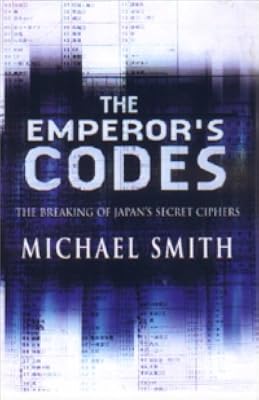
The Emperor's Codes: The Breaking of Japan's Secret Ciphers
by Michael Smith
On This Page
Description
The wartime secrets of the British codebreakers based at Bletchley Park continue to be revealed. In this book, Michael Smith examines how Japan's codes were broken, uncovering their secret preparations for the invasion of Malaya and the attack on Pearl Harbour.Tags
Recommendations














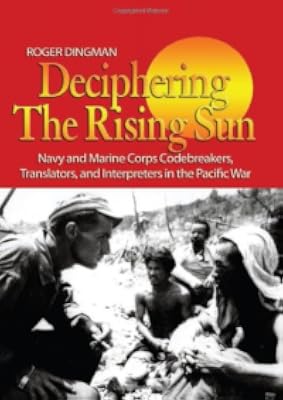

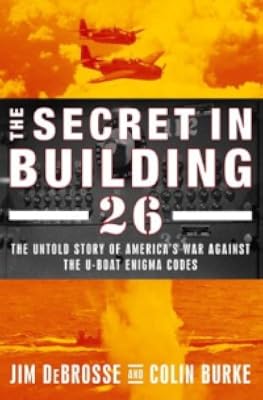

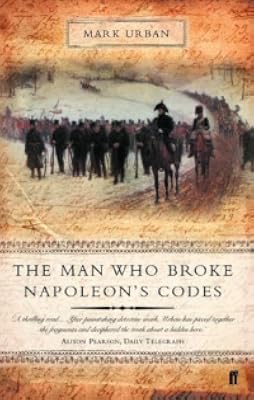
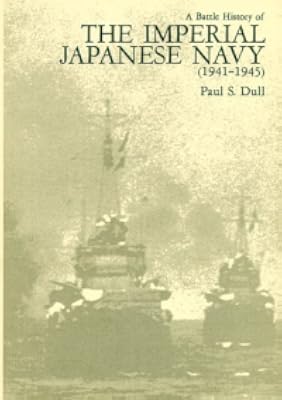





Member Recommendations


Member Reviews
By this point, the greatest secret of the Second World War is common knowledge. The allies had broken key Axis codes, and generals and admirals were guided by signals intelligence. Reading the enemy's mail provided insight into everything from strategic thinking to the readiness levels of specific fighter squadrons. The Emperor's Code is a biography, mostly of the British efforts against Japanese naval codes. It's livened by details about being a codebreaker then, boffins and retired diplomats and WRENS and Indian auxiliaries and other fringe types crammed together in sweltering radio huts, puzzling over grids of numbers in the hopes of finding some intelligence.
Imperial Japan took a characteristically arrogant approach to cryptography, show more assuming that Japanese was so complex no Westerner could read it. They were almost right, but they were also careless, using crypto systems that were barely random, re-transmitting messages in secure and broken systems simultaneously, and using stereotyped formats that provided easy 'cribs' for deciphering. The Allied effort was riven by technical and political difficulties. The main British codebreaking center in the East moved from Singapore to Sri Lanka to Mombasa in the course of the great retreat in 1942, with obvious implications for efficiency. Bletchley Park devoted most of its resource to crackign the Nazi Enigma cipher and winning the Battle of the Atlantic, and then swept in and demanded a leadership role. And if there's a villain in this book, it's the American Commander Rudi Fabian's FRUMEL unit, canny bureaucratic warriors who in Smith's telling preferred turf-building over breaking codes.
This book is long, and buries some key historical moments in the mass of details. Japanese codes were constantly changing, and could only be broken after sufficient depth of messages had accumulated. The diplomatic 'Purple' cipher had been broken by the Americans, and that combined with other breaks allowed Allied intelligence to conclude that something was up prior to Pearl Harbor, but not the specifics of the initial attacks. Conversely, the Battle of Midway came towards the end of code's period, and in fact several weeks past a scheduled turn-over in codes. This meant that the entire operational order for Midway was broken. At the end of the war, in the Summer of 1945, codebreakers caught a diplomatic message to the Soviet Union attempting to negotiate peace on terms that included the continued safety of the Emperor and the political integrity of the four home islands. These conditions were compatible with the actual American terms, no matter the harsh rhetoric of 'Unconditional Surrender', but for whatever reason (Soviet duplicity, Allied paranoia about signals intelligence), this message was not brought up at the Potsdam conference, and the atom bomb was dropped.
The Emperor's Codes is best as an oral history of codebreakers, and has some structural weaknesses, but it's still a fascinating and worthwhile military history. show less
Imperial Japan took a characteristically arrogant approach to cryptography, show more assuming that Japanese was so complex no Westerner could read it. They were almost right, but they were also careless, using crypto systems that were barely random, re-transmitting messages in secure and broken systems simultaneously, and using stereotyped formats that provided easy 'cribs' for deciphering. The Allied effort was riven by technical and political difficulties. The main British codebreaking center in the East moved from Singapore to Sri Lanka to Mombasa in the course of the great retreat in 1942, with obvious implications for efficiency. Bletchley Park devoted most of its resource to crackign the Nazi Enigma cipher and winning the Battle of the Atlantic, and then swept in and demanded a leadership role. And if there's a villain in this book, it's the American Commander Rudi Fabian's FRUMEL unit, canny bureaucratic warriors who in Smith's telling preferred turf-building over breaking codes.
This book is long, and buries some key historical moments in the mass of details. Japanese codes were constantly changing, and could only be broken after sufficient depth of messages had accumulated. The diplomatic 'Purple' cipher had been broken by the Americans, and that combined with other breaks allowed Allied intelligence to conclude that something was up prior to Pearl Harbor, but not the specifics of the initial attacks. Conversely, the Battle of Midway came towards the end of code's period, and in fact several weeks past a scheduled turn-over in codes. This meant that the entire operational order for Midway was broken. At the end of the war, in the Summer of 1945, codebreakers caught a diplomatic message to the Soviet Union attempting to negotiate peace on terms that included the continued safety of the Emperor and the political integrity of the four home islands. These conditions were compatible with the actual American terms, no matter the harsh rhetoric of 'Unconditional Surrender', but for whatever reason (Soviet duplicity, Allied paranoia about signals intelligence), this message was not brought up at the Potsdam conference, and the atom bomb was dropped.
The Emperor's Codes is best as an oral history of codebreakers, and has some structural weaknesses, but it's still a fascinating and worthwhile military history. show less
A good overview of the struggle to gain information behind the Japanese Empire approaching and during World War II. The book is filled with personal accounts which make it very personal. Thinking the Pacific War was mostly an American endeavor I learned more about the front in southeast Asia than I had ever been taught. The book does seem to follow a repetitive pattern which can be tedious; move, gather intelligence, crack a code (or almost), codes change, move or start all over. O, and bicker with the Americans.
The repetitive nature of the story is probably has more to do with the nature of the material; code cracking is a boring and repetitive task with lots of work for, what is often, very little. And cryptography uses abstract show more mathematical concepts most are quite without the background to understand. So those who know cryptography will probably be disappointed in the lack of detail, what detail does exists frustrates the rest. For the difficulty of the material I probably dock a star.
All in all I enjoyed the overview of the Pacific theater of the war and learning more about all the effort which was put into intelligence to bring it to a close. show less
The repetitive nature of the story is probably has more to do with the nature of the material; code cracking is a boring and repetitive task with lots of work for, what is often, very little. And cryptography uses abstract show more mathematical concepts most are quite without the background to understand. So those who know cryptography will probably be disappointed in the lack of detail, what detail does exists frustrates the rest. For the difficulty of the material I probably dock a star.
All in all I enjoyed the overview of the Pacific theater of the war and learning more about all the effort which was put into intelligence to bring it to a close. show less
The Americans, English, Australians, and the Canadian codebreakers helped turn the tide in WWII in the Pacific against the Japanese.
Ratings
Members
- Recently Added By
Author Information

21+ Works 1,648 Members
Michael Smith writes on defense for the Sunday Times of London. A former member of the British Army's Intelligence Corps, Smith covered the wars in the Balkans, Afghanistan, and Iraq and has broken a number of important stories. He is the award-winning author of numerous bestselling books, including MI6: The Real James Bonds.
Common Knowledge
- Original publication date
- 2000
- People/Characters
- Rudi Fabian; Eric Nave; Hugh Sinclair; John Tiltman
- Important places
- Bletchley Park, Bletchley, Buckinghamshire, England, UK; Singapore; Japan; Malaya
- Important events
- World War II; World War II, Pacific Theater; Fall of Singapore; World War II, Magic
- Epigraph
- I believe most experienced cryptanalysts would agree with me that cryptanalysis is much closer to art than to science, and this is what makes the personal factor so important.
- John Tiltman, chief cryptographer at Ble... (show all)tchley Park, 1940 - 1945 - Dedication
- For Ben, Kirsty, Louise, Leila and Levin
- First words
- The extraordinary achievements of the British codebreakers based at Bletchley Park in cracking Nazi Germany's 'unbreakable' Enigma cipher are now widely known.
Classifications
Statistics
- Members
- 373
- Popularity
- 84,063
- Reviews
- 4
- Rating
- (3.65)
- Languages
- English
- Media
- Paper, Ebook
- ISBNs
- 12
- ASINs
- 5