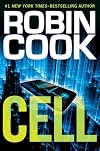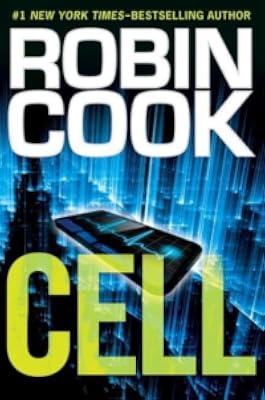
Cell
by Robin Cook
On This Page
Description
A doctor's life gets turned upside by a dangerous new technology in this thought-provoking medical thriller from #1 New York Times bestselling author Robin Cook.George Wilson, M.D., a radiology resident in Los Angeles, is about to enter a profession on the brink of an enormous paradigm shift, foreshadowing a vastly different role for doctors everywhere. The smartphone is poised to take on a new role in medicine, no longer as a mere medical app but rather as a fully customizable personal show more physician capable of diagnosing and treating even better than the real thing. It is called iDoc.
George’s initial collision with this incredible innovation is devastating. He awakens one morning to find his fiancée dead in bed alongside him, not long after she participated in an iDoc beta test. Then several of his patients die after undergoing imaging procedures. All of them had been part of the same beta test.
Is it possible that iDoc is being subverted by hackers—and that the U.S. government is involved in a cover-up? Despite threats to both his career and his freedom, George relentlessly seeks the truth, knowing that if he’s right, the consequences could be lethal. show less
Tags
Recommendations














Member Reviews
I did this for my dear Mom, who has been passed since Dec 2007, but who was a die-hard Robin Cook fan from minute one. EVERY YEAR Mr. Cook came out with a book, Mom was there at Waldenbooks [I know, I know...extinct city and...I am seriously "age-ing" myself here], Barnes & Noble [when it wasn't B&N of online fame] and Borders, etc. etc...picking up the newish Best Seller...IN HARDCOVER!. yeah, she was that much of a fan, from back in ye olde COMA days. Mom was a 31 yr Registered Nurse, who retired in PACU, which [if you don't know] stands for Post Anesthesia Nursing Care.
I loved watching Mom read these because she wasn't often a lover of ALL THINGS MEDICAL. She used to tell me that "Why do I wanna watch this, I work in THAT every damn show more day!?" and I saw her point. But there was always something special...sort of otherworldly surreal about Mr. Cook's writing that spoke to her, made her devour his books in a single day, or two. She'd finish and gush, somehow awash herself in the manner the story was told in a reality she envisioned daily. She didn't think Mr. Cook was too far off the real honest truth. There is an authenticity here she couldn't pass on...and now I see why she fed off these novels every publication year. Thanks, Mr. Cook...for showing me a minor way back to memories of my Mom. It brought me a weird joy despite the pure terror at every turn of the page.
Okay...this book effing scared me to bits. Not because everything Mr. Cook writes borders on such stunning realism, but because not too long ago...I was "caught" in the medical system that would consistently give me the literal shivers. It reminded me of how close I came to being sucked into The Void of not just terrible insurance but of the visceral trap sick customers can get stuffed into and without those random people who DO care who work for the conglomerated insurance companies...would rather watch the ill or sick get sicker draining more money into their pockets out of innocent folks like me. And thank God I had a hyper-aware family member who WANTED me to get better and see me back home...no matter what means necessary to get me there.
I wouldn't have read this book IN THERE...the hospital or the rehab/nursing home care facility I was sent to prior to coming home nearly 2.5yrs later. I would not have read this because I think...even around the time this book came out 2013-1014...we were close to such things as iDoc and implanted medical devices existing in this very scenario. It just hits too close to what can happen to the sick or terminally ill who DO NOT have the family members or a legal guardian who DOES care about them and wants what is best. Letting folks fester where they don't belong is never the answer because some of those so-called helpful places can sometimes manifest a sense of "this is the end"...or worse, "This is where I die"...patients can be found to not just become physically sicker but mentally and emotionally sink deeper into a blacker nothingness.
It's scary...and Mr. Cook comes so close...in each of those individual characters/patients who were part of the beta testing of iDoc depicting that restless energy...that instant loss of autonomy...the way insurances and people who don't know what it's remotely like take for granted for the all-mighty dollar...to feel stripped of everything that makes us human and humane. To eventually give yourself up to the inevitable Death knocking at your door because there is no fathomable way to stop it...poor, poor Sal tried and he seriously had the worst outcome of the five deaths connected to George. Jesus...on...a...cross...
I have to say, with any other book, the ending would have upset me, but not here. I want to imagine my own outcome. I like the ending we were given because endings don't always have to be happy or final. Sometimes we simply have to let them be... show less
I loved watching Mom read these because she wasn't often a lover of ALL THINGS MEDICAL. She used to tell me that "Why do I wanna watch this, I work in THAT every damn show more day!?" and I saw her point. But there was always something special...sort of otherworldly surreal about Mr. Cook's writing that spoke to her, made her devour his books in a single day, or two. She'd finish and gush, somehow awash herself in the manner the story was told in a reality she envisioned daily. She didn't think Mr. Cook was too far off the real honest truth. There is an authenticity here she couldn't pass on...and now I see why she fed off these novels every publication year. Thanks, Mr. Cook...for showing me a minor way back to memories of my Mom. It brought me a weird joy despite the pure terror at every turn of the page.
Okay...this book effing scared me to bits. Not because everything Mr. Cook writes borders on such stunning realism, but because not too long ago...I was "caught" in the medical system that would consistently give me the literal shivers. It reminded me of how close I came to being sucked into The Void of not just terrible insurance but of the visceral trap sick customers can get stuffed into and without those random people who DO care who work for the conglomerated insurance companies...would rather watch the ill or sick get sicker draining more money into their pockets out of innocent folks like me. And thank God I had a hyper-aware family member who WANTED me to get better and see me back home...no matter what means necessary to get me there.
I wouldn't have read this book IN THERE...the hospital or the rehab/nursing home care facility I was sent to prior to coming home nearly 2.5yrs later. I would not have read this because I think...even around the time this book came out 2013-1014...we were close to such things as iDoc and implanted medical devices existing in this very scenario. It just hits too close to what can happen to the sick or terminally ill who DO NOT have the family members or a legal guardian who DOES care about them and wants what is best. Letting folks fester where they don't belong is never the answer because some of those so-called helpful places can sometimes manifest a sense of "this is the end"...or worse, "This is where I die"...patients can be found to not just become physically sicker but mentally and emotionally sink deeper into a blacker nothingness.
It's scary...and Mr. Cook comes so close...in each of those individual characters/patients who were part of the beta testing of iDoc depicting that restless energy...that instant loss of autonomy...the way insurances and people who don't know what it's remotely like take for granted for the all-mighty dollar...to feel stripped of everything that makes us human and humane. To eventually give yourself up to the inevitable Death knocking at your door because there is no fathomable way to stop it...poor, poor Sal tried and he seriously had the worst outcome of the five deaths connected to George. Jesus...on...a...cross...
I have to say, with any other book, the ending would have upset me, but not here. I want to imagine my own outcome. I like the ending we were given because endings don't always have to be happy or final. Sometimes we simply have to let them be... show less
I will start this review by saying that I really wanted to enjoy this book. Robin Cook was one of my favorite authors when I was a teen, and I found the idea behind this book intriguing.
The idea had so much promise.
Unfortunately, the execution is awful. I've considered the fact that my standards are a good deal higher now. However, I suspect that one of three things has happened here 1) Cook is resting on his laurels and seriously phoning it in, 2) The publishers have hired the cheapest ghostwriter they could find to get this published, or 3) The books I read back in the 90s were not nearly as good as I recalled.
First, the third person omniscient narrator makes the book unbearable to read. Who's the main character? Everyone. It is show more clearly everyone because we are made privy to everyone's internal thoughts. Even if we weren't, every single character in this book takes the opportunity to provide clear, spoken exposition of every thought s/he has--repeatedly. The dialogue is stilted, terribly written, and unrealistic. Details are told rather than shown in a way that would have gotten every chapter cut to ribbons in any reasonably literate undergraduate writing workshop. Also, I hate every single character. The only likeable person dies at the beginning of the first chapter. Everyone else in the book serves as a flat, wooden vehicle to nudge the protagonist along what I suppose passes for a plot.
The protagonist is so self-involved that he starts to think he's a harbinger of death for everyone he cares about. You know, instead of maybe questioning why a patient dies for no apparent reason right in the hospital itself.
There's no emotion I can identify with from any character. And every time iDoc comes up, it's accompanied by the same exhaustive monologue about how wonderful and revolutionary it is. The characters' voices all blend together into a robotic monotone of being surprised over plot twists the reader knows about before they even happen. Why does the reader know this? Because the book constantly pulls you off onto the sidelines where things are explained in exhausting detail. Oh, and let us not forget the liberal inclusion of cliches around every corner. I'd say you could play a fun drinking game where you take a shot each time you spot a cliche... but alcohol poisoning probably isn't all that fun.
Then we throw in a little bit of "hacking" (and why for the love of god didn't the author bother to consult someone who actually knows something about it?) to find "evidence" of wrongdoing. Add in a nebulous government body interested in how the computer has 'learned' to kill problematic patients because they want to cut healthcare costs. Round it out with a private corporation that apparently employs ex black-ops for its routine security...
Oh, there's also a main character everyone describes as brilliant and observant, who can pick out subtle shadows on MRIs but can't see an obvious conclusion sitting on the end of his nose. The author goes to great lengths to reinforce how smart and observant the protagonist is, detailing the reasoning behind every decision he makes in the book. I could go on, but the point of this review was to hopefully save others time they would have spent reading this book.
So there you go. What could have been a great idea, murdered by horrible writing. show less
The idea had so much promise.
Unfortunately, the execution is awful. I've considered the fact that my standards are a good deal higher now. However, I suspect that one of three things has happened here 1) Cook is resting on his laurels and seriously phoning it in, 2) The publishers have hired the cheapest ghostwriter they could find to get this published, or 3) The books I read back in the 90s were not nearly as good as I recalled.
First, the third person omniscient narrator makes the book unbearable to read. Who's the main character? Everyone. It is show more clearly everyone because we are made privy to everyone's internal thoughts. Even if we weren't, every single character in this book takes the opportunity to provide clear, spoken exposition of every thought s/he has--repeatedly. The dialogue is stilted, terribly written, and unrealistic. Details are told rather than shown in a way that would have gotten every chapter cut to ribbons in any reasonably literate undergraduate writing workshop. Also, I hate every single character. The only likeable person dies at the beginning of the first chapter. Everyone else in the book serves as a flat, wooden vehicle to nudge the protagonist along what I suppose passes for a plot.
The protagonist is so self-involved that he starts to think he's a harbinger of death for everyone he cares about. You know, instead of maybe questioning why a patient dies for no apparent reason right in the hospital itself.
There's no emotion I can identify with from any character. And every time iDoc comes up, it's accompanied by the same exhaustive monologue about how wonderful and revolutionary it is. The characters' voices all blend together into a robotic monotone of being surprised over plot twists the reader knows about before they even happen. Why does the reader know this? Because the book constantly pulls you off onto the sidelines where things are explained in exhausting detail. Oh, and let us not forget the liberal inclusion of cliches around every corner. I'd say you could play a fun drinking game where you take a shot each time you spot a cliche... but alcohol poisoning probably isn't all that fun.
Then we throw in a little bit of "hacking" (and why for the love of god didn't the author bother to consult someone who actually knows something about it?) to find "evidence" of wrongdoing. Add in a nebulous government body interested in how the computer has 'learned' to kill problematic patients because they want to cut healthcare costs. Round it out with a private corporation that apparently employs ex black-ops for its routine security...
Oh, there's also a main character everyone describes as brilliant and observant, who can pick out subtle shadows on MRIs but can't see an obvious conclusion sitting on the end of his nose. The author goes to great lengths to reinforce how smart and observant the protagonist is, detailing the reasoning behind every decision he makes in the book. I could go on, but the point of this review was to hopefully save others time they would have spent reading this book.
So there you go. What could have been a great idea, murdered by horrible writing. show less
Having worked in Information Technology for my entire 20 year career, the last 15 split between healthcare and health insurance... This story hit just a little bit too close to home. I think the scariest part is that it's completely believable that the government would be involved in something like this and I don't think it requires you to be a conspiracy nut. If you want of those people who thinks the ACA is implementing death panels I don't recommend this book. If you want to have something that's gonna keep you up reading until one in the morning and then have you mulling over every passage then I say go for it.
As usual, once I start a Robin Cook book, I'm utterly hooked and don't want to stop reading until I finish, and then I'm ready for more.
Highly recommended. Relentless.
George Wilson, M.D., a radiology resident in Los Angeles, is about to enter a profession on the brink of an enormous paradigm shift, foreshadowing a vastly different role for doctors everywhere. The smartphone is poised to take on a new role in medicine, no longer as a mere medical app but rather as a fully customizable personal physician capable of diagnosing and treating even better than the real thing. It is called iDoc.
George’s initial collision with this incredible innovation is devastating. He awakens one morning to find his fiancée dead in bed alongside him, not show more long after she participated in an iDoc beta test. Then several of his patients die after undergoing imaging procedures. All of them had been part of the same beta test.
Is it possible that iDoc is being subverted by hackers—and that the U.S. government is involved in a cover-up? Despite threats to both his career and his freedom, George relentlessly seeks the truth, knowing that if he’s right, the consequences could be lethal.
I want a sequel!
Includes a sneak peek look at Host. show less
Highly recommended. Relentless.
George Wilson, M.D., a radiology resident in Los Angeles, is about to enter a profession on the brink of an enormous paradigm shift, foreshadowing a vastly different role for doctors everywhere. The smartphone is poised to take on a new role in medicine, no longer as a mere medical app but rather as a fully customizable personal physician capable of diagnosing and treating even better than the real thing. It is called iDoc.
George’s initial collision with this incredible innovation is devastating. He awakens one morning to find his fiancée dead in bed alongside him, not show more long after she participated in an iDoc beta test. Then several of his patients die after undergoing imaging procedures. All of them had been part of the same beta test.
Is it possible that iDoc is being subverted by hackers—and that the U.S. government is involved in a cover-up? Despite threats to both his career and his freedom, George relentlessly seeks the truth, knowing that if he’s right, the consequences could be lethal.
I want a sequel!
Includes a sneak peek look at Host. show less
This is so close to being real that it is scary. Once again, Cook has taken us to the brink with suspense. When a medical student's fiancé dies in bed, he discovers that she was part of beta testing for a new phone app meant to replace the shortage of primary care physicians. As it unfolds, others close to him are effected. I could totally see this app being used in the future! However I only gave this 4 stars because I thought Cook made the main character appear a bit too naïve considering he was a doctor in training and considering he suspected something wrong. But I could not put this down. Would be a good movie.
Loved the concept for the book, it is a terrifying possibility. I found the start of the book a bit slow going, but to introduce the concept of iDoc it seems to be a necessity. The build of the story was fantastic with a good, although I thought obvious twist. The ending was great leaving me with a lot of questions. I thouroughly enjoyed this although for my tastes it was a bit light on clinical medicine, although this is expected as it is more focused on medical technology.
Would recommend to anyone interested in the future of medicine.
Would recommend to anyone interested in the future of medicine.
There was a couple of things I didn't like about this book, it features George Wilson from Death Benefit & Nano yet seems to re-write his history with Pia Grazdani indicating that whilst he did fly around the world for her, and was infatuated with her he was never in love with her which seems to contradict what happened in the preceding novels. I also felt this was kind of a rehash of Fatal Cure only with the motivations and circumstances mixed up a bit. Then there was the whole just pop a drop of blood on your iPhone's touchscreen and it will automagically scan the blood for you, that was a bit absurd, seemed like lazy writing not to go to the effort of at the very least inventing some sort of attachment if not a new device that the show more patient would use rather than just making up something that clearly isn't at all realistic. The ending, like Nano also seemed rather abrupt, as if the page count and been reached let's just wrap it up.
The story was okay, but the Fatal Cure deja vu was quite strong and the contradictions with the preceding novels bothered me when Wilson declares he has never loved anyone else but his now current fiancee. It would likely be more enjoyable if you hadn't read his earlier works but in having done so this one just seemed like it followed a bit of a formula and was an updated version of Fatal Cure only using technology rather than cost cutting bureaucracy as the villain. show less
The story was okay, but the Fatal Cure deja vu was quite strong and the contradictions with the preceding novels bothered me when Wilson declares he has never loved anyone else but his now current fiancee. It would likely be more enjoyable if you hadn't read his earlier works but in having done so this one just seemed like it followed a bit of a formula and was an updated version of Fatal Cure only using technology rather than cost cutting bureaucracy as the villain. show less
Members
- Recently Added By
Author Information

72+ Works 43,241 Members
Robin (Robert William Arthur) Cook, the master of the medical thriller novel, was born to Edgar Lee Cook, a commercial artist and businessman, and Audrey (Koons) Cook on May 4, 1940, in New York City. Cook spent his childhood in Leonia, New Jersey, and decided to become a doctor after seeing a football injury at his high school. He earned a B.A. show more from Wesleyan University in 1962, his M.D. from Columbia University in 1966, and completed postgraduate training at Harvard before joining the U.S. Navy. Cook began his first novel, The Year of the Intern, while serving on a submarine, basing it on his experiences as a surgical resident. In 1979, Cook wed Barbara Ellen Mougin, on whom the character Denise Sanger in Brain is based. When Year of the Intern did not do particularly well, Cook began an extensive study of other books in the genre to see what made a bestseller. He decided to focus on suspenseful medical mysteries, mixing intricately plotted murder and intrigue with medical technology, as a way to bring controversial ethical and social issues affecting the medical profession to the attention of the general public. His subjects include organ transplants, genetic engineering, experimentation with fetal tissue, cancer research and treatment, and deadly viruses. Cook put this format to work very successfully in his next books, Coma and Sphinx, which not only became bestsellers, but were eventually adapted for film. Three others, Terminal, Mortal Fear, and Virus, and Cook's first science- fiction work, Invasion, have been television movies. In 2014 her title, Cell made The New York Times Best Seller List. (Bowker Author Biography) show less
Some Editions
Common Knowledge
- Canonical title
- Cell
- Original title
- The Cell
- Original publication date
- 2014-01-14
- People/Characters
- George Wilson
- Dedication
- This book is dedicated to the democratization of medicine.
Classifications
Statistics
- Members
- 443
- Popularity
- 69,536
- Reviews
- 18
- Rating
- (3.60)
- Languages
- 9 — Czech, Dutch, English, Finnish, French, Hungarian, Polish, Portuguese, Spanish
- Media
- Paper, Audiobook, Ebook
- ISBNs
- 36
- ASINs
- 7