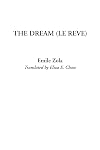
The Dream
by Émile Zola
Les Rougon-Macquart (Zola's recommended reading order) (5), Les Rougon-Macquart (publication order) (16)
There is 1 current discussion about this work.
On This Page
Description
Angelique is adopted by a couple of embroiderers, the Huberts. Enthralled by the tales of the saints and martyrs, Angelique is dreaming about a handsome prince and falls in love with Felicien d'Hautecoeur, the last in an old family of knights, heroes, and nobles in the service of Christ and of France. His father, the present Monseigneur, objects to their marrying.Tags
Recommendations

















Member Reviews
The sixteenth book in the Rougon-Macquart cycle, or fifth in Zola's recommended reading order, The Dream is a departure from Zola's usual gritty naturalism. He was reacting in part to criticism that he was too invested in hyper-realism and that his writing was obscene. The novel also reflects his own interests and life. He, like many Victorians, was fascinated by the Middle Ages and spiritualism, and The Dream is steeped in both. At this point in his life, Zola was childless and in a marriage haunted by the child his wife had given up prior to their marriage. This too is reflected in the novel.
In a snowstorm on Christmas Eve, a nine-year-old girl is found huddled on the porch of a cathedral. She is taken in by a childless couple, expert show more embroiderers who live in a four-hundred-year-old house adjacent to the church. Angelique is a wild thing at first, prone to fits of anger and passion, but their quiet, isolated life and loving but practical parenting bring about a change in her. At twelve, Angelique discovers The Golden Legend, a thirteenth-century book of the lives of the saints, and she is swept up by religious fervor. She creates a dream world for herself, populated by virgin saints. This obsession provides an outlet for her passions that is more acceptable to her parents. When she falls in idyllic love with a nobleman's son, she is confronted with the choice of either giving in to her sordid impulses and run away with him, or remain a dutiful daughter.
I was surprised by this novel, especially the ending. Knowing Zola's penchant for documenting the hereditary failings of the Rougon-Macquart family, I was expecting the worse. Instead, Angelique's hereditary passions are channeled into a different path by a nurturing environment. The love story reminded me a bit of Silvere's story back in the first novel, The Fortune of the Rougons. I quite enjoyed this installment in the cycle, a short but interesting interlude after two books detailing Saccard's greed. show less
In a snowstorm on Christmas Eve, a nine-year-old girl is found huddled on the porch of a cathedral. She is taken in by a childless couple, expert show more embroiderers who live in a four-hundred-year-old house adjacent to the church. Angelique is a wild thing at first, prone to fits of anger and passion, but their quiet, isolated life and loving but practical parenting bring about a change in her. At twelve, Angelique discovers The Golden Legend, a thirteenth-century book of the lives of the saints, and she is swept up by religious fervor. She creates a dream world for herself, populated by virgin saints. This obsession provides an outlet for her passions that is more acceptable to her parents. When she falls in idyllic love with a nobleman's son, she is confronted with the choice of either giving in to her sordid impulses and run away with him, or remain a dutiful daughter.
I was surprised by this novel, especially the ending. Knowing Zola's penchant for documenting the hereditary failings of the Rougon-Macquart family, I was expecting the worse. Instead, Angelique's hereditary passions are channeled into a different path by a nurturing environment. The love story reminded me a bit of Silvere's story back in the first novel, The Fortune of the Rougons. I quite enjoyed this installment in the cycle, a short but interesting interlude after two books detailing Saccard's greed. show less
Absolutely nothing like any other Zola I have read. This book is deeply esoteric and dreamlike—quite a departure from what I’m used to with Zola. Normally, he delves into the gritty, ruthless machinations of the morally bankrupt. But Angélique feels almost ethereal, with the title character portrayed as a near-saint, having visions of vestal virgins and martyrs. And the embroidery! My goodness—the intricate descriptions of threads, beads, and tapestry borders on obsessive. At times, I honestly couldn’t tell if I was reading about a piece of needlework or being given a history lesson. Zola even gives Dickens a run for his money in the detail department! Still stunned by Zola's departure from his "norm." 250 pages
The Dream starts like a Hans Christian Andersen tale. It was Christmas Day, 1860, and a nine year old girl was freezing to death on the stone steps of a grand twelfth century cathedral, while snow fell all around her. Above her, the statue of another young girl, Saint Agnes, kept watch, surrounded by the images of the virgin saints who had escorted her to Heaven and Christ. The young girl was rescued and adopted by a childless couple, the Huberts, embroiderers of ecclesiastic robes and soft furnishings. The child's name was Angélique.
This is Zola --- the depicter of vice and sin, greed and lust? He had indeed accomplished his goal of writing "a book nobody expects from me".
All went well. At first the young girl seemed wild and show more untamed, but gradually she responded to the Huberts. Now the book began to seem more like Zola, a classic study of environment versus heredity, especially when the child's parentage is revealed. Angélique led a cloistered life in the ancient house attached to the church. There was a garden to enjoy, but it was enclosed by church buildings.
Angélique did retain a certain stubborn streak. She was obsessed by the stories in [The Golden Legend], a fifteenth century telling of the lives and deaths of the saints. She dwelt on their stories, their tortures, taking them to heart, immersed in the iconography of the book. "So many abominations, and the joy of triumph, filled her with rapturous pleasure, more than any reality could." Zola details for page after page summaries of what Angélique was reading, suggesting a certain naiveté in the child, and encouraging scepticism and disbelief in the reader, while introducing the idea of martyrdom as a misplaced eroticism.
Saint Agnes was her favourite. She became a constant in Angélique's mind, as the child was convinced the saint was beside her always and knew her every move and thought. How could she risk committing a sin and disappointing such a guardian?
Angélique also loved stories of kings and queens, of battles and empires. She absorbed Norman history. She decided
Reproached by her parents, the innocent child replies ... you'd soon see what I would do with the money, if I had a lot. It would rain down on the town, it would stream into the houses of the poor. It would be a real blessing: no more poverty!
Young princes are scarce on the ground though; more so when the young girl hoping for one works with her hands. At fifteen, Angélique fell in love with Félicien, a maker of stained glass windows. However, there is still a sense of religious ecstasy and mystery:
And so the undefined eroticism that Angélique had felt in her religious fervors had found an object. The young girl struggled to reconcile desire and spirit. Angélique is so believable in so many ways, that the strength of her faith seems natural. Zola knew just when to ground her and the reader, by supplying the background to her life: the daily work with its high levels of skill, concentration and artistry: the physical surroundings, even the washing of the laundry in the river. These details are needed for otherwise the reader might just float out the window of Angélique's pure white bedroom into the mystery of the garden below. Like Angélique in her room, the reader is torn between dreams and reality. This dilemma is played out to a conclusion only someone with the mastery of Zola would dare attempt; Zola, who tells his readers, "All is but a dream." show less
This is Zola --- the depicter of vice and sin, greed and lust? He had indeed accomplished his goal of writing "a book nobody expects from me".
All went well. At first the young girl seemed wild and show more untamed, but gradually she responded to the Huberts. Now the book began to seem more like Zola, a classic study of environment versus heredity, especially when the child's parentage is revealed. Angélique led a cloistered life in the ancient house attached to the church. There was a garden to enjoy, but it was enclosed by church buildings.
Angélique did retain a certain stubborn streak. She was obsessed by the stories in [The Golden Legend], a fifteenth century telling of the lives and deaths of the saints. She dwelt on their stories, their tortures, taking them to heart, immersed in the iconography of the book. "So many abominations, and the joy of triumph, filled her with rapturous pleasure, more than any reality could." Zola details for page after page summaries of what Angélique was reading, suggesting a certain naiveté in the child, and encouraging scepticism and disbelief in the reader, while introducing the idea of martyrdom as a misplaced eroticism.
... death is an occasion for joy, and they defy it; relatives rejoice when one of their family succumbs. On Mount Ararat , ten thousand crucified martyrs expire. Near Cologne, eleven thousand virgins are massacred by the Huns. In the circuses, bones are crunched up by the teeth of wild beasts. ... Children at the breast hurl insults at their executioners. Disdain and disgust for the flesh, for the rags and tatters of the human body, sharpens the pain with a celestial thrill of pleasure. Let them tear that flesh, let them mangle it, let them burn it: all is well; again and again; never can it suffer agony often enough; and they all call out for the blade of iron, for the sword thrust through the throat that alone will kill them.
Saint Agnes was her favourite. She became a constant in Angélique's mind, as the child was convinced the saint was beside her always and knew her every move and thought. How could she risk committing a sin and disappointing such a guardian?
Angélique also loved stories of kings and queens, of battles and empires. She absorbed Norman history. She decided
... what I would like, what I would like, would be to marry a prince... A prince I'd never seen, who would come along one evening as dusk fell, to take me by the hand and lead me to his palace... And what I would like would be for him to be very handsome, very rich --- oh! --- the handsomest and richest who has ever walked the face of this earth. I'd like to hear horses whinnying beneath my windows, feel cascades of precious stones pouring across my knees, and gold, a shower of gold, a flood of gold, falling from my two hands as soon as I opened them... And what I'd also like would be for my prince to love me madly, so that I in turn could love him like crazy. We would be very young, very pure and very noble, for ever, for ever!
Reproached by her parents, the innocent child replies ... you'd soon see what I would do with the money, if I had a lot. It would rain down on the town, it would stream into the houses of the poor. It would be a real blessing: no more poverty!
Young princes are scarce on the ground though; more so when the young girl hoping for one works with her hands. At fifteen, Angélique fell in love with Félicien, a maker of stained glass windows. However, there is still a sense of religious ecstasy and mystery:
He emerged from the unknown, from the tremulous life of things, from the murmuring voices, from night's shifting shadows, from all that had enfolded her and made her feel so faint... He was escorted by the entire populace of the Legend , the male saints whose rods burst into flower, the female saints whose wounds wept milk. And the virgins soaring aloft all pure and white outshone the stars.
And so the undefined eroticism that Angélique had felt in her religious fervors had found an object. The young girl struggled to reconcile desire and spirit. Angélique is so believable in so many ways, that the strength of her faith seems natural. Zola knew just when to ground her and the reader, by supplying the background to her life: the daily work with its high levels of skill, concentration and artistry: the physical surroundings, even the washing of the laundry in the river. These details are needed for otherwise the reader might just float out the window of Angélique's pure white bedroom into the mystery of the garden below. Like Angélique in her room, the reader is torn between dreams and reality. This dilemma is played out to a conclusion only someone with the mastery of Zola would dare attempt; Zola, who tells his readers, "All is but a dream." show less
This is the fifth book in Zola's recommended reading order of the Rougon-Macquart series, and it felt like a large departure from his other works. It is laser focused on the heroine, Angelique, who is the abandoned daughter of Sidonie Rougon. She is adopted by a loving couple, Hubert and Hubertine, who raise her in the literal shadow of the church and apprentice her to do beautiful embroidery for church displays. Angelique is obsessed with her book about the lives of the saints and spends much of her life daydreaming and perfecting her talent as an embroideress. Then her dream of meeting a prince charming comes true. Of course, they come from different walks of life and their love for each other meets obstacles.
The whole book feels show more like a fable or fairy tale. There's little of the grit and reality present in Zola's other novels. I kind of loved it, though. Maybe because of the contrast to his other works? I am left wondering many things. I'm not sure how this is meant to fit into the larger picture of the series. I'm not sure what the connection to Sidonie was supposed to tell me. I will continue to ponder this. show less
The whole book feels show more like a fable or fairy tale. There's little of the grit and reality present in Zola's other novels. I kind of loved it, though. Maybe because of the contrast to his other works? I am left wondering many things. I'm not sure how this is meant to fit into the larger picture of the series. I'm not sure what the connection to Sidonie was supposed to tell me. I will continue to ponder this. show less
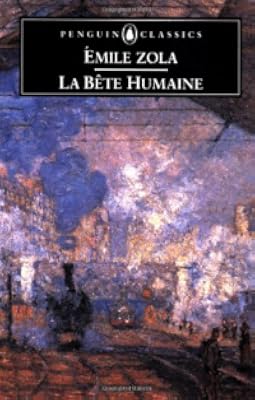
This relatively short, simple love story is one of the quiet breathing-spaces in the Rougon-Macquart cycle, like Une page d'amour and La joie de vivre; it gives us the chance to recover and reflect a little in between the exertions of La Terre and La Bête Humaine.
Zola casts the story in almost Pre-Raphaelite romantic terms: a lovely young orphan who spends her days embroidering vestments in the medieval house of her adoptive parents in the shadow of the cathedral in a sleepy country town (a fictional version of Cambrai); the handsome young artisan who falls in love with her, and turns out to be a disguised nobleman; a climbable balcony; disapproving parents; religious processions; a deathbed scene... You get the picture.
Needless to show more say, there's more to it, although you perhaps wouldn't notice if you weren't pre-warned by the other Zola novels you've read. Angélique (we're told, but she isn't) is the illegitimate daughter of the shady businesswoman Sidonie Rougon, whom we met only 14 books ago in La curée. As such, she's guaranteed not to be 100% mentally fit, and in her case this expresses itself through her obsessive interest in the medieval saints and virgins of the Golden Legend. She manages, with Zola's active connivance, to live in a mental universe that shuts out any kind of intellectual input more recent than the early renaissance. Disguised noble suitors, balconies, inexplicable illnesses and mystical cures are all perfectly normal, but she's completely incapable of imagining any kind of story that continues beyond the wedding ceremony, with predictable (but almost metatextual) consequences.
Zola is bashing religion nearly as hard as romanticism: both are part of the fatal Dream that conspires to destroy people's lives (in another world, he might almost have given this book the title The dominant ideology!). But he's also enjoying himself with lots of lyrical descriptions of the embroiderers' work, their tools, their subjects, the language they use, and he doesn't waste the opportunity to tell us about the cathedral and its stained glass, either. A fairly slight book, but with some good stuff in it. show less
Zola casts the story in almost Pre-Raphaelite romantic terms: a lovely young orphan who spends her days embroidering vestments in the medieval house of her adoptive parents in the shadow of the cathedral in a sleepy country town (a fictional version of Cambrai); the handsome young artisan who falls in love with her, and turns out to be a disguised nobleman; a climbable balcony; disapproving parents; religious processions; a deathbed scene... You get the picture.
Needless to show more say, there's more to it, although you perhaps wouldn't notice if you weren't pre-warned by the other Zola novels you've read. Angélique (we're told, but she isn't) is the illegitimate daughter of the shady businesswoman Sidonie Rougon, whom we met only 14 books ago in La curée. As such, she's guaranteed not to be 100% mentally fit, and in her case this expresses itself through her obsessive interest in the medieval saints and virgins of the Golden Legend. She manages, with Zola's active connivance, to live in a mental universe that shuts out any kind of intellectual input more recent than the early renaissance. Disguised noble suitors, balconies, inexplicable illnesses and mystical cures are all perfectly normal, but she's completely incapable of imagining any kind of story that continues beyond the wedding ceremony, with predictable (but almost metatextual) consequences.
Zola is bashing religion nearly as hard as romanticism: both are part of the fatal Dream that conspires to destroy people's lives (in another world, he might almost have given this book the title The dominant ideology!). But he's also enjoying himself with lots of lyrical descriptions of the embroiderers' work, their tools, their subjects, the language they use, and he doesn't waste the opportunity to tell us about the cathedral and its stained glass, either. A fairly slight book, but with some good stuff in it. show less
"What paradise exactly have you created in your dreams? How do you imagine the world?"
Angelique Rougon (unacknowledged daughter of that supreme gossip Sidonie Rougon from The Kill, which is not required reading here) flees her foster family at age 9 and takes refuge with a childless couple in the town of Beaumont, a couple of hours from Paris. The couple have a comfortable home, from their long family history as embroiderers, but are themselves poor. The girl grows up in a happy family, becoming a renowned local embroideress. Her life is lived entirely within the confines of her home, the garden, and the church next door, and she lives much of it in the pages of one book - The Golden Legend, tales of the great miracles of the saints, show more tales which her mind sews together into a fantasy in which she, the pure Angelique, will find love with a handsome prince and live happily ever after. And then, at 16, the dream starts to come true...
A gentle fairytale of a novel, The Dream is the most unexpected of the 20 novels in Zola's Rougon-Macquart series. It's a very quick read, clocking in at 180 pages with only five characters of note. The love between Angelique and Felicien is rejected by both of their parents for reasons of social status and tragic memories - the memories of Felicien's father, mourning his long-lost wife, and those of Angelique's foster parents, whose own marriage - in opposition to their parents - caused them a life of pain. Like all of the series' novels, Zola limits his geographic narrative to a very specific place, but here it feels less claustrophobic than ever before. Although Angelique does not have access to the wide open plains of Earth, she is freed by her dreams, by the lengthy excursions we take - via the narrative voice - into the histories of the saints. The novel weaves together three core symbols - embroidery, architecture, and the accoutrements of the Catholic church, as we find ourselves lost inside the determined but naive mind of the teenage girl at its centre.
There is a tension at the heart of the book between the naturalism to which Zola subscribed and the fantastical, which looms over the unlikely plot twists and the miracles and tragedies which take place herein. Perhaps this novel itself is a human tragedy, the story of a happiness constantly thwarted by the fears and misplaced hopes of its characters. Or perhaps the novel itself is a dream, as Zola suggests on the final page, and we should view it as a kind of palate-cleanser between two weighty novels in the series: the grotesque drama of Earth and the brutal thriller, La Bête humaine. (The novel was a late addition to Zola's plan; indeed, the family tree he had published only five years previously did not include Angelique at all.)
I would perhaps not recommend this to Zola newcomers. Not only does it stand in opposition to his usual style, but it is ultimately a fairly slight entry in the canon. The psychology of the characters is deftly handled, as was the author's trademark, but perhaps Angelique herself never quite coalesces as a protagonist, or perhaps the tonal shift at novel's end - despite having been prepared for - is just too jarring for modern readers. Still, The Dream does not deserve its dismissive 20th century reputation. (After an initial period of popularity, which included a very successful operatic adaptation, the novel was all but forgotten. Its 1893 translation remained the only English-language version available until the 21st century, which hindered its popularity considerably.) Paul Gibbard's 2018 translation for Oxford World's Classics is sensitive and atmospheric, revelling in the clash between the medieval tone of Angelique's town and the 19th century reality of her context.
An intriguing confection. show less
Angelique Rougon (unacknowledged daughter of that supreme gossip Sidonie Rougon from The Kill, which is not required reading here) flees her foster family at age 9 and takes refuge with a childless couple in the town of Beaumont, a couple of hours from Paris. The couple have a comfortable home, from their long family history as embroiderers, but are themselves poor. The girl grows up in a happy family, becoming a renowned local embroideress. Her life is lived entirely within the confines of her home, the garden, and the church next door, and she lives much of it in the pages of one book - The Golden Legend, tales of the great miracles of the saints, show more tales which her mind sews together into a fantasy in which she, the pure Angelique, will find love with a handsome prince and live happily ever after. And then, at 16, the dream starts to come true...
A gentle fairytale of a novel, The Dream is the most unexpected of the 20 novels in Zola's Rougon-Macquart series. It's a very quick read, clocking in at 180 pages with only five characters of note. The love between Angelique and Felicien is rejected by both of their parents for reasons of social status and tragic memories - the memories of Felicien's father, mourning his long-lost wife, and those of Angelique's foster parents, whose own marriage - in opposition to their parents - caused them a life of pain. Like all of the series' novels, Zola limits his geographic narrative to a very specific place, but here it feels less claustrophobic than ever before. Although Angelique does not have access to the wide open plains of Earth, she is freed by her dreams, by the lengthy excursions we take - via the narrative voice - into the histories of the saints. The novel weaves together three core symbols - embroidery, architecture, and the accoutrements of the Catholic church, as we find ourselves lost inside the determined but naive mind of the teenage girl at its centre.
There is a tension at the heart of the book between the naturalism to which Zola subscribed and the fantastical, which looms over the unlikely plot twists and the miracles and tragedies which take place herein. Perhaps this novel itself is a human tragedy, the story of a happiness constantly thwarted by the fears and misplaced hopes of its characters. Or perhaps the novel itself is a dream, as Zola suggests on the final page, and we should view it as a kind of palate-cleanser between two weighty novels in the series: the grotesque drama of Earth and the brutal thriller, La Bête humaine. (The novel was a late addition to Zola's plan; indeed, the family tree he had published only five years previously did not include Angelique at all.)
I would perhaps not recommend this to Zola newcomers. Not only does it stand in opposition to his usual style, but it is ultimately a fairly slight entry in the canon. The psychology of the characters is deftly handled, as was the author's trademark, but perhaps Angelique herself never quite coalesces as a protagonist, or perhaps the tonal shift at novel's end - despite having been prepared for - is just too jarring for modern readers. Still, The Dream does not deserve its dismissive 20th century reputation. (After an initial period of popularity, which included a very successful operatic adaptation, the novel was all but forgotten. Its 1893 translation remained the only English-language version available until the 21st century, which hindered its popularity considerably.) Paul Gibbard's 2018 translation for Oxford World's Classics is sensitive and atmospheric, revelling in the clash between the medieval tone of Angelique's town and the 19th century reality of her context.
An intriguing confection. show less
This is the fifth volume in Zola's 20 volume Rougon-Macquart cycle of novels set against the backdrop of the rule of Napoleon III in the 1850s and 60s (fifth in the author's own preferred reading order, that is, not publication order). However, this is a much simpler story than the previous novels and a much more personal non-political story revolving round the lives of a small number of ordinary people. Angelique Marie is an orphan who is freezing in the streets of a French town when she is rescued and taken in by a childless couple, the Huberts, who soon effectively adopt her. It emerges that she is the daughter of Mme Sidonie, the sister of the Minister Eugene Rougon from the second novel in the series (this is the only connection to show more the main thread of the novel cycle). Angelique is an other worldly and self-possessed child, who embroiders obsessively, and lives in the mental landscape of the Medieval book of the Golden Legend by Jacobus de Voragine, stories of the saints and church martyrs. She is also obsessed with romantic love, and sets her sight on Felicien who, though she does not know it until later, is the only son and heir of the local nobleman and now bishop. Fortunately he loves her too, but his father prevents the marriage due to her obscure origins. Eventually after trials and tribulations, the father is reconciled, as he sees in Angelique his own long dead wife. Angelique is weakened and dies as soon as she and Felicien are finally married. My description of this plot may make the novel seem rather cheesy and unimaginative, but frankly I enjoyed this simple novel rather more than some of the others, especially the mostly tedious Money. show less
Members
- Recently Added By
Talk Discussions
Current Discussions
May 2025 The Dream Chapter 16-end in Emile Zola Group Read (November 2025)
Past Discussions
May 2025 The Dream Intro-Chapters 1 & 2 in Emile Zola Group Read (May 2025)
Author Information

696+ Works 35,782 Members
Zola was the spokesperson for the naturalist novel in France and the leader of a school that championed the infusion of literature with new scientific theories of human development drawn from Charles Darwin (see Vol. 5) and various social philosophers. The theoretical claims for such an approach, which are considered simplistic today, were show more outlined by Zola in his Le Roman Experimental (The Experimental Novel, 1880). He was the author of the series of 20 novels called The Rougon-Macquart, in which he attempted to trace scientifically the effects of heredity through five generations of the Rougon and Macquart families. Three of the outstanding volumes are L'Assommoir (1877), a study of alcoholism and the working class; Nana (1880), a story of a prostitute who is a femme fatale; and Germinal (1885), a study of a strike at a coal mine. All gave scope to Zola's gift for portraying crowds in turmoil. Today Zola's novels have been appreciated by critics for their epic scope and their visionary and mythical qualities. He continues to be immensely popular with French readers. His newspaper article "J'Accuse," written in defense of Alfred Dreyfus, launched Zola into the public limelight and made him the political conscience of his country. (Bowker Author Biography) show less
Some Editions
Awards and Honors
Awards
Series

Les Rougon-Macquart (Zola's recommended reading order)
20 works (5)

Les Rougon-Macquart (publication order)
21 works (16)
Belongs to Publisher Series
Work Relationships
Common Knowledge
Classifications
Statistics
- Members
- 589
- Popularity
- 49,833
- Reviews
- 17
- Rating
- (3.47)
- Languages
- 10 — Dutch, English, Finnish, French, German, Greek, Hungarian, Italian, Spanish, Swedish
- Media
- Paper, Audiobook, Ebook
- ISBNs
- 82
- ASINs
- 38