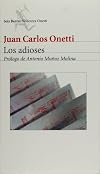
Goodbyes and Stories
by Juan Carlos Onetti
On This Page
Description
A man arrives in a mountain community and refuses to assimilate into life at the sanatorium. His only income and contact with the outside world is through two letters which he recieves every month.Tags
Recommendations



































Member Reviews
I've always enjoyed obsessively reading the works of a single author, systematically working through a library's collection one or two at a time. In high school, it was Kurt Vonnegut and Gabriel García Márquez. In college, I remember a month of Haruki Murakami and later a Roberto Arlt phase. Lately, I've been going through my library's Latin American collection and steadily reading through their holdings of books by authors like Roberto Bolaño, Felisberto Hernández and Antonio Di Benedetto. Juan Carlos Onetti is another one: lately I've been going up to the Uruguay section and checking out particularly compelling editions, like this one, a first edition of Los adioses, published in Buenos Aires in 1954. It had been hardbound by the show more library, but it still had the same plain yellow cover, the pages were old yet still crisp (certainly not worn from use), and the book felt good in my hands. I was excited to read it, and Los adioses leapfrogged to the front of my long queue of library books.
It's a short book, just under 90 pages. In it, a shop owner/bartender tells the story of a former star basketball player who came to his town in the mountains to convalesce after contracting tuberculosis. He lives in a hotel, and later rents a chalet on the mountainside where he spends his days. Some people think he's up there getting drunk, hiding from everyone. The town is small, and the constant inflow of patients gives the locals a constant source of gossip. They predict who's going to live and who's going to die, they monitor the temporary guests in their rural community, and they draw conclusions about these peoples' characters and lives. The basketball player receives letters from two different sources, and soon he's visited by two separate women, one after another. This, naturally, ratchets the gossip up a notch. As the two women visit a second time, the seasons also begin to change, with New Years coming and going (summer in the Southern Hemisphere), followed by an autumn chill in the air in the book's later pages. The man's condition follows the prognostications of a portion of those people who have been monitoring him and speculating about his health.
The constant question is: do I (the reader) trust the narrator's perspective? The story is built on speculation, rumors and hearsay. The shop owner has a limited number of interactions with the man he's observing. He's friends with a nurse who gives shots to the patients at the hotel, and they talk about the recently arrived man a lot. He drives one of the man's women to the hotel once, and sees both women as they stop by his store during their visits. However, he's not telling the story of people he knows and understands. They're strangers, and he's constructed lives out of the bits and pieces of them he sees. At the beginning of the story, and on a few other occasions, he describes a small portion of a person (the basketball player's hands are discussed for nearly the entire first page, with the bartender explaining that he would have liked to see nothing more than those hands, without seeing the attached person, the first time the man walked into the store), making a series of conclusions based on his observation of that portion of the individual. That initial page, the bartender explaining what he knew about the man by his hands, sets the tone for the next 87 pages, where he tells his interpretation of the story of the man's life, of which he's only seen brief and fleeting moments (and heard a series of rumors).
Also, you begin to wonder if maybe the narrator is telling his own story, or the story of his own fantasies, or the story of his own disgraces, through the tuburcular basketball player. How much has he projected onto the subject of his narration?
When the book ends, you know how the story ends, at least from the narrator's perspective. But you've been given enough information to question the truth of his interpretation, at so many different moments in the story and on so many different levels, that you can just as easily draw any number of other conclusions about what might have happened, and why it might have happened. As I was looking for some other readers' interpretations of this text, I came across an article by a woman named Mary-Lee Sullivan entitled "Projection as a narrative technique in Juan Carlos Onetti's Goodbyes" (http://www.onetti.net/es/descripciones/sullivan). She discusses a lot of the different critical interpretations of the text (Incest? Homosexuality? Self-projection?) and I found her article to be an excellent resource. I almost want to read the book again with the knowledge I now have about different possible interpretations of the text. One thing she mentioned was a back-and-forth between a critic, Wolfgang A. Luchting, and the author. The critic drew a conclusion, and Onetti congratulated him on unraveling a portion of the enigma, making it clear that there are other possibilities that the critic, like the narrator, may not have considered and may be just as possible. Los adioses asks the reader to interpret a story about a tall man with tuberculosis and two women in his life, while reading that story as told by a bartender, as written by Juan Carlos Onetti.
I think I agree with those who see this as one of Onetti's stronger works. He deftly wields a great number of narrational ambiguities in such a way that in the end the reader can believe he knows everything, he knows nothing, or something in between. Multiple readings could lead the reader down multiple paths, each one justifiably possible. show less
It's a short book, just under 90 pages. In it, a shop owner/bartender tells the story of a former star basketball player who came to his town in the mountains to convalesce after contracting tuberculosis. He lives in a hotel, and later rents a chalet on the mountainside where he spends his days. Some people think he's up there getting drunk, hiding from everyone. The town is small, and the constant inflow of patients gives the locals a constant source of gossip. They predict who's going to live and who's going to die, they monitor the temporary guests in their rural community, and they draw conclusions about these peoples' characters and lives. The basketball player receives letters from two different sources, and soon he's visited by two separate women, one after another. This, naturally, ratchets the gossip up a notch. As the two women visit a second time, the seasons also begin to change, with New Years coming and going (summer in the Southern Hemisphere), followed by an autumn chill in the air in the book's later pages. The man's condition follows the prognostications of a portion of those people who have been monitoring him and speculating about his health.
The constant question is: do I (the reader) trust the narrator's perspective? The story is built on speculation, rumors and hearsay. The shop owner has a limited number of interactions with the man he's observing. He's friends with a nurse who gives shots to the patients at the hotel, and they talk about the recently arrived man a lot. He drives one of the man's women to the hotel once, and sees both women as they stop by his store during their visits. However, he's not telling the story of people he knows and understands. They're strangers, and he's constructed lives out of the bits and pieces of them he sees. At the beginning of the story, and on a few other occasions, he describes a small portion of a person (the basketball player's hands are discussed for nearly the entire first page, with the bartender explaining that he would have liked to see nothing more than those hands, without seeing the attached person, the first time the man walked into the store), making a series of conclusions based on his observation of that portion of the individual. That initial page, the bartender explaining what he knew about the man by his hands, sets the tone for the next 87 pages, where he tells his interpretation of the story of the man's life, of which he's only seen brief and fleeting moments (and heard a series of rumors).
Also, you begin to wonder if maybe the narrator is telling his own story, or the story of his own fantasies, or the story of his own disgraces, through the tuburcular basketball player. How much has he projected onto the subject of his narration?
When the book ends, you know how the story ends, at least from the narrator's perspective. But you've been given enough information to question the truth of his interpretation, at so many different moments in the story and on so many different levels, that you can just as easily draw any number of other conclusions about what might have happened, and why it might have happened. As I was looking for some other readers' interpretations of this text, I came across an article by a woman named Mary-Lee Sullivan entitled "Projection as a narrative technique in Juan Carlos Onetti's Goodbyes" (http://www.onetti.net/es/descripciones/sullivan). She discusses a lot of the different critical interpretations of the text (Incest? Homosexuality? Self-projection?) and I found her article to be an excellent resource. I almost want to read the book again with the knowledge I now have about different possible interpretations of the text. One thing she mentioned was a back-and-forth between a critic, Wolfgang A. Luchting, and the author. The critic drew a conclusion, and Onetti congratulated him on unraveling a portion of the enigma, making it clear that there are other possibilities that the critic, like the narrator, may not have considered and may be just as possible. Los adioses asks the reader to interpret a story about a tall man with tuberculosis and two women in his life, while reading that story as told by a bartender, as written by Juan Carlos Onetti.
I think I agree with those who see this as one of Onetti's stronger works. He deftly wields a great number of narrational ambiguities in such a way that in the end the reader can believe he knows everything, he knows nothing, or something in between. Multiple readings could lead the reader down multiple paths, each one justifiably possible. show less
Non gli ho dedicato l'impegno e l'attenzione che merita e credo di aver perso qualcosa per strada e mi riservo di rileggerlo anche se le 4 stelle gliele assegno ugualmente visto che a distanza di qualche giorno continuo a pensarci.
Pochissime pagine ma veramente molto dense: i personaggi principali sono descritti dal punto di vista del proprietario di uno spaccio vicino ad un complesso dove si trovano un albergo e un sanatorio. Tutto quello che scopriamo, viene fuori da quello che vede e deduce/immagina questo personaggio e dai racconti di chi, come lui, gravita intorno a questi ambienti.
Di una straziante malinconia.
Pochissime pagine ma veramente molto dense: i personaggi principali sono descritti dal punto di vista del proprietario di uno spaccio vicino ad un complesso dove si trovano un albergo e un sanatorio. Tutto quello che scopriamo, viene fuori da quello che vede e deduce/immagina questo personaggio e dai racconti di chi, come lui, gravita intorno a questi ambienti.
Di una straziante malinconia.
La novela se articula a través del testimonio de un narrador‑testigo, encargado de un pequeño comercio en una localidad serrana. Desde su posición observa la llegada de un exjugador de baloncesto enfermo, que acude al sanatorio cercano. La historia se construye mediante rumores, fragmentos de conversaciones y conjeturas sobre la relación del enfermo con dos mujeres que lo visitan. La trama avanza por acumulación de versiones contradictorias, donde la verdad nunca se ofrece de forma directa.
Onetti despliega aquí su maestría en la narración oblicua: la historia se filtra a través de un narrador que interpreta más de lo que sabe, lo que convierte la novela en un ejercicio de lectura activa. La atmósfera es opresiva, marcada show more por la enfermedad, la espera y la imposibilidad de comprender del todo a los otros. El estilo es sobrio, preciso, sin adornos superfluos. La edición de Seix Barral (1985) es representativa de la serie: formato cómodo, papel resistente y presentación uniforme. La obra, breve pero intensa, es una puerta de entrada ideal al universo onettiano.
Publicada originalmente en 1953.
---
VALORACIÓN 5 / 5
Razón.- «Los adioses» es una de las novelas breves más depuradas de Onetti: concisión extrema, estructura fragmentaria, narrador poco fiable y un clima moral denso y ambiguo. La edición de Seix Barral dentro de «Obras maestras de la literatura contemporánea» es sólida y manejable. La obra, por su calidad literaria, su influencia y su perfección formal, merece la máxima valoración show less
Onetti despliega aquí su maestría en la narración oblicua: la historia se filtra a través de un narrador que interpreta más de lo que sabe, lo que convierte la novela en un ejercicio de lectura activa. La atmósfera es opresiva, marcada show more por la enfermedad, la espera y la imposibilidad de comprender del todo a los otros. El estilo es sobrio, preciso, sin adornos superfluos. La edición de Seix Barral (1985) es representativa de la serie: formato cómodo, papel resistente y presentación uniforme. La obra, breve pero intensa, es una puerta de entrada ideal al universo onettiano.
Publicada originalmente en 1953.
---
VALORACIÓN 5 / 5
Razón.- «Los adioses» es una de las novelas breves más depuradas de Onetti: concisión extrema, estructura fragmentaria, narrador poco fiable y un clima moral denso y ambiguo. La edición de Seix Barral dentro de «Obras maestras de la literatura contemporánea» es sólida y manejable. La obra, por su calidad literaria, su influencia y su perfección formal, merece la máxima valoración show less
May 11, 2026Spanish
Ratings
Members
- Recently Added By
Author Information

98+ Works 2,958 Members
Onetti's subject is the decay and materialism of the modern world, but he presents it in a dense, indirect prose style that creates a world often bordering on nightmare. The narrator of A Brief Life (1950) creates a number of other existences for himself to escape the boredom and limits, symbolized by his wife's mastectomy, of his own. Ultimately, show more the created worlds take over supposed reality. The Shipyard (1961), generally considered his best novel, demonstrates the central character's inability to control his life in an absurd existence. Onetti's characters never cease trying to create meaning, but they flounder helplessly in a world that is beyond their efforts at control. (Bowker Author Biography) show less
Awards and Honors
Awards
Series
Belongs to Publisher Series
Work Relationships
Is contained in
Common Knowledge
- Canonical title
- Goodbyes and Stories
- Original title
- Los adioses
- Original publication date
- 1954
- First words
- Avrei voluto non aver visto dell'uomo, la prima volta che entrò nel negozio, nient'altro che le mani; lente, intimidite e goffe, con movimenti senza fiducia, affilate e ancora non scurite dal sole, quasi con l'aria di chiede... (show all)re scusa per il loro gestire disinteressato.
- Last words
- (Click to show. Warning: May contain spoilers.)Rimase immobile, senza lacrine, accigliata, tardando a comprendere quello che io avevo scoperto vari mesi prima, la prima volta che l'uomo era entrato nel mio negozio - non aveva altro che questo e non volle condividerlo, - decorosa, eterna, invincibile, preparandosi già, senza prevederlo, a qualsiasi altra notte futura e violenta.
- Original language
- Spagnolo
Classifications
- Genres
- Fiction and Literature, General Fiction
- DDC/MDS
- 863 — Literature & rhetoric Spanish, Portuguese, Galician literatures Spanish fiction
- LCC
- PQ8519 .O59 .A65 — Language and Literature French, Italian, Spanish and Portuguese literatures Spanish literature Provincial, local, colonial, etc. Spanish America
- BISAC
Statistics
- Members
- 159
- Popularity
- 204,917
- Reviews
- 3
- Rating
- (4.13)
- Languages
- 7 — English, French, German, Italian, Norwegian (Nynorsk), Portuguese, Spanish
- Media
- Paper
- ISBNs
- 22
- ASINs
- 1