On This Page
Description
The future is everything we wanted it to be—and far more than we bargained for.It is the twenty-third century. Herb, a young entrepreneur, returns to the isolated planet on which he has illegally been trying to build a city—and finds it destroyed by a swarming nightmare of self-replicating machinery. Worse, the all-seeing Environment Agency has been watching him the entire time. His punishment? A nearly hopeless battle in the farthest reaches of the universe against enemy machines twice show more as fast, and twice as deadly, as his own—in the company of a disarmingly confident AI who may not be exactly what he claims. . . .
Little does Herb know that this war of machines was set in motion nearly two hundred years ago—by mankind itself. For it was then that a not-quite-chance encounter brought a confused young girl and a nearly omnipotent AI together in one fateful moment that may have changed the course of humanity forever. Science Fiction. Fantasy. Fiction. show less
Tags
Recommendations

Member Reviews
I suspect that Ballantyne started with an interesting resolution to the Fermi Paradox and worked through the implications from there, and this core idea is quite interesting. The problem is in the execution: with powerful superhuman intelligences calling the tune, the main characters (who are all rather disconnected from the world to begin with) are mostly spending their time discovering how helpless and irrelevant they really are. I never really connected with the main characters, and finished the book because I wanted to find out what was really going on rather than because I cared about what happened to them. A good ideas book, not much of a story.
I thought this first novel by Tony Ballantyne a well conceived and written novel, woven from three separate story-lines (each featuring separate characters from different time-lines) into a finished tapestry. It is a first novel, so there are a few rough spots - it's difficult to fully engender yourself with some of the supporting character's motivations, however the main protagonists of each story can mostly carry the narrative forward. A bit more character development and the author would be fine in this regard.
The back-story centers around the "Watcher" - which you find to be a very powerful AI that shapes events to improve humanity. Without giving too much away, each story ultimately falls back on the creation and consequences of show more having a consciousness shaping human destiny. The other element is the development of VNM - Von Neumann Machines - self-replicating machines that can quickly convert matter into more machines used to effect change (usually to build something the maker has devised). If you're familiar with the Fermi Paradox, it's used as a possible theory regarding the "Watcher"s origins and much of the conclusion is supported by its context.
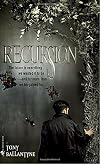
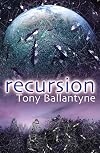
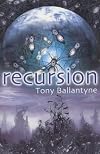
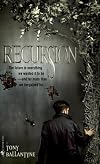
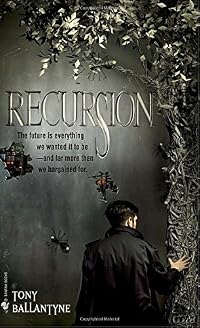
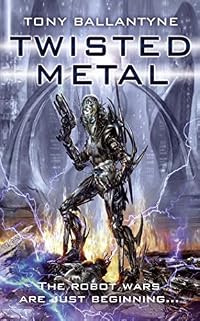
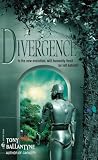
I came across this book in a book bin at Goodwill - the back cover summary enticed me to buy and read so kudos to the marketing department at Bantam Spectra. However the front cover did nothing for me and if anything I almost passed it by (if I hadn't recognized the publisher I probably wouldn't have picked it up as SciFi). Yeah I know I'm being picky but what else are reviews for? show less
The back-story centers around the "Watcher" - which you find to be a very powerful AI that shapes events to improve humanity. Without giving too much away, each story ultimately falls back on the creation and consequences of show more having a consciousness shaping human destiny. The other element is the development of VNM - Von Neumann Machines - self-replicating machines that can quickly convert matter into more machines used to effect change (usually to build something the maker has devised). If you're familiar with the Fermi Paradox, it's used as a possible theory regarding the "Watcher"s origins and much of the conclusion is supported by its context.
I came across this book in a book bin at Goodwill - the back cover summary enticed me to buy and read so kudos to the marketing department at Bantam Spectra. However the front cover did nothing for me and if anything I almost passed it by (if I hadn't recognized the publisher I probably wouldn't have picked it up as SciFi). Yeah I know I'm being picky but what else are reviews for? show less
I bought this book after seeing a review of it at Errant Dreams Reviews which for some reason caught my attention. I thought it was a good romp, especially for a first novel. The three plot lines kept me going, and I especially wanted to understand more about Eva. For these reasons I do recommend it to anyone who might be interested.
However, I think he could have done more with the theme of recursion; in many cases it seems just to be occasional plot repetition, inheritance, etc., without making any interesting point about the essential idea of recursion. This would have pushed the novel from good to great. Similarly, I think he missed some opportunities with Eva's brother, Constantine's intelligences, and Herb and Robert's further show more development. These all felt a little pro forma to me. On the whole, character development was slightly weak. Perhaps he will do more with these in the sequels.
Also, there were just some awkward moments. For example, when they said "non-Turing machines," my reaction was not, oh, something more powerful than Turing machines, but rather, wow, something weak enough to not be a Turing machine! This is, in fact, something they are called in the literature, but I find it an unfortunate name, one that he could have dealt with by encapsulating some of the current discussion of hypercomputability. Perhaps this would only bother those of us who know a little but are not specialists in that area; however, those who do read more spec fic than I are more often than average also within this knowledgable amateur range, and I think it could be worthwhile to clarify that. show less
However, I think he could have done more with the theme of recursion; in many cases it seems just to be occasional plot repetition, inheritance, etc., without making any interesting point about the essential idea of recursion. This would have pushed the novel from good to great. Similarly, I think he missed some opportunities with Eva's brother, Constantine's intelligences, and Herb and Robert's further show more development. These all felt a little pro forma to me. On the whole, character development was slightly weak. Perhaps he will do more with these in the sequels.
Also, there were just some awkward moments. For example, when they said "non-Turing machines," my reaction was not, oh, something more powerful than Turing machines, but rather, wow, something weak enough to not be a Turing machine! This is, in fact, something they are called in the literature, but I find it an unfortunate name, one that he could have dealt with by encapsulating some of the current discussion of hypercomputability. Perhaps this would only bother those of us who know a little but are not specialists in that area; however, those who do read more spec fic than I are more often than average also within this knowledgable amateur range, and I think it could be worthwhile to clarify that. show less
A pretty good story about AI and Von Neumann Machines (self-replicating); also how do you know if what you think you know is really true. How far can you push back "proof"?
Not great, but not terrible. The first 3/4ths of the novel are confusing and the various characters have literally nothing to do with each other. The very end is interesting in much the same way as Westerfeld’s Evolution’s Darling or Blindsight--it’s an exploration of what it means to be intelligent, and what intelligent machines would mean (both to humanity and to themselves).
I just finished this one at approximately 1:30AM on March 8th, 2007. It's plenty interesting, but not -exciting-. Definitely worth a read, and I'm interested in the sequel, but I'm not sure I'd ever want to read it a second time.
http://www.strangehorizons.com/reviews/2007/04/the_2007_philip.shtml
This first novel is an ambitious exploration of the future development of artificial intelligence through three viewpoint characters separated by decades in Ballantyne's future history (2051, 2119 and 2210), but sharing the problems of an intrusive nanny state and also a consistent uncertainty - extending to the characters' perception of themselves - as to who is human and who is an AI. However, I was left unconvinced by the external world-building - on the very first page, one of his central characters accidentally destroys an entire planet, which raises for me important questions, never answered, of how you can locate planets that can be so casually destroyed. In show more addition, I felt that the author's prose style simply did not rise to the level needed for such an ambitious plot. show less
This first novel is an ambitious exploration of the future development of artificial intelligence through three viewpoint characters separated by decades in Ballantyne's future history (2051, 2119 and 2210), but sharing the problems of an intrusive nanny state and also a consistent uncertainty - extending to the characters' perception of themselves - as to who is human and who is an AI. However, I was left unconvinced by the external world-building - on the very first page, one of his central characters accidentally destroys an entire planet, which raises for me important questions, never answered, of how you can locate planets that can be so casually destroyed. In show more addition, I felt that the author's prose style simply did not rise to the level needed for such an ambitious plot. show less
Members
- Recently Added By
Lists

Best Dystopias
280 works; 276 members
Author Information

33+ Works 1,267 Members
Awards and Honors
Awards
Series

Common Knowledge
- Original title
- Recursion
- Original publication date
- 2004
- People/Characters
- Herb
- Dedication
- For Barbara
- First words
- Herb looked at the viewing field and felt his stomach tighten in horror.
- Last words
- (Click to show. Warning: May contain spoilers.)When we saw people laughing together on a a night like tonight, he could almost do that.
- Publisher's editor
- Ulman, Juliet
Classifications
Statistics
- Members
- 390
- Popularity
- 79,710
- Reviews
- 11
- Rating
- (3.21)
- Languages
- English
- Media
- Paper, Ebook
- ISBNs
- 7
- ASINs
- 2