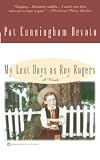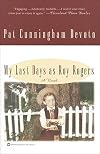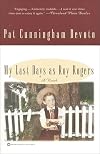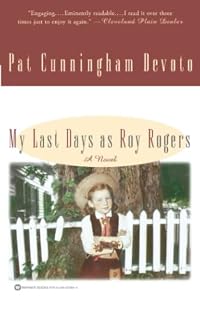
My Last Days as Roy Rogers
by Pat Cunningham Devoto
On This Page
Description
In an Alabama town in the early 1950s during the last polio summer before the Salk vaccine, ten-year-old Tabitha "Tab" Rutland is about to have the time of her life. Although movie theaters and pools have been closed to stem the epidemic, Tab, a tomboy with a passion for Roy Rogers, still seeks adventure with her best friend Maudie May, "the lightest brown colored person" she knows. Now as they meddle with the local bootlegger, Mr. Jake, row out on the Tennessee River to land the biggest show more catfish ever, and snoop into the town's darkest secrets, Tab sets out to be a hero...and comes of age in an unforgettable confrontation with human frailty, racial injustice, and the healing power of love. show lessTags
Recommendations




Member Reviews
I'm a sucker for blurbs and book reviews, so after reading that ten year old Tabitha 'Tab' Rutland in Pat Cunningham Devoto's novel is 'like Scout in Harper Lee's To Kill A Mockingbird', I was sold. And to be fair, there are similarities, from the toyboy narrator living in a small Alabama town, to the 'little but old' boy next door, the unconventional parent and the more rigidly traditional older female relative, and the overall tone and style of the writing. Comparing the two novels is perhaps a little optimistic, however.
Tab is a lively and active storyteller who leads the reader through the vagaries of her day-to-day life with a smart mouth and a fertile imagination, and her escapade on the river with best friend Maudie May is both show more funny and exciting, but the story as a whole is not nearly as subtle, sharp or neatly told as 'To Kill A Mockingbird'. Although I enjoyed reading 'Roy Rogers', the other characters, all written to fulfill a specific role or device, didn't really come alive for me. And this might be a prejudice of my own against the Deep South, learned secondhand from books and films, but none of the adults in the book comment on the fact that Maudie May, Tab's best friend and the daughter of a neighbouring housekeeper, is black - a ten year old girl may not be aware of racial segregation, although Scout is by the end of 'Mockingbird', but surely she would still be exposed to the bigoted slurs of others outside her safe childhood boundaries? The story is set before the civil rights movement, during the polio epidemic of the early 1950s, but that hardly means that the tension described by Harper Lee was no longer prevalent.
The childhood adventures of Tab and Maudie May are the most engaging part of the story. Messing about on the river, challenging the boys to a football game, and building 'Fort Polio' amongst the trees are staple pastimes of children, but told with such warmth and nostalgia by Devoto that everyone can share the experience. Tab doesn't invite the reader to share the welcoming shelter and familiarity of a small community as Scout does, but her naive interpretation of people and events hints at the same minefield of hypocrisy lurking beneath the surface. Tab's mother, born in Tennessee and considered a 'northerner' by her mother-in-law and the other ladies in the town, tries to conform to expectations but refuses to sacrifice her own standards. The comparison with Atticus Finch is there, but Mrs Rutland's independence of word and deed is not as strongly defined.
Although Tab's coming of age, an adult awakening and a dangerous confrontation with the truth, as in 'Mockingbird', is rather contrived, her transition from innocence to awareness is very emotional. Devoto's strength is in 'writing about what she knows', and the weaker parts of the novel occur when she has to apply research to memory, but overall this is a quick, light read with an entertaining narrator. show less
Tab is a lively and active storyteller who leads the reader through the vagaries of her day-to-day life with a smart mouth and a fertile imagination, and her escapade on the river with best friend Maudie May is both show more funny and exciting, but the story as a whole is not nearly as subtle, sharp or neatly told as 'To Kill A Mockingbird'. Although I enjoyed reading 'Roy Rogers', the other characters, all written to fulfill a specific role or device, didn't really come alive for me. And this might be a prejudice of my own against the Deep South, learned secondhand from books and films, but none of the adults in the book comment on the fact that Maudie May, Tab's best friend and the daughter of a neighbouring housekeeper, is black - a ten year old girl may not be aware of racial segregation, although Scout is by the end of 'Mockingbird', but surely she would still be exposed to the bigoted slurs of others outside her safe childhood boundaries? The story is set before the civil rights movement, during the polio epidemic of the early 1950s, but that hardly means that the tension described by Harper Lee was no longer prevalent.
The childhood adventures of Tab and Maudie May are the most engaging part of the story. Messing about on the river, challenging the boys to a football game, and building 'Fort Polio' amongst the trees are staple pastimes of children, but told with such warmth and nostalgia by Devoto that everyone can share the experience. Tab doesn't invite the reader to share the welcoming shelter and familiarity of a small community as Scout does, but her naive interpretation of people and events hints at the same minefield of hypocrisy lurking beneath the surface. Tab's mother, born in Tennessee and considered a 'northerner' by her mother-in-law and the other ladies in the town, tries to conform to expectations but refuses to sacrifice her own standards. The comparison with Atticus Finch is there, but Mrs Rutland's independence of word and deed is not as strongly defined.
Although Tab's coming of age, an adult awakening and a dangerous confrontation with the truth, as in 'Mockingbird', is rather contrived, her transition from innocence to awareness is very emotional. Devoto's strength is in 'writing about what she knows', and the weaker parts of the novel occur when she has to apply research to memory, but overall this is a quick, light read with an entertaining narrator. show less
This wonderful debut novel evokes memories of "To Kill a Mockingbird", with which it has many superficial similarities. It is no slight against this charming, funny and moving story that it does not achieve the same level of greatness or ambition as that classic. It is set in the early 1950's, when Tabitha "Tab" Rutland is ten and growing up in a small Alabama town. The characters are real and memorable, and many of "Mockingbird's" themes are touched upon here, especially how the world of children can intersect with the confusing adult world with often tragic results. Very nearly a great book. I would have left off the epilogue, however.
Tab Rutland is a tomboy growing up in Alabama in the early 1950s before the civil rights movement gains media attention when parents are busy trying to protect their children from polio. A character much like Scout in "To Kill a Mockingbird", Tab knows no limits. Really wonderful southern fiction.
I love a good southern fiction novel and this one does not disappoint. Told from the point of view of Tab, a young girl coming of age during the polio epidemic in the 1950's.
I laughed..I cried..I loved it.
So sad I had to finish it AWESOME!!
So sad I had to finish it AWESOME!!
Ratings
Members
- Recently Added By
Author Information

7 Works 403 Members
Pat Cunningham Devoto has lived in Atlanta, Georgia, for the past 30 years. (Bowker Author Biography)
Common Knowledge
- Original publication date
- 1999
- People/Characters
- Tabitha Rutland
- Important places
- Alabama, USA
- Dedication
- For the sisters: Jo and Sal
- First words
- Whenever I am caught in a summer rain, the memory of that last polio summer comes back to me.
- Last words
- (Click to show. Warning: May contain spoilers.)It is a long, long time ago.
Classifications
Statistics
- Members
- 141
- Popularity
- 231,303
- Reviews
- 5
- Rating
- (3.74)
- Languages
- English
- Media
- Paper, Ebook
- ISBNs
- 9
- ASINs
- 3