On This Page
Description
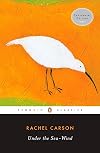
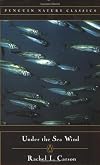
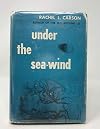
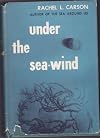
Silent Spring author Rachel Carson's early masterwork brings to life the elegiac, subtle beauty of birds and the sea, blending her natural storytelling ability with clear-eyed scienceIn her first book, preeminent nature writer Rachel Carson tells the story of the sea creatures and birds that dwell in and around the waters along North America's eastern coastand the delicately balanced ecosystem that sustains them. Following the life cycles of a pair of sanderlings, a mackerel, and an eel, show more Carson gracefully weaves scientific observation with imaginative prose to educate and inspire, creating one of the finest wildlife narratives in American literature.This ebook features an illustrated biography of Rachel Carson including rare photos and never-before-seen documents from the Beinecke Rare Book and Manuscript Library at Yale University. show lessTags
Recommendations


















Member Reviews
18. Under the Sea Wind by Rachel Carson
reader: C. M. Hébert
published: 1941
format: 5:46 audible audio* (~137 pages of original paperback)
acquired: March 5 listened: Mar 5-14
rating: 4
genre/style: Nature theme: random audio
locations: Atlantic Coast
about the author: 1907 –1964, born on a family farm near Springdale, Pennsylvania. Carson was an American marine biologist, writer, and conservationist whose influential book Silent Spring (1962) and other writings are credited with advancing the global environmental movement.
*The audiobook length is 6:38, but the glossary started with 52 minutes left and I stopped there. The original paperback is 157 pages.
Another classic, but one again completely different.
I didn't know what to expect here show more in Rachel Carson's first book, from 1941, published shortly before the bombing of Pearl Harbor. I learned in the [The Book of Eels] by Patrick Svensson that Carson wrote an essay as a contribution for a book on coastal animals and was told that what she wrote wasn't a good fit for the book, but that she might try the Atlantic Monthly. She did, it got published and she expanded it into this book. I didn't know what that meant. Svensson has really nice things to say about Carson, and that's why I picked this up.
So, unprepared, I started, and an elegant-paced reader read to me:
Carson tells her natural stories without introduction, explanation, purpose, or any authorial intervention. No commentary, no authorial side notes and presence. She just begins to tell us, and she never pauses to talk to the reader about what she's doing or where her information comes from, or what her message is; she stops only to change location for the next chapter. Each coastal environment is captured by a string of striking prose on natural experience and sensations - the sights, sounds, feelings, sensations present and absent, animal awareness, its limitations. There is a sense of these animals' fragile existence.
Each chapter centers on a named animal. So, everything is personified.
Striking prose and simple format. Carson imagines the experiences of her birds fish, etc. using the information of her time, 1941, which was a lot of information. No purpose is presented, but the reader should understand they are learning something. And the reader can't but help notice the poetic sense of experience. If you happen to drift, the narrative forgives, and experience maintained by that voice. I can't promise I diligently captured the full story details, but I'm glad I stopped here. It's a curious audio experience, with an exceptionally good reader (C. M. Hébert) who joyfully, after the briefest pause for affect, calls out all the distinct bird sounds.
2023
https://www.librarything.com/topic/348551#8097670 show less
reader: C. M. Hébert
published: 1941
format: 5:46 audible audio* (~137 pages of original paperback)
acquired: March 5 listened: Mar 5-14
rating: 4
genre/style: Nature theme: random audio
locations: Atlantic Coast
about the author: 1907 –1964, born on a family farm near Springdale, Pennsylvania. Carson was an American marine biologist, writer, and conservationist whose influential book Silent Spring (1962) and other writings are credited with advancing the global environmental movement.
*The audiobook length is 6:38, but the glossary started with 52 minutes left and I stopped there. The original paperback is 157 pages.
Another classic, but one again completely different.
I didn't know what to expect here show more in Rachel Carson's first book, from 1941, published shortly before the bombing of Pearl Harbor. I learned in the [The Book of Eels] by Patrick Svensson that Carson wrote an essay as a contribution for a book on coastal animals and was told that what she wrote wasn't a good fit for the book, but that she might try the Atlantic Monthly. She did, it got published and she expanded it into this book. I didn't know what that meant. Svensson has really nice things to say about Carson, and that's why I picked this up.
So, unprepared, I started, and an elegant-paced reader read to me:
The island lay in shadows only a little deeper than those that were swiftly stealing across the sound from the east. On its western shore the wet sand of the narrow beach caught the same reflection of palely gleaming sky that laid a bright path across the water from island beach to horizon. Both water and sand were the color of steel overlaid with the sheen of silver, so that it was hard to say where water ended and land began.
Carson tells her natural stories without introduction, explanation, purpose, or any authorial intervention. No commentary, no authorial side notes and presence. She just begins to tell us, and she never pauses to talk to the reader about what she's doing or where her information comes from, or what her message is; she stops only to change location for the next chapter. Each coastal environment is captured by a string of striking prose on natural experience and sensations - the sights, sounds, feelings, sensations present and absent, animal awareness, its limitations. There is a sense of these animals' fragile existence.
Each chapter centers on a named animal. So, everything is personified.
On the south beach of the island, where water no deeper than a man’s hand ran over gently ribbed bottom, Rynchops began to wheel and quarter over the shallows. He flew with a curious, lilting motion, lifting his wings high after the downstroke. His head was bent sharply so that the long lower bill, shaped like a scissor blade, might cut the water.
The blade or cutwater plowed a miniature furrow over the placid sheet of the sound, setting up wavelets of its own and sending vibrations thudding down through the water to rebound from the sandy bottom. The wave messages were received by the blennies and killifish that were roving the shallows on the alert for food. In the fish world many things are told by sound waves. Sometimes the vibrations tell of food animals like small shrimps or oar-footed crustaceans moving in swarms overhead. And so at the passing of the skimmer the small fishes came nosing at the surface, curious and hungry. Rynchops, wheeling about, returned along the way he had come and snapped up three of the fishes by the rapid opening and closing of his short upper bill.
Striking prose and simple format. Carson imagines the experiences of her birds fish, etc. using the information of her time, 1941, which was a lot of information. No purpose is presented, but the reader should understand they are learning something. And the reader can't but help notice the poetic sense of experience. If you happen to drift, the narrative forgives, and experience maintained by that voice. I can't promise I diligently captured the full story details, but I'm glad I stopped here. It's a curious audio experience, with an exceptionally good reader (C. M. Hébert) who joyfully, after the briefest pause for affect, calls out all the distinct bird sounds.
Ah-h-h-h, called the black skimmer. Ha-a-a-a! Ha-a-a-a!
2023
https://www.librarything.com/topic/348551#8097670 show less
Was Rachel Carson a fish? A bird? A single-cell organism? If not, how could she have such incredible knowledge of Atlantic shore creatures, how they grow, how they interact, their co-dependencies, and their demises? In this treasure of naturalism, she describes the lifespans and times of exotic creatures such as amphipods, anguillas (eels), aurelia jellyfish, blennies (fish), brants (geese), conger eels, copepods, croakers, crowberries (plant), curlews (birds), desmids and diatoms (algae)...I could go on. She follows a few species and mentions many more. Carson's language is as lyrical as the underwater scenery. I only knew her as a naturalist and one who warned of climate and pollution disasters eighty five years ago. Here, she's a show more brilliant playwright. show less
Although famous today for Silent Spring, Rachel Carson had already made her name decades earlier. During the 1930s, as a young zoologist specialising in marine ecology, she helped pay the bills with a series of essays which appeared in newspapers such as the Boston Globe and attracted widespread praise. These led, in turn, to several books about the ocean, of which Under the Sea-Wind was the first.
It reads almost like a nature documentary, a narrative description (illustrated with pencil sketches by Howard Frech) of the wildlife of the western Atlantic and adjacent coastline. More nonfiction than fiction, it has no plot - unless you count the tumultuous births, lives and deaths of the natural world itself as the plot. It is, show more though, filled with characters: Silverbar the sandpiper, Scomber the mackerel, Anguilla the eel, and what Carson gives us is an utterly realistic impression of both their lives - what it's actually like to be a shore bird or fish - and of the ecology of it all, how it all works, its interconnectedness (a more familiar idea nowadays than it was back in the 1930s). For me, one thing which came across particularly vividly was the small fry - copepods, shelled protozoa, the miniscule larvae of jellyfish and crabs - usually lumped together as 'plankton'; it's like peering down a microscope tube at a rich, bustling little world of jewel-like entities, a world exquisite and deadly in equal measure.
Of course, this is a glimpse of the rivers and seas as they were back in the late 1930s, i.e. somewhere along the scale between the original pre-human superabundance and today's polluted and almost fishless wastes; reading this, I found myself hoping that Carson can't see from beyond the grave what has been done to the oceans she loved.
And that is what comes across here most clearly of all: how much she loved the sea and everything that lives in it - it shows in every sentence, page after brilliant page. One reason the prose is so good is that every line was read out loud, for its rhythm, as she went (I don't really use audiobooks, but I can imagine this being a stunning listen). It also changed my picture of the author: from here on I'll think of Rachel Carson, only second as a scientist and environmental inspiration, first and foremost as a world-class author. show less
It reads almost like a nature documentary, a narrative description (illustrated with pencil sketches by Howard Frech) of the wildlife of the western Atlantic and adjacent coastline. More nonfiction than fiction, it has no plot - unless you count the tumultuous births, lives and deaths of the natural world itself as the plot. It is, show more though, filled with characters: Silverbar the sandpiper, Scomber the mackerel, Anguilla the eel, and what Carson gives us is an utterly realistic impression of both their lives - what it's actually like to be a shore bird or fish - and of the ecology of it all, how it all works, its interconnectedness (a more familiar idea nowadays than it was back in the 1930s). For me, one thing which came across particularly vividly was the small fry - copepods, shelled protozoa, the miniscule larvae of jellyfish and crabs - usually lumped together as 'plankton'; it's like peering down a microscope tube at a rich, bustling little world of jewel-like entities, a world exquisite and deadly in equal measure.
Of course, this is a glimpse of the rivers and seas as they were back in the late 1930s, i.e. somewhere along the scale between the original pre-human superabundance and today's polluted and almost fishless wastes; reading this, I found myself hoping that Carson can't see from beyond the grave what has been done to the oceans she loved.
And that is what comes across here most clearly of all: how much she loved the sea and everything that lives in it - it shows in every sentence, page after brilliant page. One reason the prose is so good is that every line was read out loud, for its rhythm, as she went (I don't really use audiobooks, but I can imagine this being a stunning listen). It also changed my picture of the author: from here on I'll think of Rachel Carson, only second as a scientist and environmental inspiration, first and foremost as a world-class author. show less
Written in 1941, my copy is a 60 cent paperback from the Signet Science Library that was given to me in 1964 by my Aunt Jackie. This copy was from the 6th printing in the year that Rachel Carson died. I don't know why I still have it, but I decided it was probably time to read it. The book's subtitle is "a naturalist's picture of ocean life", and the author tells a series of stories each one revolving around a named animal, Silverbar the sanderling, Scomber the mackerel and Anguilla the eel. Each story moves in place and time with the migration and life history of the animal. Description of the encountered plants, animals, weather and geography creates a tapestry of the sea and seashore. No words are wasted and the reader is drawn into show more a vast natural history that is much larger than this short book. Brilliant. show less
Categories:
20th Century Classic (BacktotheClassics2020)
Three Books by the Same Author (#mmdreading)
Wow! Reading this was like watching Planet Earth, Blue Planet, or pretty much anything narrated by David Attenborough. Carson has a way with words. That's for sure. I appreciate her lyrical style. This book covers the Atlantic Coast of North America, mainly by following the lives of a sanderling, a mackerel, and an eel. I admit that as much as I love animals and the ocean, I thought I was going to be bored during the mackerel section. I was so wrong. It turned out to be one of my favorite sections of the book! This is a book I know I'm going to re-visit
20th Century Classic (BacktotheClassics2020)
Three Books by the Same Author (#mmdreading)
Wow! Reading this was like watching Planet Earth, Blue Planet, or pretty much anything narrated by David Attenborough. Carson has a way with words. That's for sure. I appreciate her lyrical style. This book covers the Atlantic Coast of North America, mainly by following the lives of a sanderling, a mackerel, and an eel. I admit that as much as I love animals and the ocean, I thought I was going to be bored during the mackerel section. I was so wrong. It turned out to be one of my favorite sections of the book! This is a book I know I'm going to re-visit
Rachel Carson writing before Silent Spring. No intimation yet of environmental disaster. The words “sea wind” are Carson’s shorthand for the encapsulation of all life within a single system. The sea is vast, as is aquatic life. Carson’s prose is lyrical yet precise (as Peter Matthiessen comments, setting the standard for all nature writers to follow). Two words come particularly to mind: meal and migration. From diatom, copepod and algae to whale, shore bird and eel, life is moving and eating. Humans, living along the perimeter of such abundance, haul in their nets, sometimes full and sometimes empty (the fish escape). In the larger scheme of things here, humans function as just one more set of mouths, one more life form eating show more other life forms. They aren’t yet the ones who poison the air & water and deplete the fisheries, or, at least, they aren't yet acknowledged as such despoilers. show less
I found myself charmed by this novel. It’s almost as if you’re watching a nature documentary, but in the form of a book—not the most eloquent way to put it, but you get the idea. Following the eyes and lives of various water-based creatures, Carson weaves a captivating story about nature. Only rating it 4 instead of 5 because some of the prose was written in a confusing manner, and some sections of the novel were a bit slow despite its relatively short length.
Still, all in all, it’s a lovely read which I recommend.
Still, all in all, it’s a lovely read which I recommend.
Members
- Recently Added By
Lists

Recommended Nature Writing
346 works; 180 members

Books We Love to Reread
688 works; 296 members
Author Information

29+ Works 13,582 Members
Rachel Carson was for many years a marine biologist and then editor-in-chief of the United States Fish and Wildlife Service's publications. She was also the author of Silent Spring, Under the Sea-Wind, and At the Edge of the Sea. She died in 1964. Sylvia Earle is a marine biologist, oceanographer, and National Geographic Society Explorer in show more Residence. Her books include Blue Hope: Exploring and Caring for Earth's Magnificent Ocean and Ocean An Illustrated Atlas. show less
Some Editions
Awards and Honors
Distinctions
Series

Belongs to Publisher Series
Work Relationships
Is contained in
Is abridged in
Was inspired by
Common Knowledge
- Canonical title
- Under the Sea-Wind
- Original title
- Under the sea wind : a naturalist's picture of ocean life
- Alternate titles
- Under the Sea-Wind: A Naturalist's Picture of Ocean Life; Under the Sea Wind: A Naturalist's Picture of Ocean Life
- Original publication date
- 1941
- People/Characters
- Silverbar (sanderling); Scomber (mackerel); Anguillla (eel)
Classifications
- Genres
- Science & Nature, Nonfiction, General Nonfiction
- DDC/MDS
- 578.773 — Natural sciences & mathematics Biology Natural history of organisms and related subjects Organisms characteristic of specific kinds of environments
- LCC
- QH92 .C3 — Science Natural history – Biology Natural history (General) General
- BISAC
Statistics
- Members
- 801
- Popularity
- 34,522
- Reviews
- 13
- Rating
- (3.99)
- Languages
- 5 — English, French, Japanese, Spanish, Swedish
- Media
- Paper, Audiobook, Ebook
- ISBNs
- 25
- ASINs
- 32