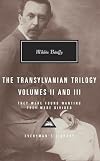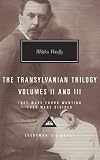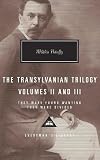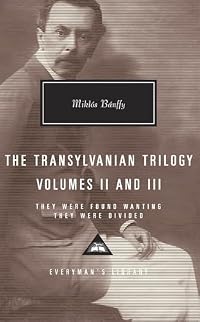
The Transylvanian Trilogy: They Were Found Wanting / They Were Divided, Vol. 2 & Vol. 3
by Miklós Bánffy
The Transylvanian Trilogy (Collections and Selections — Books 2-3)
On This Page
Description
"The liberal hero, Balint, is at odds with the politics of his time; he lyrically describes the idyllic pre-industrial world of Hungarian Transylvania, later to fall into the hands of first the Nazis and then the Communists, his love for Adrienne, married to an unpleasant and dangerous lunatic, and a Proustian society helplessly bent on its own destruction.This is a novel hard to put down, a masterpiece of twentieth-century literature that deserves to be much more widely known.First show more published in English in the early 1990s by a small publisher, and a huge word-of-mouth success, this is the first edition in hardback, and in two rather than three volumes." show lessTags
Recommendations
















Member Reviews
In these second and third volumes the story of Lazslo Gyeroffy — the charismatic, dissipated foil to authorial stand-in and all-round stand-up guy Balint Abady — recedes into the background as its subject hits rock bottom and stays there, leaving the narrative unbalanced and at times approaching autofiction. Still though, it's autofiction of the highest quality. The parallel stories of Balint's star-crossed relationship with Adrienne "married to a madman" Miloth, and the Hungarian and broader European political vortex spiralling towards the Great War, are interleaved with immense assurance, and punctuated with scenes of Transylvanian life and landscape that leap off the page. Bánffy's first-hand experience gives the political show more chapters an assurance and verisimilitude that carry along even a reader as unversed in early twentieth century Austro-Hungarian parliamentary proceedings as me, and it also gives him a feel for human nature and human folly that makes the whole novel feel extraordinarily grown-up. The set-pieces — the society events and especially the domestic politicking — come to seem increasingly bathetic as the Hungarians waltz gaily and blindly into the coming cataclysm. The insanity is allegorised in vignettes like when the secretary of the anti-duelling league has to hide his duelling injuries from its patron, or when Balint visits a reclusive aristocrat holed up in his manor with maps and travel narratives, sailing the world in his imagination. The Trilogy is a bona fide classic, and the English translation by Patrick Thursfield and the author's daughter Katalin Bánffy-Jelen is superb: fluent, consistent and tonally congruent with the dates of the original, i.e. it feels like it was written by a Hungarian Count in the 30's. show less
Miklós Bánffy did not write a simple story here; he wrote something so genuine that pulled at my heartstrings. You see these characters constantly over the many hours it took to read these books and you hope for a good ending. Bánffy does not give anyone a good ending. Countess Roza dies from a stroke, Laszlo Gyeroffy dies bankrupt and ruined, Pal Uzdy dies from a mantic episode, Margit Miloth likely loses Adam in WWI and most sad of all, Adrienne does not marry Balint after all these years because he wants to take care of her dying child, essentially choosing Pal Uzdy over Balint. Balint having no joy left in his life decides to commit suicide by joining WWI instead of taking an office job. These last hundred pages really pack in show more death and misery and I cried quite heavily the moment I finished the book. Truly a brilliant piece of literature.
There are some criticisms I can point out however. The biggest gripe I have is that Balint does not particularly grow as a character; his moods are mostly based on how his relationship with Adrienne is; if it's good then he is happy, if it is bad then he is sad. The book does not really go beyond that. He is ultimately a character that views the world around him and changes very little. The book is also rather shy about talking about his downsides; the only instance of a criticism of Balint is that he is too generous regarding the Co-operative. There is also the instance where Balint is trying to justify to himself that he is still a Christian despite committing adultery with the argument that his love is pure and God will accept that; this shows a rather poor understanding of the faith. It is likely that Bánffy was not much of a Christian in that the only other religious character is Father Timbus, a corrupt Orthodox priest.
It has been a long journey and I am finally finished with my first foray into Hungarian literature. I genuinely enjoyed it and I might explore the genre further in the future. I have come out stronger from this book knowing that my life is so precious to not be bogged down in gambling, alcoholism, infatuation of women, adultery and pointless discussions. This book dealt with every one of these themes heavily and thus, I have come out all the better. show less
There are some criticisms I can point out however. The biggest gripe I have is that Balint does not particularly grow as a character; his moods are mostly based on how his relationship with Adrienne is; if it's good then he is happy, if it is bad then he is sad. The book does not really go beyond that. He is ultimately a character that views the world around him and changes very little. The book is also rather shy about talking about his downsides; the only instance of a criticism of Balint is that he is too generous regarding the Co-operative. There is also the instance where Balint is trying to justify to himself that he is still a Christian despite committing adultery with the argument that his love is pure and God will accept that; this shows a rather poor understanding of the faith. It is likely that Bánffy was not much of a Christian in that the only other religious character is Father Timbus, a corrupt Orthodox priest.
It has been a long journey and I am finally finished with my first foray into Hungarian literature. I genuinely enjoyed it and I might explore the genre further in the future. I have come out stronger from this book knowing that my life is so precious to not be bogged down in gambling, alcoholism, infatuation of women, adultery and pointless discussions. This book dealt with every one of these themes heavily and thus, I have come out all the better. show less
The Transylvanian Trilogy isn’t what you think it is. Assuming you were thinking it involved vampires.
It’s natural that you might suppose so. The one thing everyone knows about Transylvania is that it’s the home of Bram Stoker’s fictional Count Dracula. Most also know that it’s an actual territory in Romania. That’s true now, and has been for many decades, but it’s not the whole story. We tend, or at least I do, to get stuck on a concept of world geography that was formed by the globes and maps that we used in elementary school, and think of those borders as more or less permanently fixed. Nothing could be further from the truth.
But I’m not here to talk about my general ignorance, just one example of it. Or rather, one show more former example of it. Through an informal program of reading where one book leads accidentally to another, I have lately been traveling down the Danube into central and eastern European history, and I’ve learned a lot about Transylvania. Did you know that this region was for a thousand years, from the turn of the first millennium to the early 20th century, an essential part of Hungary? The trans-sylvan “land beyond the forest” was wide and wild, and its residents were seen as more rugged and authentic than those closer to the capital city of Budapest–it seems to have occupied much the same place in the Magyar imagination that the American West does in ours. The handing over of Transylvania to Romania in the aftermath of World War I was a devastating blow.
That national calamity is what Miklós Bánffy slowly, deliciously works his way toward in his sweeping trilogy. The individual volumes borrow their titles from the famous writing on the wall in the biblical book of Daniel, a prophecy about the collapse of a legendary kingdom–They Were Counted, They Were Found Wanting, They Were Divided–and together they describe the decline of a fascinating real place.
The story begins as a young nobleman (a Bánffy stand-in) returns from diplomatic service abroad and is flung back into the social and political Hungarian swirl. Tempted by selfish interests but dedicated to the betterment of his society, he charts a course toward the future, beset on all sides by frivolity and obliviousness. Old ladies gossip and young ladies angle to win marital competitions while generals compare mustaches and bicker pettily about their junior status in the Austro-Hungarian Empire, all unaware that their lives are about to turn upside down.
Though written in the 1930s, the trilogy is both in style and substance the last of the great 19th-century novels, grand and stately and ambitious and utterly immersive. The characters, including the upright Count Abady, the captivating Adrienne with her “flame-colored shift,” and the doomed artist Laszlo, are playthings of their omniscient author but also fully dimensional, and the set pieces they occupy will not soon be forgotten by anyone with the leisure to read them. Hunting parties, parliamentary debates, duels, intrigues, stolen moments of romance, midnight sledge rides through the snow … it’s positively sumptuous. The lush surface enraptures, but there’s also an underlying seriousness that appeals, an insistent moral drumbeat that asks What Is the Right Way to Live? There’s simply too much to this epic to do it proper justice here, so I’ll just flippantly call it a cross between Gone with the Wind and War and Peace with an added dash of paprika. show less
It’s natural that you might suppose so. The one thing everyone knows about Transylvania is that it’s the home of Bram Stoker’s fictional Count Dracula. Most also know that it’s an actual territory in Romania. That’s true now, and has been for many decades, but it’s not the whole story. We tend, or at least I do, to get stuck on a concept of world geography that was formed by the globes and maps that we used in elementary school, and think of those borders as more or less permanently fixed. Nothing could be further from the truth.
But I’m not here to talk about my general ignorance, just one example of it. Or rather, one show more former example of it. Through an informal program of reading where one book leads accidentally to another, I have lately been traveling down the Danube into central and eastern European history, and I’ve learned a lot about Transylvania. Did you know that this region was for a thousand years, from the turn of the first millennium to the early 20th century, an essential part of Hungary? The trans-sylvan “land beyond the forest” was wide and wild, and its residents were seen as more rugged and authentic than those closer to the capital city of Budapest–it seems to have occupied much the same place in the Magyar imagination that the American West does in ours. The handing over of Transylvania to Romania in the aftermath of World War I was a devastating blow.
That national calamity is what Miklós Bánffy slowly, deliciously works his way toward in his sweeping trilogy. The individual volumes borrow their titles from the famous writing on the wall in the biblical book of Daniel, a prophecy about the collapse of a legendary kingdom–They Were Counted, They Were Found Wanting, They Were Divided–and together they describe the decline of a fascinating real place.
The story begins as a young nobleman (a Bánffy stand-in) returns from diplomatic service abroad and is flung back into the social and political Hungarian swirl. Tempted by selfish interests but dedicated to the betterment of his society, he charts a course toward the future, beset on all sides by frivolity and obliviousness. Old ladies gossip and young ladies angle to win marital competitions while generals compare mustaches and bicker pettily about their junior status in the Austro-Hungarian Empire, all unaware that their lives are about to turn upside down.
Though written in the 1930s, the trilogy is both in style and substance the last of the great 19th-century novels, grand and stately and ambitious and utterly immersive. The characters, including the upright Count Abady, the captivating Adrienne with her “flame-colored shift,” and the doomed artist Laszlo, are playthings of their omniscient author but also fully dimensional, and the set pieces they occupy will not soon be forgotten by anyone with the leisure to read them. Hunting parties, parliamentary debates, duels, intrigues, stolen moments of romance, midnight sledge rides through the snow … it’s positively sumptuous. The lush surface enraptures, but there’s also an underlying seriousness that appeals, an insistent moral drumbeat that asks What Is the Right Way to Live? There’s simply too much to this epic to do it proper justice here, so I’ll just flippantly call it a cross between Gone with the Wind and War and Peace with an added dash of paprika. show less
Ratings
Members
- Recently Added By
Lists

Top Five Books of 2015
811 works; 240 members
Author Information

19 Works 1,488 Members
Series

The Transylvanian Trilogy (Collections and Selections — Books 2-3)
Work Relationships
Common Knowledge
- Original language
- Hungarian
Classifications
- Genres
- General Fiction, Fiction and Literature, Historical Fiction
- DDC/MDS
- 894.511332 — Literature & rhetoric Literatures of other languages Literatures of Altaic, Uralic, Hyperborean, Dravidian languages; literatures of miscellaneous languages of south Asia Finno-Ugric languages Ugric languages Hungarian Hungarian fiction 1900–2000 Early 20th century 1900–1945
- LCC
- PH3213 .B24 .M413 — Language and Literature Uralic languages. Basque language Uralic. Basque Hungarian
- BISAC
Statistics
- Members
- 144
- Popularity
- 225,850
- Reviews
- 3
- Rating
- (4.33)
- Languages
- English
- Media
- Paper
- ISBNs
- 2
- ASINs
- 2