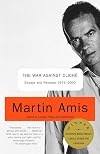
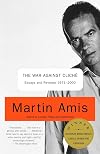
The War Against Cliché: Essays and Reviews 1971-2000
by Martin Amis
On This Page
Description
In this collection of essays and reviews spanning twenty-five years of criticism, Martin Amis asserts the writer's obligation to battle "not just cliches of the pen but cliches of the mind and cliches of the heart." He marshals the forces of his infamous arsenal: his language, his wit, and his intolerance for suffering fools to review, consider, and, in some cases, condemn. He takes to task the best and the brightest, including Cervantes and Milton, Jane Austen and Charles Dickens, show more and. Norman Mailer and Elmore Leonard. From "Great Books" to "Some American Prose," from "Popularity Contest" to the "Ultramundane," Amis parses the classics and the unconventional with the subversive brilliance he brings to everything he touches. He also skewers myths about masculinity, with great skepticism and more than a dash of nose-thumbing humor. Unflinchingly, he lambastes the "supercharged banality" of Elvis, the monumental self-absorption of Andy Warhol, and American squeamishness about movie violence. Evaluating the present participle, casting a cold eye on the Guinness Book of Records, and the sacrosanct image of Abraham Lincoln, Amis astutely surveys our cultural landscape and fluctuates between celebration and. Castigation, with the precision of a hypodermic. Book jacket. show lessTags
Recommendations








Member Reviews
The war that Amis promised us is not really being fought, as the book goes on, at least not in the sense that a "war" against cliché implies sacrifice and seriousness. Amis is more interested in games, which involve rivalry and enjoyment of oneself. Not that Amis is not a talented critic—quite the contrary.
The most fashionable thing to say on the sad death of Martin Amis earlier this month is that he was a better critic and essayist than novelist. Which novels have the large number of critics asserting this read one wonders? It’s not just the virtuosic so-called ‘London trilogy’ (Amis did not so-call it). The last 15 years showed an author tackling a really huge range of topics, registers, styles. Many have commented on the tragic irony of Jonathan Glazer’s film of ‘The Zone of Interest’ being premiered on the day Amis’s death was announced. It sounds as if the film will be quite different from the book, but nevertheless that fecundity of invention and the vision and the technical ability to see the inspiration through to a show more work of literature, which has compelling narrative and characterisation as well as a prose style unmatched by any English living author make ‘The Zone of Interest’ as well as ‘The Pregnant Widow’ and ‘Inside Story’ essential books of the last decade.
So, Amis as ‘literary critic’ had better be pretty damned good. Is the test that he could have had at least as distinguished a career writing about mostly about books without the novels? If so then I’m actually not quite sure. He may be consistently more entertaining than say James Wood but I would say equally the consistency of insight is not as strong as Wood. In any case, the other lazy assertion that was constantly made last weekend and in the days that followed was that not only Amis the critic more worthwhile than the fiction writer, but that this was his best book. Again one has to ask which other Amis compilations people saying that have bothered to read.
The problem I think with ‘The War on Cliché’ is that it straddles that part of Amis’s career when he was reviewing books either for Sunday newspapers in the UK or for other publications which were not at that stage prepared to give him carte blanche to write the longer articles where his critical faculties seem to blossom. So here the two best essays in the book are pieces of reasonable length on the rubbishing of Philip Larkin’s reputation by way of a review of the Andrew Motion biography (Amis and not a sub-editor clearly gave the article its brilliant title ‘Don Juan in Hull’ and allowed Shavians a chuckle) and an absolutely brilliant piece for The Atlantic on ‘Lolita’. Too much of the rest of the book is either on subjects which editors clearly thought it would be amusing to get a review from Amis on (for example, Robert Bly’’s Iron John’, Hillary Clinton’s ‘It Takes a Village’, Hugo Young’s book on Thatcher’, One of Us’) and all *are* amusing in an ephemeral way, or are too short for Amis to hit his stride on (the Anthony Burgess chapter is an unsatisfactory sort of incongruent medley of short pieces) and/or are restricted by the books in question (so the VS Pritchett chapter is not half as interesting as one suspects it could be because it’s of comapartively minor books - and going back to Burgess who has even heard of let alone read Burgess’ ’1985’ these days?).
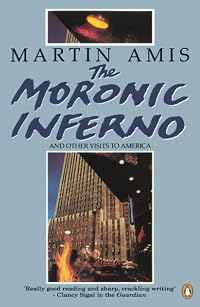
So this book is not short of attractions but I would say if you want hilarious one-off reads on not necessarily weighty topics, ’The Moronic Inferno’ (published in 1986, some time before ‘The War on Cliché’) is a better choice. If you want to experience Amis’s gifts as an astute and stylish critic then 2017’s ‘The Rob of Time’ is by far his best. Ideally read all three. And the novels first. show less
So, Amis as ‘literary critic’ had better be pretty damned good. Is the test that he could have had at least as distinguished a career writing about mostly about books without the novels? If so then I’m actually not quite sure. He may be consistently more entertaining than say James Wood but I would say equally the consistency of insight is not as strong as Wood. In any case, the other lazy assertion that was constantly made last weekend and in the days that followed was that not only Amis the critic more worthwhile than the fiction writer, but that this was his best book. Again one has to ask which other Amis compilations people saying that have bothered to read.
The problem I think with ‘The War on Cliché’ is that it straddles that part of Amis’s career when he was reviewing books either for Sunday newspapers in the UK or for other publications which were not at that stage prepared to give him carte blanche to write the longer articles where his critical faculties seem to blossom. So here the two best essays in the book are pieces of reasonable length on the rubbishing of Philip Larkin’s reputation by way of a review of the Andrew Motion biography (Amis and not a sub-editor clearly gave the article its brilliant title ‘Don Juan in Hull’ and allowed Shavians a chuckle) and an absolutely brilliant piece for The Atlantic on ‘Lolita’. Too much of the rest of the book is either on subjects which editors clearly thought it would be amusing to get a review from Amis on (for example, Robert Bly’’s Iron John’, Hillary Clinton’s ‘It Takes a Village’, Hugo Young’s book on Thatcher’, One of Us’) and all *are* amusing in an ephemeral way, or are too short for Amis to hit his stride on (the Anthony Burgess chapter is an unsatisfactory sort of incongruent medley of short pieces) and/or are restricted by the books in question (so the VS Pritchett chapter is not half as interesting as one suspects it could be because it’s of comapartively minor books - and going back to Burgess who has even heard of let alone read Burgess’ ’1985’ these days?).
So this book is not short of attractions but I would say if you want hilarious one-off reads on not necessarily weighty topics, ’The Moronic Inferno’ (published in 1986, some time before ‘The War on Cliché’) is a better choice. If you want to experience Amis’s gifts as an astute and stylish critic then 2017’s ‘The Rob of Time’ is by far his best. Ideally read all three. And the novels first. show less
Opinionated, biting criticism. Well worth reading whether you agree with his judgements or not.
The foreword warns the reader to watch the datelines: "You hope to get more relaxed and confident over time; and you should certainly get (or seem to get) kinder, simply by avoiding the stuff you are unlikely to warm to. Enjoying being insulting is a youthful corruption of power. You lose the taste for it when you realize how hard people try, how much they mind, and how long they remember[.]" The acidity of the critical critical responses is wonderful fun, from a safe distance ("The Green Movement needs a holy book. So does Viking Penguin. So do I. So do we all. Our need survives The End of Nature, in which Bill McKibben fails to fulfil the show more rolling prophecies of his publicity kit.") but given the illustrious names he tears into and the span of 29 years the reviews cover, I can easily imagine some hindsight reservations here and there.
It's the detail of Amis's response, and the evidence he insists on providing, in quote after quote after quote, that makes these pieces so very succesful as reviews. I'm adding a great many books to my wishlist, not because he recommends them but because reading his reviews I'm confident that I know enough to decide for myself that I will enjoy them.
Even when he's unimpressed, Amis has a response -- sometimes quietly hilarious in its animosity, sometimes more forgiving and plainly informative. The best of these reviews are worth attention both as analysis and as (anti)recommendation, and also simply as plain-spoken and extremely vigorous prose. show less
The foreword warns the reader to watch the datelines: "You hope to get more relaxed and confident over time; and you should certainly get (or seem to get) kinder, simply by avoiding the stuff you are unlikely to warm to. Enjoying being insulting is a youthful corruption of power. You lose the taste for it when you realize how hard people try, how much they mind, and how long they remember[.]" The acidity of the critical critical responses is wonderful fun, from a safe distance ("The Green Movement needs a holy book. So does Viking Penguin. So do I. So do we all. Our need survives The End of Nature, in which Bill McKibben fails to fulfil the show more rolling prophecies of his publicity kit.") but given the illustrious names he tears into and the span of 29 years the reviews cover, I can easily imagine some hindsight reservations here and there.
It's the detail of Amis's response, and the evidence he insists on providing, in quote after quote after quote, that makes these pieces so very succesful as reviews. I'm adding a great many books to my wishlist, not because he recommends them but because reading his reviews I'm confident that I know enough to decide for myself that I will enjoy them.
Even when he's unimpressed, Amis has a response -- sometimes quietly hilarious in its animosity, sometimes more forgiving and plainly informative. The best of these reviews are worth attention both as analysis and as (anti)recommendation, and also simply as plain-spoken and extremely vigorous prose. show less
Amis's reactions are so fun to read, largely because of his brilliant humour. One thing he does better than anyone I have read is control his tone. People this smart tend to show off their intellectual abilities, especially when making fun, but Amis has tact and a good sense for subtlety. He never runs his mouth for no good reason, but when he does have reason what he writes can leave you feeling glad he is not criticising your work. His ability to write about everything, and people who think they can write about everything, makes this such an enjoyable collection. "War Against Cliche" is full of wonderful observations and I am constantly in awe of Amis's ability to cohere the fragments and come up with an argument where others, such as show more myself, would be left groping for something vague. This collection asks us not only what is literature? but what is literary criticism? and in doing so makes a defense of wit and talent. show less
It's impossible to pick this book up, open randomly to any passage, and not be completely enthralled and entertained. His phrasing is diamond cut perfect. He makes nearly every writer currently scribbling book reviews and critical essays seem completely and utterly dull. If you can't appreciate this writing (whether you agree with his opinions or not) you have no pulse.
I found the essay about the democratization of the art of literary criticism most interesting. Amis points out that since no objective standards of writing seems to hold water; criticism is reduced to subjective like & not- like; Anyone can join the choir on the same terms, whether they have learnt their score or not. Since he himself does not use the occasion to broadcast an (academic) opinion on this theme, I can only surmise that a) he has not solved the puzzlement of literary standard himself despite living off literary criticism as a professional or b) he has not the guts to go against the tide of what is political correct. Both alternatives leaves the literary criticism he presents in the book on different works slightly less show more interesting.....
The most valuable about this book is that the folly of value relativism - or should I say - human vanity - is put to discussion. We need to know what is good from what is bad, to keep on being human. show less
The most valuable about this book is that the folly of value relativism - or should I say - human vanity - is put to discussion. We need to know what is good from what is bad, to keep on being human. show less
Amis is a really terrific book reviewer; acid about any error, able to pinpoint a book's strengths, well versed in the historical. Highlights here include his ability to explain J.G. Ballard and Elmore Leonard's talents, the panning of Hannibal and dissection of a middling humor anthology, an enthusiastic endorsement of Underworld that's still online. The only weak essay is his attempt to explain Jane Austen's appeal-he quotes some passages, doesn't really make any claims about how we get involved with it--but for me, this was a tremendous disappointment. Pride and Prejudice is apparently the book that got him into literature, but it was also the one book in high school I couldn't bring myself to finish, and I was hoping this gap could show more be bridged to some extent. show less
Members
- Recently Added By
Lists

Books referenced in Jim Holt's Why Does the World Exist?
119 works; 1 member

living room bookshelf
150 works; 1 member
Author Information

58+ Works 29,753 Members
Martin Amis, son of the novelist Kingsley Amis, was born August 25, 1949. His childhood was spent traveling with his famous father. From 1969 to 1971 he attended Exeter College at Oxford University. After graduating, he worked for the Times Literary Supplement and later as special writer for the Observer. Amis published his first novel, The Rachel show more Papers, in 1973, which received the prestigious Somerset Maugham Award in 1974. Other titles include Dead Babies (1976), Other People: A Mystery Story (1981); London Fields (1989), The Information (1995), and Night Train (1997). Martin Amis has been called the voice of his generation. His novels are controversial, often satiric and dark, concentrating on urban low life. His style has been compared to that of Graham Greene, Philip Larkin and Saul Bellow, among others. He is currently Professor of Creative Writing at the Centre for New Writing at the University of Manchester. In 2008, The Times named him one of the 50 greatest British writers since 1945. (Bowker Author Biography) show less
Awards and Honors
Awards
Common Knowledge
- Canonical title
- The War Against Cliché: Essays and Reviews 1971-2000
Classifications
Statistics
- Members
- 934
- Popularity
- 28,512
- Reviews
- 13
- Rating
- (3.89)
- Languages
- English, French, Italian, Spanish
- Media
- Paper, Ebook
- ISBNs
- 12
- ASINs
- 11