Losing Battles
by Eudora Welty
On This Page
Description
A Southern novel about two families who have a reunion to celebrate Grandma's ninetieth birthday.Tags
Recommendations



















Member Reviews
Eudora Welty weaves a very Southern tale around a Mississippi family who are staging a family reunion that is also a celebration of the family’s oldest member, Granny Vaughn. This felt like going back in time and visiting the world of my childhood. My own extended family had an annual reunion at a small church in the mountains where my father was born, and I have sat through dinners that spread like the food was endless and heard the musings and memories of great-aunts and uncles, aunts and uncles, and cousins that were old enough to be my parents. I laughed, applauded the things that knit these people together, but felt the element of sadness that ran through many of these lives. Even those stories told with humor often dealt with show more subjects so serious that they altered lives forever.
Aside from the story, Eudora Welty might be one of the most beautiful descriptive writers I have ever come across. You could open this book to any random page and lift an amazing passage, which is what I am doing here:
The crowd was forming around three sides of the new grave hole. Where Mr. Comfort had been supposed to go was the last grave at the river end of the cemetery. At its back stood only an old cedar trunk, white against gray space. Its bark was sharp folded as linen, it was white as a tablecloth. Wreaths and sprays of spiky florist flowers from Ludlow--gladioli and carnations and ferns--were being stood on their wire frames around the grave, and the homemade offerings--the flower-heads sewn onto box lids and shirt cardboards and the fruit jars and one milk can packed with yard lilies and purple phlox and snow-on-the-mountain--were given room to the side.
I was literally standing at the grave and I could feel the respect and emotion that prompted those homemade offerings.
Welty treats with some very serious topics during the course of this novel. I wondered about the isolation that could exist in the midst of such a close community, about the lack of justice for some and the miscarriage of punishments for others. I was amazed by the ability this family showed to forgive and accept, and the sense that much of the acceptance arose from the almost fatalistic nature of life in such an environment.
This is my first Welty novel. She has been on my reading list for a long time. I will surely read more of her work at the first opportunity. show less
Aside from the story, Eudora Welty might be one of the most beautiful descriptive writers I have ever come across. You could open this book to any random page and lift an amazing passage, which is what I am doing here:
The crowd was forming around three sides of the new grave hole. Where Mr. Comfort had been supposed to go was the last grave at the river end of the cemetery. At its back stood only an old cedar trunk, white against gray space. Its bark was sharp folded as linen, it was white as a tablecloth. Wreaths and sprays of spiky florist flowers from Ludlow--gladioli and carnations and ferns--were being stood on their wire frames around the grave, and the homemade offerings--the flower-heads sewn onto box lids and shirt cardboards and the fruit jars and one milk can packed with yard lilies and purple phlox and snow-on-the-mountain--were given room to the side.
I was literally standing at the grave and I could feel the respect and emotion that prompted those homemade offerings.
Welty treats with some very serious topics during the course of this novel. I wondered about the isolation that could exist in the midst of such a close community, about the lack of justice for some and the miscarriage of punishments for others. I was amazed by the ability this family showed to forgive and accept, and the sense that much of the acceptance arose from the almost fatalistic nature of life in such an environment.
This is my first Welty novel. She has been on my reading list for a long time. I will surely read more of her work at the first opportunity. show less
I grew up surrounded by Southern women: my devout grandmother, my reticent mother, grown sisters, teachers, teachers, teachers, church ladies, neighbor ladies, the librarian lady. I learned early on to say “Yes, ma’am,” and “No ma’am,” and to listen. I knew Miss Daisy well, and I loved her more than I knew.
Then I read Losing Battles by Eudora Welty, and Southern Ladies outgrew their stereotype. There are struggles among them, genuine struggles. Some dominate; some submit; some resist; and some resist passively. Some win most every battle, but never declare victory; some lose but never admit defeat. Men are dominant in this Southern society: the judge, the minister, the “man of the family,” the young roustabout, a show more favorite son. But women are dominant in the family, or at least in this family.
Welty’s novel takes place during the one day of the Vaughn/Renfro family reunion, which actually extends over into the next day. The action seems to focus on the favorite son/grandson Jack, who has just escaped from the penitentiary so as not to miss Granny Vaughn’s ninetieth (or is it her ninety-first?) birthday. But, of course, the actual thematic focus is on the tensions among Granny, her daughter Beulah, and Jack’s young wife Gloria. Furthermore, one of the most prominent characters in the novel is the school teacher, Miss Julia Mortimer, who appears only in the stories told by others. Her funeral is the off-stage event competing with the Vaughn reunion for attention. Of all the “losing battles” recounted in the book, and there are many, Miss Julia’s is probably the most manifest and the source of the most ambivalence.
One critic has contended “that the form of language used by . . . Julia Mortimer and Granny Vaughn, serves as a challenge to the ‘male-authored decrees’ found throughout the book,” and I agree. “Julia's idioms are ‘teaching, writing, and books,’ while Granny Vaughn, on the other hand, uses oral language to transmit family history. While Julia's province is one of ideas and abstraction in the written word, Granny Vaughn's stories are concrete, empirical, and rooted in actual events and real people. How these two methods of questioning male authority are used by the two characters” comprises the heart of the novel.
But these tensions lurk just beneath the surface of the novel. What Losing Battles is really. clearly about is Southern storytelling. If you are delighted by the voices of storytellers in their element, you will feel entirely welcome at the Vaughn reunion, from first to last. If you are not frustrated that no story ever quite gets completely told, that there are still unanswered questions or answers that you have to infer, then you can relax, laugh along with the tellers, and enjoy the long day’s festivities.
This is Eudora Welty’s only long novel. She made her reputation with short stories, like “Why I Live at the PO,” and novellas, like The Ponder Heart. Because Losing Battles is about telling stories—Welty’s kind of stories—one has the sense that this was her signature novel. Personally, I list it as one of my top ten favorite novels of the 20th century, probably #1 in a list limited to USAmerican novelists of my lifetime.
But remember, I grew up learning to say “Yes, ma’am” and “No ma’am,” and to listen. show less
Then I read Losing Battles by Eudora Welty, and Southern Ladies outgrew their stereotype. There are struggles among them, genuine struggles. Some dominate; some submit; some resist; and some resist passively. Some win most every battle, but never declare victory; some lose but never admit defeat. Men are dominant in this Southern society: the judge, the minister, the “man of the family,” the young roustabout, a show more favorite son. But women are dominant in the family, or at least in this family.
Welty’s novel takes place during the one day of the Vaughn/Renfro family reunion, which actually extends over into the next day. The action seems to focus on the favorite son/grandson Jack, who has just escaped from the penitentiary so as not to miss Granny Vaughn’s ninetieth (or is it her ninety-first?) birthday. But, of course, the actual thematic focus is on the tensions among Granny, her daughter Beulah, and Jack’s young wife Gloria. Furthermore, one of the most prominent characters in the novel is the school teacher, Miss Julia Mortimer, who appears only in the stories told by others. Her funeral is the off-stage event competing with the Vaughn reunion for attention. Of all the “losing battles” recounted in the book, and there are many, Miss Julia’s is probably the most manifest and the source of the most ambivalence.
One critic has contended “that the form of language used by . . . Julia Mortimer and Granny Vaughn, serves as a challenge to the ‘male-authored decrees’ found throughout the book,” and I agree. “Julia's idioms are ‘teaching, writing, and books,’ while Granny Vaughn, on the other hand, uses oral language to transmit family history. While Julia's province is one of ideas and abstraction in the written word, Granny Vaughn's stories are concrete, empirical, and rooted in actual events and real people. How these two methods of questioning male authority are used by the two characters” comprises the heart of the novel.
But these tensions lurk just beneath the surface of the novel. What Losing Battles is really. clearly about is Southern storytelling. If you are delighted by the voices of storytellers in their element, you will feel entirely welcome at the Vaughn reunion, from first to last. If you are not frustrated that no story ever quite gets completely told, that there are still unanswered questions or answers that you have to infer, then you can relax, laugh along with the tellers, and enjoy the long day’s festivities.
This is Eudora Welty’s only long novel. She made her reputation with short stories, like “Why I Live at the PO,” and novellas, like The Ponder Heart. Because Losing Battles is about telling stories—Welty’s kind of stories—one has the sense that this was her signature novel. Personally, I list it as one of my top ten favorite novels of the 20th century, probably #1 in a list limited to USAmerican novelists of my lifetime.
But remember, I grew up learning to say “Yes, ma’am” and “No ma’am,” and to listen. show less
Truly my favorite of all of her novels. I had trouble putting the book down as it almost had a soap-opera quality to it. Can Gloria escape the clutches of this bizarre Southern family (and take Jack with her)? Who is Gloria's father? What will happen to the judge's car (or rather Mrs. Judge's car)?
The battle being waged is against ignorance and poverty and all of life's tribulations that try to suck you into their depths. Somehow this cast of colorful characters manages to prevail over it all.
The battle being waged is against ignorance and poverty and all of life's tribulations that try to suck you into their depths. Somehow this cast of colorful characters manages to prevail over it all.
I'm not particularly fond of Welty, but her prose in this book almost made me reevaluate her completely. She's got a wonderful hand with descriptions, metaphor and allusion -- but not such a great one, in my opinion, with characterization. At least, these particular skills weren't exhibited fully in this book, about a family in the Depression-era South at their family reunion. The family runs together -- maybe three of the fifty have distinct personalities, and about 10 others have individualized names, so there's constantly just a mass of 'family' streaming about the action. The entire book takes place in a single day, and it's a somewhat *long* book, so it is a very long day. While watching Welty run these people in futile circles show more while giving grandiose speeches about their own place in life is amusing for the first 100 pages, after a second hundred pages it starts to pall. There are only so many fantastic events (which go nowhere) and grandiose speeches (which go nowhere) and jumbled xenophobic conversations (which go nowhere) one can take before becoming a little bit tired of everything going nowhere. But that's the point, right? It's meta! 6/10 show less
LOSING BATTLES, a raucous novel set in Boone County, MS during the 1930s, chronicles a family reunion at the 90th birthday of Granny Vaughan. All her grandchildren and great -grandchildren gather to feast, to rehearse their family history, and to await the return of Jack Jordan Renfro, the beloved young scion of the family who's spent the last two years in Parchman prison. The novel is by turns hilarious and compassionate with a touch of pathos in the recounting of the life and death of Miss Julia Mortimer, the crusading schoolteacher, who failed to convince any of the family members of the value of education. At the center of the novel are Jack and Gloria, determined to restart their lives and look to the future with their infant show more daughter, Lady May. As with all of Welty's novels, there are glorious descriptions of nature, wonderful dialogue, memorable characters and a thoroughly humane core. show less
This is one of the best books i have read. Being a northerner, it took me a while to appreciate this Southern writer. I had read this in my youth without caring for it. For some reason, I now relate to that time and the values of that time. Very subtle humor that I missed first time round. Very funny!
On the hot, dry first Sunday of August, three generations of Granny Vaughn's descendants gather at her home in the little town of Banner, Mississippi, to celebrate her ninetieth birthday. The celebrations take only two days, but many members of the family are great storytellers, and when they get together, the temptation is irresistible-a device that enables Eudora Welty to take the reader back into the lost battles of the past, capturing different tones of voice and ways of thinking..
Members
- Recently Added By
Lists

Southern Fiction
212 works; 52 members

1970s
657 works; 23 members
National Book Award Finalists - Fiction
377 works; 12 members

Published in 1970
58 works; 7 members

1970 Club
85 works; 2 members

Canon de la narrativa universal del s. XX (cicutadry)
499 works; 3 members
Author Information

99+ Works 15,329 Members
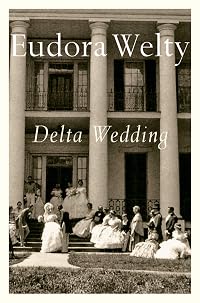
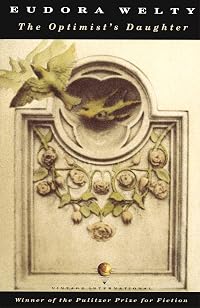
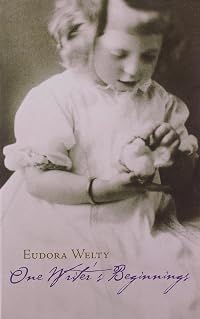
Eudora Welty was born in Jackson, Mississippi on April 13, 1909. She was educated at the Mississippi State College for Women in Columbus, Mississippi, and at the University of Wisconsin. She moved to New York in 1930 to study advertising at the Columbia University business school. After her father's death, she moved back to Jackson in 1931. She show more held various jobs on local newspapers and at a radio station before becoming a publicity agent for the Works Progress Administration (WPA), part of Franklin Roosevelt's New Deal program. Travelling through the state of Mississippi opened her eyes to the misery of the great depression and resulted in a series of photographs, which were exhibited in a one-women show in New York in 1936 and were eventually published as One Time, One Place: Mississippi in the Depression in 1971. She stopped working for the WPA in 1936. Her first stories, Magic and Death of a Travelling Salesman, were published in small magazines in 1936. Some of her better-known short stories are Why I Live at the P.O., Petrified Man, and A Worn Path. Her short story collections include A Curtain of Green, The Golden Apples, The Wide Net and Other Stories, and The Bride of Innisfallen and Other Stories. Her first novel, The Robber Bridegroom, was published in 1942. Her other novels include Delta Wedding, The Ponder Heart, Losing Battles, and The Optimist's Daughter, which won the Pulitzer Prize in 1972. She received the gold medal for fiction from the National Institute of Arts and Letters in 1972. Her nonfiction works include A Snapshot Album, The Eye of the Storm: Selected Essays and Reviews, and One Writer's Beginnings. She died from complications following pneumonia on July 23, 2001 at the age of 92. (Bowker Author Biography) show less
Some Editions
Awards and Honors
Awards
Distinctions
Series
Belongs to Publisher Series
Work Relationships
Is contained in
Has as a student's study guide
Common Knowledge
- Original publication date
- 1970
- Dedication
- To the memory of my brother,
Edward Jefferson Welty
Walter Andrews Welty - First words
- When the rooster crowed, the moon had still not left the world but was going down on flushed cheek, one day short of the full.
- Quotations
- When the mire of the roads had permitted, the aunts and girl cousins had visited two and three together and pieced it on winter afternoons. It was in the pattern of "The Delectable Mountains" and measured 8 feet square, the s... (show all)lanty red and white pieces running in to the 8 pointed star in the middle, with the called for number of sheep spaced upon it. Then Aunt Beck had quilted it on her lap with her bent needle.
"Possum, then what would she have had you do?" "Teach, teach, teach!" Gloria cried. "Till I dropped in harness! Like the rest of 'em!"
"Oh, books! The woman read more books than you could shake a stick at," said Miss Beulah. "I don't know what she thought was going to get her if she didn't." - Last words
- (Click to show. Warning: May contain spoilers.)All Banner could hear him and know who he was.
- Blurbers
- Rushdie, Salman
Classifications
Statistics
- Members
- 772
- Popularity
- 36,358
- Reviews
- 10
- Rating
- (3.62)
- Languages
- English, Spanish
- Media
- Paper, Ebook
- ISBNs
- 9
- ASINs
- 21