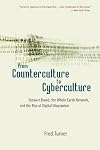
From Counterculture to Cyberculture: Stewart Brand, the Whole Earth Network, and the Rise of Digital Utopianism
by Fred Turner
On This Page
Description
In the early 1960s, computers haunted the American popular imagination. Bleak tools of the cold war, they embodied the rigid organization and mechanical conformity that made the military-industrial complex possible. But by the 1990s--and the dawn of the Internet--computers started to represent a very different kind of world: a collaborative and digital utopia modeled on the communal ideals of the hippies who so vehemently rebelled against the cold war establishment in the first place. From show more Counterculture to Cyberculture is the first book to explore this extraordinary and ironic transformation. Fred Turner here traces the previously untold story of a highly influential group of San Francisco Bay-area entrepreneurs: Stewart Brand and the Whole Earth network. Between 1968 and 1998, via such familiar venues as the National Book Award-winning Whole Earth Catalog, the computer conferencing system known as WELL, and, ultimately, the launch of the wildly successful Wired magazine, Brand and his colleagues brokered a long-running collaboration between San Francisco flower power and the emerging technological hub of Silicon Valley. Thanks to their vision, counterculturalists and technologists alike joined together to reimagine computers as tools for personal liberation, the building of virtual and decidedly alternative communities, and the exploration of bold new social frontiers. Shedding new light on how our networked culture came to be, this fascinating book reminds us that the distance between the Grateful Dead and Google, between Ken Kesey and the computer itself, is not as great as we might think. show lessTags
Recommendations


























Member Reviews
If there's an iconic figure of the 21st century, it's the technological entrepreneur. You know the type, the saavy, cool, cutting-edge, networked, leveraged, foresighted thought leader. The kind of person who makes a lot of money by not doing better than the competition, but by blazing whole new economic sectors. That figure is a kind of mediated chimera in the mold of the Original, the central subject of this book, one Stewart Brand.
Turner's book is an intellectual career of Brand, from itinerant avanta-garde son et luminere artist, to his major success of the Whole Earth Catalog, to the WELL community, and finally Brand's ascension to the sage of Wired, and the entire Bay Area techster lifestyle. It's a long and somewhat convoluted show more journey, interspersed with some pretty dense science and technology studies jargon, and with a few leaps of faith. It is also a masterpiece of scholarship, and a great example of what an STS book should do.
For Americans in the 1950s and 1960s, the computer had a singular, sinister vision. Computerization was the logic of dehumanization, of doomsday. Psychologically fragmented 'organization men' served as cogs in a horrific machine, which gobbled up nature and culture in its juggernaut like roll towards nuclear annihilation. The actual practice of computer engineering (intimately tied to defense via the needs of the SAGE air defense network and aerospace miniaturization) was actually rather open, interdisciplinary, and innovative, albeit behind barbed wire fences and security clearances. This was the culture that created Nobert Weiner's cybernetics and Claude Shannon's information theory, along with Buckminster Fuller's radical designs.
There's little in Brand's childhood that distinguished him as a future radical; A midwestern suburban youth, Stanford, Army ROTC, a brief stint in the Rangers, and a job as military photographer. But when he mustered out, with a deep feeling that 'this could not go on', he fell into the emergent counterculture. The first influence was the USCO media art collective, which combined experiments with light and sound with psychedelic drugs, but Brand made contacts everywhere. Turner distinguishes two major threads in 60s politics. The New Left were hardheaded organizers, working against racism and the Vietnam War with actions that confronted the American system. The New Communalism, which Brand became a part of, took an entirely different attitude towards social change.
For New Communalism, politics itself was the problem, and consciousness was the solution. By changing minds, individually and then en mass, the counterculture could simply float out of American society. Music, aesthetics, drugs, meditation, and a return to the land symbolized a chance to break free. Brand's genius was the Whole Earth Catalog, a sprawling publication that presented the building blocks of the New Communalism between its covers, juxtaposing books, homesteading essentials, and the latest electronics as 'tools for thinking more clearly'.
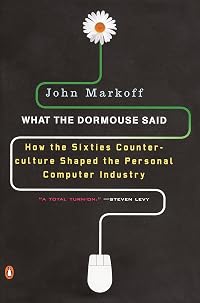
The Whole Earth Catalog was an outlandish success, winning awards and selling millions of copies. Xerox PARC stocked it's library by getting one of everything in the WEC. PARC has a much better claim on building the digital modernity than anyone in Turner's book, see Markoff's What The Dormouse Said for details. But as Brand's star ascended, the New Communalism collapsed, as thousands of communes failed under the gritty problems of subsistence farming, separating from the American economy, and predatory charismatic leaders and various kinds of bums.
Many members of the New Communalist movement went back to various square jobs, but they stayed in touch, a loose network around the Bay Area. Brand himself kept publishing and operated a small non-profit foundation focused on various artistic and technological ideas. In 1985, Brand organized the WELL, the Whole Earth 'Lectronic Link, a message board server that linked together many of his friends and contacts in a personal computing-centric version of the New Communalism.
The personal computer and networking were the technologies that Brand had been waiting for his entire life, the tools that would enable a person to craft an entirely new identity in a world free from the obsolete governments and ideologies of the past. Brand managed a simultaneous double jump at this point. On one side, he managed to cash in, founding the Global Business Network consultancy firm, an exclusive, corporate-centric, and for-profit version of the WELL vision. For the radicals, he also helped organize the first hacker conference in 1984, bringing together the old idealists of the 1960s with the next generation of entrepreneurs and programmers, gathering hippies, ruthless capitalists along the lines of Bill Gates, and semi-criminal computer crackers going by arcane message board handles handles.
Turner's story closes out with Wired magazine, and the embrace of the new business friendly high-tech cyber utopianism by Newt Gingrich. His story ends just before the first dotcom crash, and the 21st century world of FAANGs, monopolistic platforms, app stores, the sharing economy, meme warfare, and all the other problems of the late 2010s.
Turner is up front about the seductive power of Brand's vision. These days, when PCs are pocket sized and John Berry Barlow's cyberspace frontier fenced in by tech titans, it's easy to sneer. But Brand imagined a better world, and with great humor and self-effacement, brought together the people who made it happen. Stewart Brand is not exactly a household name, yet he's indirectly responsible what makes my household different than my parent's household (and yes, my mom does have a paper copy of The Last Whole Earth Catalog on a shelf somewhere). At the same time, the important parts of Brand's vision never real worked. Consciousness may have been raised temporarily, but it always fell back to earth. Most of the new communities failed almost instantaneously. In practice, these new pioneers were very male and very white, same as the last bunch. The web was commercialized, and the ungoverned spaces are not democratic forums, but nightmarish collective ids; our darkest desires for violence, drugs, and illicit pornography made real.
A few decades on, the legacy of digital utopianism is a clearly one of collapse into incoherence. But what saves this book is the grace of love. Turner loves his subject, he loves the possibilities, and that love shines through. There are more adjectives than a typical academic editor would allow, and that's something I love. Turner shows how it's possible to offer critique without being critical. show less
Turner's book is an intellectual career of Brand, from itinerant avanta-garde son et luminere artist, to his major success of the Whole Earth Catalog, to the WELL community, and finally Brand's ascension to the sage of Wired, and the entire Bay Area techster lifestyle. It's a long and somewhat convoluted show more journey, interspersed with some pretty dense science and technology studies jargon, and with a few leaps of faith. It is also a masterpiece of scholarship, and a great example of what an STS book should do.
For Americans in the 1950s and 1960s, the computer had a singular, sinister vision. Computerization was the logic of dehumanization, of doomsday. Psychologically fragmented 'organization men' served as cogs in a horrific machine, which gobbled up nature and culture in its juggernaut like roll towards nuclear annihilation. The actual practice of computer engineering (intimately tied to defense via the needs of the SAGE air defense network and aerospace miniaturization) was actually rather open, interdisciplinary, and innovative, albeit behind barbed wire fences and security clearances. This was the culture that created Nobert Weiner's cybernetics and Claude Shannon's information theory, along with Buckminster Fuller's radical designs.
There's little in Brand's childhood that distinguished him as a future radical; A midwestern suburban youth, Stanford, Army ROTC, a brief stint in the Rangers, and a job as military photographer. But when he mustered out, with a deep feeling that 'this could not go on', he fell into the emergent counterculture. The first influence was the USCO media art collective, which combined experiments with light and sound with psychedelic drugs, but Brand made contacts everywhere. Turner distinguishes two major threads in 60s politics. The New Left were hardheaded organizers, working against racism and the Vietnam War with actions that confronted the American system. The New Communalism, which Brand became a part of, took an entirely different attitude towards social change.
For New Communalism, politics itself was the problem, and consciousness was the solution. By changing minds, individually and then en mass, the counterculture could simply float out of American society. Music, aesthetics, drugs, meditation, and a return to the land symbolized a chance to break free. Brand's genius was the Whole Earth Catalog, a sprawling publication that presented the building blocks of the New Communalism between its covers, juxtaposing books, homesteading essentials, and the latest electronics as 'tools for thinking more clearly'.
The Whole Earth Catalog was an outlandish success, winning awards and selling millions of copies. Xerox PARC stocked it's library by getting one of everything in the WEC. PARC has a much better claim on building the digital modernity than anyone in Turner's book, see Markoff's What The Dormouse Said for details. But as Brand's star ascended, the New Communalism collapsed, as thousands of communes failed under the gritty problems of subsistence farming, separating from the American economy, and predatory charismatic leaders and various kinds of bums.
Many members of the New Communalist movement went back to various square jobs, but they stayed in touch, a loose network around the Bay Area. Brand himself kept publishing and operated a small non-profit foundation focused on various artistic and technological ideas. In 1985, Brand organized the WELL, the Whole Earth 'Lectronic Link, a message board server that linked together many of his friends and contacts in a personal computing-centric version of the New Communalism.
The personal computer and networking were the technologies that Brand had been waiting for his entire life, the tools that would enable a person to craft an entirely new identity in a world free from the obsolete governments and ideologies of the past. Brand managed a simultaneous double jump at this point. On one side, he managed to cash in, founding the Global Business Network consultancy firm, an exclusive, corporate-centric, and for-profit version of the WELL vision. For the radicals, he also helped organize the first hacker conference in 1984, bringing together the old idealists of the 1960s with the next generation of entrepreneurs and programmers, gathering hippies, ruthless capitalists along the lines of Bill Gates, and semi-criminal computer crackers going by arcane message board handles handles.
Turner's story closes out with Wired magazine, and the embrace of the new business friendly high-tech cyber utopianism by Newt Gingrich. His story ends just before the first dotcom crash, and the 21st century world of FAANGs, monopolistic platforms, app stores, the sharing economy, meme warfare, and all the other problems of the late 2010s.
Turner is up front about the seductive power of Brand's vision. These days, when PCs are pocket sized and John Berry Barlow's cyberspace frontier fenced in by tech titans, it's easy to sneer. But Brand imagined a better world, and with great humor and self-effacement, brought together the people who made it happen. Stewart Brand is not exactly a household name, yet he's indirectly responsible what makes my household different than my parent's household (and yes, my mom does have a paper copy of The Last Whole Earth Catalog on a shelf somewhere). At the same time, the important parts of Brand's vision never real worked. Consciousness may have been raised temporarily, but it always fell back to earth. Most of the new communities failed almost instantaneously. In practice, these new pioneers were very male and very white, same as the last bunch. The web was commercialized, and the ungoverned spaces are not democratic forums, but nightmarish collective ids; our darkest desires for violence, drugs, and illicit pornography made real.
A few decades on, the legacy of digital utopianism is a clearly one of collapse into incoherence. But what saves this book is the grace of love. Turner loves his subject, he loves the possibilities, and that love shines through. There are more adjectives than a typical academic editor would allow, and that's something I love. Turner shows how it's possible to offer critique without being critical. show less
This book was a massive disappointment. I had been wanting to read it for so long and had really been looking forward to it. I had heard about the Whole Earth Catalog and Whole Earth Review and their respective influences for years, and I had been on The WELL for over a decade myself (sch@well.com) and thought it was the best BBS ever devised, and of course Wired Magazine was awesome, so I knew this book had to be cool as hell. Boy, was I wrong. I actually almost finished it, almost made it 300 pages through before giving up in disgust. I don't know how you could take such a COOL topic or topics such as Stewart Brand, 60s/70s counterculture, the invention and growth of the Internet, the importance of the Whole Earth Catalog, the show more influence of The WELL, the influence of Wired, the growth of the New Economy, and so much more, and make it SO DAMN BORING!!! God, this book sucks. It reads like a bad doctoral dissertation, which I guess should come as little surprise since Turner got his PhD at UC San Diego and taught or teaches at Stanford. He's writing to his academic cronies and I guess he's writing to impress them, but it's definitely not for laymen, because he takes a chronology of events, times, places, people, things, happenings, big ideas, etc, et al, and bores you to tears while also beating you over the head with redundancy until you want to bash your head into a concrete wall. This is frankly one of the worst written books I've ever had the misfortune to read and I have no doubt that if ANY other decent writer out there had undertaken to write a book about similar topics, they could have written an engaging, enlightening, entertaining and cool book that would have captured most readers' attentions. Instead, this garbage kills any interest I've ever had in the subject and I'm almost embarrassed now to have been on such a cool and influential BBS as The WELL after Turner has turned his destructive powers of total boredom on it. I'm giving the book two stars instead of one because the topic is good, but the book is not. Most definitely not recommended. I can't stress that enough. show less
While some of the story around “wired” magazine seemed not atypical of any magazine and there are large areas missing that cover more recent perspectives in Cyberculture this text is very well researched and inspiring in its insight as to the special combination of values that shape Cyberculture.
The rebels against centralisation live in close relationship to the centralised system and its tools. These intrinsic contradictions should get us to appreciate and be ready to accept that the world is always more complicated than our ideas make of it.
The rebels against centralisation live in close relationship to the centralised system and its tools. These intrinsic contradictions should get us to appreciate and be ready to accept that the world is always more complicated than our ideas make of it.
Some nostalgia value for me, having been in the software world through much of the period, but for the most part I found it no more than a plodding exercise, with little life in it.
Seemed overblown and repetitive.
Ratings
Members
- Recently Added By
Lists

Books in the Bibliography of Digital Lethargy by Tung-Hui Hu
151 works; 3 members
Author Information

3 Works 483 Members
Fred Turner is professor of communication at Stanford University. He is the author of Echoes of Combat: The Vietnam War in American Memory and From Counterculture to Cyber culture: Stewart Brand, the Whole Earth Network, and the Rise of Digital Utopianism, also published by the University of Chicago Press.
Awards and Honors
Awards
Classifications
- Genres
- Technology, Nonfiction, History, General Nonfiction
- DDC/MDS
- 303.48 — Society, government, & culture Social sciences, sociology & anthropology Social processes Social change Causes of change
- LCC
- QA76.9 .C66 .T875 — Science Mathematics Mathematics Instruments and machines Calculating machines Electronic computers. Computer science
- BISAC
Statistics
- Members
- 408
- Popularity
- 76,125
- Reviews
- 6
- Rating
- (3.82)
- Languages
- English, French
- Media
- Paper, Ebook
- ISBNs
- 4
- ASINs
- 3