On This Page
Description
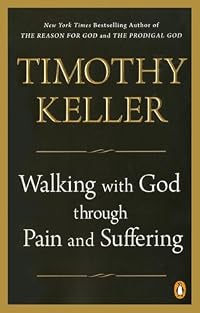
The problem of pain is a perennial one; and for those who undergo particular sufferings it can often be the largest obstacle for trusting in a good and loving God. If such a God exists, why is there so much suffering in the world? And how do we deal with it when it comes into our lives? In his fullest and most passionately argued book since 2008's bestseller The Reason For God, New York pastor and church planter Tim Keller brings his authoritative teaching, sensitivity to contemporary show more culture and pastoral heart to this pressing question, offering no easy answers but giving guidance, encouragement and inspiration. show lessTags
Recommendations












Member Reviews
My favorite author Tim Keller discusses the problem of human suffering from three perspectives (So the book is divided into three sections): 1) How have human beings coped with the problem of suffering, from past to present? 2) What does the Bible teach about suffering? 3) What are some practical things to know/do when you are suffering? The book is surprisingly interesting. The author argues (and successfully persuaded me) it's important to ponder on how to cope with suffering, and Biblical truths about suffering, "before" you actually experience suffering, so that the truths are internalized in you and become an effective source of hope and strength in the event of suffering. The first and second sections laid out how the current show more secularized worldview cannot address the problem of suffering effectively (without giving an answer of total despair), how in human history four paradigms had developed that help people cope with suffering, and how the Biblical view on suffering differed from the four paradigms, with a complex, layered treatment of the problem. The author also discussed how many people rejected the existence of God because there are suffering in this world, and how this rejection came from an assumption that God exists to serve/intensify human pleasure, which was not a common view held by ancient or medieval people but have become increasingly popular over the past 150 years. show less
The structure of the book was interesting. Keller starts with a discussion about comparative religion, atheism’s lack of resources for suffering the problem of evil, the theology of the cross and more. In doing so, Keller starts where I didn’t expect him to begin: in theology and philosophy. As a result, if I were myself suffering I might find it dry and not immediately helpful. In the Introduction, Keller does suggest that if you are in the midst of affliction that it may be best to jump straight to section 2 and 3. This would be wise but I wonder who does that (skip a third of a book). In many ways section 1 and 2 lay the foundation for the pastoral help in section 3. All Christian practice flows from theology, and the structure show more of Keller’s book demonstrates that.
Nevertheless, because the first section is intellectually weighty I’m not sure I would give this book to a friend who is in the midst of suffering as the first port of call.
I found Keller’s discussion of the problem of evil clear and penetrating. I’ve always wondered about the free will defense and Keller shows where it fits and why he finds it lacking. In the end Keller provides a number of biblical answers the the problem of senseless suffering but never goes so far as to suggest it removes all mystery and difficultly. The argument Keller favors most is that an all living and all powerful God would also be all wise and have reasons we might not see for allowing suffering. Just as a loving parent may allow their kids to suffer (through eating their vegetables or a vaccination needle) which the child may feels is totally unloving (yet it isn’t), so too God may have reasons to permit suffering that are totally consistent with his love and power. This argument is theologically and philosophically plausible but as Keller says, it doesn’t make the pain ho away. For that the only answer is the new creation which Jesus will one day bring.
I found this book intellectually stimulating, heart warming and practical. I find sometimes Keller’s sermonic style fails to translate to the written page (but I’m being pedantic).
There’s a couple of areas I had issues with, especially his treatment of trinity and the atonement on page 150. Keller says that there was a disruption in the trinity, a separation from the beloved, the loss of love at the cross between the father and the son. I believe Keller errs in this regard. In trying to display the immensity or the sons suffering, I fear Keller mistakes what happened at the cross. M’Cheyne whom Keller quotes does better when he says Jesus “was without any comforts of God—no feeling that God loved him...” (p. 150)
———
Keller suggests in his introduction that for those in the midst of adversity they may wish to read parts two and three of the book first. I would agree.
Part 1 and some sections of part 2 contain philosophical and theological evaluation of the problem of pain and the failure of other religions and the secular worldview to offer a livable theory of suffering. These sections are pitched at a highly educated audience, and every pastor will benefit from the worldview analysis and theological summaries of the doctrine of God’s sovereignty and suffering. While I enjoyed part 1, it made me question this is THE book on suffering that I would recommend to all people.
Part 3, on the other hand, is incredibly pastoral and accessible and would provide immediate help to those in the midst of adversity. Perhaps following Keller’s advice in the introduction, all readers should begin at Part 3, then read Part 2 and finish with Part 1, if they are able. That way the reader moves through the book from the pastoral to the philosophical rather than the other way around. My problem with the order of the book is that I think people who are suffering may give up before they get to the practical help the Christian faith offers. So too, inexperienced readers, may give up and miss out on part 3 because the suspect the entire book would be as dense as part 1.
I do think this is THE book on suffering that I would recommend to all people, but I would make sure I am encouraging them to start at part 3. show less
Nevertheless, because the first section is intellectually weighty I’m not sure I would give this book to a friend who is in the midst of suffering as the first port of call.
I found Keller’s discussion of the problem of evil clear and penetrating. I’ve always wondered about the free will defense and Keller shows where it fits and why he finds it lacking. In the end Keller provides a number of biblical answers the the problem of senseless suffering but never goes so far as to suggest it removes all mystery and difficultly. The argument Keller favors most is that an all living and all powerful God would also be all wise and have reasons we might not see for allowing suffering. Just as a loving parent may allow their kids to suffer (through eating their vegetables or a vaccination needle) which the child may feels is totally unloving (yet it isn’t), so too God may have reasons to permit suffering that are totally consistent with his love and power. This argument is theologically and philosophically plausible but as Keller says, it doesn’t make the pain ho away. For that the only answer is the new creation which Jesus will one day bring.
I found this book intellectually stimulating, heart warming and practical. I find sometimes Keller’s sermonic style fails to translate to the written page (but I’m being pedantic).
There’s a couple of areas I had issues with, especially his treatment of trinity and the atonement on page 150. Keller says that there was a disruption in the trinity, a separation from the beloved, the loss of love at the cross between the father and the son. I believe Keller errs in this regard. In trying to display the immensity or the sons suffering, I fear Keller mistakes what happened at the cross. M’Cheyne whom Keller quotes does better when he says Jesus “was without any comforts of God—no feeling that God loved him...” (p. 150)
———
Keller suggests in his introduction that for those in the midst of adversity they may wish to read parts two and three of the book first. I would agree.
Part 1 and some sections of part 2 contain philosophical and theological evaluation of the problem of pain and the failure of other religions and the secular worldview to offer a livable theory of suffering. These sections are pitched at a highly educated audience, and every pastor will benefit from the worldview analysis and theological summaries of the doctrine of God’s sovereignty and suffering. While I enjoyed part 1, it made me question this is THE book on suffering that I would recommend to all people.
Part 3, on the other hand, is incredibly pastoral and accessible and would provide immediate help to those in the midst of adversity. Perhaps following Keller’s advice in the introduction, all readers should begin at Part 3, then read Part 2 and finish with Part 1, if they are able. That way the reader moves through the book from the pastoral to the philosophical rather than the other way around. My problem with the order of the book is that I think people who are suffering may give up before they get to the practical help the Christian faith offers. So too, inexperienced readers, may give up and miss out on part 3 because the suspect the entire book would be as dense as part 1.
I do think this is THE book on suffering that I would recommend to all people, but I would make sure I am encouraging them to start at part 3. show less
A first I didn't want to read this book. I have a prejudice against trendy-looking mega-church pastors, and Tim Keller sort of fits the stereotype, with his shaved head and earring. I was expecting some well worn Christian cliches, lots of Bible verses and little new in terms of insights and wisdom. Boy was I wrong. This was no hyped up how-to book. Walking with God through Pain and Suffering was a philosophical book of sorts, with sound reasoning, logic and grounded theology. I found myself highlighting a lot of sentences and entire paragraphs.
Here are some quotes that resonated with me:
We are so instinctively and profoundly self-centered that we don't believe we are.
The 'rage' at the dying of light' is our intuition that we were show more not meant for mortality, for the loss of love, or for the triumph of darkness. In order to help people face death and grief we often tell people that death is a perfectly natural part of life. But that asks them to repress a very right and profound human intuition- that we were not meant to simply go to dust.
Almost no one grows into greatness or finds God without suffering, without pain coming into our lives, like smelling salts to wake us up to all sorts of facts about life and our own hearts to which we were blind.
There were many other passages that were compelling. .. This is a book to hold onto, to read and to re-read, as an invaluable resource. For sufferers, people who work with sufferers and people who live with sufferers. And so it is for everyone.
Just started this book, and so far I'm thrilled. It starts off w/a synopsis of different cultures' ways of dealing with suffering. Fascinates me to read how other peoples handle things.... how they understand the world and their purpose in it. We Westerners think our ways are the best. Lots of philosophical insights here. Looking forward to reading this one. show less
Very thorough treatment of the topic. The first third is very academic, less immediately practical. The last two-thirds is more impactful for those who grieve. Classic great Keller. Everyone who has gone through any kind of suffering should read this.
This is a wonderful and very helpful book. We will all undergo some sort of pain and suffering. And if we aren't, someone we love will be. We can not escape evil. The question is - how do we deal with that. This book talks about our current culture, which seeks to avoid or minimize or medicate, and does nothing to help deal with it. Christianity has abundant tools to help endure and even grow during pain and suffering. Why do we not use these tools? Keller constantly has a wonderful Gospel message of what Jesus has done for us and how we can be certain of this good news. I believe the last third of the book would be enormously helpful for someone currently going through pain and suffering and grief. Other parts of the book are more show more theological and, while helpful, the last third is specifically tools to help now. I believe unresolved grief as well as a failure to deal with pain and suffering is a great issue in our culture today and many have turned their backs on what can help. Keller is always good. show less
Probably the best all around view of suffering that approaches things in a straightforward manner and theological philosophical profound
Iƒ??d been told that this was the best Christian book on suffering and I certainly found that to be the case from my own reading. Wonderfully clear and pastorally minded. Very helpful and incisive. Highly recommended.
Members
- Recently Added By
Lists

Spiritual Growth
8 works; 1 member

Top Five Books of 2016
795 works; 228 members
Author Information

378+ Works 43,540 Members
Timothy J. Keller was born in 1950. He received a B.A. from Bucknell University in 1972, a M.Div. from Gordon-Conwell Theological Seminary in 1975, and a D.Min. from Westminster Theological Seminary in 1981. He was ordained by the Presbyterian Church in America and served as a pastor in Virginia for nine years. He is founding pastor of Redeemer show more Presbyterian Church in New York City, New York. He has written several books including Grace Changes Everything, Generous Justice: How God's Grace Makes Us Just, and The Reason for God: Belief in an Age of Skepticism, which won awards from World Magazine and Christianity Today. His title, Preaching: Communicating Faith in a Skeptical Age, made the New York Times Best Seller List in 2015. Hidden Christmas: The Surprising Truth Behind the Birth of Christ was published in October 2016. (Bowker Author Biography) show less
Series

Common Knowledge
- Original title
- Walking with God through pain and suffering
- Alternate titles*
- 同祢患難與共
- First words
- [Introduction] Suffering is everywhere, unavoidable, and its scope often overwhelms.
Suffering seems to destroy so many things that give life meaning that is may feel impossible to even go on.
[Epilogue] Let's summarize what we have learned. If we know the biblical theology of suffering and have our hearts and minds engaged by it, then when grief pain, and loss come, we will not be surprised, and can respond in t... (show all)he various ways laid out in Scripture. - Last words
- (Click to show. Warning: May contain spoilers.)[Introduction] He plunged himself into our furnace so that when we find ourselves in the fire, we can turn to him and know we will not be consumed but will be made into people great and beautiful. "I will be with you, your troubles to bless, and sanctify to you your deepest distress."
(Click to show. Warning: May contain spoilers.)We are summoned to pass in through Nature, beyond her, into that splendor which she fitfully reflects.
(Click to show. Warning: May contain spoilers.)[Epilogue] Doing all these things, as George Herbert writes, will first bring your "joys to weep" but then your "griefs to sing."
*Some information comes from Common Knowledge in other languages. Click "Edit" for more information.
Classifications
- Genres
- Religion & Spirituality, Nonfiction
- DDC/MDS
- 248.8 — Religion Christian practice & observance Christian experience, practice, life Christian Living for specific groups
- LCC
- BV4909 .K43 — Philosophy, Psychology and Religion Practical Theology Practical Theology Practical religion. The Christian life Works of consolation and cheer
- BISAC
Statistics
- Members
- 1,351
- Popularity
- 17,605
- Reviews
- 13
- Rating
- (4.76)
- Languages
- 9 — Chinese, Danish, Dutch, English, German, Korean, Malay, Portuguese, Spanish
- Media
- Paper, Audiobook, Ebook
- ISBNs
- 18
- ASINs
- 8