
Vietnam: A History
by Stanley Karnow
On This Page
Description
Examines American involvement in the Vietnam War, delves into the decisionmaking process in Washington and Asia, and presents interviews with participants on both sides.Tags
Recommendations
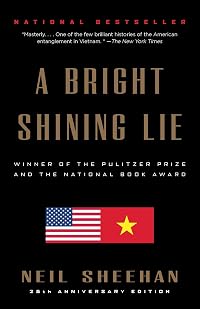

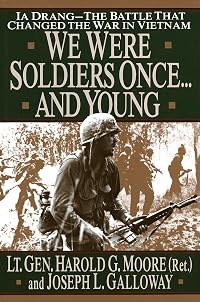
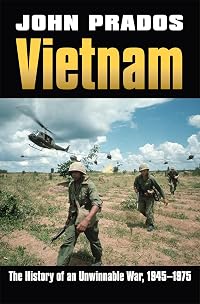
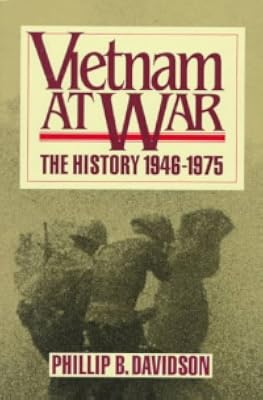
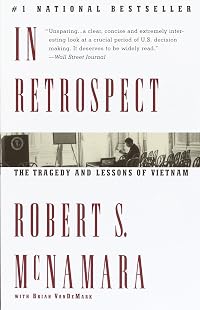
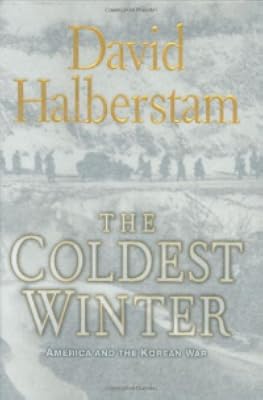
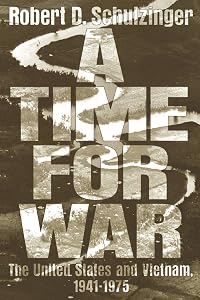

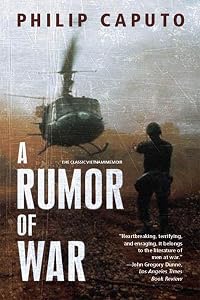
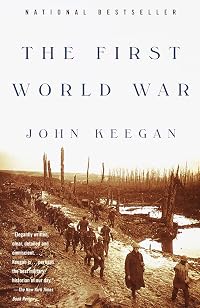

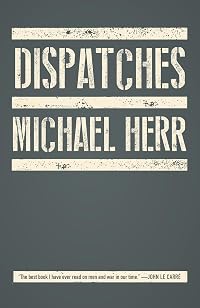

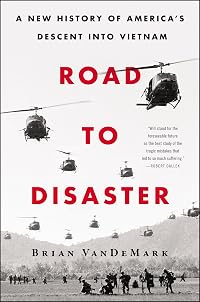
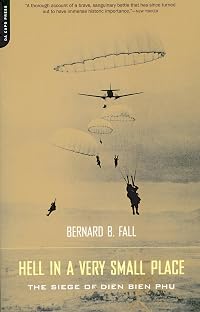






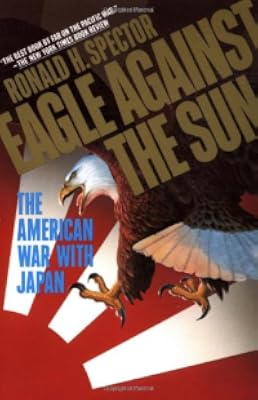
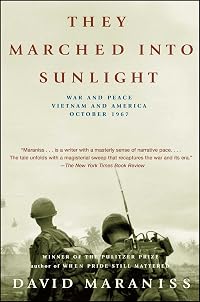

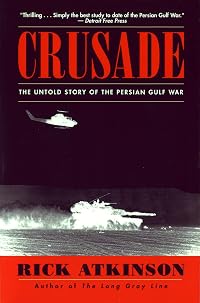
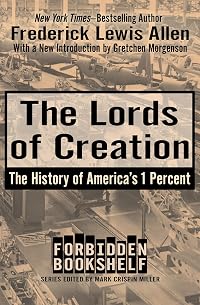




Member Recommendations

The Pentagon Papers: The Defense Department history of United States decisionmaking on Vietnam [5 vol. set] by United States. Dept. of Defense
anonymous user Official, encyclopaedic, de-classified.
20

by anonymous user
02

Member Reviews
There a few things using the Dewey Decimal System that, IMHO, positively affected my thinking. One is where to file books on the Vietnam War, or any war. It's not in the United States section, it is in the Vietnam section since a war is something that happens to a country, it is not perpetrated by a country. It doesn't matter if one participant is a superpower. A war happens at a place, to a people. This long view that ends with the fall of Saigon starts way back with Vietnam on the fringes of Napoleon III's empire and on through post-WW II France handing over a struggle to a United States espousing its domino theory. Well, we left Hitler and Mussolini unmolested and look what happened? At least, that's how the argument went but over show more all those decades into centuries, really, an internally inconsistent Vietnam struggled to shake off foreign power. Well, at least the part struggled that was ideological, not so much the corrupt and craven leadership of Southern Vietnam... show less
There a few things using the Dewey Decimal System that, IMHO, positively affected my thinking. One is where to file books on the Vietnam War, or any war. It's not in the United States section, it is in the Vietnam section since a war is something that happens to a country, it is not perpetrated by a country. It doesn't matter if one participant is a superpower. A war happens at a place, to a people. This long view that ends with the fall of Saigon starts way back with Vietnam on the fringes of Napoleon III's empire and on through post-WW II France handing over a struggle to a United States espousing its domino theory. Well, we left Hitler and Mussolini unmolested and look what happened? At least, that's how the argument went but over show more all those decades into centuries, really, an internally inconsistent Vietnam struggled to shake off foreign power. Well, at least the part struggled that was ideological, not so much the corrupt and craven leadership of Southern Vietnam... show less
This is another history written by a journalist who was covering the war while actually stationed in Vietnam, thus giving him a unique insight as opposed to a historian looking back years later. What I like most is that the author has maintained relationships with the Vietnamese military leaders he interviewed while in Southeast Asia, using more recent interviews from the 1990s of the same leaders to provide an additional historical angle in retrospect. The book covers the roots of Vietnamese nationalism throughout its long history, then the war with the French, all the while showing how the US slowly became entagled in the Vietnam quagmire. One interesting tidbit I learned was how much LBJ disliked Robert Kennedy. The first chapter show more reads more like a last chapter in that it looks back at what has happened in Vietnam since the war ended. But it is an excellent way to begin the book because it asks the question, whether intentionally or not, just who won and was it worth the cost? show less
Se uno si aspetta un resoconto storico classico, rimane deluso. Non perché il libro sia scritto male, ma perché la guerriglia si descrive male, si descrive male il lavorìo diplomatico, e le fonti comuniste del Vietnam all'epoca rifiutarono di farsi intervistare (anche alcuni protagonisti statunitensi a dire la verità ma molti meno). Ne deriva un librone che racconta in quasi 500 pagine la storia del Vietnam dagli anni '50 fino a inizio anni '80 (è un testo vecchiotto ma sempre valido) molto spesso più dall'ottica americana che da quella vitnamita ma non per mancanza di obiettività quanto di parità di fonti, come detto. E' corredato da foto in bianco e nero, da una fittissima bibliografia, una ottima cronologia e un ottimo indice show more delle persone. Per chi vuole saperne di più sulla guerra del Vietnam, è una vera e propria bibbia. Due difetti: è un po' verboso e la bibliografia su ogni capitolo inserita a fine libro. Un controsenso, dopo 500 pagine non ricordi di cosa trattava il quinto rigo del primo capitolo, sarebbe stato meglio impaginarla a fine del capitolo stesso. show less
Three major chroniclers of the Vietnam War served as journalists in Vietnam during the period of the war. David Halberstam is the most ideological engaged. Neil Sheehan is the most detailed from the perspective of the officers and men fighting the war. and Stanley Karnow is the most comprehensive. Karnow provides a survey of Vietnamese history and the arrival of the French, which serves as a serviceable context for the introduction of American soldiers and politicians into the area in the 1950s and 1960s.
For the most part, this is a balanced and fair book. Karnow dissects the American failures, especially by the upper echelon, Johnson, Rostow, Acheson, Westmoreland, and later Nixon and Kissinger. Again, he is fair, albeit deservedly show more critical, particularly of Johnson, whose dithering, indecisiveness, and utter incapability of understanding a foreign culture locked the US into taking one misstep after another.
On the other hand, Karnow is weakest in his discussion of the North Vietnamese Communist leadership. His history of Ho Chi Minh's is concise and accurate. But he doesn't give full enough credit to Le Duan's leadership role, especially early on in the 1960s, when Ho was consigned to the position of a figurehead. In his favor, Karnow does treat Communist attestations with the skepticism they deserve (unlike Sheehan, who is often apt to take their word at full value). And his post war interviews of North Vietnamese and Viet Cong veterans gives good insight not only into their motivations but also their inherent differences and distrust of each other, especially among Viet Cong (NLF) veterans native to the south.
In short, read Karnow for a comprehensive history of Vietnam as well as the best understanding of American political maneuvering during the war. Read Sheehan for a detailed picture through the eyes of the men who fought the war at ground level. show less
For the most part, this is a balanced and fair book. Karnow dissects the American failures, especially by the upper echelon, Johnson, Rostow, Acheson, Westmoreland, and later Nixon and Kissinger. Again, he is fair, albeit deservedly show more critical, particularly of Johnson, whose dithering, indecisiveness, and utter incapability of understanding a foreign culture locked the US into taking one misstep after another.
On the other hand, Karnow is weakest in his discussion of the North Vietnamese Communist leadership. His history of Ho Chi Minh's is concise and accurate. But he doesn't give full enough credit to Le Duan's leadership role, especially early on in the 1960s, when Ho was consigned to the position of a figurehead. In his favor, Karnow does treat Communist attestations with the skepticism they deserve (unlike Sheehan, who is often apt to take their word at full value). And his post war interviews of North Vietnamese and Viet Cong veterans gives good insight not only into their motivations but also their inherent differences and distrust of each other, especially among Viet Cong (NLF) veterans native to the south.
In short, read Karnow for a comprehensive history of Vietnam as well as the best understanding of American political maneuvering during the war. Read Sheehan for a detailed picture through the eyes of the men who fought the war at ground level. show less
Very good for the lead up to the war and the history of Vietnam, sets the context of the war nicely. However in a 600 page book less than 200 pages are on the period after 1965. It is solid when it comes to political and diplomatic efforts, but next to nothing on the actual fighting. The author does a good job of looking at the North Vietnamese, the South Vietnamese (too often ignored) and the Americans and their viewpoints.
This book represents just that - the best single volume history of the war, in my opinion. The first couple of chapters cover the early history of 'Indochina' and French colonialism, and then the rest of the text covers the history of Vietnam up to ~1980. This breadth of coverage (notably the war under Nixon) is not available in 'Bright Shining Lie' or 'Fire in the Lake' - the best of the other histories of the Vietnam war, and 'Best and the Brightest' is a political history.
The chapter structure is logical and the writing style maintained my interest throughout the book. It won the Pulitzer, so why write more? A wonderful history book.
The chapter structure is logical and the writing style maintained my interest throughout the book. It won the Pulitzer, so why write more? A wonderful history book.
Members
- Recently Added By
Published Reviews
ThingScore 100
Lists

Books in the Bibliography of The Cold War by John Lewis Gaddis
192 works; 1 member

2026 Reading List
50 works; 1 member

You Couldn't Pay Me to Read That (Take 2)
213 works; 84 members
Author Information

19+ Works 3,455 Members
Stanley Karnow was born in Brooklyn, New York on February 4, 1925. During World War II, he served in the Army Air Force. He received a bachelor's degree from Harvard University in 1947. After graduating, he sailed for France intending to spend the summer, but he stayed for a decade. He studied politics at the University of Paris in 1948-1949, and show more from 1950 to 1957 was a Paris correspondent for Time magazine. He was an Asian correspondent for Time-Life from 1959 to 1962, The London Observer from 1961 to 1965, The Saturday Evening Post from 1963 to 1965 and The Washington Post from 1965 to 1971. He was a diplomatic correspondent for The Washington Post in 1971 and 1972, and a special correspondent for NBC and an associate editor of The New Republic from 1973 to 1975. He was a columnist for King Features from 1975 to 1988, wrote for the French newsweekly Le Point from 1976 to 1983 and for Newsweek International from 1977 to 1981. His first book, Southeast Asia, was published in 1962. He also wrote Mao and China: From Revolution to Revolution and Paris in the Fifties. Vietnam: A History was published in 1983 and resulted in a 13-hour PBS documentary entitled Vietnam: A Television History. In Our Image: America's Empire in the Philippines was published in 1989 and won the 1990 Pulitzer Prize for history. It resulted in a three-part PBS documentary entitled The U.S. and the Philippines: In Our Image. He was also a co-author of or contributor to books based on his years in Asia, including Asian-Americans in Transition, Passage to Vietnam, Mekong, and Historical Atlas of the Vietnam War. He died of congestive heart failure on January 27, 2013 at the age of 87. (Bowker Author Biography) show less
Awards and Honors
Distinctions
Series
Belongs to Publisher Series
Work Relationships
Common Knowledge
- Canonical title
- Vietnam: A History
- Original title
- Vietnam. A History
- Alternate titles*
- Vietnam. Le premier récit complet des guerres du Vietnam; Vietnam. Des révélations explosives sur le conflit le plus sanglant de l'après-guerre
- Original publication date
- 1983
- People/Characters
- Lyndon Baines Johnson; Ho Chi Minh; Vo Nguyen Giap; Richard M. Nixon
- Important places
- Vietnam; French Indochina
- Important events
- Vietnam War (1959 | 1975)
- Related movies
- Vietnam: A Television History (1983 | IMDb)
- Epigraph
- They made a wasteland and called it peace. - Tacitus
Yes, we defeated the United States. But now we are plagued by problems. We do not have enough to eat. We are a poor, underdeveloped nation. Waging a war is simple, but running a country is very difficult. - Pham Van Dong
Vietnam is still with us. It has created doubts about American judgment, about American credibility, about American power – not only at home, but throughout the world. It has poisoned our domestic debate. So we paid an exor... (show all)bitant price for the decisions that were made in good faith and for good purpose. - Henry Kissinger - Dedication
- For Annette, who was there at the beginning.
- First words
- The roots of this book reach back to the early 1950s in Paris, where I began my professional career as a journalist. [Preface]
The memorial, an angle of polished black stone subtly submerged in a gentle slope, is an artistic abstraction. [Chapter 1] - Last words
- (Click to show. Warning: May contain spoilers.)Stretching out on the grass, he gazed at the sky, exalted.
- Original language
- English
*Some information comes from Common Knowledge in other languages. Click "Edit" for more information.
Classifications
- Genres
- History, Nonfiction, General Nonfiction
- DDC/MDS
- 959.704 — History & geography History of Asia Southeast Asia: Myanmar, Thailand, Laos, Cambodia, Vietnam Vietnam 1949-
- LCC
- DS558 .K37 — History of Europe, Asia, Africa and Oceania Asia History of Asia Southeast Asia French Indochina Vietnam. Annam Vietnamese Conflict
- BISAC
Statistics
- Members
- 2,591
- Popularity
- 7,356
- Reviews
- 21
- Rating
- (4.04)
- Languages
- English, French, Italian
- Media
- Paper, Audiobook, Ebook
- ISBNs
- 26
- UPCs
- 1
- ASINs
- 19