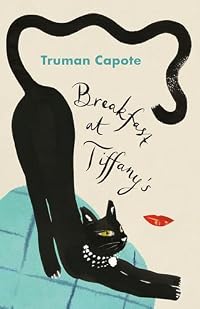
Breakfast at Tiffany's: A Short Novel and Three Stories
by Truman Capote
On This Page
Description
In this seductive, wistful masterpiece, Truman Capote created a woman whose name has entered the American idiom and whose style is a part of the literary landscape. Holly Golightly knows that nothing bad can ever happen to you at Tiffany's; her poignancy, wit, and naïveté continue to charm.This volume also includes three of Capote's best-known stories, “House of Flowers,” “A Diamond Guitar,” and “A Christmas Memory,” which the Saturday Review called “one of the most moving show more stories in our language.” It is a tale of two innocents—a small boy and the old woman who is his best friend—whose sweetness contains a hard, sharp kernel of truth.
. Classic Literature. Literature. Fiction. show less
Tags
Recommendations







Member Reviews
"Breakfast at Tiffany's" is one of those stories that is such a classic that I can't recall anyone actually ever telling me about it; it has just been there in my greater awareness for decades. Last night I was sitting in my armchair, and noticed a vintage paperback copy of it on the floor next to me. I've never read it before, so I picked it up, and gave it a go in one sitting (it is only 85 pages long, and small pages at that).
ENERGETIC POIGNANCE
Immediately you can see why it is famous. It has the poignance and attention to emotional and energetic detail that you also find in a book like "Anna Karenina." "Perhaps my face explained she'd misconstrued, that I'd not wanted advice but congratulations: her mouth shifted from a town into a show more smile" (page 44). It's exchanges like this—where, if we were there, much of the interaction would be perceived subconsciously so that we don't even notice it happening—that bring a surreal clarity to the work.
AMERICAN PRINCESS ARCHETYPE
And then there's the content. Truman's homosexuality has not deterred from the way he has captured the iconic 20th century American princess. The racism and sexism condemns this story as a barbaric 20th century beast. Despite (maybe because of?) Capote's bigotry, he has captured a certain archetype that has significant cultural weight.
Our protagonist, Holly Golightly, is a whirlwind. You want her attention. Her world is under the compression of a sound engineer; she's so blasé about bringing you into the intimate folds of her life, and simultaneously it is as though nothing matters. Due to your infatuation, this leaves you desirous of her affections, which come like rain during climate change—unpredictable and inundating.
With a fleeting fondness, I recall the Holly Golightly's I've encountered, in all their intensity, spontaneity, and ephemerality. The evenings splitting a bottle of red wine at the retreat house in the Rockies followed by a two-person dance party. The mornings in the shower, washing each other's bodies. Holding hands while walking across the park, wondering at the perception of onlookers. Skinny dipping in the mountain streams. Kissing on the half-erected frame of a barn at sunset. Picking strawberries under a midnight full-moon. Watching the way eyes and hearts follow them across the dance floor. The pastels of dawn after an all-night conversation.
There's a timelessness to these experiences, not just because there's no knowing whether the next fling might be a decade or a lifetime away.
Setting aside our wistfulness and psychoses of longing, it seems there's still something essential about the human experience that Truman relates here, somehow tied into themes of innocent awe—of one another and the world.
FIRST PERSON PERSPECTIVE
And then there's the easygoing storytelling style Capote utilizes. Its him, telling his own story. He didn't try to tell the story from someone else's perspective, which may be why he was able to tell something so exceedingly relatable—there was no translation across identities necessary.
The story has a nostalgic feel to it, due to it being set in the past tense, a recollection of the iconic years of youth; "There is a brownstone in the East Seventies where, during the early years of the war, I had my first New York apartment" (page 9).
I recently picked up my dogeared copy of "The Rolling Stone Book of the Beats." Reading publications like Bookforum and the New Yorker, it's easy to see the continuous strand of slick New York hipster coming through. And, at the same time, I'm left wondering—was Capote a beatnik? Was this story frame-breaking for the 1950s? This is something I don't know. show less
ENERGETIC POIGNANCE
Immediately you can see why it is famous. It has the poignance and attention to emotional and energetic detail that you also find in a book like "Anna Karenina." "Perhaps my face explained she'd misconstrued, that I'd not wanted advice but congratulations: her mouth shifted from a town into a show more smile" (page 44). It's exchanges like this—where, if we were there, much of the interaction would be perceived subconsciously so that we don't even notice it happening—that bring a surreal clarity to the work.
AMERICAN PRINCESS ARCHETYPE
And then there's the content. Truman's homosexuality has not deterred from the way he has captured the iconic 20th century American princess. The racism and sexism condemns this story as a barbaric 20th century beast. Despite (maybe because of?) Capote's bigotry, he has captured a certain archetype that has significant cultural weight.
Our protagonist, Holly Golightly, is a whirlwind. You want her attention. Her world is under the compression of a sound engineer; she's so blasé about bringing you into the intimate folds of her life, and simultaneously it is as though nothing matters. Due to your infatuation, this leaves you desirous of her affections, which come like rain during climate change—unpredictable and inundating.
With a fleeting fondness, I recall the Holly Golightly's I've encountered, in all their intensity, spontaneity, and ephemerality. The evenings splitting a bottle of red wine at the retreat house in the Rockies followed by a two-person dance party. The mornings in the shower, washing each other's bodies. Holding hands while walking across the park, wondering at the perception of onlookers. Skinny dipping in the mountain streams. Kissing on the half-erected frame of a barn at sunset. Picking strawberries under a midnight full-moon. Watching the way eyes and hearts follow them across the dance floor. The pastels of dawn after an all-night conversation.
There's a timelessness to these experiences, not just because there's no knowing whether the next fling might be a decade or a lifetime away.
Setting aside our wistfulness and psychoses of longing, it seems there's still something essential about the human experience that Truman relates here, somehow tied into themes of innocent awe—of one another and the world.
FIRST PERSON PERSPECTIVE
And then there's the easygoing storytelling style Capote utilizes. Its him, telling his own story. He didn't try to tell the story from someone else's perspective, which may be why he was able to tell something so exceedingly relatable—there was no translation across identities necessary.
The story has a nostalgic feel to it, due to it being set in the past tense, a recollection of the iconic years of youth; "There is a brownstone in the East Seventies where, during the early years of the war, I had my first New York apartment" (page 9).
I recently picked up my dogeared copy of "The Rolling Stone Book of the Beats." Reading publications like Bookforum and the New Yorker, it's easy to see the continuous strand of slick New York hipster coming through. And, at the same time, I'm left wondering—was Capote a beatnik? Was this story frame-breaking for the 1950s? This is something I don't know. show less
Some of us of a certain age first came to know Truman Capote as a celebrity rather than an author. Back in the day, he was a frequent talk show guest, known largely for his outspoken comments, acerbic wit, high-profile feuds with other personalities, and flamboyant, over-the-top style. In time, a variety of addictions and personal demons rendered him a caricature of himself and ultimately led to his early demise. What a shame that was because the memory we were left with at the time was one of a rather silly man who was responsible for his own destruction. Fortunately, those memories faded with the years, but the legacy of the remarkable fiction Capote produced—including such notable works as Other Voices, Other Rooms and In Cold show more Blood—survives to remind us of what a talented writer he was.
In Breakfast at Tiffany’s, Capote produced a collection of four works of short fiction that do not share any unifying themes beyond being strong and affecting stories. For me, the clear standouts in the group are “Breakfast at Tiffany’s”, the title story that really is more of a novella in terms of its length, and “A Christmas Memory”. Both are superbly paced and well written, despite the nature of the tales they tell being drastically different. In the first, we spend a season in the New York City of the 1940s getting to know Holly Golightly, a quixotic young socialite with no apparent means and a shady past. As seen through the eyes of one of her neighbors, a would-be writer who may well be in love with her, we come to realize that beneath the external glamour, she is a fragile and troubled person. Despite its pervasive sadness, this is a deeply poignant tale and in Holly the author has created an iconic character for the ages.
The other gem in the collection is an elegiac story of the last Christmas a young seven-year-old boy spends with his sixty-something cousin. They are dirt poor, but the sweet and loving nature of their relationship makes them rich in other ways. The two are at opposite ends of their lives—the boy just beginning and the older woman not far from the end—but the bond they share sustains them and the memories they make form the foundation of the young man’s future essence. While nothing dramatic happens, this is one of the most touching and emotionally satisfying stories I have read. The other tales in the book—“House of Flowers” and “A Diamond Guitar”—are solid, but far slighter in both ambition and impact. There is nothing especially wrong with either, but they do suffer somewhat in comparison to the stronger entries. Overall, Breakfast at Tiffany’s is an excellent example of how splendid Capote’s writing could be. show less
In Breakfast at Tiffany’s, Capote produced a collection of four works of short fiction that do not share any unifying themes beyond being strong and affecting stories. For me, the clear standouts in the group are “Breakfast at Tiffany’s”, the title story that really is more of a novella in terms of its length, and “A Christmas Memory”. Both are superbly paced and well written, despite the nature of the tales they tell being drastically different. In the first, we spend a season in the New York City of the 1940s getting to know Holly Golightly, a quixotic young socialite with no apparent means and a shady past. As seen through the eyes of one of her neighbors, a would-be writer who may well be in love with her, we come to realize that beneath the external glamour, she is a fragile and troubled person. Despite its pervasive sadness, this is a deeply poignant tale and in Holly the author has created an iconic character for the ages.
The other gem in the collection is an elegiac story of the last Christmas a young seven-year-old boy spends with his sixty-something cousin. They are dirt poor, but the sweet and loving nature of their relationship makes them rich in other ways. The two are at opposite ends of their lives—the boy just beginning and the older woman not far from the end—but the bond they share sustains them and the memories they make form the foundation of the young man’s future essence. While nothing dramatic happens, this is one of the most touching and emotionally satisfying stories I have read. The other tales in the book—“House of Flowers” and “A Diamond Guitar”—are solid, but far slighter in both ambition and impact. There is nothing especially wrong with either, but they do suffer somewhat in comparison to the stronger entries. Overall, Breakfast at Tiffany’s is an excellent example of how splendid Capote’s writing could be. show less
The life of a glamorous and equally reckless young woman named Holiday Golightly intersects with that of her unnamed upstairs neighbor, who narrates the short story that popularized American writer Truman Capote. Mercurial and captivating, girl-about-town “Holly” seems to charm any man she encounters, sparking a chain of suitors who ceaselessly climb up and down the staircase to her tiny New York apartment—though failing to possess her heart. The narrator—who Holly begins to call “Fred” upon their initial meeting as she is climbing through his window—will be swept into the adventures of the young hurricane, while remaining cautious, observant, and at times critical or even jealous of the men who fall into her web. show more Capote’s sketch of his narrative is exquisite in its befitting degree of interest in Holly’s life—watchful without appearing inappropriate, readers will come to thank "Fred" for providing them with a front row seat to observe the stories of an untamable young soul. show less
I really loved this book - it took me a while to understand why: I did not take to Holly Golightly, and I suspect nor wanted the author. There isn't much for him to like in her, an aspiring author confronted with a scatterbrained, unlucky, unhinged, disoriented girl not much versed for nurturing her more intellectual sides besides skimming books to extract the bare minimum to get a conversation going with a potential sugar-daddy. Surely there is nothing in common and yet... and yet "Fred" quite simply falls in love, and this is the beauty of the story for me. It is a beautiful, touching, melancholic story of how we fall in love, and get hurt, and even after many years go back with aching sweetness to a story that never was.
Never saw the show more movie, but I doubt it can live up to the book. show less
Never saw the show more movie, but I doubt it can live up to the book. show less
New York, mid 20th century. The city of dreams, occupied by dreamers gathered from literally everywhere. Stories set in NYC during this time have a sense of coziness about them and make one feel secure and lighthearted. Breakfast at Tiffany's has the same effect, and like all the other great stories set in this place and time, does so while being blunt and without sugarcoating its contents.
This is the first Truman Capote story that I've read, so I have no idea how tonally similar his other stories are to this one, but he achieved perfection with Breakfast at Tiffany's. Holly Golightly is one of the best written characters that I've come across, and she has been crafted with so much care by Capote, and narrated with the kindness that show more she needed and deserved.
Despite the initial impression,Holly Golightly is not some nonchalant, selfish woman who tramples on everyone and escapes when she needs to . Truman Capote makes one ask early on in the book why the narrator would be drawn towards a woman like her, and then spends the rest of the book answering that question. In the process of doing so, he ends up creating a character incredibly complex yet logically justified, while establishing a friendship between the two leads that one could truly put everything at stake for .
Based on the current social landscape, the setting of this book feels like a remnant of a past that might never be restored, and as the world moves farther from those times towards a new (perhaps dystopian) reality, it's stories like Breakfast at Tiffany's, that make one feel somewhat alive again. show less
This is the first Truman Capote story that I've read, so I have no idea how tonally similar his other stories are to this one, but he achieved perfection with Breakfast at Tiffany's. Holly Golightly is one of the best written characters that I've come across, and she has been crafted with so much care by Capote, and narrated with the kindness that show more she needed and deserved.
Despite the initial impression,
Based on the current social landscape, the setting of this book feels like a remnant of a past that might never be restored, and as the world moves farther from those times towards a new (perhaps dystopian) reality, it's stories like Breakfast at Tiffany's, that make one feel somewhat alive again. show less
For the most part, Breakfast at Tiffany’s the movie stays fairly true to the novella. Those areas in which the movie and the novella differ, however, change the entire flavor of the story. Readers who are only familiar with the movie may experience shock at how jaded and how very young Holly is. More importantly, they will not expect the darker feel of the story, the seediness of Holly’s relationships and the amount of manipulation she exhibits.
Truman Capote’s Holly Golightly is not the fresh-faced, harmless ingenue Audrey Hepburn created. Rather, his vision is a very clearly defined Marilyn Monroe lookalike who is all about sex and titillation. Of most importance is the fact that she is young, still several years shy of her 20s, show more but there is an air of hard experience that is disheartening to see. As she reveals her background to her unnamed neighbor, one realizes that the true tragedy of her life, the one that created the woman she is right now, lies in those unspoken memories she will never discuss. For all her lightness and ability to live in the moment, there is very much an aspect about her of a frightened deer, one who is always on the verge of running away to a safe spot.
Michael C. Hall does an excellent job narrating. As the unnamed neighbor, he comes across as a remote observer who is desperately trying to hide his fascination with Miss Golightly. Mr. Hall attempts to use different voices for the various characters but never lets them interfere with his main job as the unnamed neighbor/narrator. Rather, he ensures listeners understand that the neighbor’s studied indifference to Holly’s past is nothing but a front. His performance is dispassionate and collected, making the casualness with which he describes certain events that much more effective in showcasing just how much the neighbor admired and adored Holly.
The language is the true star of Breakfast at Tiffany’s. Mr. Capote’s phrasing is superb, and those readers who like to take notes or jot down powerful phrases and sentences will have plenty of note-taking fodder. Mr. Capote’s observations about life, as filtered through Holly, are simply outstanding. He astutely tells readers how it is but does so without being overly saccharine or bitter.
While the movie version is beloved and acclaimed for a reason, one cannot help but feel the movie does Mr. Capote’s original story a disservice. By removing Holly’s harsher edges and glamorizing her lifestyle, the movie misses the point. While Audrey Hepburn captured Holly’s yearning for a better life, the movie is too much like a fairy tale, whereas the novella is much harsher in its depiction of life’s consequences. Some readers will not like the original, deeming it too dark and depressing. Others will adore the realism of the story and Holly’s very fragile sense of happiness and contentment. All readers will understand why critics consider Breakfast at Tiffany’s Mr. Capote’s masterpiece because he packs a powerful punch into a very short work of fiction. show less
Truman Capote’s Holly Golightly is not the fresh-faced, harmless ingenue Audrey Hepburn created. Rather, his vision is a very clearly defined Marilyn Monroe lookalike who is all about sex and titillation. Of most importance is the fact that she is young, still several years shy of her 20s, show more but there is an air of hard experience that is disheartening to see. As she reveals her background to her unnamed neighbor, one realizes that the true tragedy of her life, the one that created the woman she is right now, lies in those unspoken memories she will never discuss. For all her lightness and ability to live in the moment, there is very much an aspect about her of a frightened deer, one who is always on the verge of running away to a safe spot.
Michael C. Hall does an excellent job narrating. As the unnamed neighbor, he comes across as a remote observer who is desperately trying to hide his fascination with Miss Golightly. Mr. Hall attempts to use different voices for the various characters but never lets them interfere with his main job as the unnamed neighbor/narrator. Rather, he ensures listeners understand that the neighbor’s studied indifference to Holly’s past is nothing but a front. His performance is dispassionate and collected, making the casualness with which he describes certain events that much more effective in showcasing just how much the neighbor admired and adored Holly.
The language is the true star of Breakfast at Tiffany’s. Mr. Capote’s phrasing is superb, and those readers who like to take notes or jot down powerful phrases and sentences will have plenty of note-taking fodder. Mr. Capote’s observations about life, as filtered through Holly, are simply outstanding. He astutely tells readers how it is but does so without being overly saccharine or bitter.
While the movie version is beloved and acclaimed for a reason, one cannot help but feel the movie does Mr. Capote’s original story a disservice. By removing Holly’s harsher edges and glamorizing her lifestyle, the movie misses the point. While Audrey Hepburn captured Holly’s yearning for a better life, the movie is too much like a fairy tale, whereas the novella is much harsher in its depiction of life’s consequences. Some readers will not like the original, deeming it too dark and depressing. Others will adore the realism of the story and Holly’s very fragile sense of happiness and contentment. All readers will understand why critics consider Breakfast at Tiffany’s Mr. Capote’s masterpiece because he packs a powerful punch into a very short work of fiction. show less
The Book Report: Miss Holiday Golightly, Traveling, meets a nameless man in her WWII-era brownstone, ignores and then abuses him, and never truly sees him (or anyone else, unless she has her prescription sunglasses on) as she pursues her life of errrmmm uhhh enthusiastic debauchery around the man-starved confines of Manhattan. Unsaid but completely obvious is the narrator's gayness: No man under 50 who wasn't in a sensitive occupation would be undrafted at the time he narrates unless he was 4F or queer. He never say anything, so we know which it was. In the end, Holly's crazy antics make it necessary for her to flee New York, and the narrator never sees her again; until, that is, a moment in 1957, when he sees a photo of a carving done show more in a small African village that is Holly to the life. He remembers it all, and he writes this tiny jewel of a story to free himself of Holly's long-buried hold on his mind and heart.
My Review: A breathtakingly beautiful story, told perfectly, with dialogue that (having rewatched the movie last night) stands out from the dross that surrounds it in the film like the Hope Diamond stands out from those Diamonique things in Kmart.
Oh how I wish the realities of films in 1960-1 had allowed for the *real* story, complete with its chilly, sociological eye for a certain class of striver that the USA produces, attracts, and celebrates in a dark, negative way with all kinds of judgments and exclusions, intact! How much more beautiful would Audrey Hepburn have been in an unsanitized Holly's Mainbocher dresses! And George Peppard (a dead ringer, only taller, for the youthful Capote) without the silly name and tacked-on "mistress" (played with stunning cruelty by gorgeous Patricia Neal), could have been a *huge* star on the back of that role.
But things were not as they could not be. And things never are, which is one of the messages Capote presents with a shade too much force for five-star perfection, and his of-the-time reticences and prejudices haven't worn well at all. But oh God, how happy I am this story is in our world, and how much I hope each of y'all will read it. Find your inner Holly. 'Tis the season, after all. show less
My Review: A breathtakingly beautiful story, told perfectly, with dialogue that (having rewatched the movie last night) stands out from the dross that surrounds it in the film like the Hope Diamond stands out from those Diamonique things in Kmart.
Oh how I wish the realities of films in 1960-1 had allowed for the *real* story, complete with its chilly, sociological eye for a certain class of striver that the USA produces, attracts, and celebrates in a dark, negative way with all kinds of judgments and exclusions, intact! How much more beautiful would Audrey Hepburn have been in an unsanitized Holly's Mainbocher dresses! And George Peppard (a dead ringer, only taller, for the youthful Capote) without the silly name and tacked-on "mistress" (played with stunning cruelty by gorgeous Patricia Neal), could have been a *huge* star on the back of that role.
But things were not as they could not be. And things never are, which is one of the messages Capote presents with a shade too much force for five-star perfection, and his of-the-time reticences and prejudices haven't worn well at all. But oh God, how happy I am this story is in our world, and how much I hope each of y'all will read it. Find your inner Holly. 'Tis the season, after all. show less
Members
- Recently Added By
Lists

1001 Books You Must Read Before You Die
1,448 works; 1,131 members

Read the book and saw the movie
1,170 works; 195 members

1950s
340 works; 22 members

Lithub: 50 Great Classic Novels Under 200 pages
50 works; 10 members
20th Century Literature
1,161 works; 54 members

Blue Pyramid 1,276 Best Books of All Time
1,248 works; 32 members

LibraryThingers' 1001 Books You Must Read Before You Die
442 works; 30 members

Five star books
1,755 works; 107 members

American Lit for Eng 11 Research Project
368 works; 6 members

Tonikat reading completed on Librarything journals
329 works; 2 members
Books in Riverdale
123 works; 3 members

Books Read in 2025
4,090 works; 97 members
The Complete Rory Gilmore Reading List
506 works; 5 members

Books Read in 2024
4,623 works; 126 members

Books Read in 2021
5,361 works; 114 members

living room bookshelf
150 works; 1 member

Top Five Books of 2023
767 works; 317 members

Books Read in 2013
1,629 works; 51 members

Penguin Random House
458 works; 4 members

Books whose title names an object usually found in the kitchen
171 works; 14 members
Author Information

173+ Works 57,137 Members
Truman Capote, 1924 - 1984 Novelist and playwright Truman Streckfus Person was born in 1924 in New Orleans to a salesman and a 16-year-old beauty queen. His parents divorced when he was four years old and was then raised by relatives for a few years in Monroeville. His mother was remarried to a successful businessman, moved to New York, and Truman show more adopted his stepfather's surname. He attended Greenwich High School and never went to college. When he was 17, Capote's formal education ended when he was employed at The New Yorker magazine. He belived he did not need to go to college to be a writer, since he was writing seriously since age 11. Capote's first novel was "Other Voices, Other Rooms" (1948), which told the story of a boy growing up in the Deep South. "The Grass Harp" (1951) is about a young boy and his elderly cousin discovering that some compromise is necessary for people to live together in a community and was adapted to screen in 1996. The play "The House of Flowers" (1954) is a musical set in a West Indies bordello. Capote then wrote, "Breakfast at Tiffanys" (1958), which tells the story of how Holly Golightly goes to New York seeking happiness. Capote became preoccupied with journalism and, sparked by the murder of a wealthy family in Holcomb, Kansas, began interviewing the locals to recreate the lives of the murderers and their victims. The research and writing for this novel, "In Cold Blood" (1966), took six years for him to complete. Other works of Capote's include the classic "A Christmas Memory" (1966), which is an autobiographical account of a seven-year-old boy, his cousin, and an eccentric old lady, "Music for Chameleons" (1981), which is a collection of short pieces, interviews, stories and conversations that were published in several magazines, and "One Christmas" (1982). On August 26, 1984 in Los Angeles, Truman Capote died of liver disease complicated by phlebitis and multiple drug intoxication. Published after his death were "Conversations With Capote" (1985) and "Answered Prayers: The Untitled Novel" (1986). (Bowker Author Biography) show less
Some Editions
Awards and Honors
Awards
Distinctions
Series
Belongs to Publisher Series
Work Relationships
Common Knowledge
- Canonical title
- Breakfast at Tiffany's: A Short Novel and Three Stories
- Original title
- Breakfast at Tiffany's: A Short Novel and Three Stories
- Alternate titles*
- Frühstück bei Tiffany. Ein Kurzroman und drei Erzählungen
- Original publication date
- 1958
- People/Characters
- Holly Golightly; Ottilie; Mr. Schaeffer
- Important places
- New York, New York, USA; Port-au-Prince, Haïti
- Related movies
- Breakfast at Tiffany's (1961 | IMDb)
- Epigraph
- [None]
- First words
- I am always drawn back to places where I have lived, the houses and the neighborhoods.
- Last words
- (Click to show. Warning: May contain spoilers.)As if I expected to see, rather like hearts, a lost pair of kites hurrying toward heaven.
- Original language
- English
- Disambiguation notice
- This record is for books which contain the stories Breakfast at Tiffany's, House of Flowers, A Diamond Guitar and A Christmas Memory. Please do not combine editions containing only Breakfast, or wi... (show all)th editions that have a different selection of stories.
*Some information comes from Common Knowledge in other languages. Click "Edit" for more information.
Classifications
Statistics
- Members
- 9,410
- Popularity
- 1,104
- Reviews
- 244
- Rating
- (3.82)
- Languages
- 9 — Danish, Dutch, English, French, German, Hebrew, Japanese, Russian, Swedish
- Media
- Paper, Audiobook, Ebook
- ISBNs
- 57
- UPCs
- 2
- ASINs
- 32