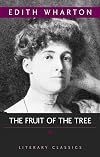
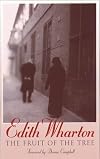
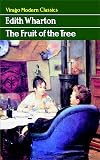
The Fruit of the Tree
by Edith Wharton
On This Page
Description
Brimming with romance and important social questions, Edith Wharton's novel The Fruit of the Tree offers something for everyone. The story expertly weaves themes of workers' rights, medical ethics, and end-of-life care into the framework of a conventional—but pulse-pounding—romantic entanglement..
Tags
Recommendations



















Member Reviews
10. The Fruit of the Tree by Edith Wharton
published: 1907
format: Kindle Public Domain ebook, I'm calling it 400 pages
acquired: November, read: Feb 6 – Mar 17, time reading: 15:13, 2.3 mpp
rating: 4½
genre/style: novel theme Wharton
locations: New York City and a fictional factory town in Massachusetts
about the author: about the author: 1862-1937. Born Edith Newbold Jones on West 23rd Street, New York City. Relocated permanently to France after 1911.
Ah, Justine.
On Litsy we were comparing Wharton to Willa Cather, because the same group read Cather previously. They are such different writers. Wharton was born into the New York City leisure class, whereas Willa Cather grew up in Nebraska, was educated in Lincoln before coming to New York show more City to write. They both overlapped as New York City writers in the early 1900's, before Wharton left for France permanently around 1911, and both were deeply influenced by Henry James (Wharton was a personal friend of his.). Of course, Wharton wrote of her own class, critically, making her a very jaded writer, even if sharp and elegant. Cather began by writing about this leisure class too, before exploring her own roots, and even turning spiritual in her own way. I told the group I see Wharton as insistent, needing to convince (us, the reader, and also the world). Whereas I see Cather accepting that you, reader, are probably never going to change and see it her way.
Justine. Justine is the most Wharton-like character I've come across in her books. She was born in the leisure class, but she works for a living. She's a nurse, self-sufficient, and not married, and not in any rush to get married although she's looking around. She's practical, sharp, well read, philosophical, and an independent thinker in every way. The odd structure of this book puts her in the opening seen, caring for a patient, and then leaves her mostly alone, a secondary character, for a long time, before putting her out in front again, in all her wit and flaws.
Our nurse is taking care of a mangled factory worker and the novel begins with a look at the abuse of factory labor for profit, almost an exposé. But it turns to the owners of these factories, the leisure class. And Wharton studies them, putting a widow in an accidental ownership role she's completely unsuited to, letting things play out. She studies all her characters, but especially looks into these different women and their contradictory expectations. Our widow, Bessy: "Isn't she one of the most harrowing victims of the plan of bringing up our girls in the double bondage of expediency and unreality, corrupting their bodies with luxury and their brains with sentiment, and leaving them to reconcile the two as best they can, or lose their souls in the attempt."
The novel never solves the paternalistic perspectives on the factory workers, ever viewed as "these dim creatures of the underworld," but it does work on marriage, ethics, and the conflicts of idealism and practical reality. Her study of marriage is quite magnificent, capturing that bewildering unintended failure to communicate. The novel is all over in several interesting places. As I put it in Litsy, it‘s not just how many different unexpected turns this novel‘s focus takes, but how thought provoking each is. It led to a lot of discussion.
It's a difficult book to review. A plot summary is really difficult as the plot is just complicated, and it's nearly impossible to avoid spoilers. But there is a lot of good stuff in this rather obscure book. It's a bit long (although the 600-pages editions are really misleading. It's not _that_ long. I read this in less time than I read [The House of Mirth]), so recommended to the curious and committed.
2022
https://www.librarything.com/topic/337810#7799631 show less
published: 1907
format: Kindle Public Domain ebook, I'm calling it 400 pages
acquired: November, read: Feb 6 – Mar 17, time reading: 15:13, 2.3 mpp
rating: 4½
genre/style: novel theme Wharton
locations: New York City and a fictional factory town in Massachusetts
about the author: about the author: 1862-1937. Born Edith Newbold Jones on West 23rd Street, New York City. Relocated permanently to France after 1911.
Ah, Justine.
On Litsy we were comparing Wharton to Willa Cather, because the same group read Cather previously. They are such different writers. Wharton was born into the New York City leisure class, whereas Willa Cather grew up in Nebraska, was educated in Lincoln before coming to New York show more City to write. They both overlapped as New York City writers in the early 1900's, before Wharton left for France permanently around 1911, and both were deeply influenced by Henry James (Wharton was a personal friend of his.). Of course, Wharton wrote of her own class, critically, making her a very jaded writer, even if sharp and elegant. Cather began by writing about this leisure class too, before exploring her own roots, and even turning spiritual in her own way. I told the group I see Wharton as insistent, needing to convince (us, the reader, and also the world). Whereas I see Cather accepting that you, reader, are probably never going to change and see it her way.
Justine. Justine is the most Wharton-like character I've come across in her books. She was born in the leisure class, but she works for a living. She's a nurse, self-sufficient, and not married, and not in any rush to get married although she's looking around. She's practical, sharp, well read, philosophical, and an independent thinker in every way. The odd structure of this book puts her in the opening seen, caring for a patient, and then leaves her mostly alone, a secondary character, for a long time, before putting her out in front again, in all her wit and flaws.
Our nurse is taking care of a mangled factory worker and the novel begins with a look at the abuse of factory labor for profit, almost an exposé. But it turns to the owners of these factories, the leisure class. And Wharton studies them, putting a widow in an accidental ownership role she's completely unsuited to, letting things play out. She studies all her characters, but especially looks into these different women and their contradictory expectations. Our widow, Bessy: "Isn't she one of the most harrowing victims of the plan of bringing up our girls in the double bondage of expediency and unreality, corrupting their bodies with luxury and their brains with sentiment, and leaving them to reconcile the two as best they can, or lose their souls in the attempt."
The novel never solves the paternalistic perspectives on the factory workers, ever viewed as "these dim creatures of the underworld," but it does work on marriage, ethics, and the conflicts of idealism and practical reality. Her study of marriage is quite magnificent, capturing that bewildering unintended failure to communicate. The novel is all over in several interesting places. As I put it in Litsy, it‘s not just how many different unexpected turns this novel‘s focus takes, but how thought provoking each is. It led to a lot of discussion.
It's a difficult book to review. A plot summary is really difficult as the plot is just complicated, and it's nearly impossible to avoid spoilers. But there is a lot of good stuff in this rather obscure book. It's a bit long (although the 600-pages editions are really misleading. It's not _that_ long. I read this in less time than I read [The House of Mirth]), so recommended to the curious and committed.
2022
https://www.librarything.com/topic/337810#7799631 show less
In this perhaps less known novel by Wharton, she takes on some big issues in addition to her usual exploration of New York society and its foibles. Here, she looks at labor and industrial conditions, with horrid and dangerous working conditions and exploitation of workers, and the wealth created for owners and how they use that wealth. The novel also considers the issue of euthanasia.
John, one of the managers at the factory, is an idealist who wants to put in reforms to make conditions better for the workers. He meets newly-widowed Bessie, who has become the owner of the factory after her husband's death. He wants to convince her to make the reforms. Bessie falls in love with John, and in theory with his idealism, and they marry. But show more will Bessie be able to forgo at least a tiny bit of her accustomed life of luxury in order to make matters better for the workers?
Another important character is Justine, who John also meets at the beginning of the novel. Although she is of a high social class, she is a nurse, and seems to share many of John's views regarding reform. She is friends with Bessie, and becomes a semi-companion to Bessie. Later, when Justine is observed giving a drug overdose to a patient with little chance of survival and only prolonged suffering to look forward to, she becomes the victim of blackmail.
Wharton, as always writes beautifully, and her characters are precisely observed. A large part of the drama of this book is the way in which the three main characters miscommunication or fail to communicate with each other, and the tragedies that leads to. The ending is magnificent. show less
John, one of the managers at the factory, is an idealist who wants to put in reforms to make conditions better for the workers. He meets newly-widowed Bessie, who has become the owner of the factory after her husband's death. He wants to convince her to make the reforms. Bessie falls in love with John, and in theory with his idealism, and they marry. But show more will Bessie be able to forgo at least a tiny bit of her accustomed life of luxury in order to make matters better for the workers?
Another important character is Justine, who John also meets at the beginning of the novel. Although she is of a high social class, she is a nurse, and seems to share many of John's views regarding reform. She is friends with Bessie, and becomes a semi-companion to Bessie. Later, when Justine is observed giving a drug overdose to a patient with little chance of survival and only prolonged suffering to look forward to, she becomes the victim of blackmail.
Wharton, as always writes beautifully, and her characters are precisely observed. A large part of the drama of this book is the way in which the three main characters miscommunication or fail to communicate with each other, and the tragedies that leads to. The ending is magnificent. show less
Although not as beautifully rendered as her more well-known works (such as House of Mirth, Age of Innocence, and Custom of the Country), The Fruit of the Tree is still a gripping story, with all of the miscommunication and heartache that one would expect in any novel by Wharton. In this case, the story follows John Amherst, a visionary trying to carry out plans for industrial renewal while building a life for himself with his wife. The story looks at the problem of communicating higher ideals to those whose sole concern is with immediate profit from a more personal level than is usual; the fact that the protagonist is neither the owner of the factory nor a low-level worker is also somewhat unusual and makes for a novel show more perspective.
Running alongside and among the story of the mills is the story of Amherst's relationships- with society, with his wife, and with his family. Wharton is in her element here, as she draws well-developed characters and then proceeds to let them destroy each other in that way that only people can. Miscommunication, often due to societal constraints, is really the heart of the novel, and Wharton does an excellent job of demonstrating how easy it is to ruin another person simply by not saying that which you mean, or by allowing prejudice and pride impede actions and speech.
As is typical, The Fruit of the Tree does not have a very happy ending, though it is somewhat less tragic than many of Wharton's other novels. Sort of. But not really. show less
Running alongside and among the story of the mills is the story of Amherst's relationships- with society, with his wife, and with his family. Wharton is in her element here, as she draws well-developed characters and then proceeds to let them destroy each other in that way that only people can. Miscommunication, often due to societal constraints, is really the heart of the novel, and Wharton does an excellent job of demonstrating how easy it is to ruin another person simply by not saying that which you mean, or by allowing prejudice and pride impede actions and speech.
As is typical, The Fruit of the Tree does not have a very happy ending, though it is somewhat less tragic than many of Wharton's other novels. Sort of. But not really. show less
This is a lesser known novel by Edith Wharton that nevertheless has her characteristic deep dive into her characters' motivations and a look at social issues. In this novel, Wharton tackles two big issues of the day - the plight of factory workers and what the responsibility of the owners should be to improve their lives, and end of life decisions regarding prolonging a painful life through medication vs. choosing to end it.
Pretty different topics, right? And the novel is a bit like that. The first third has a pretty thorough focus on factory life and owner responsibility, the middle third becomes more of a bad marriage story, and the end is a happy ending disrupted by this end of life issue. Wharton does manage to tie it all together show more with some well thought out and developed characters, but I thought it was less successful than some of her other masterpieces.
There is still plenty to enjoy and appreciate here, but I wouldn't recommend it as a place to start with Wharton's writing. show less
Pretty different topics, right? And the novel is a bit like that. The first third has a pretty thorough focus on factory life and owner responsibility, the middle third becomes more of a bad marriage story, and the end is a happy ending disrupted by this end of life issue. Wharton does manage to tie it all together show more with some well thought out and developed characters, but I thought it was less successful than some of her other masterpieces.
There is still plenty to enjoy and appreciate here, but I wouldn't recommend it as a place to start with Wharton's writing. show less
Mrs. Wharton is an excellent writer. She writes a well-crafted plot and takes care that our interest will be held throughout. She knows character and how to flesh it out in fiction. This must come from being a careful and discriminating observer of human behaviour. All her characters in this book are convincing as participants in a developing drama; a crisis that calls for a writer whose familiarity with human foibles will carry the novel through to a satisfying, yet sobering, end.
This novel flows without any authorial interventions which might disturb it. Mrs. Wharton is so sufficiently in command of the contemporary social milieu of the ruling classes of early Twentieth Century America as to lead the reader into a very credible show more fiction.
The great themes of the book are the condition of mill workers and the degree to which factory owners might alleviate at least sone of their drudgery, the great debate about when life in extremis should be ended for mercy's sake, and the frightful consequences that might ensue when communication between loving partners fails to be open; all as relevant today as in 1902.
Edith Wharton is from the highest echelon of American writers in my opinion. show less
This novel flows without any authorial interventions which might disturb it. Mrs. Wharton is so sufficiently in command of the contemporary social milieu of the ruling classes of early Twentieth Century America as to lead the reader into a very credible show more fiction.
The great themes of the book are the condition of mill workers and the degree to which factory owners might alleviate at least sone of their drudgery, the great debate about when life in extremis should be ended for mercy's sake, and the frightful consequences that might ensue when communication between loving partners fails to be open; all as relevant today as in 1902.
Edith Wharton is from the highest echelon of American writers in my opinion. show less
This is definitely NOT a typical Edith Wharton novel. Instead of the foibles of the aristocracy of New York Cit, we have a book that is part a muckraking polemic on the evils of manufacturing and part lurid love story laced with adultery, drug addiction and euthanasia. Quite the topics for 1907!
John Amherst, the reform-minded assistant manager at the Hanaford textile mills, meets trained nurse Justine Brent at the hospital bedside of Dillon, an injured mill worker. They agree that Dillon would be better off dead if he cannot return to the job. Their discussion of euthanasia, sets up the novel's major incident.
Meanwhile, Amherst is asked show the mills to the new owner, Bessy Langhope Westmore, who a wealthy young widow with a young show more daughter. During the course of later meetings over the fate of the workers, Bessy falls in love with Amherst. Thinking that she shares his idealistic social vision and concern for the workers, Amherst marries her and begins his campaign of reforming the mills.
However, he runs into opposition from Bessy's father and her lawyer who think that all this reforming will eat into Bessy's income. After the death of their infant son, Bessy and Amherst become increasingly estranged, and he spends longer and longer periods absent from home immersed in his work. When he is home he & , Justine meet and discussed conditions in the mills. He comes to regard her as a friend. who understands him as opposed to Bessy who lives more and more for her own pleasure.
Bessy recognizes that Amherst is drifting away from her. Hurt by his indifference, she starts going to parties with the disreputable Mrs. Fenton Carbury and indulges herself in planning a "pleasure-house." Bessy has also renewed her friendship with Justine, who tacitly understands the situation. Seeing the two drift apart and urged on by Mrs. Ansell, an older friend of Bessy's, Justine writes to Amherst that he should return home. Hurt by Amherst's refusal to do so, Bessy rides over icy roads on her horse, and suffers a near-fatal spinal injury
Justine watches Bessy suffer helplessly at the hands of Dr. Wyant, an ambitious young doctor determined to keep his patient alive at all costs. Justine recalls her discussion with Amherst about euthanasia, and moved by Bessy's plight, she administers an overdose of morphine to Bessy.
After Bessy's death, Justine and Amherst marry, but their happiness is short-lived.because Dr. Wyant, now addicted to morphine, threatens to expose Justine's action and blackmails her. Soon he will no longer be bought off by the small sums that Justine has sent him and she must tell Amherst the truth. He is appalled at her action and she sacrifices her own happiness and leaves.
When Bessy's daughter Cicely falls ill and pines for Justine, Amherst seeks Justine out and they reconcile, but not happily for long. .
Amherst finds a set of plans for Bessy's pleasure-house and mistakes them for a new recreation hall for the millworkers and believes Bessy had at last learned to share his compassionate attitude toward the workers in the mill. When he asks Justine about Bessy's motives for building the gymnasium, Justine, who knows the truth, nonetheless lies to preserve his illusions. With the specter of the now-idealized Bessy between them, however, Justine and Amherst can never again live in the total happiness of their first few months together. Wharton has clearly written a book ahead of it's time. show less
John Amherst, the reform-minded assistant manager at the Hanaford textile mills, meets trained nurse Justine Brent at the hospital bedside of Dillon, an injured mill worker. They agree that Dillon would be better off dead if he cannot return to the job. Their discussion of euthanasia, sets up the novel's major incident.
Meanwhile, Amherst is asked show the mills to the new owner, Bessy Langhope Westmore, who a wealthy young widow with a young show more daughter. During the course of later meetings over the fate of the workers, Bessy falls in love with Amherst. Thinking that she shares his idealistic social vision and concern for the workers, Amherst marries her and begins his campaign of reforming the mills.
However, he runs into opposition from Bessy's father and her lawyer who think that all this reforming will eat into Bessy's income. After the death of their infant son, Bessy and Amherst become increasingly estranged, and he spends longer and longer periods absent from home immersed in his work. When he is home he & , Justine meet and discussed conditions in the mills. He comes to regard her as a friend. who understands him as opposed to Bessy who lives more and more for her own pleasure.
Bessy recognizes that Amherst is drifting away from her. Hurt by his indifference, she starts going to parties with the disreputable Mrs. Fenton Carbury and indulges herself in planning a "pleasure-house." Bessy has also renewed her friendship with Justine, who tacitly understands the situation. Seeing the two drift apart and urged on by Mrs. Ansell, an older friend of Bessy's, Justine writes to Amherst that he should return home. Hurt by Amherst's refusal to do so, Bessy rides over icy roads on her horse, and suffers a near-fatal spinal injury
Justine watches Bessy suffer helplessly at the hands of Dr. Wyant, an ambitious young doctor determined to keep his patient alive at all costs. Justine recalls her discussion with Amherst about euthanasia, and moved by Bessy's plight, she administers an overdose of morphine to Bessy.
After Bessy's death, Justine and Amherst marry, but their happiness is short-lived.because Dr. Wyant, now addicted to morphine, threatens to expose Justine's action and blackmails her. Soon he will no longer be bought off by the small sums that Justine has sent him and she must tell Amherst the truth. He is appalled at her action and she sacrifices her own happiness and leaves.
When Bessy's daughter Cicely falls ill and pines for Justine, Amherst seeks Justine out and they reconcile, but not happily for long. .
Amherst finds a set of plans for Bessy's pleasure-house and mistakes them for a new recreation hall for the millworkers and believes Bessy had at last learned to share his compassionate attitude toward the workers in the mill. When he asks Justine about Bessy's motives for building the gymnasium, Justine, who knows the truth, nonetheless lies to preserve his illusions. With the specter of the now-idealized Bessy between them, however, Justine and Amherst can never again live in the total happiness of their first few months together. Wharton has clearly written a book ahead of it's time. show less
I do not know why i love these Wharton books so much....it is something about the overly long sentences that read so naturally that you don't realize how long they are....the way she is able to convey so much in merely the description of one's face...the fascinating world of upper class 'manners' of that period.......and i could go on and on......I'm gonna be disappointed when i have completed all of her books....gonna space the remaining volumes out over time.....i just don't want them to end!
Members
- Recently Added By
Author Information

379+ Works 63,782 Members
Edith Wharton was a woman of extreme contrasts; brought up to be a leisured aristocrat, she was also dedicated to her career as a writer. She wrote novels of manners about the old New York society from which she came, but her attitude was consistently critical. Her irony and her satiric touches, as well as her insight into human character, show more continue to appeal to readers today. As a child, Wharton found refuge from the demands of her mother's social world in her father's library and in making up stories. Her marriage at age 23 to Edward ("Teddy") Wharton seemed to confirm her place in the conventional role of wealthy society woman, but she became increasingly dissatisfied with the "mundanities" of her marriage and turned to writing, which drew her into an intellectual community and strengthened her sense of self. After publishing two collections of short stories, The Greater Inclination (1899) and Crucial Instances (1901), she wrote her first novel, The Valley of Decision (1902), a long, historical romance set in eighteenth-century Italy. Her next work, the immensely popular The House of Mirth (1905), was a scathing criticism of her own "frivolous" New York society and its capacity to destroy her heroine, the beautiful Lily Bart. As Wharton became more established as a successful writer, Teddy's mental health declined and their marriage deteriorated. In 1907 she left America altogether and settled in Paris, where she wrote some of her most memorable stories of harsh New England rural life---Ethan Frome (1911) and Summer (1917)---as well as The Reef (1912), which is set in France. All describe characters forced to make moral choices in which the rights of individuals are pitted against their responsibilities to others. She also completed her most biting satire, The Custom of the Country (1913), the story of Undine Spragg's climb, marriage by marriage, from a midwestern town to New York to a French chateau. During World War I, Wharton dedicated herself to the war effort and was honored by the French government for her work with Belgian refugees. After the war, the world Wharton had known was gone. Even her Pulitzer Prize-winning novel, The Age of Innocence (1920), a story set in old New York, could not recapture the former time. Although the new age welcomed her---Wharton was both a critical and popular success, honored by Yale University and elected to The National Institute of Arts and Letters---her later novels show her struggling to come to terms with a new era. In The Writing of Fiction (1925), Wharton acknowledged her debt to her friend Henry James, whose writings share with hers the descriptions of fine distinctions within a social class and the individual's burdens of making proper moral decisions. R.W.B. Lewis's biography of Wharton, published in 1975, along with a wealth of new biographical material, inspired an extensive reevaluation of Wharton. Feminist readings and reactions to them have focused renewed attention on her as a woman and as an artist. Although many of her books have recently been reprinted, there is still no complete collected edition of her work. (Bowker Author Biography) show less
Some Editions
Series
Belongs to Publisher Series
Virago Modern Classics (145)
Work Relationships
Is contained in
Common Knowledge
- Canonical title
- The Fruit of the Tree
- Original publication date
- 1907
- First words
- In the surgical ward of the Hope Hospital at Hanaford, a nurse was bending over a young man whose bandaged right hand and arm lay stretched along the bed.
The Fruit of the Tree is an engrossing novel. (Introduction) - Last words
- (Click to show. Warning: May contain spoilers.)Beyond them rose the smoke of Westmore.
(Click to show. Warning: May contain spoilers.)My words, echoing Wharton's words, express a moral truth the world's leaders have yet to hear and comprehend; indeed they remain mere words until you comprehend it. (Introduction)
Classifications
Statistics
- Members
- 201
- Popularity
- 162,670
- Reviews
- 7
- Rating
- (3.77)
- Languages
- English, French
- Media
- Paper, Ebook
- ISBNs
- 60
- ASINs
- 13