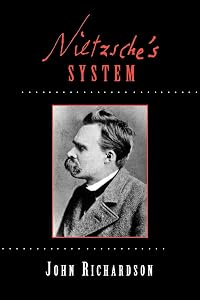
Nietzsche's System
by John Richardson
On This Page
Description
This book argues, against recent interpretations, that Nietzsche does in fact have a metaphysical system--but that this is to his credit. Rather than renouncing philosophy's traditional project, he still aspires to find and state essential truths, both descriptive and valuative, about us andthe world. These basic thoughts organize and inform everything he writes; by examining them closely we can find the larger structure and unifying sense of his strikingly diverse views. With rigor and show more conceptual specificity, Richardson examines the will-to-power ontology and maps the values thatemerge from it. He also considers the significance of Nietzsche's famous break with Plato--replacing the concept of "being" with that of "becoming." By its conservative method, this book tries to do better justice to the truly radical force of Nietzsche's ideas--to demonstrate more exactly theirnovelty and interest. show lessTags
Recommendations
















Members
- Recently Added By
Author Information
7 Works 167 Members
John Richardson here organizes Nietzsche's thinking around the central and unifying concept of values. Richardson maps in detail Nietzsche's arguments, which crucially distinguish three basic ways of valuing. The first is the valuing Nietzsche attributes to all living things, and to us humans in our bodies; Nietzsche insists that we already value show more in our drives and affects. The second is our distinctively human valuing, which; we carry out as subjects and agents; these conscious and worded values are superimposed on those bodily ones, in ways Nietzsche finds deeply problematic. The third is the new way of valuing that Nietzsche offers as his lesson from that diagnosis and critique of our human values; these new values are centered on a universal affirmation or "Yes," epitomized in the thought of eternal return. Each of the book's twelve chapters examines a different aspect of one of these ways of valuing, showing the complexity of Nietzsche's thinking on its topic, but also its unity and consistency. Incorporating recent advances in philosophical scholarship on Nietzsche, Richardson's thought-provoking new interpretation will serve as a vital updated reference point for future work. show less
Classifications
Statistics
- Members
- 28
- Popularity
- 978,625
- Languages
- English
- Media
- Paper, Ebook
- ISBNs
- 6