Red or Dead
by David Peace
On This Page
Description
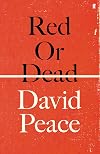
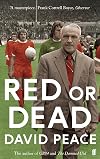
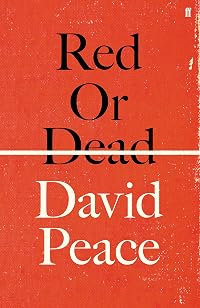
'Red or Dead' is the story of the rise of Liverpool Football Club and Bill Shankly. And the story of the retirement of Bill Shankly. Of one man and his work. And of the man after that work. A man in two halves. Home and away.Tags
Recommendations

















Member Reviews
It takes a pretty special effort to write such a turgid, bloated, repetitive and boring book about a subject that should be of great interest to a sports fan such as myself.
Peace's novel is based on the career of Bill Shankly, the soccer manager who dragged Liverpool from the doldrums of the Second Division to being the power in the game that it is today. Shankly was ambitious, dedicated, determined and a great judge of talent. His attitude is best summed up by his famous quote: 'Some people believe football is a matter of life and death, I am very disappointed with that attitude. I can assure you it is much, much more important than that.'
There are great moments in this book, such as when Shankly first hears the Liverpool anthem, show more You'll Never Walk Alone. Some excellent writing too: Bill knew the time of the greatest victory was also the time of the greatest danger.These hours when the seeds were sown, these days when the seeds were planted. The seeds of complacency, the seeds of idleness. Watered with song, drowned with wine. The seeds of defeat. In showers of praise. But these brief moments are drowned in a sea of mundane writing at almost John and Betty level: Bill went to the drawer. Bill opened the drawer. Bill took out the tablecloth. Bill closed the drawer. This precedes about a page and a half describing Bill setting the table. Not only that; Peace recounts this identical scene several times at different points. At one stage, Peace spends about ten pages describing Bill mowing the lawn. Peace describes vast numbers of Liverpool matches following exactly the same bland formulaic prose, always terminated by the unnecessary tautology "Away from home. Away from Anfield" or "At home. At Anfield". There is so much of this bland repetition that it completely crowds out the inherent interest in a story of ambition, achievement, triumph and the bittersweet aftermath of retirement after a glittering career. There is more than 730 pages in this book, and Peace could easily have told this story in half that length. It's massively contemptuous of readers, their time and their patience.
I can only conclude that Peace must be an Everton supporter, to have written such an appalling book about a Liverpool legend such as Shankly. show less
Peace's novel is based on the career of Bill Shankly, the soccer manager who dragged Liverpool from the doldrums of the Second Division to being the power in the game that it is today. Shankly was ambitious, dedicated, determined and a great judge of talent. His attitude is best summed up by his famous quote: 'Some people believe football is a matter of life and death, I am very disappointed with that attitude. I can assure you it is much, much more important than that.'
There are great moments in this book, such as when Shankly first hears the Liverpool anthem, show more You'll Never Walk Alone. Some excellent writing too: Bill knew the time of the greatest victory was also the time of the greatest danger.These hours when the seeds were sown, these days when the seeds were planted. The seeds of complacency, the seeds of idleness. Watered with song, drowned with wine. The seeds of defeat. In showers of praise. But these brief moments are drowned in a sea of mundane writing at almost John and Betty level: Bill went to the drawer. Bill opened the drawer. Bill took out the tablecloth. Bill closed the drawer. This precedes about a page and a half describing Bill setting the table. Not only that; Peace recounts this identical scene several times at different points. At one stage, Peace spends about ten pages describing Bill mowing the lawn. Peace describes vast numbers of Liverpool matches following exactly the same bland formulaic prose, always terminated by the unnecessary tautology "Away from home. Away from Anfield" or "At home. At Anfield". There is so much of this bland repetition that it completely crowds out the inherent interest in a story of ambition, achievement, triumph and the bittersweet aftermath of retirement after a glittering career. There is more than 730 pages in this book, and Peace could easily have told this story in half that length. It's massively contemptuous of readers, their time and their patience.
I can only conclude that Peace must be an Everton supporter, to have written such an appalling book about a Liverpool legend such as Shankly. show less
Well, we can't say he didn't warn us. 'Repetition. Repetition. Repetition.' Those are the first three words of David's Peace's novel on Bill Shankly's years as manager of Liverpool FC (or 'Liverpool Football Club' as Peace reiterates throughout) and repetition is what we are given on every one of the 700-odd pages that follow. Relentless. Relentless. Relentless. It's a style that has divided critics, and has divided this critic. Even while I'm writing this review I'm still trying to work out what I feel about the experience, and what I should say about it.
I could say the novel is powerful and brilliant. It drills into us, injects into our mainstream the Shankly obsession with the team and the unbearable tension that inevitably show more accompanies it. The unadorned accounts of match after match, entirely stripped of verbiage and sporting cliché, are insistent drumbeats on the brain. The repeated step-by-step descriptions of Shankly's domestic chores - laying the kitchen table, washing the car - are written and read at the nerve ends. Ness, the placidly inscrutable wife in the background, and the daughters - never present, always somewhere else - underscore Bill's constant isolation. Other characters - the board of directors, fellow managers, players, specific fans - exist chiefly to show what Bill is not (guileful, worldly) or to emphasise his difference even where he is at his most influential - somehow standing outside even when he seems at his happiest and most absorbed in the first half of the book when he is working; an ambiguous state, a strangely parallel existence which is both a stark contrast and a prefiguration of his more obvious isolation in the second half, standing alone in corridors outside dressing rooms after his ill-judged retirement. The diction throughout is near-biblical, lifting and sanctifying, with a distant roll of morality like coming thunder.
I could say the reading experience in detail is tedious and wearing. I could say that the second half of the book - which uses entire transcripts of long radio and television interviews including a broadcast conversation between Bill Shankly and then-Prime Minister Harold Wilson - represents lazy editing, merely the author importing his research material wholesale into the novel. I want to argue myself out of those propositions, insist that the gestalt is the potent brew and no ingredient can be changed or modified. But I have no way of knowing whether that is true: the book is what it is.
Would I recommend it? Absolutely yes. But don't say I didn't warn you. show less
I could say the novel is powerful and brilliant. It drills into us, injects into our mainstream the Shankly obsession with the team and the unbearable tension that inevitably show more accompanies it. The unadorned accounts of match after match, entirely stripped of verbiage and sporting cliché, are insistent drumbeats on the brain. The repeated step-by-step descriptions of Shankly's domestic chores - laying the kitchen table, washing the car - are written and read at the nerve ends. Ness, the placidly inscrutable wife in the background, and the daughters - never present, always somewhere else - underscore Bill's constant isolation. Other characters - the board of directors, fellow managers, players, specific fans - exist chiefly to show what Bill is not (guileful, worldly) or to emphasise his difference even where he is at his most influential - somehow standing outside even when he seems at his happiest and most absorbed in the first half of the book when he is working; an ambiguous state, a strangely parallel existence which is both a stark contrast and a prefiguration of his more obvious isolation in the second half, standing alone in corridors outside dressing rooms after his ill-judged retirement. The diction throughout is near-biblical, lifting and sanctifying, with a distant roll of morality like coming thunder.
I could say the reading experience in detail is tedious and wearing. I could say that the second half of the book - which uses entire transcripts of long radio and television interviews including a broadcast conversation between Bill Shankly and then-Prime Minister Harold Wilson - represents lazy editing, merely the author importing his research material wholesale into the novel. I want to argue myself out of those propositions, insist that the gestalt is the potent brew and no ingredient can be changed or modified. But I have no way of knowing whether that is true: the book is what it is.
Would I recommend it? Absolutely yes. But don't say I didn't warn you. show less
Bill Shankly was a man worth getting to know, and this novel gives one the best possible feel for him that I can imagine a book giving. His drive, his ambition, his love for his fellow man, his obsession with the game to the unfortunate neglect of other parts of life, his difficult transition into retirement, his neediness and his generosity. Brilliant.
In his room, his hotel room. Not in his bed, his hotel bed. Bill paced and Bill paced. Bill thinking and Bill thinking. Bill knew failure could become habitual, defeat become routine. Routine and familiar. Familiar and accepted. Accepted and permanent. Permanent and imprisoning. Imprisoning and suffocating. Bill knew failure carried chains. Chains to bind you. You and your dreams. To bindshow more
you and your dreams alive. Bill knew defeat carried spades. Spades to bury you. Your and your hopes. To bury you and your hopes alive. Bill knew you had to fight against failure. With every bone in your body. Bill knew you had to struggle against defeat. With every drop of your blood. You had to fight against failure, you had to struggle against defeat. For your dreams and for your hopes. For you and for the people. To fight and to struggle. For the dreams of the people,show less
for the hopes of the people.
This was the first book I read by David Peace. Pretty much all of his works are on my to-read list for one reason or another, but I figured this would be a good one to start with because its subject matter -- the life and career of Liverpool FC manager Bill Shankly -- would probably be less grim than that of the Red Riding quartet, which was the first of his works to attract my attention.
Well, that assessment was correct. This is definitely not a grim book, but it requires determination of a different kind to get through. Peace meticulously layers small, repetitive statements to build up a portrait of Shankly that a review in the Independent described as resembling a pointillist painting. For this reason, it might be better for faster show more readers who can skim; once I got into the rhythm I could spot some of the really repetitive bits, such as the training sessions at Melwood, and skip ahead to the next event. And it did take a bit of time to settle into the rhythm. But once I did, it was almost hypnotic and pulled me right along.
The ideal reader of this book, then, is someone who doesn't mind getting stuck in a book for a while, and is familiar with at least the basic rules of soccer. Knowledge of the Byzantine association football system of cups and leagues might also help but is not a prerequisite. The book contains a bibliography at the back that may be of assistance, and of course the Internet can also help. Also, for what it's worth, I found this easier to read in the trade paperback edition (I started out with hardcover and switched to a different copy). More comfortable to hold, and the page dimensions feel smaller.
Those who have already read The Damned Utd (or seen the movie) might like this book, but be prepared for the long haul. show less
Well, that assessment was correct. This is definitely not a grim book, but it requires determination of a different kind to get through. Peace meticulously layers small, repetitive statements to build up a portrait of Shankly that a review in the Independent described as resembling a pointillist painting. For this reason, it might be better for faster show more readers who can skim; once I got into the rhythm I could spot some of the really repetitive bits, such as the training sessions at Melwood, and skip ahead to the next event. And it did take a bit of time to settle into the rhythm. But once I did, it was almost hypnotic and pulled me right along.
The ideal reader of this book, then, is someone who doesn't mind getting stuck in a book for a while, and is familiar with at least the basic rules of soccer. Knowledge of the Byzantine association football system of cups and leagues might also help but is not a prerequisite. The book contains a bibliography at the back that may be of assistance, and of course the Internet can also help. Also, for what it's worth, I found this easier to read in the trade paperback edition (I started out with hardcover and switched to a different copy). More comfortable to hold, and the page dimensions feel smaller.
Those who have already read The Damned Utd (or seen the movie) might like this book, but be prepared for the long haul. show less
I found this book tedious, repetitive and at times sublimely beautiful kinda like soccer or football itself. In 1959 Liverpool were struggling in the Second Division until Bill Shankly and while turnaround wasn't meteoric or 100 percent successful it still profound, Liverpool are current European champions and Bill Shankly is a big reason why.
On aurait pu écrire ce livre en 350 pages et pas 800, tellement il y'a des répétitions. Enervant et après 80 pages, c'est trop, j'ai arrêté.
Oct 18, 2015French
Members
- Recently Added By
Lists

in the name of the game ~ sport novels
23 works; 2 members

Novels about Sport
10 works; 1 member
Author Information

19+ Works 5,478 Members
Awards and Honors
Awards
Distinctions
Common Knowledge
- First words
- Repetition. Repetition. Repetition.
- Quotations
- It was, if I have enough, I have plenty and I don't want anymore.
Classifications
Statistics
- Members
- 209
- Popularity
- 156,466
- Reviews
- 7
- Rating
- (3.61)
- Languages
- 6 — Dutch, English, French, German, Italian, Norwegian (Bokmål)
- Media
- Paper, Ebook
- ISBNs
- 14
- ASINs
- 4