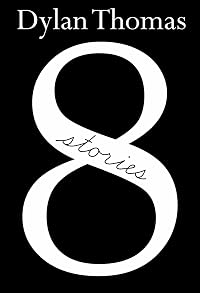
Eight Stories (New Directions Bibelots)
by Dylan Thomas
On This Page
Description
This story collection includes The End of The River, The School for Witches, The Peaches, Just Like Little Dogs, Old Garbo, One Warm Saturday, Plenty of Furniture, The FollowersTags
Recommendations















Member Reviews
I'm not sure that I'll finish this - I've read quite a bit of it, left it the other side of the world...I seem to have been disappointed by it compared with most readers. My fault?
I'm not sure that I'll finish this - I've read quite a bit of it, left it the other side of the world...I seem to have been disappointed by it compared with most readers. My fault?
Ratings
Members
- Recently Added By
Author Information

275+ Works 15,847 Members
The most important Welsh poet of the twentieth century, Thomas was born in Swansea, about which he remembered unkindly "the smug darkness of a provincial town." He attended Swansea Grammar School but received his real education in the extensive library of his father, a disappointed schoolteacher with higher ambitions. Refusing university study in show more favor of immediately becoming a professional writer, Thomas worked first in Swansea and then in London at a variety of literary jobs, which included journalism and, eventually, filmscripts and radio plays. In 1936 he began the satisfying but stormy marriage to the bohemian writer and dancer Caitlin MacNamara that would endure for the rest of his career. His life fell into a pattern of oscillation between work and dissipation in London and recovery and relaxation in a rural retreat, usually in Wales. Thomas worked in a documentary film unit during the war. Besides his poetry, he wrote plays and fiction. In the early 1950s, he gave three celebrated poetry-reading tours of the United States, during which his outrageous behavior vied with his superb reading ability for public attention. Aggravated by chronic alcoholism, his health collapsed during the last tour, and he died in a New York City hospital. In his poetry, Thomas embraced an exuberant romanticism in the encounter between self and world and a joyous riot in the lushness of language. His work falls into three periods---an early "womb-tomb" phase during which he produced a notebook, which he later mined for further poems, a middle one troubled by marriage and war, and a final acceptance of the human condition. The exuberant rhetoric of his work belies an equally strong devotion to artistry, what he once called "my craft or sullen art." His great "Fern Hill," for example, builds its imagery of the rejoicing innocence of childhood on a strict and demanding syllabic count. A recollection of boyhood holidays on the farm of his aunt and uncle, that poem places its emotion within an Edenic framework typical of Thomas's work. The impressive sonnet sequence "Altarwise by Owl-Light" (1936) combines the internal quest of romanticism with a more elaborate religious outlook in tracing the birth and spiritual autobiography of a poet. Almost at the end of his career he produced the moving elegy "Do Not Go Gentle into That Good Night" (1952), written during the final illness of his father. Despite his periods of doubt and dissipation, Thomas celebrated the fullness of life. As he wrote in a note to his Collected Poems (1952), "These poems, with all their crudities, doubts, and confusion, are written for the love of Man and in praise of God, and I'd be a damn fool if they weren't." (Bowker Author Biography) show less
Series
Belongs to Publisher Series
Common Knowledge
- Canonical title
- Eight Stories (New Directions Bibelots) (New Directions Bibelots)
Classifications
Statistics
- Members
- 38
- Popularity
- 748,548
- Reviews
- 2
- Rating
- (3.50)
- Languages
- English
- Media
- Paper, Ebook
- ISBNs
- 3
- ASINs
- 1