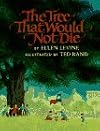
The Tree That Would Not Die
by Ellen Levine
On This Page
Description
A 500 year old tree tells what it has seen as Austin, Texas grew from an Indian village to a modern city.Tags
Recommendations



Member Recommendations
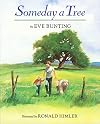
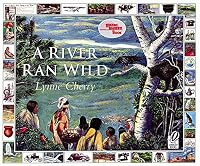
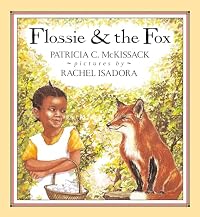
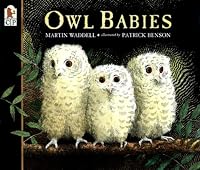
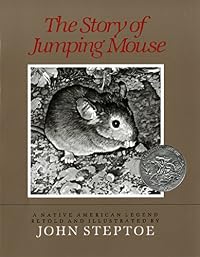
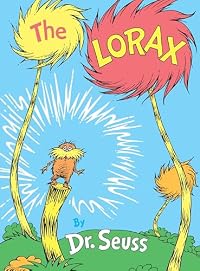
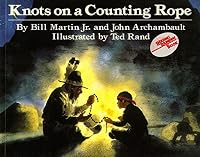
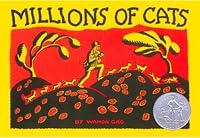
TendingEmbers In both stories, old trees succumb to poison (here to deliberate application; in SOMEDAY A TREE perhaps to dumping pollutants). People rally to rescue them, offering soup and sending get-well cards.
Member Reviews
As a big tree-lover myself, I was interested in learning about the "Treaty Oak," a tree over four hundred years old and whose claim to fame is that it supposedly was the same tree Stephen Austin signed a peace treaty under. Although no historian has proven that fact, legends, in a way, make their own history. Through beautiful illustrations, Ellen Levine takes us through the history of the tree and, consequently, the history of America. Levine and Rand present the story in such a way as to get readers to care about the outcome of this tree, which I feel is a great first step towards getting younger people more interested in environmental conservation and protection. On the other hand, this book is supposed to be non-fiction, and I show more definitely wouldn't classify it as such. While the tree was (and is) real, and there are historical facts referenced, that doesn't change the fact that Levine took so many liberties when writing this book. She has characters interact with the "Treaty Oak" without providing references showing that such instances actually occurred; the blurb at the back ("About the Treaty Oak") acts as a teaser for a more substantial reference list. Although I did enjoy the story and the illustrations, my frustration with the lack supporting evidence dropped my rating. If this book was presented as a work of fiction, I probably would take less umbrage with it. show less
This book takes a lot of liberties in terms of non-fiction. First off, the tree is talking. The entire narrative is told through the "eyes" of the tree. I have trouble with that because personification is clearly a fiction literary device. The fact that the tree refers to the owl as someone whom he can speak with is also troubling. Now it isn't just the tree but also the animals around it that are personified.
Then there is the issue with the events that take place around the tree. The treaty meeting is a legend and not proven to have taken place under the tree. The tree also refers to a lady that visited her often with her nine kids, but makes no mention of her name so that we could fact check it. The tree can also read the letters that show more were written to it.
I'm inclined to say that this book deserves to be put into the fiction section of the library. I understand that there may be some historical relevance that makes the book non-fiction, but there are too many liberties taken to justify keeping it in the non-fiction library. show less
Then there is the issue with the events that take place around the tree. The treaty meeting is a legend and not proven to have taken place under the tree. The tree also refers to a lady that visited her often with her nine kids, but makes no mention of her name so that we could fact check it. The tree can also read the letters that show more were written to it.
I'm inclined to say that this book deserves to be put into the fiction section of the library. I understand that there may be some historical relevance that makes the book non-fiction, but there are too many liberties taken to justify keeping it in the non-fiction library. show less
The central theme of the story is that no matter the horrible past of human nature, hope, courage, and kindness can triumphant all. I enjoyed the authors theme and her use of repetition (“As I grew”) at the start of almost every page, throughout the story. This phrase gives the reader an indication that there is more and that another event is about to be introduced. I also enjoyed the author’s choice of point of view, rather than narrating in third person about an old oak tree, the author made a strategic decision to take the story and have it narrated through the perspective of the tree. This is what I believe made the story more engaging as it made the story more personal and intimate for the reader. For example, “My branches show more swayed, my leaves trembled, and my upper roots quivered” gives a human like quality to the tree and makes the reader realize the liveliness of the tree. The illustrations also did wonders in reinforcing what was said in the story and detailed enough for a beginning reader to interpret what is going on. show less
I loved this book! It had a combination of languages and repetition. The author combines the Spanish and English text. For example, "Tejas, became a separate country." This allows the reader to expand their language and explore into small words of Spanish. I also like the repetition and the viewpoint of the tree. For example, the tree is watching all of these events happen and the author always says, "and I grew." This gives the reader a sense of time and how long the tree actually grew (a long time.) The purpose of this story is to educate children about a series of different historical events from the viewpoint of an object.
I think this book is great to use when teaching about Texas history. It can also be used to teach the life cylce of a tree in science.
This book is written about the life of a tree and the history that happened around it. It is told from the tree's point of view.
http://www2.scholastic.com/browse/contributor.jsp?id=3318
This website has videos of the author reading her books.
http://www2.scholastic.com/browse/contributor.jsp?id=3318
This website has videos of the author reading her books.
Ratings
Members
- Recently Added By
Author Information

31+ Works 19,012 Members
Ellen Levine was born in New York City on March 9, 1939. She received a master's degree in political science from the University of Chicago and a law degree from New York University School of Law. She was an attorney for a public-interest law group, a documentary filmmaker, and taught courses in writing for children and young adults in Vermont show more College's MFA program. She wrote numerous books for children and young adults during her lifetime including Darkness Over Denmark, I Hate English, Freedom's Children: Young Civil Rights Activists Tell Their Stories, Rachel Carson: A Twentieth-Century Life, and Henry's Freedom Box. She died from lung cancer on May 26, 2012 at the age of 73. (Bowker Author Biography) show less
Awards and Honors
Notable Lists
Common Knowledge
- Important places
- USA; Texas, USA
Classifications
Statistics
- Members
- 234
- Popularity
- 138,670
- Reviews
- 6
- Rating
- (4.07)
- Languages
- English
- Media
- Paper
- ISBNs
- 3
- ASINs
- 1