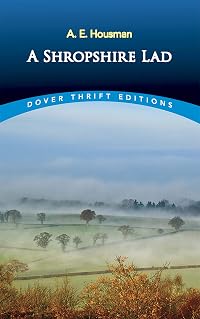
A Shropshire Lad
by A. E. Housman
On This Page
Description
Published at the author's own expense in 1896, after rejection from publishers, the collection contains a cycle of 63 poems. Despite exploring themes of lost love, obsession, pessimism and death, the poems touched English readers and became a bestseller during the Second Boer War and World War I. The collection, set in a half-imagined pastoral Shropshire, includes the well-known poems When I Was One-and-Twenty, To an Athlete Dying Young and Loveliest of Trees, the Cherry Now.Tags
Recommendations





















Member Reviews
My expectations for this poem cycle were confounded. I'd got it into my head that A Shropshire Lad was a rural idyll about bucolic farm boys, milk maids and nostalgic reveries about "blue remembered hills". As there is practically none of that ("blue remembered hills" notwithstanding), I'd obviously constructed this false image myself based on nothing more than the title of the collection.
Now, that's a bit of a shame as I was in the mood for (had a need for, in fact) a bit of idylic escapism to lift my mood. What Housman serves up instead is a series of poems of which the majority deal with death, sometimes by way of poetical allusion (autumnal trees shedding leaves, that sort of thing), though often directly stated. War is present in show more some poems, but mostly death simply stalks the countryside, or the city-bound country boy pining for his home fields. A few of the poems pay with the idea of the dead visiting the living, only to find their sweetheart in the arms of their best friend. These melancholy musings are not without their charm, though not exactly what I had in mind as a tonic (fortunately, Keats's remedy of getting out into nature was available to me). However, Housman goes rather further in a couple of poems, encouraging his 'lad' to die by suicide, and in one poem worthy of Poe, his 'lad' (there must be several of them, and presumably Shropshire must have been rather depopulated of young men if Housman is to be taken literally) actually cuts his own throat while on a date with his girlfriend.
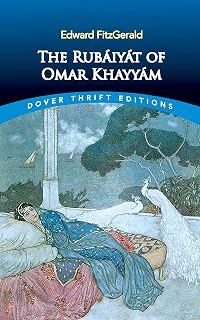
Some of the poems remind me of Khayyám-FitzGerald's preoccupation with mortality and the transience of life, and with the consolations of alcohol. The are some quatrains in Housman's collection but, as far as my amateur reading can tell, no deliberate imitation of the Rubáiyát.
First published in 1896, I wonder whether the late Victorian morbid (from a modern perspective) relationship with death, and their often melodramatic sentimentality feeds into Housman's rather dark vision of life's ephemeral nature. How much was England and the Empire overshadowed by the growing inevitability of the death of the Old Queen? The impending death of the seemingly ever-present and eternal Victoria signalling the decease of a way of life, a break in cultural continuity, the end of days?
Overall, an uneven (but enjoyable) collection, I think, though highly praised by J.R.R. Tolkien, who's probably a better judge than I. I'll read the poems again when I'm in a brighter mood and see whether the poems which aren't about death and shagging your dead mate's girlfriend make more of an impression on me. show less
Now, that's a bit of a shame as I was in the mood for (had a need for, in fact) a bit of idylic escapism to lift my mood. What Housman serves up instead is a series of poems of which the majority deal with death, sometimes by way of poetical allusion (autumnal trees shedding leaves, that sort of thing), though often directly stated. War is present in show more some poems, but mostly death simply stalks the countryside, or the city-bound country boy pining for his home fields. A few of the poems pay with the idea of the dead visiting the living, only to find their sweetheart in the arms of their best friend. These melancholy musings are not without their charm, though not exactly what I had in mind as a tonic (fortunately, Keats's remedy of getting out into nature was available to me). However, Housman goes rather further in a couple of poems, encouraging his 'lad' to die by suicide, and in one poem worthy of Poe, his 'lad' (there must be several of them, and presumably Shropshire must have been rather depopulated of young men if Housman is to be taken literally) actually cuts his own throat while on a date with his girlfriend.
Some of the poems remind me of Khayyám-FitzGerald's preoccupation with mortality and the transience of life, and with the consolations of alcohol. The are some quatrains in Housman's collection but, as far as my amateur reading can tell, no deliberate imitation of the Rubáiyát.
First published in 1896, I wonder whether the late Victorian morbid (from a modern perspective) relationship with death, and their often melodramatic sentimentality feeds into Housman's rather dark vision of life's ephemeral nature. How much was England and the Empire overshadowed by the growing inevitability of the death of the Old Queen? The impending death of the seemingly ever-present and eternal Victoria signalling the decease of a way of life, a break in cultural continuity, the end of days?
Overall, an uneven (but enjoyable) collection, I think, though highly praised by J.R.R. Tolkien, who's probably a better judge than I. I'll read the poems again when I'm in a brighter mood and see whether the poems which aren't about death and shagging your dead mate's girlfriend make more of an impression on me. show less
A Shropshire lad (1896) is one of the most celebrated collections of poems in English. Housman brings together themes of evanescent youth, beautiful English rural scenery, and untimely sudden death, hitting many of the same buttons as the German romantic poets of a hundred years earlier, and he does it in a deceptively simple, almost folkloric style that draws the reader straight into the world of the poems. The generally morbid subject-matter is lightened by an occasional touch of earthy humour, even self-mockery. In the penultimate poem, "Terence, this is stupid stuff", the poet debates with a friend the relative merits of poetry and beer:
Oh, many a peer of England brews
Livelier liquor than the Muse
- the poet concedes the point, but show more argues that poetry is better at preparing you for life's miseries than beer is!
When you read these poems for the first time, you'll probably be surprised how many of their lines and phrases have entered the language. They are not poems of the sort you have to struggle through on the page, untangling dense webs of allusions, but rather poems that you want to learn by heart, to read aloud, to sing (all the great and good of 20th century English music have had a go at them at various times...).
Many of the poems refer to the countryside of the Shropshire hills. It's an area where I used to go walking "when I was one-and-twenty" myself: when you stand on the Long Mynd or the Wrekin, at that age, it's difficult to resist the urge to declaim a bit of Housman. The poems seem to fit perfectly to the landscape, but famously, Housman didn't know that area at all well when he wrote the poems: he was a Worcestershire lad himself, and the poems were mostly written in London. He seems to have picked Shropshire because he liked the rhythm of the placenames and thought it would fit with the romantic pastoral idea of Englishness he was trying to convey. Maybe "Worcestershire" is too firmly attached to "Lea and Perrins" in the popular imagination...
Housman has become something of a gay icon, of course, and (as the title implies) the subjects of these poems are mostly somewhat idealised young men, usually farm-workers and soldiers. Women appear only peripherally, as mothers or sweethearts. Quite a few of the poems are addressed by one young man to another, often from the grave, but they deal (explicitly, at least) with friendship, rather than love, between men. Obviously, these are poems that resonate with gay readers, but I think just about anyone would get a good deal of pleasure from them.
[Another of those books with lots of copies on LT that no-one has bothered to review so far, presumably because it is so well-known] show less
Oh, many a peer of England brews
Livelier liquor than the Muse
- the poet concedes the point, but show more argues that poetry is better at preparing you for life's miseries than beer is!
When you read these poems for the first time, you'll probably be surprised how many of their lines and phrases have entered the language. They are not poems of the sort you have to struggle through on the page, untangling dense webs of allusions, but rather poems that you want to learn by heart, to read aloud, to sing (all the great and good of 20th century English music have had a go at them at various times...).
Many of the poems refer to the countryside of the Shropshire hills. It's an area where I used to go walking "when I was one-and-twenty" myself: when you stand on the Long Mynd or the Wrekin, at that age, it's difficult to resist the urge to declaim a bit of Housman. The poems seem to fit perfectly to the landscape, but famously, Housman didn't know that area at all well when he wrote the poems: he was a Worcestershire lad himself, and the poems were mostly written in London. He seems to have picked Shropshire because he liked the rhythm of the placenames and thought it would fit with the romantic pastoral idea of Englishness he was trying to convey. Maybe "Worcestershire" is too firmly attached to "Lea and Perrins" in the popular imagination...
Housman has become something of a gay icon, of course, and (as the title implies) the subjects of these poems are mostly somewhat idealised young men, usually farm-workers and soldiers. Women appear only peripherally, as mothers or sweethearts. Quite a few of the poems are addressed by one young man to another, often from the grave, but they deal (explicitly, at least) with friendship, rather than love, between men. Obviously, these are poems that resonate with gay readers, but I think just about anyone would get a good deal of pleasure from them.
[Another of those books with lots of copies on LT that no-one has bothered to review so far, presumably because it is so well-known] show less
8/2012 I come to Housman when I'm hollow, when I'm lost, when I'm confused. I come here when I need to come here, and he takes me in, he comforts me with snark, with acute observation, with hilarity and bottomless woe. There's nobody, nobody at all like Housman. I have entire swaths of this by heart, and generally read a poem or two at need. Today I read it cover to cover and was, once again, entirely blown away.
2010: What's to say of Housman? His words are like strange wine that changes one utterly once imbibed.
"...that grace, that manhood gone..."
2010: What's to say of Housman? His words are like strange wine that changes one utterly once imbibed.
"...that grace, that manhood gone..."
I was first introduced to the exquisite poetry of A.E. Housman in my grade ten English class (where we covered British literature from Beowulf to the early 20th century). I started to appreciate Housman then, but I really, really started to love his poetry when I listened to George Butterworth's lovely and evocative song-cycle rendition of A Shropshire Lad and realisesd that Housman's poems are not just meant to be read, but really and truly are meant to be sung, to be listened to as musical offerings (offerings showing joy, simplicity, but also the anguish of lost love, of growing up, and of destructive, manipulative war, that has the horrific power to destroy whole bastions of young men).
A very thought-provoking little book, Housman's A SHROPSHIRE LAD, first published in 1896, was a bestseller in England during the Great War, and no wonder, with it overarching theme of the shortness and fragility of life, coupled with pieces that point directly at war and answering the call to arms ("The Recruit"), and the gruesome result ("The Day of Battle"). Although Housman was writing of the Boer Wars, the sentiment was the same.
I've been reading a lot lately about the First World War, so was moved to glance through Housman's minor masterpiece once again. My version is this flimsy International Pocket Library edition, bought new for only fifty cents more than fifty years ago. It's well-traveled, and looks it. Probably its most show more famous poem is "To an Athlete Dying Young."
Barely fifty pages, but there's much food for thought here. Very highly recommended.
- Tim Bazzet, author of the memoir, BOOKLOVER show less
I've been reading a lot lately about the First World War, so was moved to glance through Housman's minor masterpiece once again. My version is this flimsy International Pocket Library edition, bought new for only fifty cents more than fifty years ago. It's well-traveled, and looks it. Probably its most show more famous poem is "To an Athlete Dying Young."
Barely fifty pages, but there's much food for thought here. Very highly recommended.
- Tim Bazzet, author of the memoir, BOOKLOVER show less
I was surprised to find I hadn't read A Shropshire Lad before. I had read a number of the poems, all rather good, and there are a number of phrases which have entered general circulation. Having read the entire collection now I can see why I hadn't done so before. There are a limited number of jewels, rather a lot of unexciting verse and a solid chunk of dreadful stuff. It's all on one note, of course, melancholic, bittersweet, nostalgic, triste. He can pretty well only write well in simple ballad style, but on a few occasions he does write so very well in them. I got to be intrigued as to what the difference was between the brilliant and the bad so I had a careful look at a couple.
For example XL, probably his best known and definitely show more his best. It is full of memorable phrases - in fact the most famous Housman phrases come from this poem. 'The land of lost content' and 'blue remembered hills'. The poem is deliberately vague as to landscape. This is because he is looking into the past rather more than into a space which is why the phrase 'blue remembered hills' resonates so. Hills are blue because they are far away but he is not looking at them now. It is the land of lost content but probably, possibly because he never went there - they were the future, and distant. But the blue vagueness grows into the 'shining plain' (a lovely pun too) because we are on the 'happy highways' - Housman's regular metaphor for life - where he went, in the past again, and finally the last line made brilliant by using one word - 'come' instead of the more usual go. He can and did go to the hills later in his life (it seems likely that he never actually visited them until then!) but he cannot go to the past. He is describing, evoking something, somewhere he can see but can never 'go' to.
XXVII "Is my team ploughing" is a perfect ballad building up to the last line which, while totally expected, is all the more bitter. The live lad lies easy in spite of lying by the dead lad's sweetheart. Housman again uses a simple word, lie, which weaves between its possible meanings in an intricate but simple development.
XXI Bredon Hill I Once more it's the perfect control of the structure, that third rhyme which pulls the story and the emotion forward. It gives the statement an emphasis because it's repeating the rhythm of the line before. At the same time he uses a pattern of repeated words, especially in the last line, which sharpen what we see in a very simple way: "stay", 'come to church". "went to church", "would not wait" and the final devastating, "I will come".
The exact opposite of something like IV Reveille where for metaphors we have a beach and burning ship, a vault of some sort which is trampled (a vault? trampled?) followed by a tent and mysterious straws. All very grandiose and terribly silly. Move to II, Loveliest of trees, on the other hand and the one image of the tree is used brilliantly and complexly. But then I think most, if not all, of the soldier off to war poems Like Reveille are dreadful, sub-Kiplingesque. Always be suspicious when someone who never went to war cheers you on to recruiting.
Housman may have been a minor poet but there are enough brilliant jewels in this ragbag to justify reading what is, after all, a very short collection. show less
For example XL, probably his best known and definitely show more his best. It is full of memorable phrases - in fact the most famous Housman phrases come from this poem. 'The land of lost content' and 'blue remembered hills'. The poem is deliberately vague as to landscape. This is because he is looking into the past rather more than into a space which is why the phrase 'blue remembered hills' resonates so. Hills are blue because they are far away but he is not looking at them now. It is the land of lost content but probably, possibly because he never went there - they were the future, and distant. But the blue vagueness grows into the 'shining plain' (a lovely pun too) because we are on the 'happy highways' - Housman's regular metaphor for life - where he went, in the past again, and finally the last line made brilliant by using one word - 'come' instead of the more usual go. He can and did go to the hills later in his life (it seems likely that he never actually visited them until then!) but he cannot go to the past. He is describing, evoking something, somewhere he can see but can never 'go' to.
XXVII "Is my team ploughing" is a perfect ballad building up to the last line which, while totally expected, is all the more bitter. The live lad lies easy in spite of lying by the dead lad's sweetheart. Housman again uses a simple word, lie, which weaves between its possible meanings in an intricate but simple development.
XXI Bredon Hill I Once more it's the perfect control of the structure, that third rhyme which pulls the story and the emotion forward. It gives the statement an emphasis because it's repeating the rhythm of the line before. At the same time he uses a pattern of repeated words, especially in the last line, which sharpen what we see in a very simple way: "stay", 'come to church". "went to church", "would not wait" and the final devastating, "I will come".
The exact opposite of something like IV Reveille where for metaphors we have a beach and burning ship, a vault of some sort which is trampled (a vault? trampled?) followed by a tent and mysterious straws. All very grandiose and terribly silly. Move to II, Loveliest of trees, on the other hand and the one image of the tree is used brilliantly and complexly. But then I think most, if not all, of the soldier off to war poems Like Reveille are dreadful, sub-Kiplingesque. Always be suspicious when someone who never went to war cheers you on to recruiting.
Housman may have been a minor poet but there are enough brilliant jewels in this ragbag to justify reading what is, after all, a very short collection. show less
At school many years ago we compared Herrick’s “Fair Daffodils” and Housman’s “Loveliest of Trees”. I don’t think it’s possible to say which is “best”: they are both perfect. I remember my mother quoting or reading “On Wenlock Edge” when I was only about 7 or 8, and young enough to be a bit frightened at the Roman who was ashes under Uricon, even though I had no real idea of death. The ruins at Viroconium or Wroxeter are surprisingly big, pillars standing in a field as I recall once seeing. Housman gave us the phrases “the coloured counties”, “blue remembered hills” and "the land of lost content". Favourites: “Loveliest of Trees” and “On Wenlock Edge”. My copy is a tiny hardback still in its show more yellow and black dustjacket. show less
Members
- Recently Added By
Lists

One Book, Many Authors
441 works; 40 members

Best of British Literature
226 works; 41 members

Folio Society
831 works; 48 members

Tonikat reading completed on Librarything journals
329 works; 2 members

Books I've Read More Than Once
602 works; 49 members

Poetry Corner
187 works; 15 members

Books Read in 2017
4,249 works; 130 members
Books available on Open Library
171 works; 4 members

Books Read in 2020
4,379 works; 124 members
Author Information

53+ Works 3,375 Members
A. E. Housman was born in Fockbury, Worcestershire, England on March 26, 1859. In 1877, he attended St. John's College, Oxford and received first class honours in classical moderations. He worked as clerk in the Patent Office in London for ten years. During this time he studied Greek and Roman classics intensively, and in 1892 was appointed show more professor of Latin at University College, London. In 1911 he became professor of Latin at Trinity College, Cambridge, a post he held until his death. He only published two volumes of poetry during his lifetime: A Shropshire Lad and Last Poems. He died on April 30, 1936. A third volume, More Poems, was released posthumously in 1936 by his brother as was an edition of Housman's Complete Poems in 1939. (Bowker Author Biography) show less
Some Editions
Awards and Honors
Notable Lists
Series
Belongs to Publisher Series
Work Relationships
Is contained in
Has as a reference guide/companion
Common Knowledge
- Canonical title
- A Shropshire Lad
- Original publication date
- 1896
- Important places
- Shropshire, England, UK; Ludlow, Shropshire, England, UK; Wenlock Edge, Shropshire, England, UK; The Wrekin, Shropshire, England, UK
- First words
- From Clee to heaven the beacon burns, / The shires have seen it plain, / From north to south the sign returns / And beacons burn again.
- Quotations
- When I was one-and-twenty
I heard a wise man say,
"Give crowns and pounds and guineas
But not your heart away;
Give pearls away and rubies
But keep your fancy free."
But I was one-and... (show all)-twenty,
No use to talk to me.
When I was one-and-twenty
I heard him say again,
"The heart out of the bosom
Was never given in vain;
'Tis paid with sighs a plenty
And sold for endless rue."
And I am two-and-twenty
And oh, 'tis true, 'tis true.
(Poem XIII) - Last words
- (Click to show. Warning: May contain spoilers.)Some seed the birds devour, / And some the season mars, / But here and there will flower / The solitary stars, / And fields will yearly bear them / As light-leaved spring comes on, / And luckless lads will wear them / When I am dead and gone.
Classifications
Statistics
- Members
- 1,638
- Popularity
- 13,761
- Reviews
- 17
- Rating
- (4.13)
- Languages
- Dutch, English, Swedish, Welsh
- Media
- Paper, Audiobook, Ebook
- ISBNs
- 74
- UPCs
- 1
- ASINs
- 112