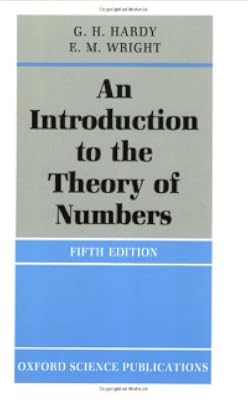
An Introduction to the Theory of Numbers
by G. H. Hardy
On This Page
Description
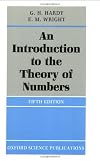
An Introduction to the Theory of Numbers by G. H. Hardy and E. M. Wright is found on the reading list of virtually all elementary number theory courses and is widely regarded as the primary and classic text in elementary number theory. Developed under the guidance of D. R. Heath-Brown, this Sixth Edition of An Introduction to the Theory of Numbers has been extensively revised and updated to guide today's students through the key milestones and developments in number theory. Updates include a show more chapter by J. H. Silverman on one of the most important developments in number theory -- modular elliptic curves and their role in the proof of Fermat's Last Theorem -- a foreword by A. Wiles, and comprehensively updated end-of-chapter notes detailing the key developments in number theory. Suggestions for further reading are also included for the more avid reader. The text retains the style and clarity of previous editions making it highly suitable for undergraduates in mathematics from the first year upwards as well as an essential reference for all number theorists. show lessTags
Recommendations




Member Reviews
I'm not a mathematician, but I was interested enough to make my way through the first few chapters and found them relatively accessible. Though I imagine most university courses use more contemporary texts, this is still a decent introduction to the topic for advanced undergraduates/graduate students. Besides, it's G.H. Hardy.
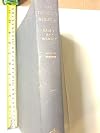
Introduction to the Theory of Numbers by Godfrey Harold Hardy is more sturdy than the other book by him that I had read recently. It is also significantly longer. While E. M. Wright also went and wrote some things for this book, he wasn’t included on the spine of the book, so I forgot about him. The opening section of the book states that it arose out of series of lectures given at Oxford, Cambridge, and other Universities. Given that, it is not a systematic treatment of the subject, though it does attempt to touch upon all of the facets of Number Theory.
This book starts out by discussing the terminology and symbols used. It is divided into twenty-four chapters starting out with Prime Numbers. The chapters go like this:
(1. The Series show more of Primes (1)
(2. The Series of Primes (2)
(3. Farey Series and a Theorem of Minkowski
(4. Irrational Numbers
(5. Congruences and Residues
(6. Fermat’s Theorem and its Consequences
(7. General Properties of Congruences
(8. Congruences to Composite Moduli
(9. The Representation of Numbers by Decimals
(10. Continued Fractions
(11. Approximation of Irrationals by Rationals
(12. The Fundamental Theorem of Arithmetic in k(1), k(i), and k(ρ)
(13. Some Diophantine Equations
(14. Quadratic Fields (1)
(15. Quadratic Fields (2)
(16. The Arithmetical Functions ϕ(n), μ(n), d(n), σ(n), r(n)
(17. Generating Functions of Arithmetical Functions
(18. The Order of Magnitude of Arithmetical Functions
(19. Partitions
(20. The Representation of a Number by Two or Four Squares
(21. Representation by Cubes and Higher Powers
(22. The Series of Primes (3)
(23. Kronecker’s Theorem
(24. Some More Theorems of Minkowski
Most of the chapters are self-explanatory. Some of them are rather opaque at first glance. Take chapter 19 for example, it is called Partitions. What exactly is a partition? Looking into it tells you that a partition is a way to show a number using any number of positive integral parts.
I especially liked the chapters on modular arithmetic since that is something I never really learned in school for some reason. This particular version was written in 1938 and I don't know what edition it is. show less
This book starts out by discussing the terminology and symbols used. It is divided into twenty-four chapters starting out with Prime Numbers. The chapters go like this:
(1. The Series show more of Primes (1)
(2. The Series of Primes (2)
(3. Farey Series and a Theorem of Minkowski
(4. Irrational Numbers
(5. Congruences and Residues
(6. Fermat’s Theorem and its Consequences
(7. General Properties of Congruences
(8. Congruences to Composite Moduli
(9. The Representation of Numbers by Decimals
(10. Continued Fractions
(11. Approximation of Irrationals by Rationals
(12. The Fundamental Theorem of Arithmetic in k(1), k(i), and k(ρ)
(13. Some Diophantine Equations
(14. Quadratic Fields (1)
(15. Quadratic Fields (2)
(16. The Arithmetical Functions ϕ(n), μ(n), d(n), σ(n), r(n)
(17. Generating Functions of Arithmetical Functions
(18. The Order of Magnitude of Arithmetical Functions
(19. Partitions
(20. The Representation of a Number by Two or Four Squares
(21. Representation by Cubes and Higher Powers
(22. The Series of Primes (3)
(23. Kronecker’s Theorem
(24. Some More Theorems of Minkowski
Most of the chapters are self-explanatory. Some of them are rather opaque at first glance. Take chapter 19 for example, it is called Partitions. What exactly is a partition? Looking into it tells you that a partition is a way to show a number using any number of positive integral parts.
I especially liked the chapters on modular arithmetic since that is something I never really learned in school for some reason. This particular version was written in 1938 and I don't know what edition it is. show less
Ratings
Members
- Recently Added By
Lists

Books in the bibliography of Godel, Escher, Bach by Douglas Hofstadter
97 works; 3 members
Author Information

16+ Works 2,450 Members
Some Editions
Series
Belongs to Publisher Series
Common Knowledge
- Canonical title
- An Introduction to the Theory of Numbers
- Original publication date
- 1938
- First words
- 1.1. Divisibility of integers. The numbers 0, 1, 2, 3, ... are called the rational integers, or simply the integers; the numbers 0, 1, 2, 3, ... the non-negative integers; and the numbers 1, 2, 3, ... the positive integers.
- Last words
- (Click to show. Warning: May contain spoilers.)All the results mentioned in this paragraph have been found by the modern sieve method; see Halberstam and Roth, ch. 4 for an elementary exposition and Halberstam and Richert for a fuller treatment.
Classifications
Statistics
- Members
- 336
- Popularity
- 94,191
- Reviews
- 2
- Rating
- (4.24)
- Languages
- Chinese, English, French
- Media
- Paper
- ISBNs
- 9
- ASINs
- 3