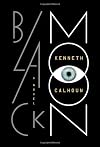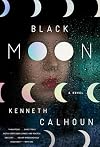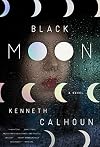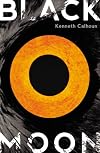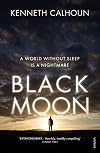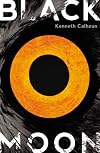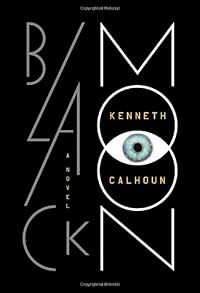
Black Moon: A Novel
by Kenneth Calhoun
On This Page
Description
Insomnia has claimed everyone Biggs knows. Even his beloved wife, Carolyn, succumbed before disappearing into the quickly collapsing world. Yet Biggs can still sleep, and dream, so he sets out to find her. He ventures out into a world ransacked by mass confusion and desperation, where he meets others struggling against the tide of sleeplessness. Chase and Jordan are devising a scheme to live off their drug-store lootings; Lila is a high school student wandering the streets in an owl mask; show more Felicia abandons the sanctuary of a sleep research center to try to protect her family and perhaps reunite with Chase, an ex-boyfriend. However, Biggs persists in his quest for Carolyn, finding a resolve and inner strength that he never knew he had.. show less
Tags
Recommendations








Member Reviews
For his first novel, Calhoun pleasantly surprises by avoiding plot line pitfalls and descriptive cliches in a genre that can at times feel overdone. The setting proves integral to the delusional state of the characters and adds to the tension of their sleep depravity. Character development is so well done that the reader feels completely invested in their various plights. All elements create a thought-provoking page turner that makes us question the limits of the human mind.
It’s possible that I’m processing the appalling state of the world right now by savagely critiquing a series of random novels that I found by keyword searching ‘dystopia’ in the library catalogue. There are probably worse coping mechanisms. ‘Black Moon’, fourth in the stack, was actually a borderline case, as I’d already read another book with the exact same plot: [b:Nod|16044493|Nod|Adrian Barnes|https://images.gr-assets.com/books/1351786251s/16044493.jpg|21822383]. I ended up including it in the hope that it would surpass [b:Nod|16044493|Nod|Adrian Barnes|https://images.gr-assets.com/books/1351786251s/16044493.jpg|21822383]. In that, no-one in the world can sleep anymore except the narrator, a man whose utter lack of show more personality seems to preserve him from the insomnia plague. In 'Black Moon' ditto, except the tedious male lead (name of Biggs) is accompanied by a few other, much more interesting narrators. Without Lila, Chase, and Felicia, I would have given up on the book in disgust. Biggs’ sole motivation and character trait is trying to find his wife, who has fallen victim to the mass sleeplessness. This woman is the most extreme example of a Manic Pixie Dream Girl I have ever encountered. A selection of evidence: she’s an artist who doesn’t know any other artists and works exclusively in stop motion animation. She makes a painstaking animation for her husband, shows it to him once, then destroys it. She tells him that she doesn’t need anyone else in her life but him. She worries him by climbing on the roof and the balcony. She has depression, but in a sexy way. She treats helpless elderly people ‘like a sack of abandoned kittens’. She’s also thin and has long hair, of course. This is not a human woman, it is a collection of male wish fulfilment traits bundled together. At one point I hoped she’d returned to murder her deeply annoying husband, but sadly that was just a hallucination.
As a more general comparison with [b:Nod|16044493|Nod|Adrian Barnes|https://images.gr-assets.com/books/1351786251s/16044493.jpg|21822383], ‘Black Moon’ has none of the interesting use of language but a weirder and more erratic plot. In fact, I was most entertained by the book while wondering what the actual fuck was happening. Notably, the point when Chase has taken an overdose of viagra, which somehow compels him to steal a truck full of sheep while naked and high on sleep deprivation. Said incident also inspires the priceless line: ‘It was as though he had told his cock an incredible story and it had laughed and cried, then turned to him and said, “Then what?”’ For all the faults I found in this book, that’s a memorable turn of phrase. (As an aside, for most of the narrative I assumed that Chase was a teenager, then latterly realised he was supposed to be an adult. Nothing about his characterisation suggested an age above fifteen.)
The only plot thread with any coherence belonged to Felicia who, much like the lead female character of [b:Nod|16044493|Nod|Adrian Barnes|https://images.gr-assets.com/books/1351786251s/16044493.jpg|21822383], deserved better. Nevertheless, I liked the inclusion of attempts to fix the insomnia crisis with science, something [b:Nod|16044493|Nod|Adrian Barnes|https://images.gr-assets.com/books/1351786251s/16044493.jpg|21822383] doesn’t bother with. The theme of sleep without dreams being survival rather than life was conceptually intriguing, then sadly not explored in any detail. In conclusion, I think ‘Black Moon’ could have been much improved by: a) entirely removing Biggs and his Manic Pixie Dream Wife, b) leaning into the black humour of the plot much harder as I could not take it seriously, c) giving Felicia and Lila much more time and character development, d) explaining what the hell happened to Jordan, e) giving some indication of whether this sleeplessness problem was limited to one part of America or what, and f) using insomnia as an allegory, to make this a true dystopia rather than a nonsensical thought experiment. show less
As a more general comparison with [b:Nod|16044493|Nod|Adrian Barnes|https://images.gr-assets.com/books/1351786251s/16044493.jpg|21822383], ‘Black Moon’ has none of the interesting use of language but a weirder and more erratic plot. In fact, I was most entertained by the book while wondering what the actual fuck was happening. Notably, the point when Chase has taken an overdose of viagra, which somehow compels him to steal a truck full of sheep while naked and high on sleep deprivation. Said incident also inspires the priceless line: ‘It was as though he had told his cock an incredible story and it had laughed and cried, then turned to him and said, “Then what?”’ For all the faults I found in this book, that’s a memorable turn of phrase. (As an aside, for most of the narrative I assumed that Chase was a teenager, then latterly realised he was supposed to be an adult. Nothing about his characterisation suggested an age above fifteen.)
The only plot thread with any coherence belonged to Felicia who, much like the lead female character of [b:Nod|16044493|Nod|Adrian Barnes|https://images.gr-assets.com/books/1351786251s/16044493.jpg|21822383], deserved better. Nevertheless, I liked the inclusion of attempts to fix the insomnia crisis with science, something [b:Nod|16044493|Nod|Adrian Barnes|https://images.gr-assets.com/books/1351786251s/16044493.jpg|21822383] doesn’t bother with. The theme of sleep without dreams being survival rather than life was conceptually intriguing, then sadly not explored in any detail. In conclusion, I think ‘Black Moon’ could have been much improved by: a) entirely removing Biggs and his Manic Pixie Dream Wife, b) leaning into the black humour of the plot much harder as I could not take it seriously, c) giving Felicia and Lila much more time and character development, d) explaining what the hell happened to Jordan, e) giving some indication of whether this sleeplessness problem was limited to one part of America or what, and f) using insomnia as an allegory, to make this a true dystopia rather than a nonsensical thought experiment. show less
"To sleep, perchance to dream - ay, there's the rub;
For in that sleep of death what dreams may come"
Shakespeare, Hamlet Act 3 scene 1
Black Moon by Kenneth Calhoun is a highly recommended surreal story of a world plagued by insomnia. What happens when the person with the ability to sleep, and to dream, is the rare exception? Sleep deprivation causes hallucinations, a disconnect with the sensory world, and language centers in the brain can no longer keep your word usage in syntax. Certainly everyone has experienced at some point a time when they craved the restorative power of sleep, and desired the release of dreaming, perhaps to work out life's problems through the dreams. But we all know that you are also at your most vulnerable when show more sleeping, cut off from the world around you. What is even more dangerous in this changed world for those who can sleep is the murderous rage insomniacs feel when they see someone sleeping.
In this dystopian world several characters try to hide their ability to sleep, while trying to get sleep even when they know they will be killed if found.
The main character in Black Moon is Biggs, a sleeper. Biggs has watched the gradual disintegration of his wife, Carolyn, who is an insomniac. When she disappears, he sets off across a changed, dangerous urban landscape to find her as well as reflect on their life together.
Lila Ferrell is a teen whose parents are insomniacs. When they become a threat to her life when she is sleeping, they send her off to the research center they have heard about.
Chase, an oblivious college student, teams up with Justin, a former high school buddy who has been following the news, to steal sleeping pills.
Felicia, Chase's former girlfriend, is a lab assistant at a sleep research center where they are trying to fight their own symptoms.
Calhoun's writing is brilliant. Those who can sleep are also sleep deprived because sleeping is dangerous and he manages to capture the dreamlike fugue characters are wading through. I like the word hallucinatory used to describe Black Moon because he manages to evoke that feeling. His characters are traveling through a known world that has suddenly become an illusory deception. Real landmarks are there, but changed due to the restless wandering of the sleepless. Biggs is reflecting on a past and dreams he shared with Carolyn that may be delusive. What is real and true in a sleepless world where dreams are a rare anomaly? And is it sleep or our dreams that determine our humanity?
Disclosure: My Kindle edition was courtesy of Crown Publishing Group for review purposes. show less
For in that sleep of death what dreams may come"
Shakespeare, Hamlet Act 3 scene 1
Black Moon by Kenneth Calhoun is a highly recommended surreal story of a world plagued by insomnia. What happens when the person with the ability to sleep, and to dream, is the rare exception? Sleep deprivation causes hallucinations, a disconnect with the sensory world, and language centers in the brain can no longer keep your word usage in syntax. Certainly everyone has experienced at some point a time when they craved the restorative power of sleep, and desired the release of dreaming, perhaps to work out life's problems through the dreams. But we all know that you are also at your most vulnerable when show more sleeping, cut off from the world around you. What is even more dangerous in this changed world for those who can sleep is the murderous rage insomniacs feel when they see someone sleeping.
In this dystopian world several characters try to hide their ability to sleep, while trying to get sleep even when they know they will be killed if found.
The main character in Black Moon is Biggs, a sleeper. Biggs has watched the gradual disintegration of his wife, Carolyn, who is an insomniac. When she disappears, he sets off across a changed, dangerous urban landscape to find her as well as reflect on their life together.
Lila Ferrell is a teen whose parents are insomniacs. When they become a threat to her life when she is sleeping, they send her off to the research center they have heard about.
Chase, an oblivious college student, teams up with Justin, a former high school buddy who has been following the news, to steal sleeping pills.
Felicia, Chase's former girlfriend, is a lab assistant at a sleep research center where they are trying to fight their own symptoms.
Calhoun's writing is brilliant. Those who can sleep are also sleep deprived because sleeping is dangerous and he manages to capture the dreamlike fugue characters are wading through. I like the word hallucinatory used to describe Black Moon because he manages to evoke that feeling. His characters are traveling through a known world that has suddenly become an illusory deception. Real landmarks are there, but changed due to the restless wandering of the sleepless. Biggs is reflecting on a past and dreams he shared with Carolyn that may be delusive. What is real and true in a sleepless world where dreams are a rare anomaly? And is it sleep or our dreams that determine our humanity?
Disclosure: My Kindle edition was courtesy of Crown Publishing Group for review purposes. show less
“…a black moon had risen, a sphere of sleeplessness that pulled at the tides of blood—and invisible explanation for the madness welling inside.”
The world has stopped sleeping. Restless nights have grown into days of panic, delirium and, eventually, desperation. But few and far between, sleepers can still be found – a gift they quickly learn to hide. For those still with the ability to dream are about to enter a waking nightmare.
Matt Biggs is one of the few sleepers. His wife Carolyn however, no stranger to insomnia, is on the very brink of exhaustion. After six restless days and nights, Biggs wakes to find her gone. He stumbles out of the house in search of her to find a world awash with pandemonium, a rapidly collapsing show more reality. Sleep, it seems, is now the rarest and most precious commodity. Money can’t buy it, no drug can touch it, and there are those who would kill to have it.
Kenneth Calhoun’s dark, hallucinatory and brilliantly realised debut confronts one of our deepest needs – and fears – with style, vision and a very human heart. show less
The world has stopped sleeping. Restless nights have grown into days of panic, delirium and, eventually, desperation. But few and far between, sleepers can still be found – a gift they quickly learn to hide. For those still with the ability to dream are about to enter a waking nightmare.
Matt Biggs is one of the few sleepers. His wife Carolyn however, no stranger to insomnia, is on the very brink of exhaustion. After six restless days and nights, Biggs wakes to find her gone. He stumbles out of the house in search of her to find a world awash with pandemonium, a rapidly collapsing show more reality. Sleep, it seems, is now the rarest and most precious commodity. Money can’t buy it, no drug can touch it, and there are those who would kill to have it.
Kenneth Calhoun’s dark, hallucinatory and brilliantly realised debut confronts one of our deepest needs – and fears – with style, vision and a very human heart. show less
A insomniac’s worst nightmare, so to speak, is an epidemic of chronic sleeplessness where sleeping pills just don’t work! That’s the scenario in Kenneth Calhoun’s debut novel, a dystopian world in which most people have suddenly stopped sleeping.
No zombies, aliens or vampires herald this apocalypse, but the world ceases to function as sleep-deprived populations become dissociated, mad and ultimately violent: of course, there are a handful of those who are immune, and the book focuses on their plight.
The insomniacs are enraged by the sight of anyone sleeping and tear them to pieces – parents rip babies apart, and lovers are driven to violent slaughter – so the challenge for sleepers is to find one of the increasingly rare show more safe places to sleep.
We follow the disparate journeys of Biggs, searching for his wife Carolyn, Chase, looking for Felicia, his former girlfriend, Lila, whose insomniac parents threw her out lest they kill her in a sleepless fury, and others, whose stories come together at the conclusion of this rather bleak but well-written and thought-provoking book. show less
No zombies, aliens or vampires herald this apocalypse, but the world ceases to function as sleep-deprived populations become dissociated, mad and ultimately violent: of course, there are a handful of those who are immune, and the book focuses on their plight.
The insomniacs are enraged by the sight of anyone sleeping and tear them to pieces – parents rip babies apart, and lovers are driven to violent slaughter – so the challenge for sleepers is to find one of the increasingly rare show more safe places to sleep.
We follow the disparate journeys of Biggs, searching for his wife Carolyn, Chase, looking for Felicia, his former girlfriend, Lila, whose insomniac parents threw her out lest they kill her in a sleepless fury, and others, whose stories come together at the conclusion of this rather bleak but well-written and thought-provoking book. show less
Yup, people really DO go nuts when they can't sleep. Ripping-limbs nuts.
So much more plausible to me than the zombie tropes, the three main story lines -- peppered with mounting horror -- obliquely intersect near the end, in a most satisfying way.
So much more plausible to me than the zombie tropes, the three main story lines -- peppered with mounting horror -- obliquely intersect near the end, in a most satisfying way.
This is a zombie book.
Ever heard of sleep deprivation turning you into a 'zombie'? It's not a metaphor here.
A mysterious plague of sleeplessness has infected us. A few are not (or not yet?) affected, but even the immune are out of luck, because the insomnia doesn't only degrade the faculties, it causes the sleepless to become filled with violent, killing rage at the sight of a sleeper.
We see this apocalypse through the eyes of a few different characters... Two young men, one of whom notices the creeping insomnia, and hopes to get a jump on survival by stockpiling sleeping pills. A young woman, whose position working at a sleep research lab might give her an advantage. A man who tries to cure his girlfriend through the placebo effect, show more then spends most of the book chasing after her after she goes missing. Some others...
Calhoun's writing style and focus on the mundane aspects of his characters' lives may cause this book to be classified into the 'literature' section, but when it comes right down to it, the book is quite firmly in the 'zombie' genre. It reminded me a bit of Alden Bell's 'The Reapers Are The Angels.'
I very much appreciated and enjoyed most of the book. I felt like the author set up a lot of interesting scenarios, introduced both heartbreak and black humor in an effective way. And then, it ended.
Yep, nothing really wrapped up, open questions left hanging, dangling plotlines everywhere, and a thoroughly inconclusive and abrupt finale. It felt very unsatisfying.
As far as I know, that's meant to be the end, too... no sequel planned.
Read as this month's post-apocalyptic book club selection. show less
Ever heard of sleep deprivation turning you into a 'zombie'? It's not a metaphor here.
A mysterious plague of sleeplessness has infected us. A few are not (or not yet?) affected, but even the immune are out of luck, because the insomnia doesn't only degrade the faculties, it causes the sleepless to become filled with violent, killing rage at the sight of a sleeper.
We see this apocalypse through the eyes of a few different characters... Two young men, one of whom notices the creeping insomnia, and hopes to get a jump on survival by stockpiling sleeping pills. A young woman, whose position working at a sleep research lab might give her an advantage. A man who tries to cure his girlfriend through the placebo effect, show more then spends most of the book chasing after her after she goes missing. Some others...
Calhoun's writing style and focus on the mundane aspects of his characters' lives may cause this book to be classified into the 'literature' section, but when it comes right down to it, the book is quite firmly in the 'zombie' genre. It reminded me a bit of Alden Bell's 'The Reapers Are The Angels.'
I very much appreciated and enjoyed most of the book. I felt like the author set up a lot of interesting scenarios, introduced both heartbreak and black humor in an effective way. And then, it ended.
Yep, nothing really wrapped up, open questions left hanging, dangling plotlines everywhere, and a thoroughly inconclusive and abrupt finale. It felt very unsatisfying.
As far as I know, that's meant to be the end, too... no sequel planned.
Read as this month's post-apocalyptic book club selection. show less
Members
- Recently Added By
Lists

LitReactor Best Horror of the Decade
20 works; 1 member
Author Information
4+ Works 385 Members
Awards and Honors
Awards
Common Knowledge
- Original publication date
- 2014-03-04 (US) (US)
Classifications
Statistics
- Members
- 372
- Popularity
- 83,831
- Reviews
- 24
- Rating
- (3.19)
- Languages
- English
- Media
- Paper, Audiobook, Ebook
- ISBNs
- 11
- ASINs
- 4