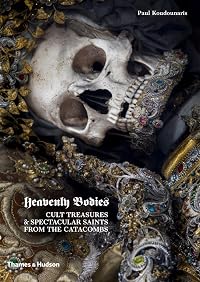
Heavenly Bodies: Cult Treasures and Spectacular Saints from the Catacombs
by Paul Koudounaris
On This Page
Description
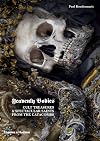
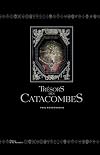
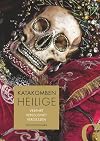
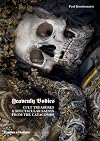
This book is the chronicle of a group of extraordinary skeletons discovered in the Roman Catacombs in the late sixteenth century. Largely anonymous, they were nevertheless held to be the remains of Early Christian martyrs, and treated as sacred. Sent to Catholic churches and religious houses in German-speaking Europe to replace holy relics that had been destroyed in the wake of the Protestant Reformation, the skeletons were carefully reassembled, and richly adorned with jewels and precious show more costumes. They became the centre of spiritual life for many communities, yet as time passed, faith in them wavered and they were cast out as imposters, as the Catholic Church turned its back on what was once one of its treasures. This is a story that until now has been left out of the pages of both art and religious histories. show lessTags
Recommendations






Member Reviews
Heavenly Bodies is a book about human bones and an overlooked era of history – post-Reformation in the Germanic nations of Europe.
Catholics there were still reeling from the influence of Martin Luther and so, to bolster up the people’s faith, the Vatican decided to ship, wholesale, skeletons of Christian martyrs – or what they assumed were Christian martyrs – from a recently discovered catacomb near Rome to churches, parishes, monasteries and convents for veneration and display. These skeletons were revered as much as those of the saints were, for in the violence of the Reformation many churches had been looted and their relics destroyed. These “martyrs” filled in a vital gap for the community. As their identities were never show more known they were given new names and histories and received a lengthy treatment to render them as objects of display – cleaning, articulation, and sumptuous clothing. The bare bones were decorated with elaborate whorls of gems both real and glass, held in place with gold or silver wirework. Finally they were given positions of honor in the church in lifelike poses.
Such a display may seem macabre or horrifying to the people of today. Yet it was very natural to the people of the time. The bones were meant to evoke awe and faith, and even generated a vital sense of community. The author is clear-eyed and articulate, approaching the skeletons sympathetically while acknowledging their dubious exhumations. In fact, he dedicates the book to the anonymous artists behind the skeletons’ creation, for they are indeed works of art. The book is filled with sumptuous photographs of the detail involved and the effect they created in their environment, the churches. Sadly, some languish today out of the public eye, moldering in attics or warehouses.
Heavenly Bodies has a gothic, baroque vibe, but I wouldn’t call it a horror book. The emphasis was on life, not death. The skeletons, as macabre as they were, were an affirmation of faith and hope, like the painted clay muerto figurines of the Mexican Day of the Dead. The Mexican caricaturist Posada endowed them with a bizarreness that hipsters adopted with irony; recent depictions in American culture are more decorative. But in actuality the muertos are not meant with irony or a love of death. They are closer in spirit to the jeweled skeletons of those German churches. One is sanctified, the other folk; yet both arise from faith. show less
Catholics there were still reeling from the influence of Martin Luther and so, to bolster up the people’s faith, the Vatican decided to ship, wholesale, skeletons of Christian martyrs – or what they assumed were Christian martyrs – from a recently discovered catacomb near Rome to churches, parishes, monasteries and convents for veneration and display. These skeletons were revered as much as those of the saints were, for in the violence of the Reformation many churches had been looted and their relics destroyed. These “martyrs” filled in a vital gap for the community. As their identities were never show more known they were given new names and histories and received a lengthy treatment to render them as objects of display – cleaning, articulation, and sumptuous clothing. The bare bones were decorated with elaborate whorls of gems both real and glass, held in place with gold or silver wirework. Finally they were given positions of honor in the church in lifelike poses.
Such a display may seem macabre or horrifying to the people of today. Yet it was very natural to the people of the time. The bones were meant to evoke awe and faith, and even generated a vital sense of community. The author is clear-eyed and articulate, approaching the skeletons sympathetically while acknowledging their dubious exhumations. In fact, he dedicates the book to the anonymous artists behind the skeletons’ creation, for they are indeed works of art. The book is filled with sumptuous photographs of the detail involved and the effect they created in their environment, the churches. Sadly, some languish today out of the public eye, moldering in attics or warehouses.
Heavenly Bodies has a gothic, baroque vibe, but I wouldn’t call it a horror book. The emphasis was on life, not death. The skeletons, as macabre as they were, were an affirmation of faith and hope, like the painted clay muerto figurines of the Mexican Day of the Dead. The Mexican caricaturist Posada endowed them with a bizarreness that hipsters adopted with irony; recent depictions in American culture are more decorative. But in actuality the muertos are not meant with irony or a love of death. They are closer in spirit to the jeweled skeletons of those German churches. One is sanctified, the other folk; yet both arise from faith. show less
The history of the catacomb saints is interesting, but the collection of gorgeous, macabre photos are what make this book so good. Highly recommended if you appreciate the beautiful and morbid.
I was somewhat disappointed in this book -- perhaps because it seemed tailor-made for me! I mean ... skeletons, sparkly stuff, moldy history ...
The history is quite interesting, make no mistake, it's just that there isn't a great deal of it. If the photographs were removed I think you'd have an interesting, weighty pamphlet.
It may be that the photographs are the problem. They are superficially stunning and striking, but this wears off after a bit and one comes down to "oh, look: another skeleton strung with costume jewelry."
A truly detailed history would be a better book, in my opinion.
The history is quite interesting, make no mistake, it's just that there isn't a great deal of it. If the photographs were removed I think you'd have an interesting, weighty pamphlet.
It may be that the photographs are the problem. They are superficially stunning and striking, but this wears off after a bit and one comes down to "oh, look: another skeleton strung with costume jewelry."
A truly detailed history would be a better book, in my opinion.
Fascinating account and high-quality images that is worth reading, but probably as a library book instead of a purchase.
I've seen these things many times, but never really looked at them or known their story. This was very interesting.
BTW, the German translation was excellent, read very smoothly.
BTW, the German translation was excellent, read very smoothly.
this book is the bestest thing everrrrrrrrrr
http://www.bostonbibliophile.com/2014/02/review-heavenly-bodies-cult-treasures.h...
http://www.bostonbibliophile.com/2014/02/review-heavenly-bodies-cult-treasures.h...
Ratings
Members
- Recently Added By
Lists

Top Five Books of 2014
1,064 works; 397 members

Summer Reads 2014
207 works; 70 members

Favorite Books Published in 2013
32 works; 10 members
Author Information

7+ Works 781 Members
Some Editions
Common Knowledge
- Original title
- Heavenly Bodies : Cult Treasures and Spectacular Saints from the Catacombs
- Original publication date
- 2013
- First words
- In 1723, a fully articulated skeleton identified as that of St Albertus arrived in the small church of St George in Burgrain, Germany.
- Last words
- (Click to show. Warning: May contain spoilers.)To look up at these glorious relics on the high altar at Rottenbuch is to peer through a window into a largely forgotten past, opened through a measure of the devotion that was once accorded to countless other Heavenly Bodies, and that in one comunity refused to be extinguished.
Classifications
- Genres
- Nonfiction, Art & Design, Religion & Spirituality, General Nonfiction, History
- DDC/MDS
- 235.2094 — Religion Christianity Spiritual beings Saints
- LCC
- BX2315 .K68 — Philosophy, Psychology and Religion Christian Denominations Christian Denominations Catholic Church Relics. Shrines. Pilgrimages. Processions
- BISAC
Statistics
- Members
- 282
- Popularity
- 113,930
- Reviews
- 6
- Rating
- (4.47)
- Languages
- English, French, German
- Media
- Paper
- ISBNs
- 3
- ASINs
- 2